
 Hi, I’m Andy
Traveler and photographer.
I don’t travel just to see places. I travel because I want to know if there’s more than just everyday life. More about me
12 Bangkok Attractions – The Most Important Sights in Thailand’s Capital
Bangkok is not only the capital of Thailand but also the starting point for most journeys through the country. The metropolis offers spectacular temples, shopping districts, street food, and vibrant city life.
As Bangkok can sometimes feel hectic and chaotic, not every traveller falls in love with the city immediately. However, the Thai capital has plenty of cultural highlights to offer, and several of the country’s most famous attractions are located here.
In this travel guide, I’ll take you on a three-day journey through Bangkok, introducing some of the city’s most interesting attractions. From impressive temples and lively street markets to parks and observation decks, we’ll explore together what makes Bangkok such an extraordinary destination.
By the way, many of Bangkok’s main attractions can also be discovered through guided tours*.
No desire to read? Then explore our Bangkok attractions photo gallery instead.
What to Expect in This Bangkok Attractions Travel Guide:
Bangkok Attractions on Video – Discover the City’s Most Important Highlights
1. Wat Phra Kaew & the Grand Palace – Bangkok’s Most Popular Attraction

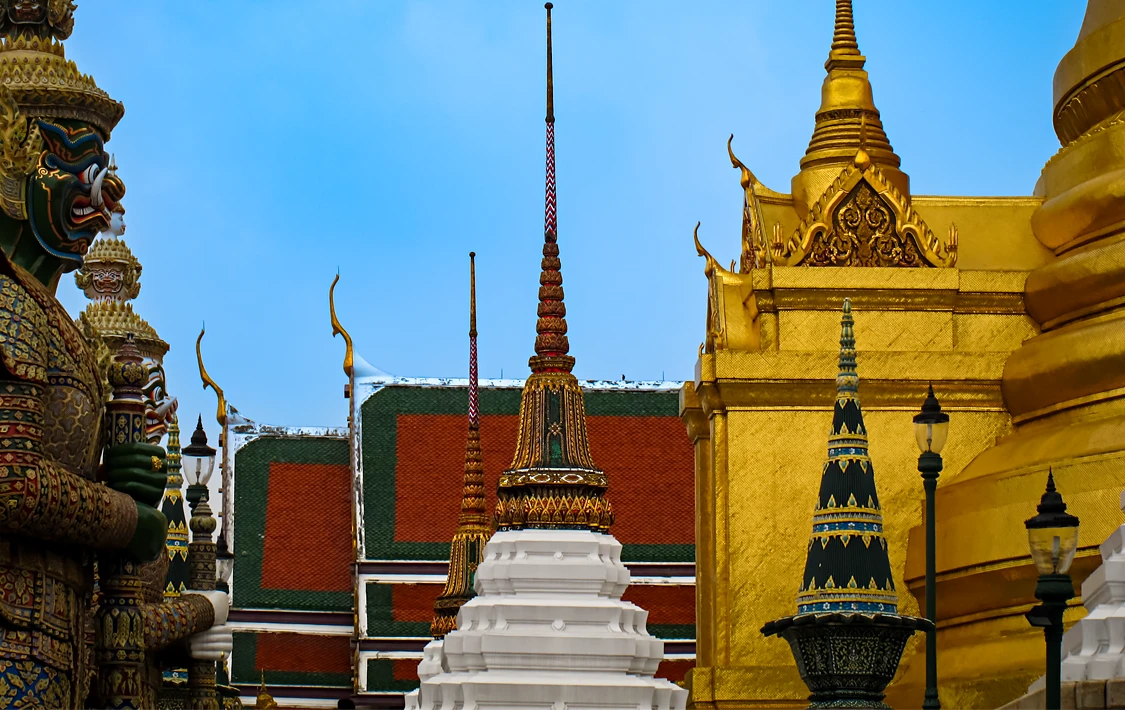

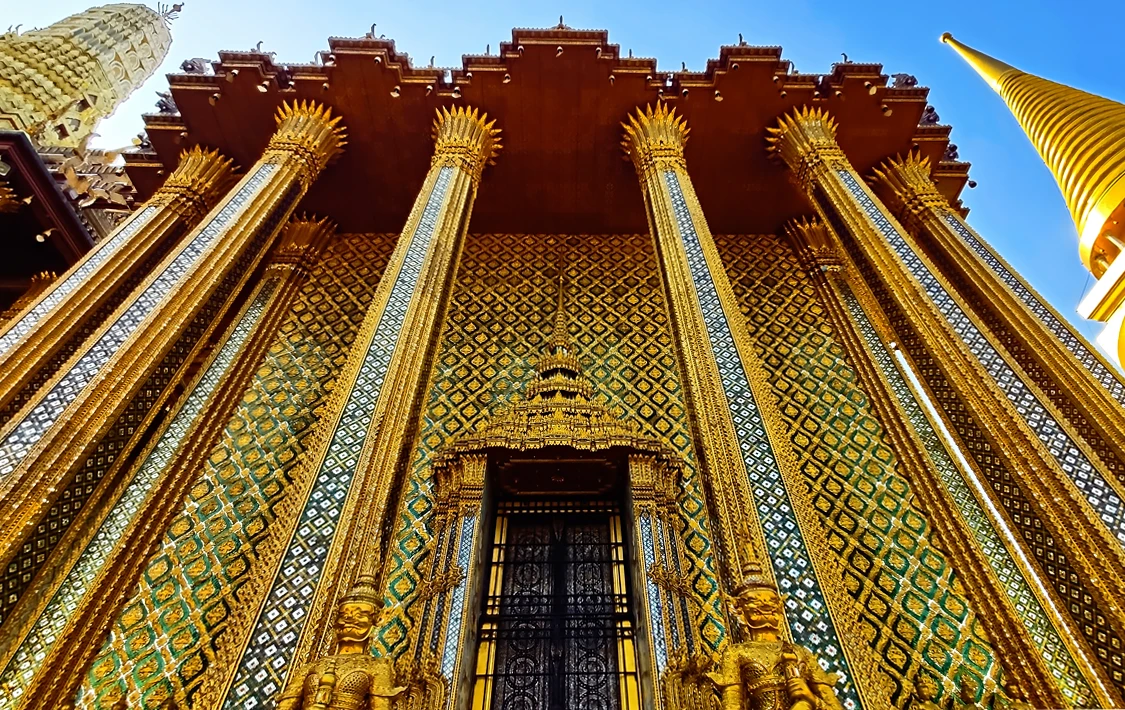
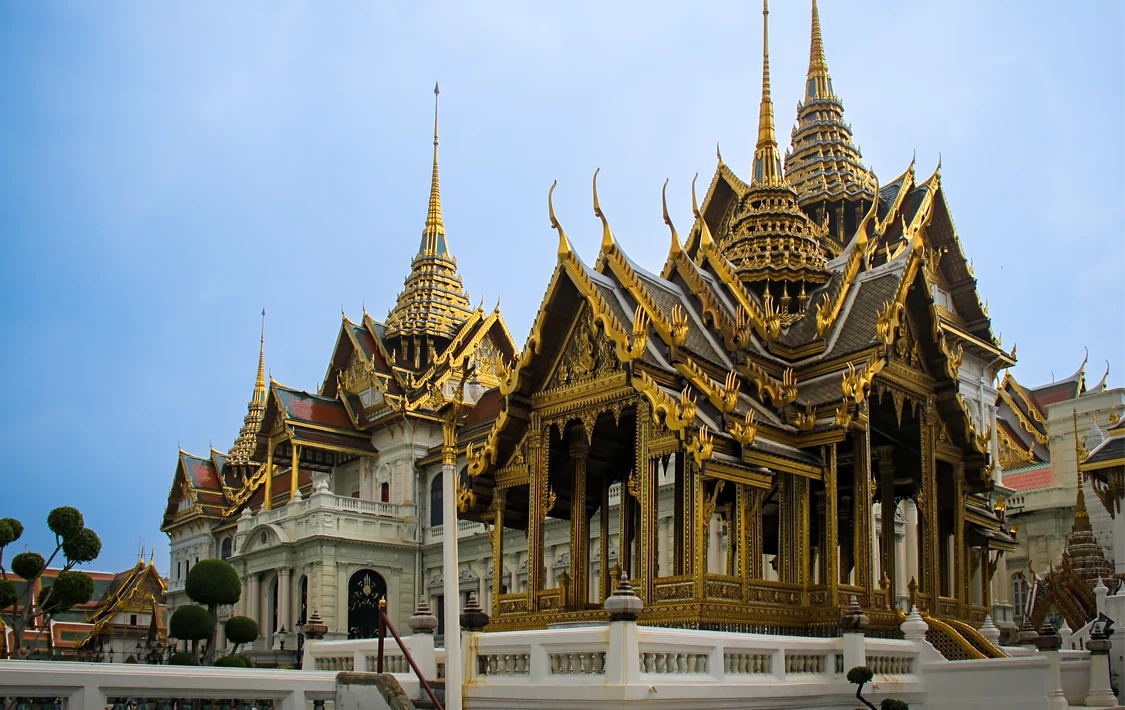

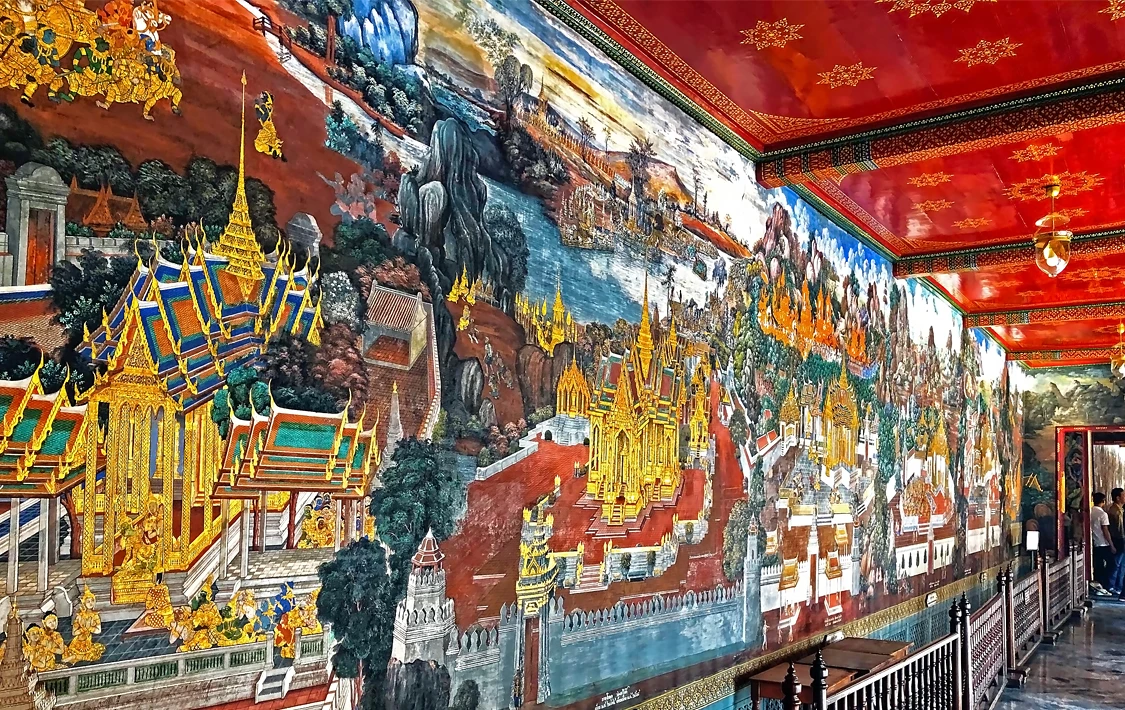
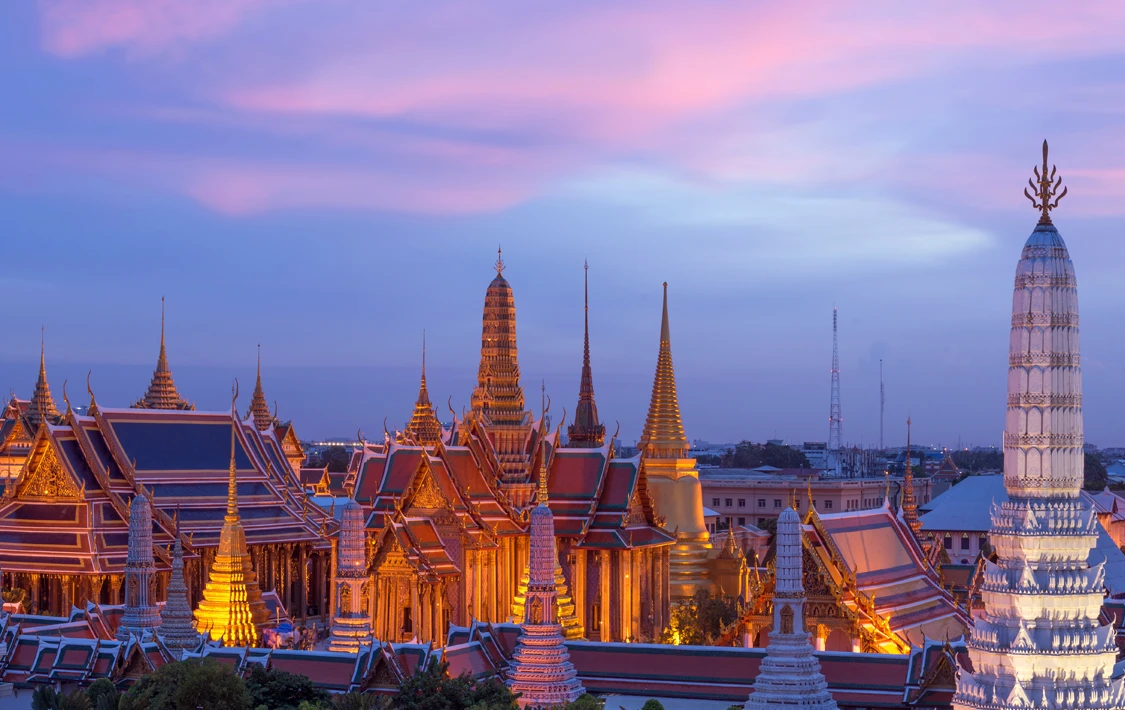
Among Bangkok’s most impressive and important attractions are the Grand Palace and Wat Phra Kaew (Temple of the Emerald Buddha). This enormous complex consists of more than 100 buildings, decorated with golden facades and roofs, intricate murals, and elaborate mosaics. The grandeur of the temple complex is difficult to put into words and makes it one of the most significant cultural sites in all of Thailand.
One reason for its importance is the Emerald Buddha, housed within the temple. The approximately 66-centimetre-tall Buddha statue is believed to have originated in India and is said to be more than 2,000 years old. Many Thai people and Buddhists deeply revere this statue, as it is believed to possess special spiritual powers.
If you are visiting Thailand for the first time, Wat Phra Kaew offers an impressive introduction to Thai culture and spirituality. Plan enough time for your visit, around 2 to 4 hours, as there is a great deal to explore within the complex.
Wat Phra Kaew is arguably the Bangkok attraction and should definitely have a place on your travel itinerary.
I have also created a separate guide with detailed information about the royal temple complex and its most important buildings and highlights. You can find it here: Wat Phra Kaew in Detail
Useful Information About Wat Phra Kaew
2. Wat Pho – Visit One of Thailand’s Longest Reclining Buddhas
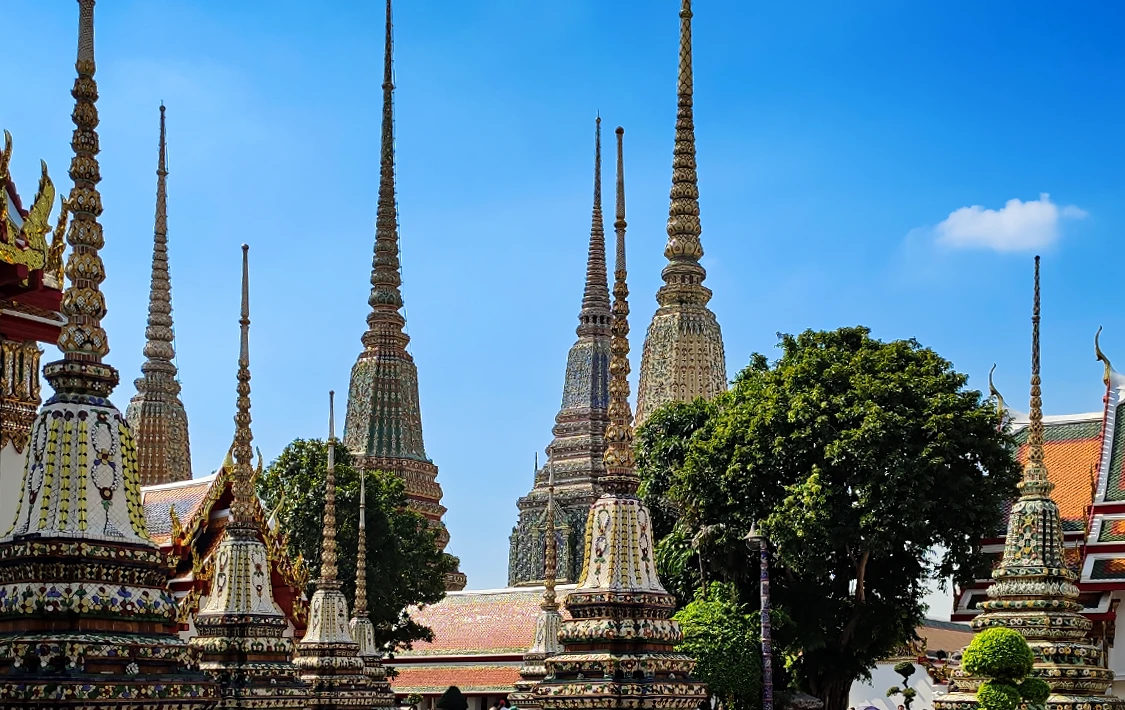
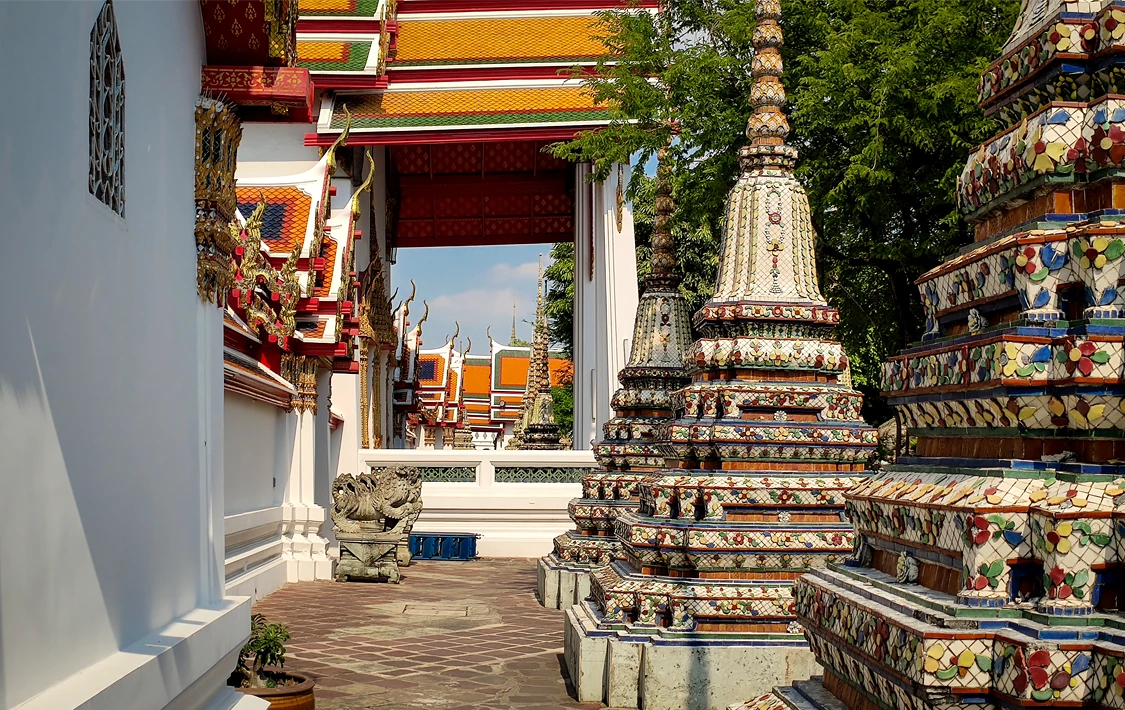
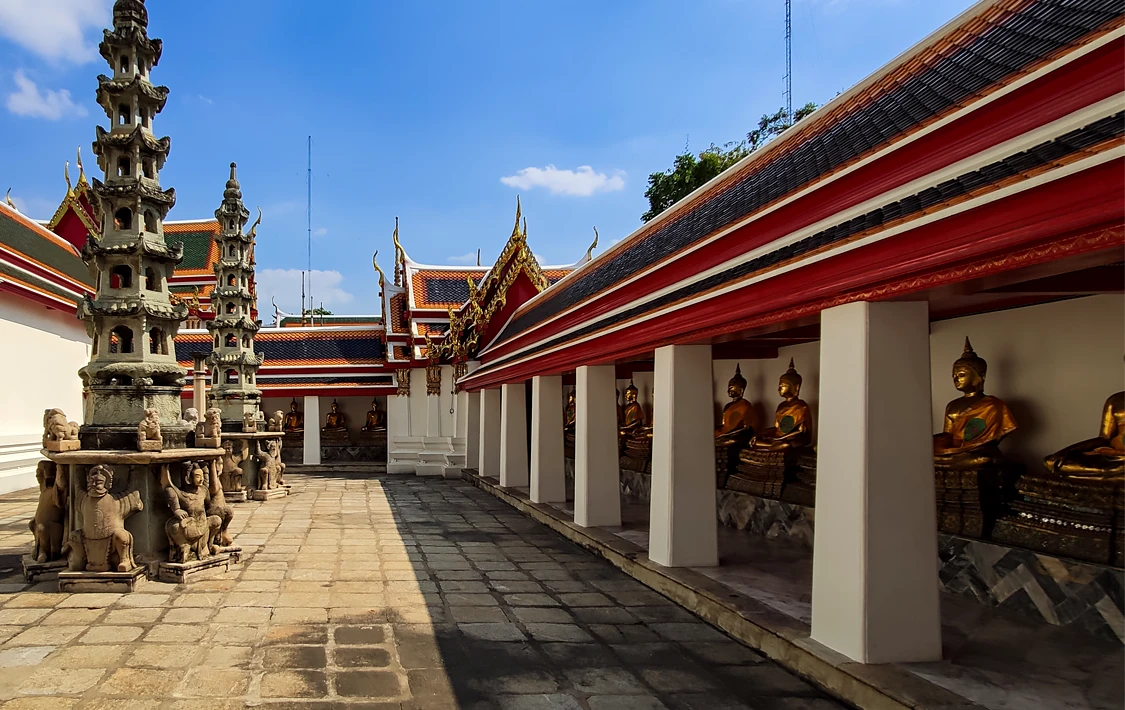
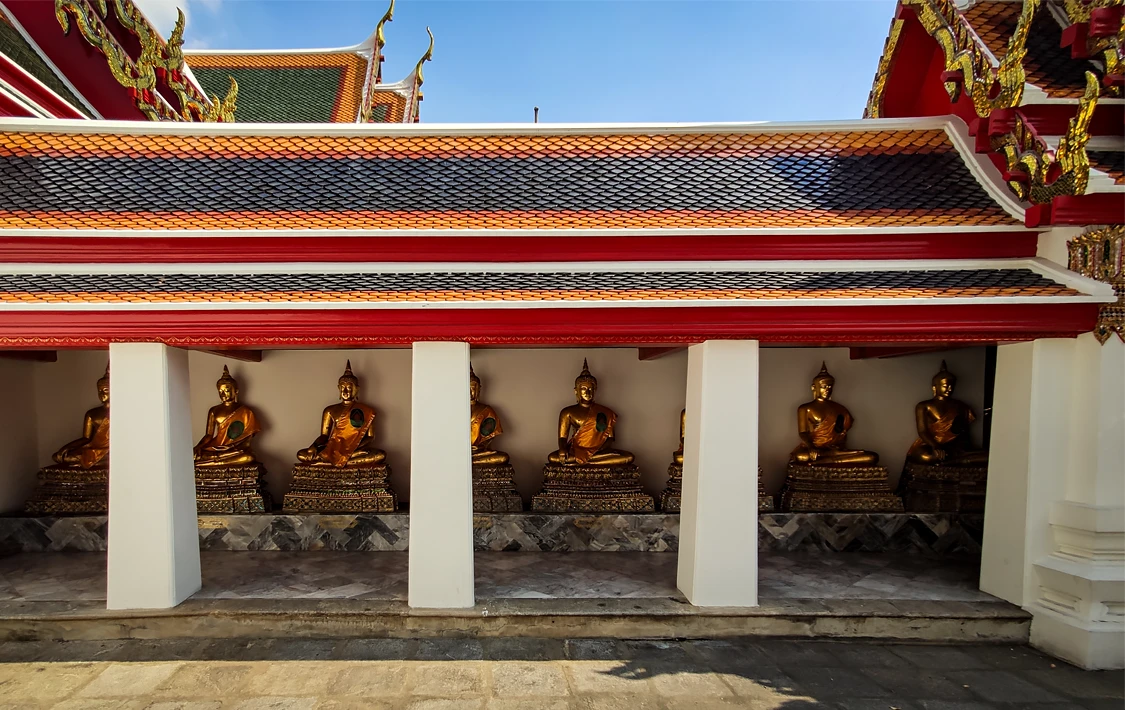
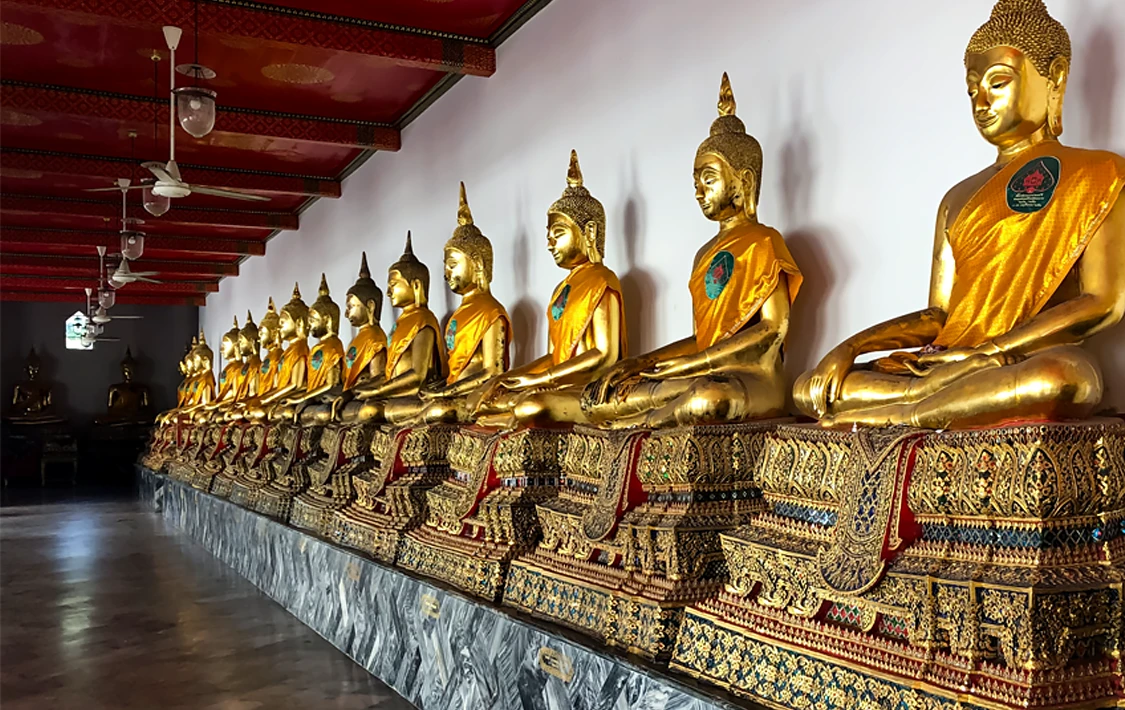


Wat Pho is located right next to Wat Phra Kaew and the Grand Palace, which is why I recommend visiting both attractions together. Like the Grand Palace, this temple is also popular with tourists, although it tends to feel slightly less crowded.
The architectural style of the two temples differs significantly. At Wat Pho, you’ll find less gold and more grey, white, and intricate mosaic details. The marble inscriptions and illustrations within the temple complex are even protected by UNESCO. Overall, Wat Pho ranks among the most important attractions in Bangkok.
The original construction of Wat Pho cannot be linked to a specific founder, but historians believe it was built or expanded during the reign of King Phetracha (1688–1703). Over the centuries, the temple has been continuously enlarged and now houses Thailand’s largest collection of Buddha images.
The temple is also considered one of the earliest centres of public education in Thailand, and it is believed that the country’s first public university was once located here.
Thailand’s Largest Reclining Buddha
Wat Pho is famous for its 46-metre-long and 15-metre-high Reclining Buddha, which serves as the temple’s main attraction. This enormous golden Buddha statue is among the largest in Thailand. The true scale of the figure only becomes apparent when standing directly beside it.
I highly recommend bringing a wide-angle lens or checking whether your smartphone has a wide-angle feature, because this extraordinary artwork deserves to be captured in its full size.
The Birthplace of Traditional Thai Massage
Wat Pho is widely regarded as the birthplace of the traditional Thai massage. During the 19th century, it also served as an important centre for traditional medicine before modern western medicine became more widespread.
Today, the temple complex still includes a traditional Thai massage school, where both locals and international visitors can attend courses or enjoy a massage. After a long day of exploring Bangkok, this is the perfect place to relax tired feet and recharge.
Because the massage school has such an excellent reputation, prices are slightly higher than elsewhere. Expect to pay around 500 Baht (approx. EUR 11) for a one-hour massage. Appointments can be arranged on-site, although waiting times are common due to high demand.
Useful Information About Wat Pho
3. Wat Arun – The Temple of Porcelain Fragments
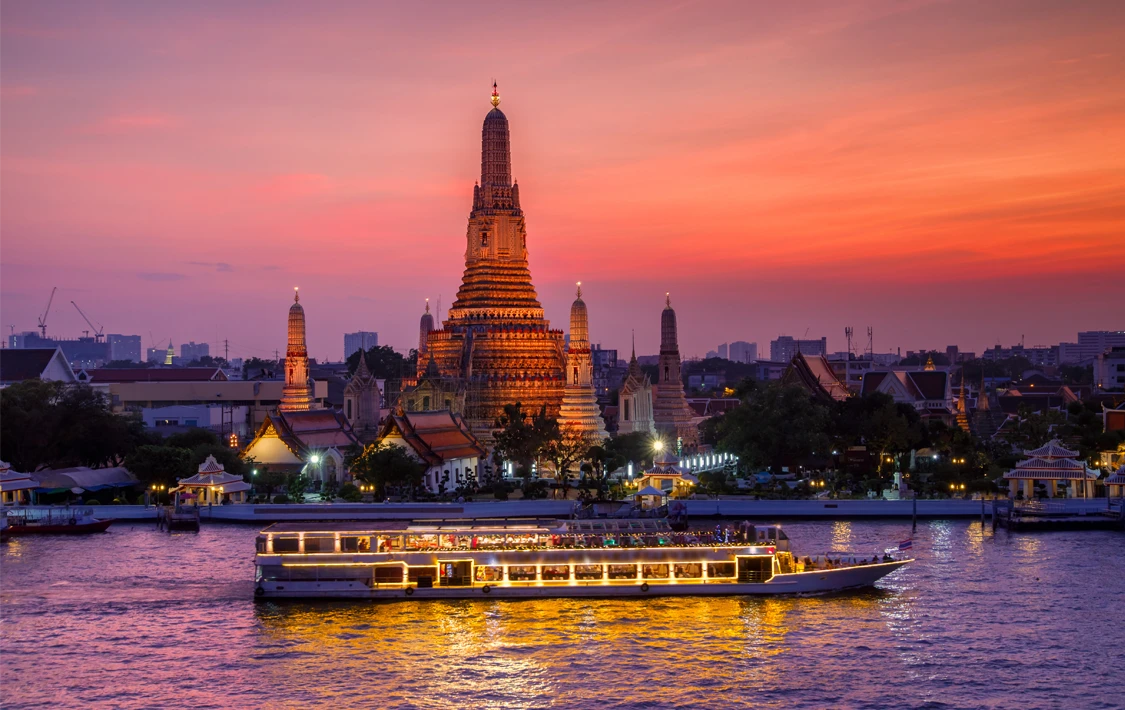
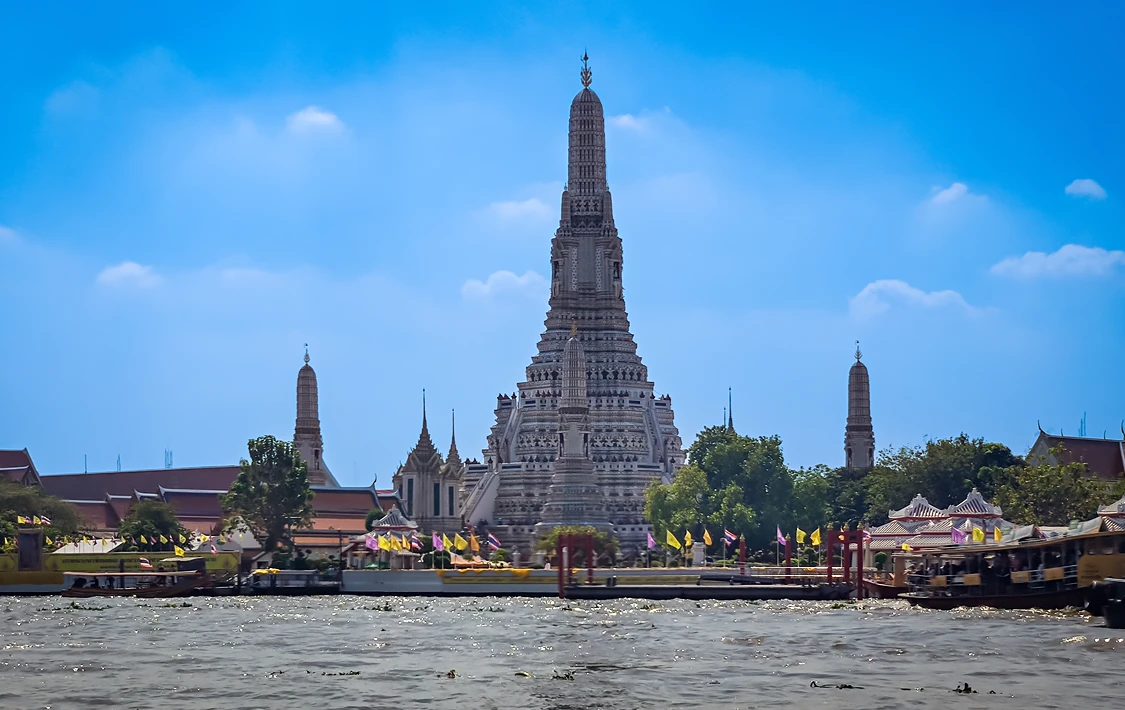
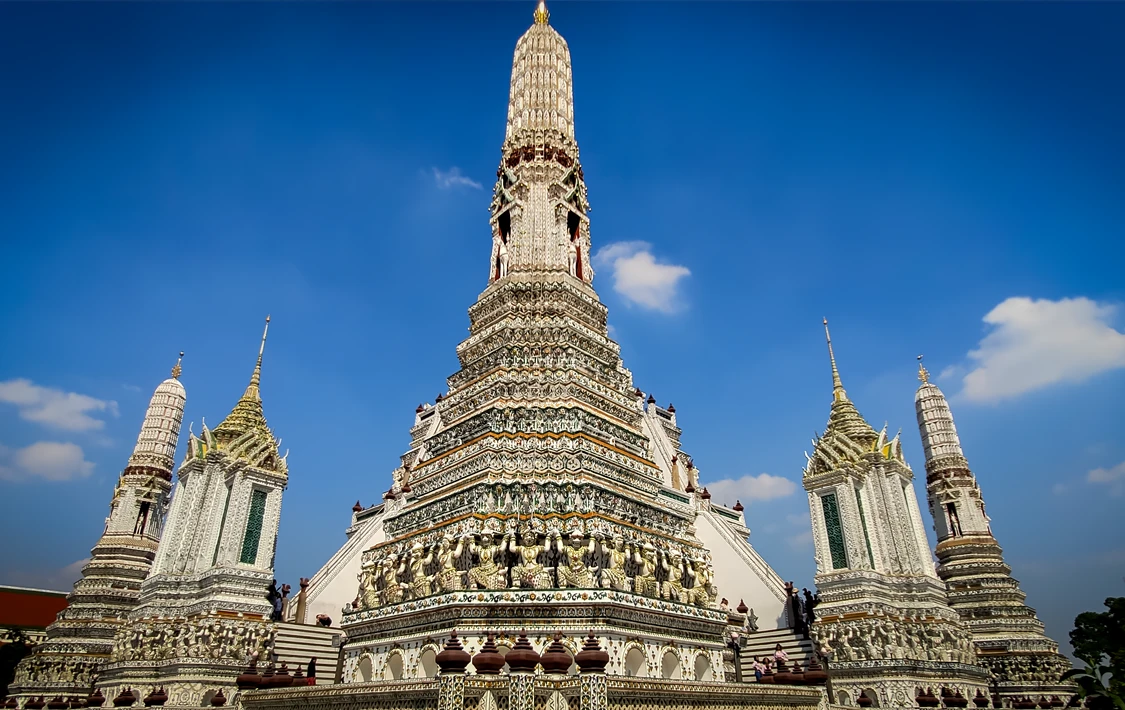

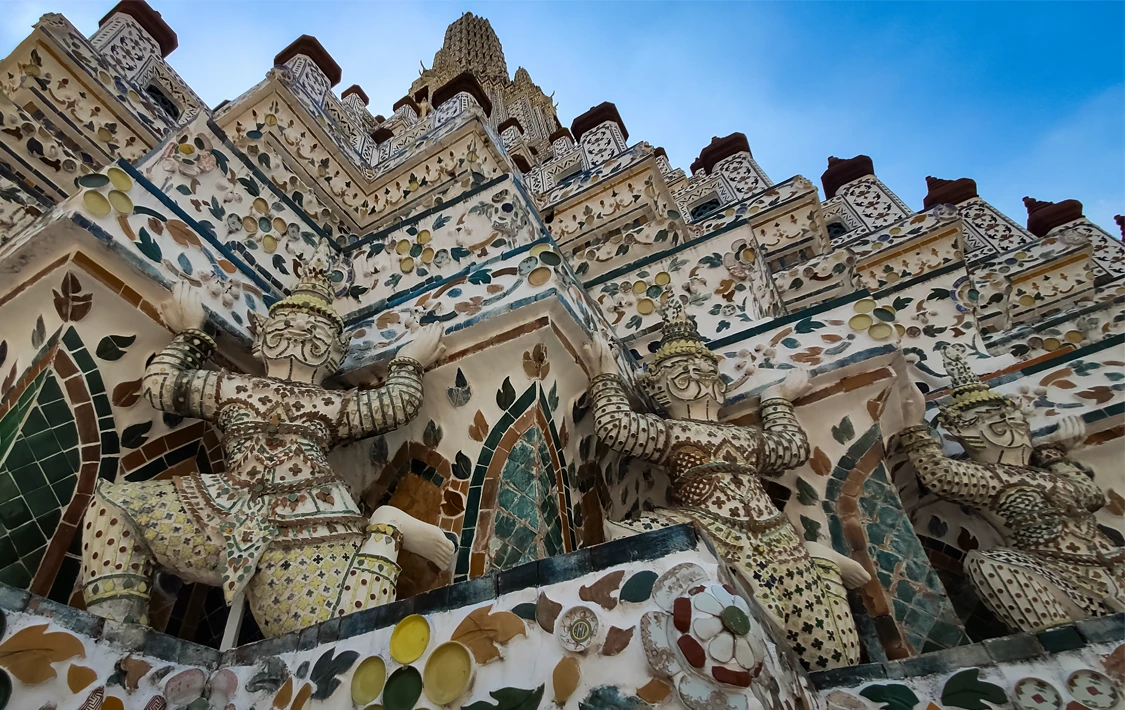
Wat Arun dates back to the 17th century and was dedicated to the Hindu god Aruna, the god of dawn. The architecture of the temple complex reflects the Buddhist universe. The main prang (temple tower) represents Mount Meru, the sacred mountain rising from the centre of the cosmic ocean. Surrounding Mount Meru are four continents, represented by four smaller prangs.
Why Wat Arun is a Bangkok highlight
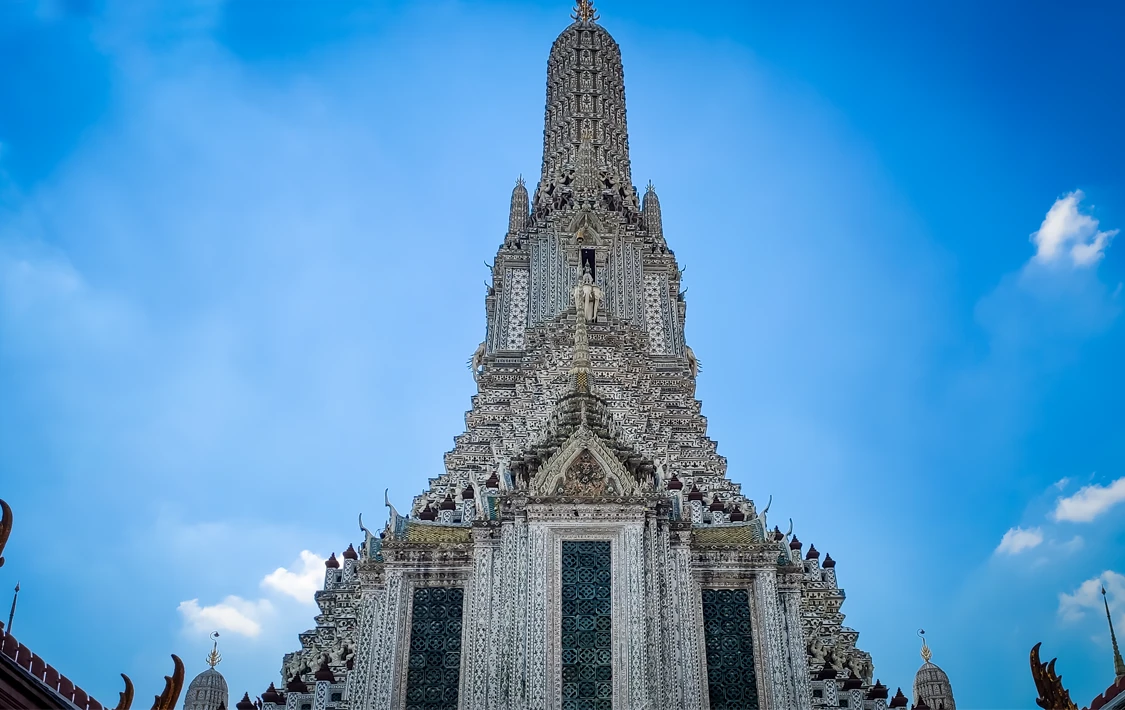
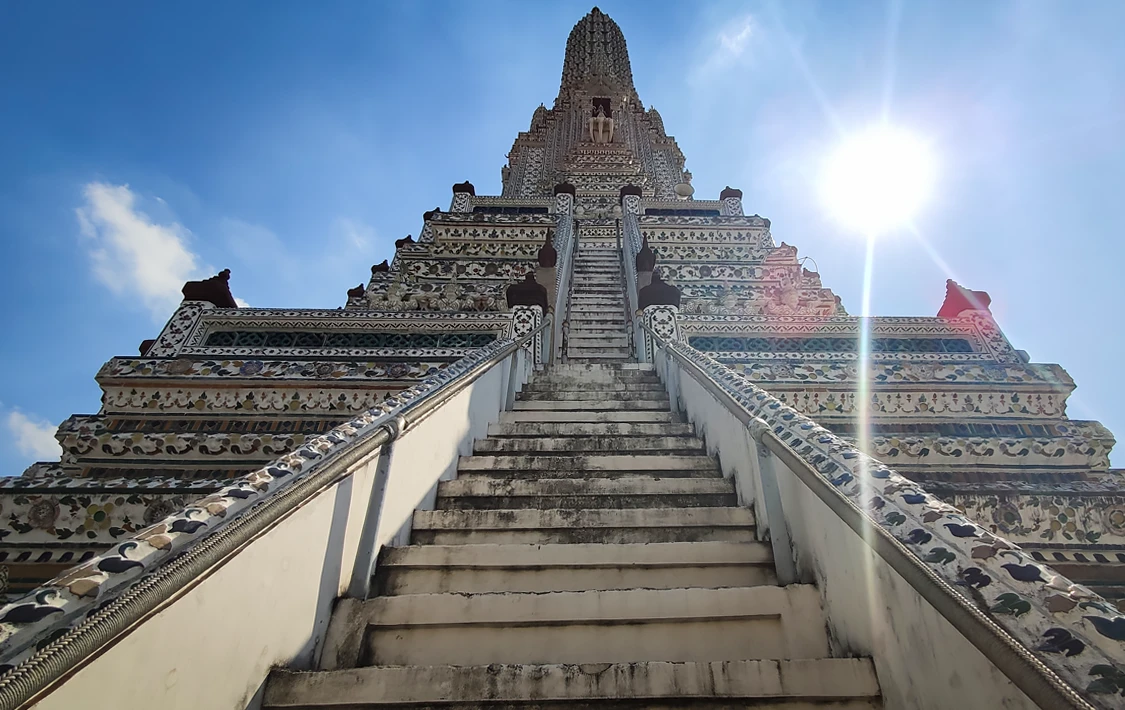
Temples in Thailand are usually covered in gold and shine brilliantly beneath the tropical sun. Wat Arun, however, presents itself in an entirely different style. The entire temple complex is intricately decorated with mosaics made from colourful Asian porcelain, shells, and glass fragments, creating an incredibly detailed and impressive appearance.
In total, around one million pieces were used to create floral patterns across the temple. According to legend, the builders eventually ran out of porcelain to complete the decoration. King Rama III then encouraged the population to donate broken porcelain from their homes, allowing Wat Arun to be finished in all its splendour.
Magnificent appearance
Thanks to its richly decorated façade, countless patterns, and mystical figures surrounding the structure, Wat Arun is, in my opinion, one of the most impressive temples in Thailand. Its appearance differs greatly from other Buddhist temples and makes it a truly unique masterpiece.
The approximately 80-metre-high central tower is visible from almost anywhere in the city and has become an iconic part of Bangkok’s skyline. During the evening hours, Wat Arun is beautifully illuminated and turns into a popular photography spot. Unsurprisingly, Wat Arun is also one of Bangkok’s most visited attractions.
Ordination Hall – Often overlooked by tourists
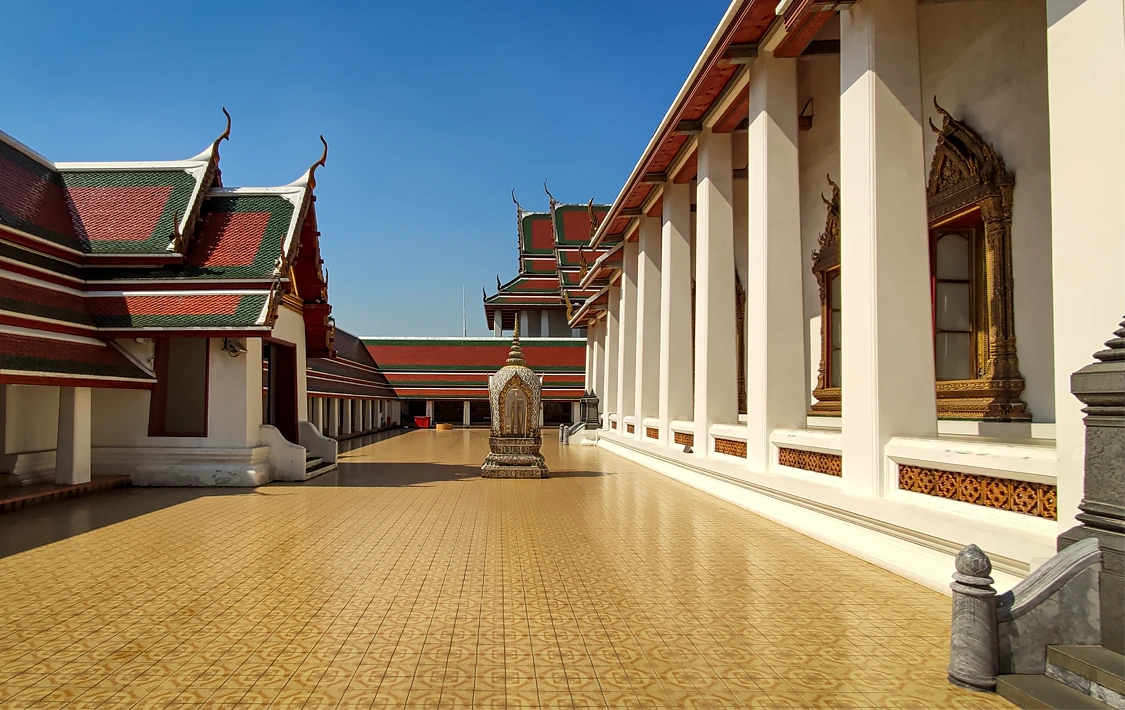
The Ordination Hall is located next to the main Wat Arun complex. Significantly fewer tourists make their way here, creating a much quieter atmosphere compared to the famous central prang. Personally, I find this surprising, as the area has an inspiring charm of its own.
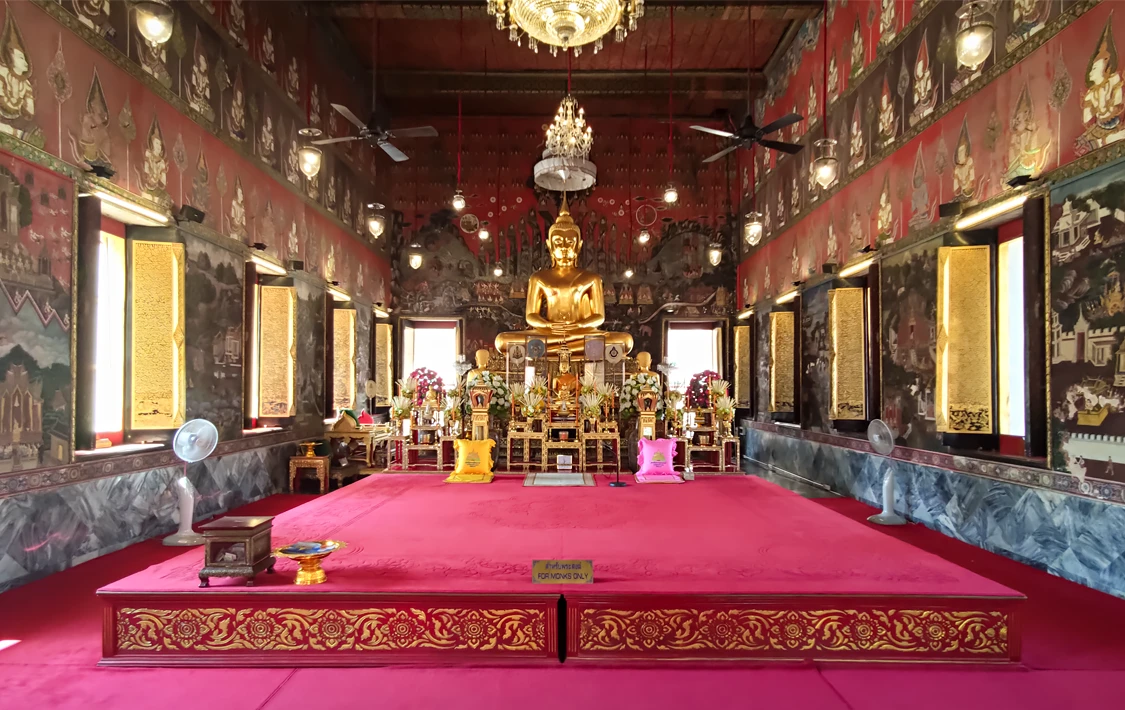
The complex is surrounded by walls topped with orange and green ceramic roof tiles, creating a beautiful and colourful contrast. At its centre stands the Ordination Hall, featuring remarkable murals that depict stories from the final ten lives of Buddha.
Useful Information About
4. Wat Saket / Golden Mount – Climb 318 Steps for the Perfect View over Bangkok
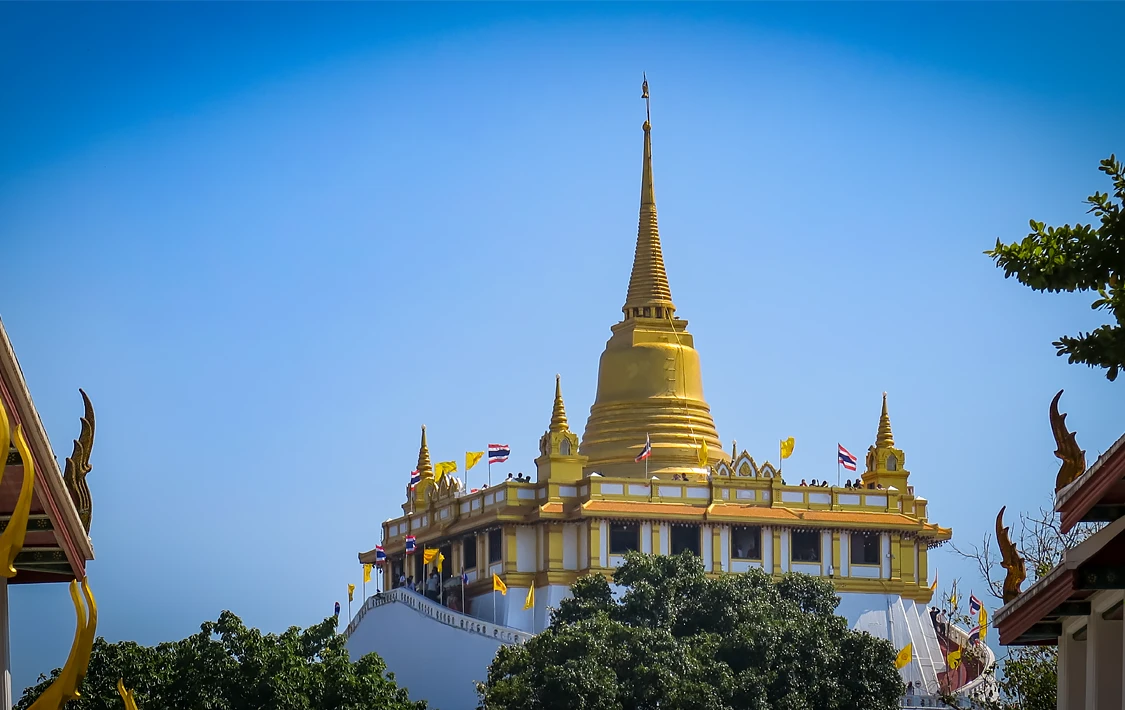
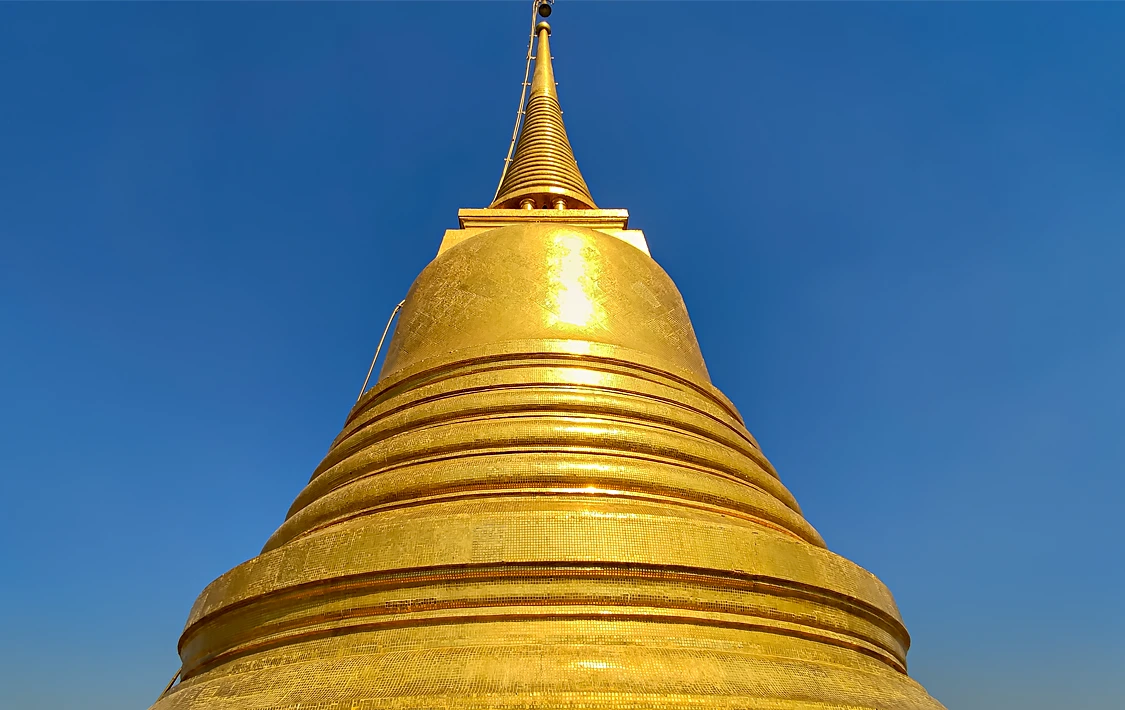
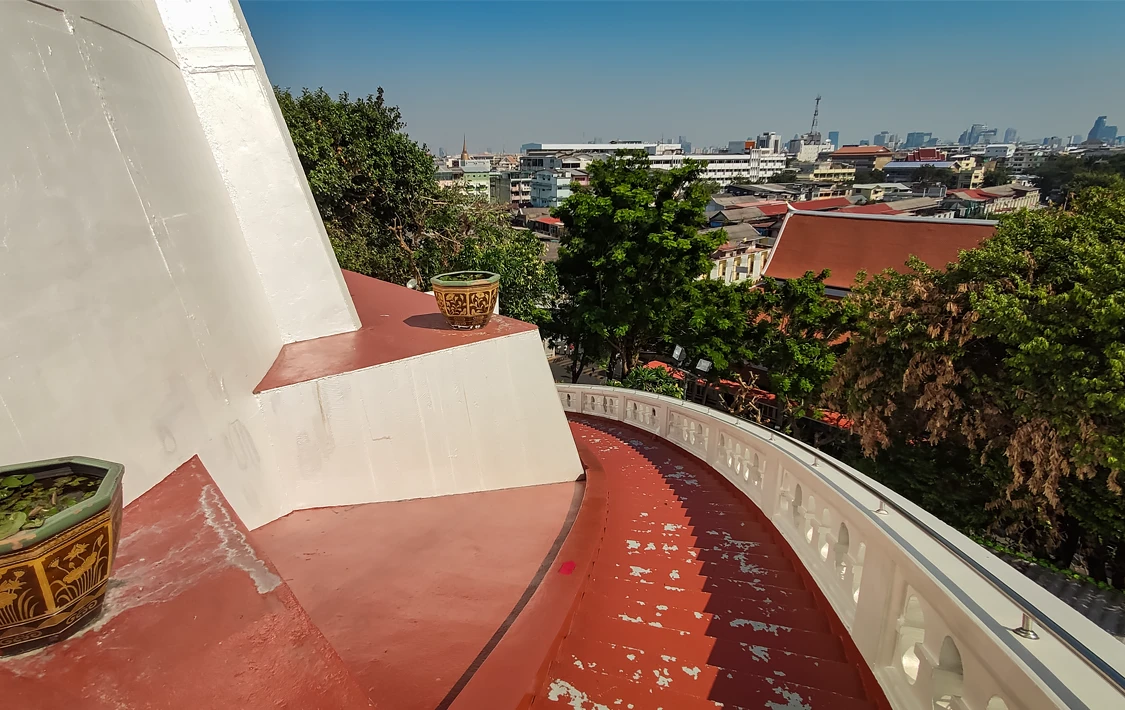
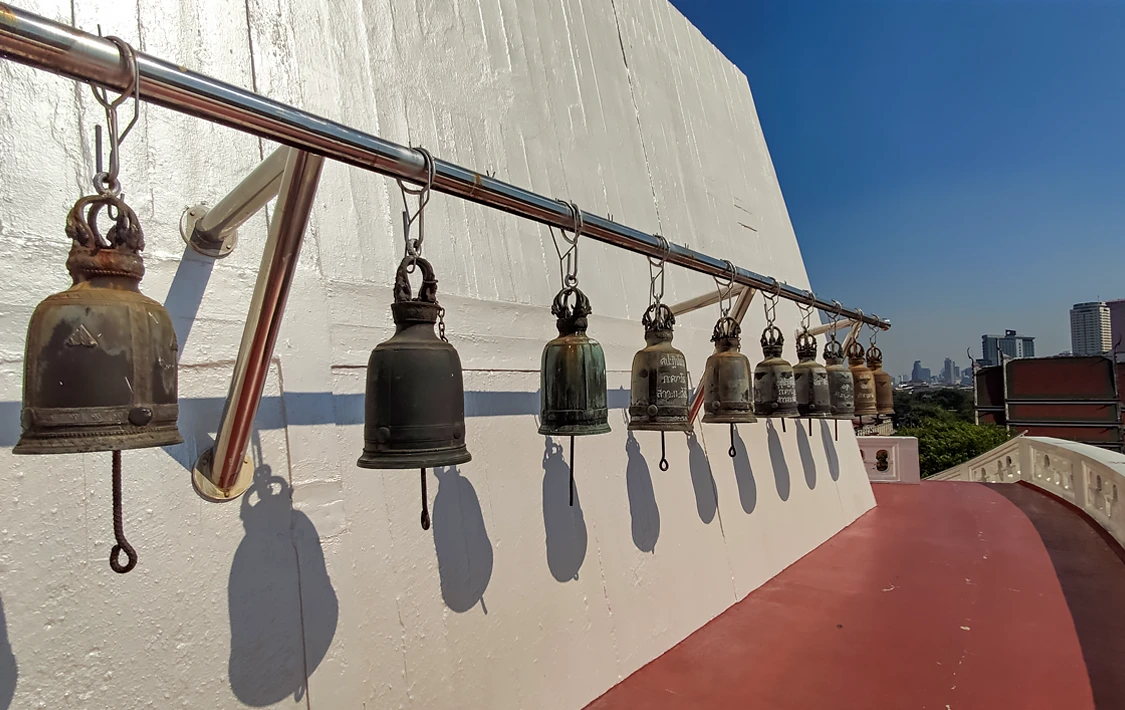
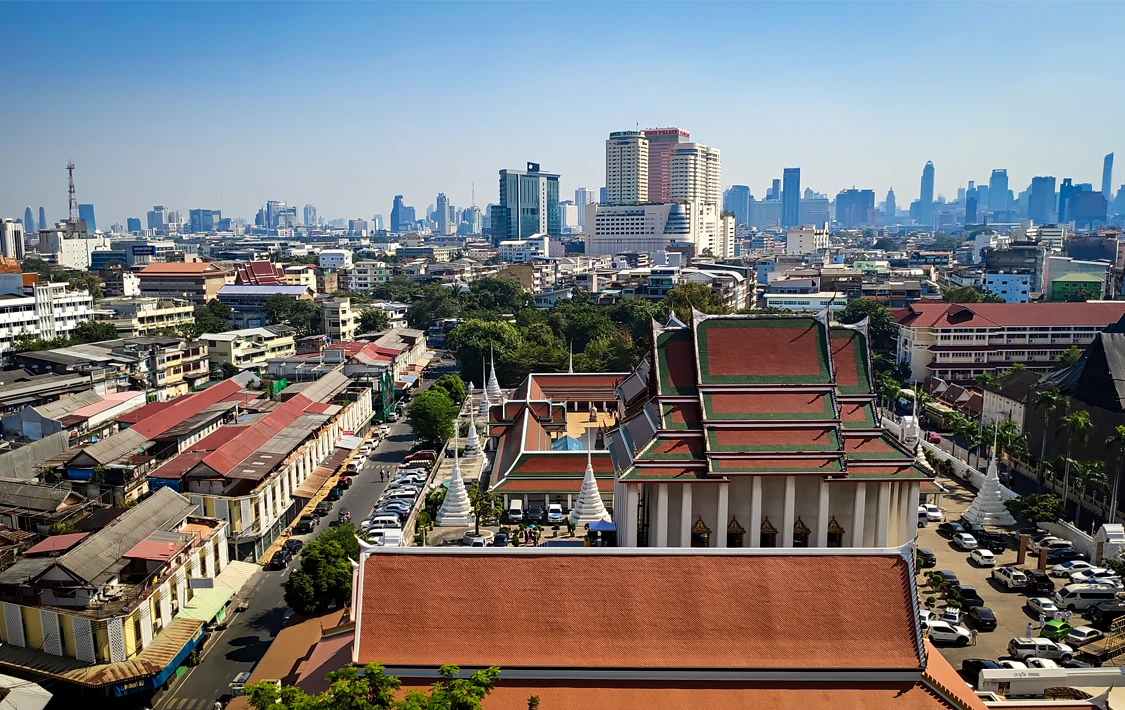
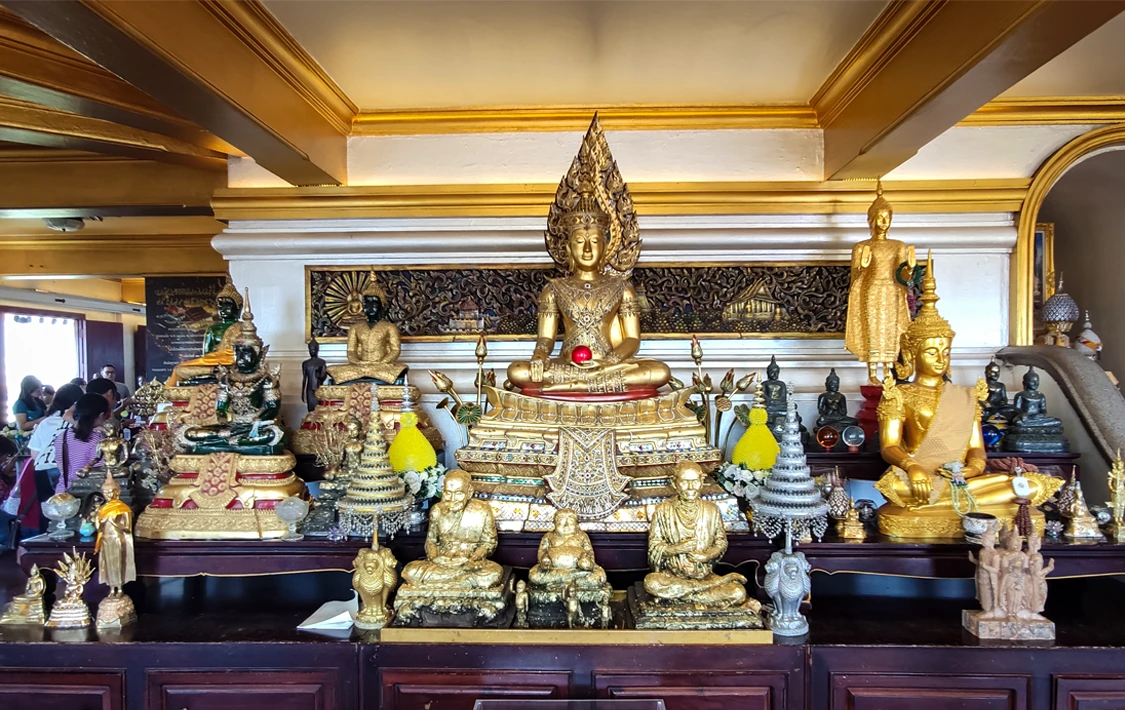

Wat Saket is located on an artificial hill at an elevation of 79 metres. Even the climb to the temple via the 318 steps is a highlight in itself. As you make your way up, you will pass artificial streams, religious statues, and Buddha figures. All of them are surrounded by beautiful greenery and create a peaceful and spiritual atmosphere.
Buddhist prayers, bells, and gong sounds echo through loudspeakers, further enhancing the mystical ambience of this place. If you get hungry or thirsty, there is also a small café along the way where you can take a break.
Spectacular views over Bangkok
At the summit of Golden Mount sits the temple with its golden chedi as the main attraction. After conquering the staircase challenge, you are rewarded with breathtaking views. Since Bangkok is mostly flat, Golden Mount, at 79 metres high, provides an excellent viewpoint overlooking Thailand’s capital.
Touristy, but not overcrowded
Wat Saket on Golden Mount is one of Bangkok’s top attractions and appears on many travel itineraries. Compared to major must-sees such as the Grand Palace, Wat Phra Kaew, Wat Pho, and Wat Arun, however, significantly fewer tourists visit this temple.
As a result, the atmosphere at Wat Saket feels much more relaxed. If you want to avoid the crowds of Bangkok’s most famous attractions, Wat Saket is a fantastic alternative!
Useful information about Wat Saket Temple
5. Wat Ratchanatdaram – Thailand’s Only Metal Temple
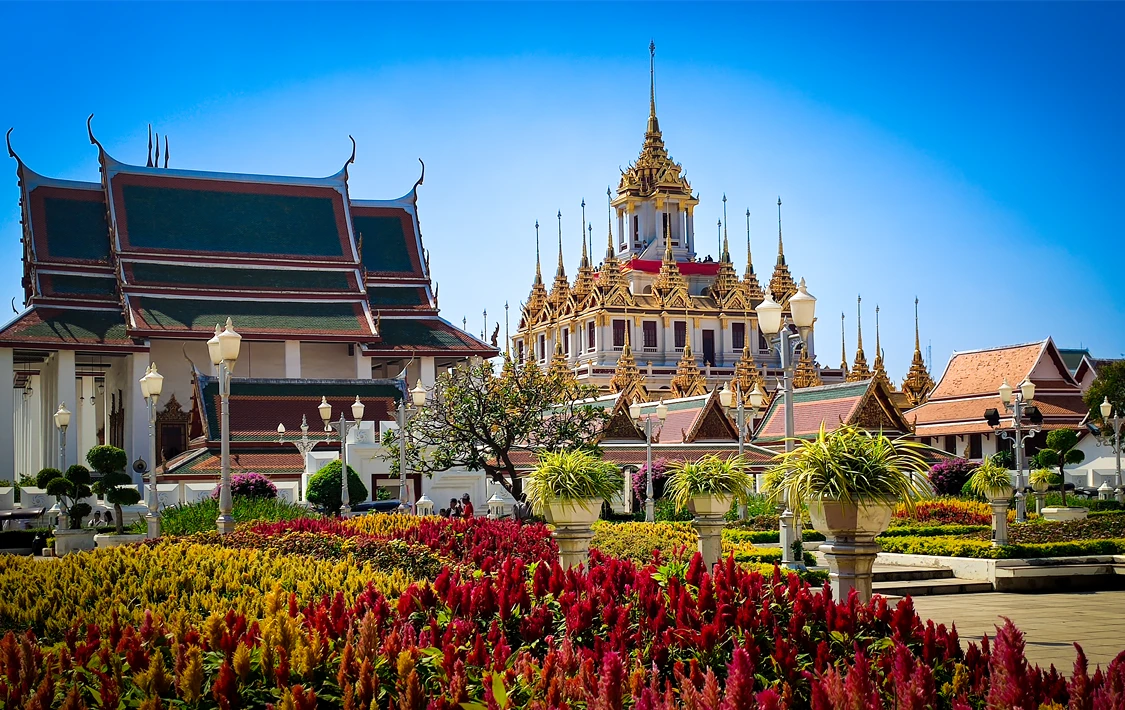
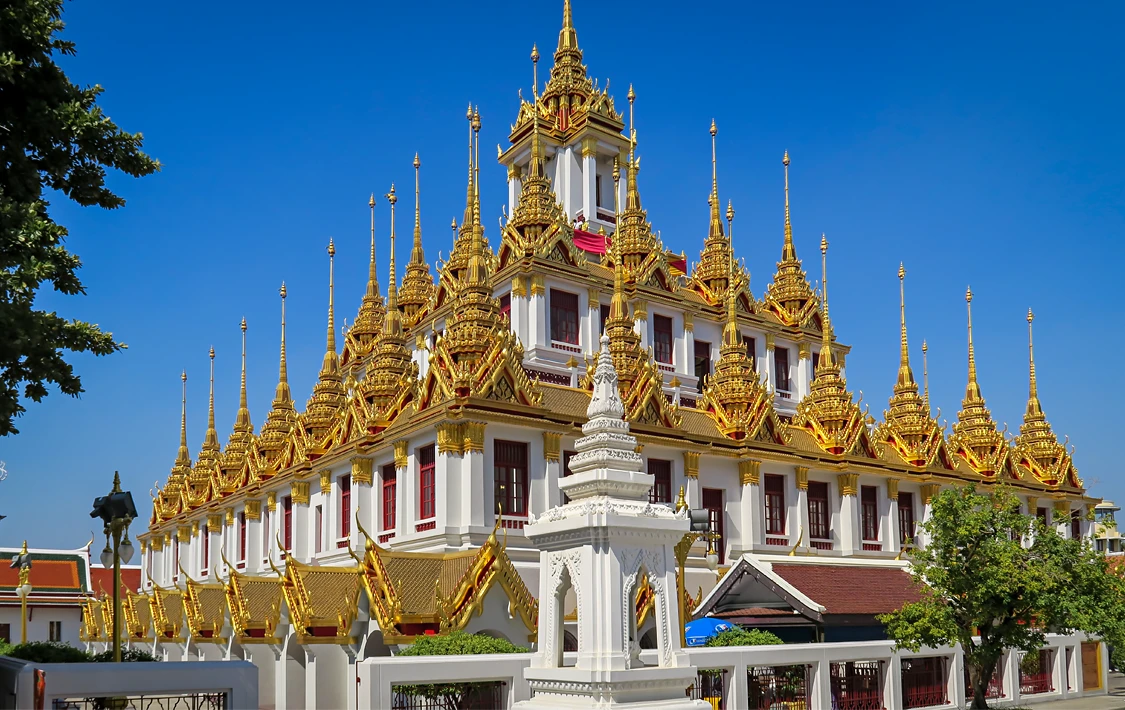
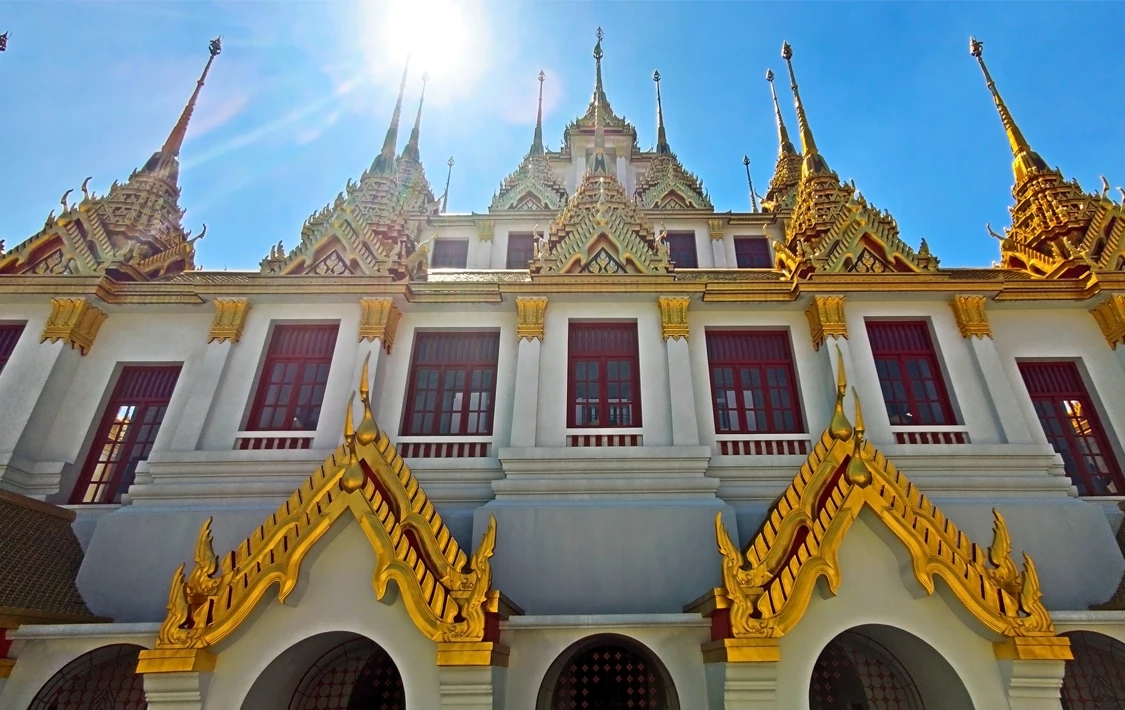
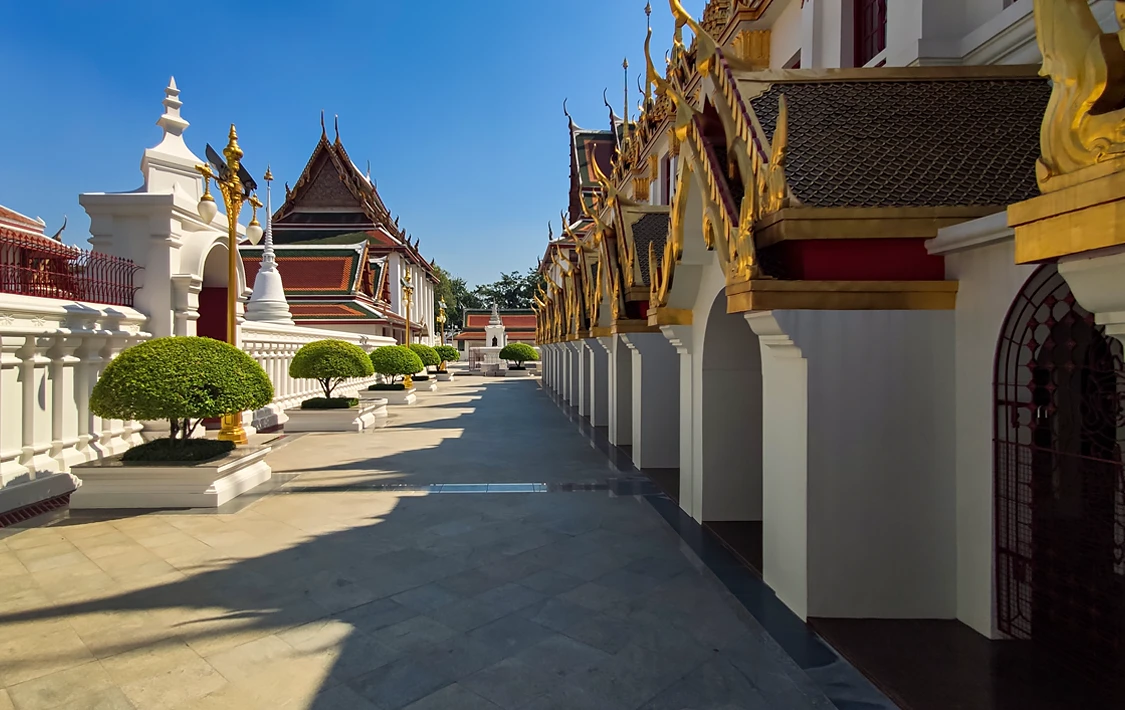

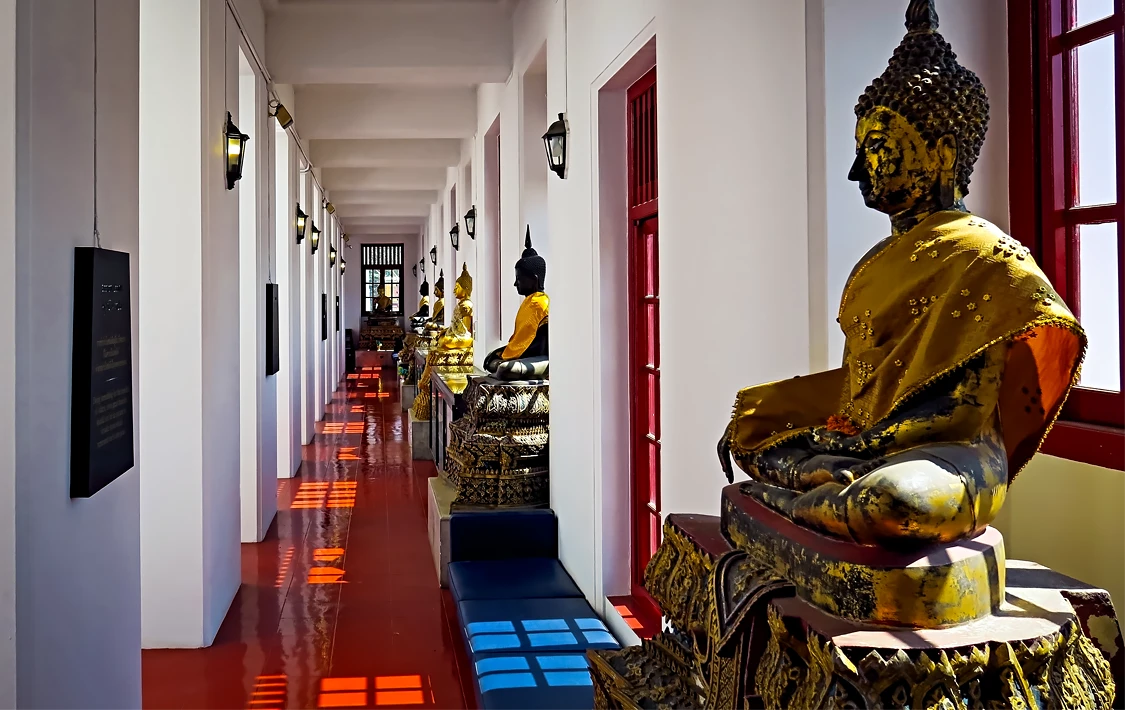
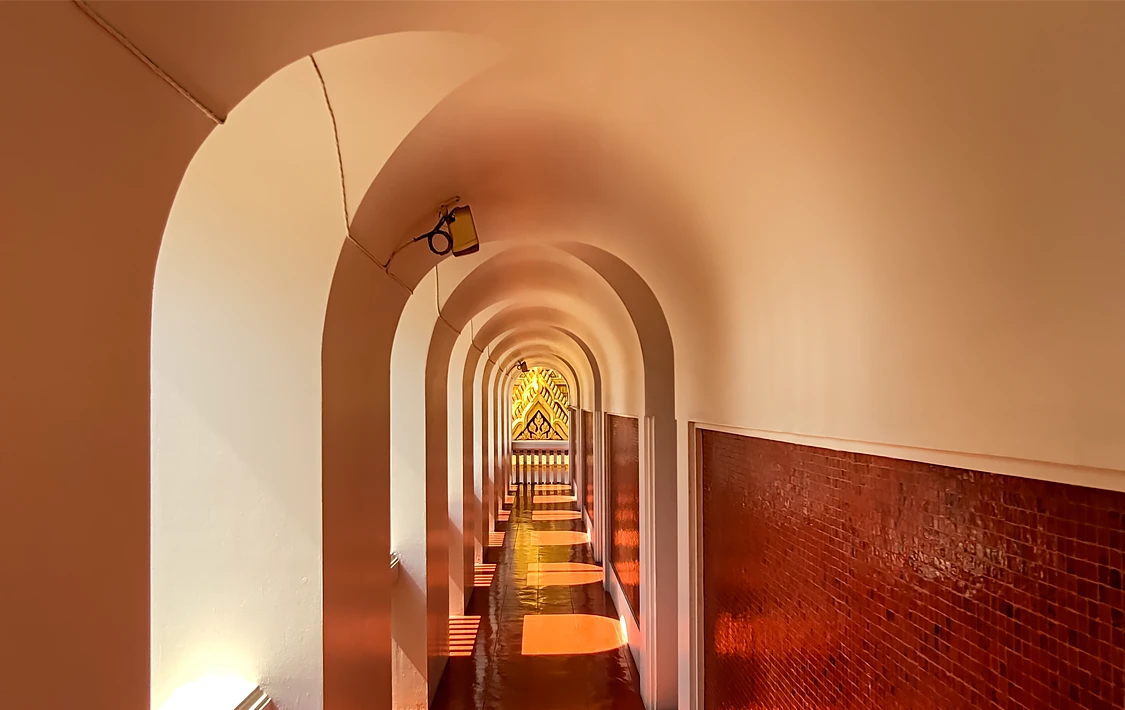
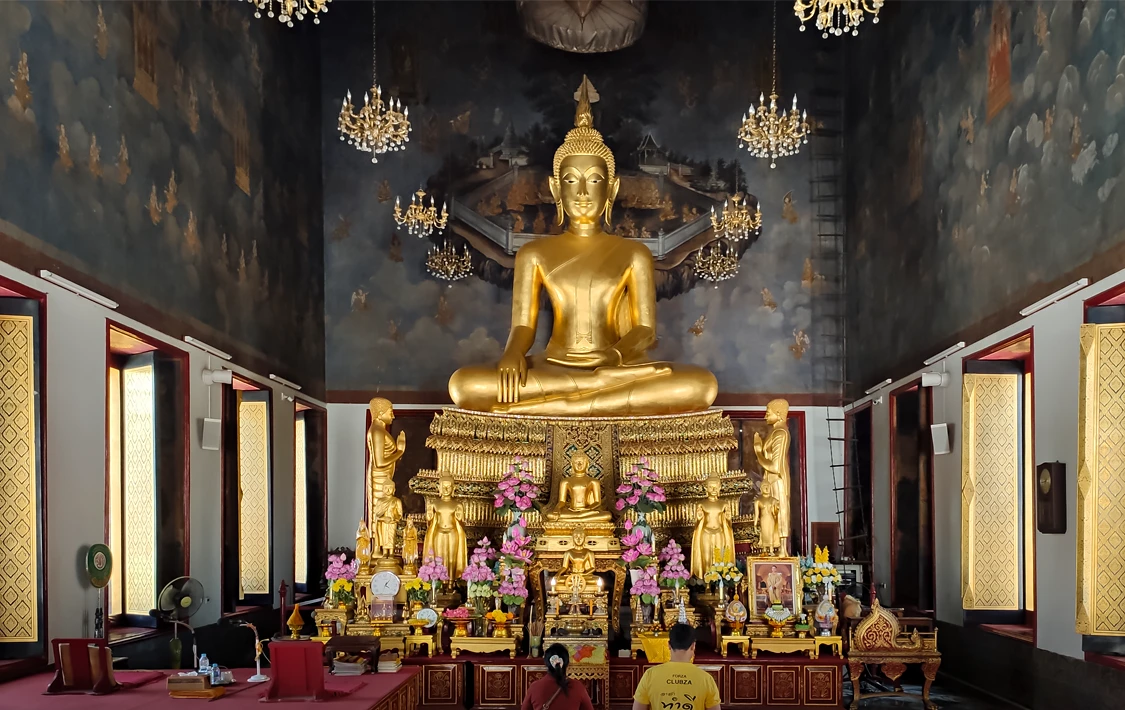
Wat Ratchanatdaram roughly translates to “Temple of the Royal Niece”. The temple was built by King Nangklao (Rama III) in 1846 to provide his niece with a peaceful environment for meditation. The main highlight of Wat Ratchanatdaram is the iron castle known as Loh Prasat.
Architecturally, the metal palace resembles a three-tiered pyramid, which is highly unusual for Buddhist temples. The structure rises 36 metres high and is surrounded by 37 metal chedis (towers). These towers represent the 37 virtues that, according to Buddhism, must be followed to achieve ultimate enlightenment.
Today, the temple is the only one of its kind in the world and is therefore included on the UNESCO World Heritage list. Together with the beautifully landscaped gardens filled with flowers and plants, Loh Prasat is an unforgettable sight. Personally, Wat Ratchanatdaram ranks among the best Bangkok attractions.
Architectural masterpiece
The interior of the temple is architecturally fascinating and resembles a labyrinth of narrow corridors and passageways. You will encounter numerous meditation spaces, Buddha quotes, and vaulted ceilings.
With its red tiled floors, golden decorative elements, and white façade, the temple creates a contrasting and deeply spiritual atmosphere – truly impressive!
Fantastic views & hardly any tourists
The temple complex extends across seven levels. The highest floor features an interesting rooftop terrace. From the top level, you can overlook the entire Wat Ratchanatdaram complex and enjoy fantastic views all the way to Wat Saket, as well as a 360-degree panorama over Bangkok.
As the temple is not among Bangkok’s best-known tourist attractions, the atmosphere remains pleasantly quiet. During my visit, only a few people were exploring the temple, allowing me to enjoy my discovery tour in a relaxed setting.
If you want to escape Bangkok’s tourist crowds, then Wat Ratchanatdaram is an impressive alternative worth visiting.
Useful information about Wat Ratchanatdaram Temple
6. Wat Intharawihan – Big Buddha Temple
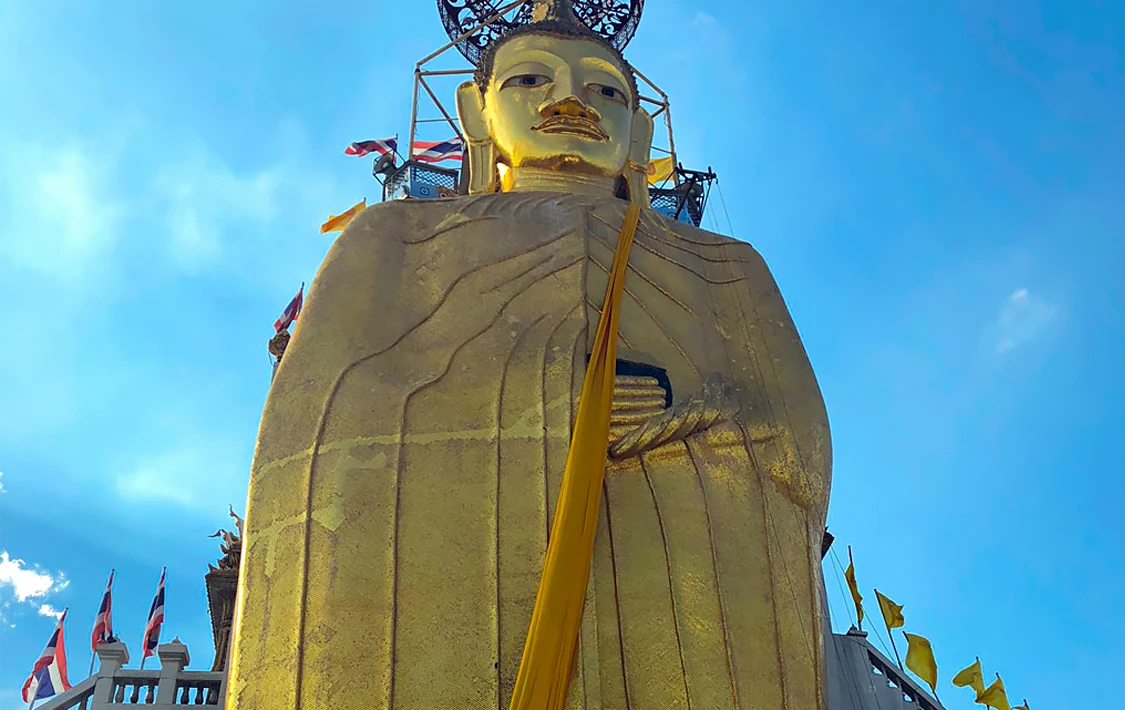
Wat Intharawihan is especially known among tourists who have fallen into the trap of the dubious tuk tuk offers near the Grand Palace. Tourists are often tempted with extremely cheap city tours, which usually include Wat Intharawihan, also known as Big Buddha Bangkok.
Typically, you are first driven to a small temple nearby, then to a tailor shop for custom suits, where the driver receives a generous commission, and finally to Wat Intharawihan. At that point, the driver often disappears and informs one of his “colleagues” that tourists have been left there. Unsurprisingly, another tuk tuk driver then appears outside the temple and kindly offers a ride back to your hotel at heavily inflated prices.
So be careful and avoid such offers!
32-metre-high Buddha statue & impressive murals
Fortunately, you can also visit the temple independently. The main attraction of this rather overlooked temple is the 32-metre-high Buddha statue, also known as Luang Pho Tho.
Construction of the statue began as early as 1867 but had to be interrupted several times due to financial difficulties, meaning it was only completed in 1967. According to legend, part of Buddha’s ashes is kept inside the statue, donated by monks from Sri Lanka in 1978.
Within the smaller temple buildings, you can also admire several remarkable and impressive murals.
Useful information about the temple
7. Khao San Road – Probably the Loudest Corner of Bangkok
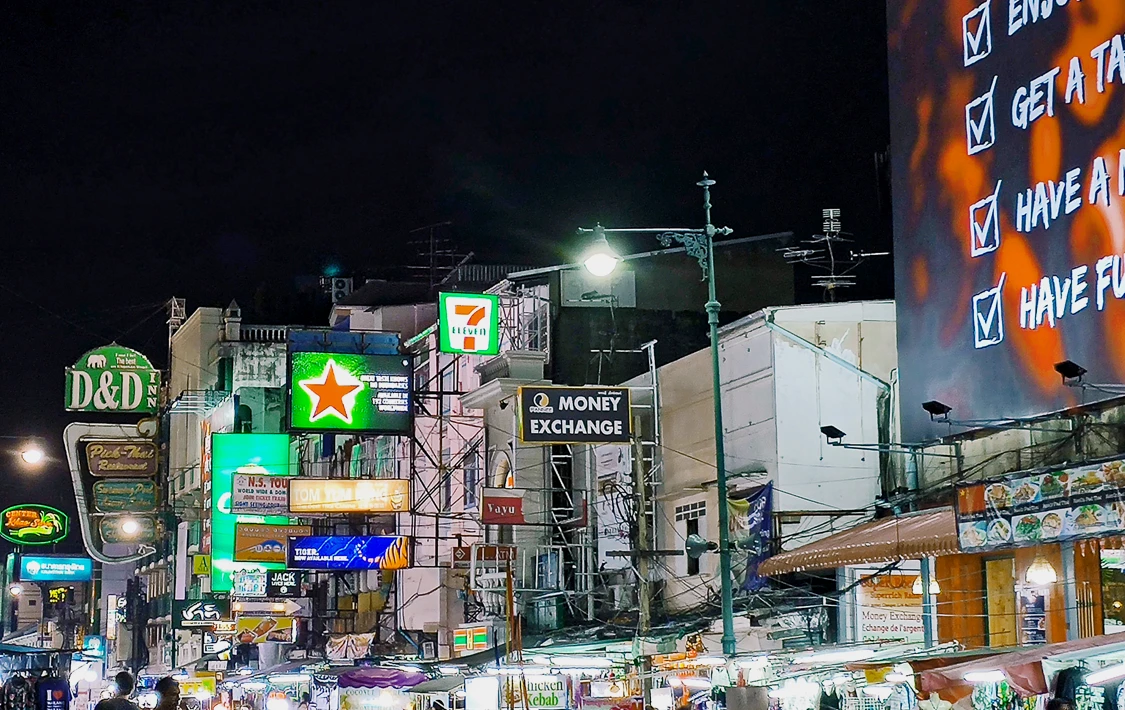
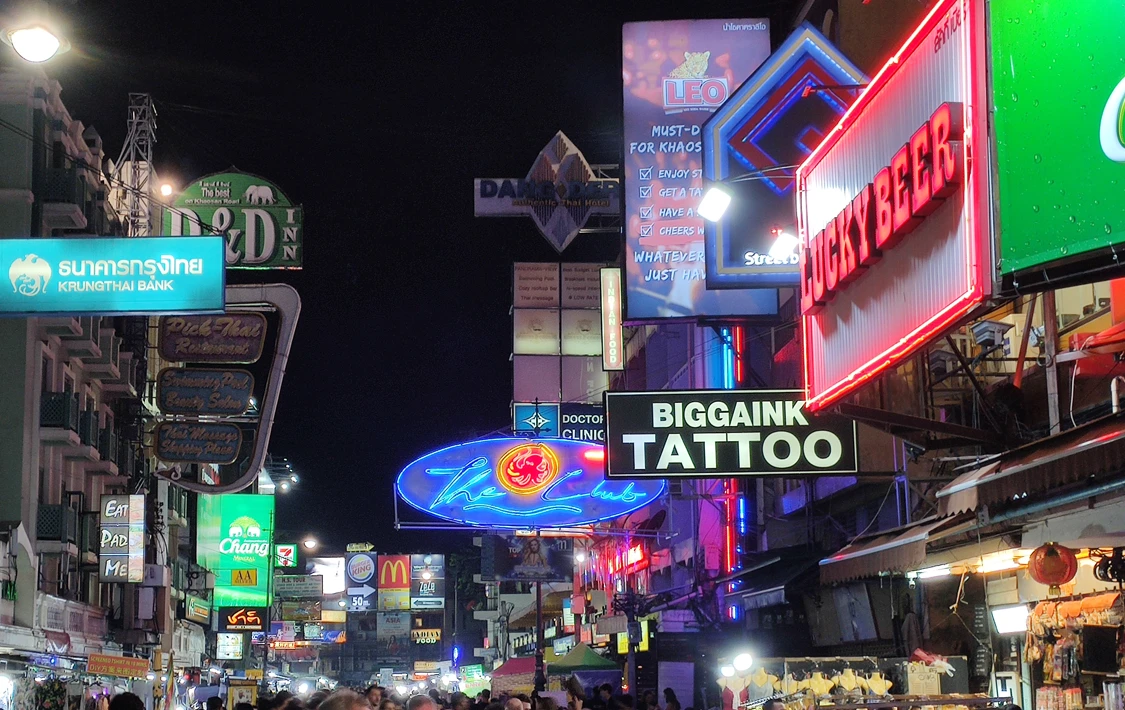


Once upon a time, the approximately 400-metre-long Khao San Road was mainly popular among backpackers, but today this car-free street is no longer a hidden gem. Quite the opposite, Khao San Road has become one of Bangkok’s most touristy places.
The lively street is packed with life, whether restaurants, bars, street food, stalls selling counterfeit branded goods, ping pong show offers, or massage studios. Khao San Road offers an incredibly diverse range of entertainment. Along this tourist-oriented street, you will even find scorpions, spiders, insects, and crocodile meat sold for consumption, as well as laughing gas to boost your party mood.
Loud, bizarre and somehow magical
Loud music and heavy bass blast from the bars lining Khao San Road. At times, it almost feels like there is an unofficial competition over which venue has the loudest sound system. As a result, every bar tries to drown out the music coming from its neighbours.
Even though Khao San Road resembles a carnival, attracts enormous crowds, and offers some bizarre experiences and eccentric characters, it still has a strangely magical atmosphere. The feeling created by the countless neon lights, exotic scents, endless nightlife options, and loud music filling the street is unique and definitely something you should experience at least once.
Khao San Road is considered one of Bangkok’s most popular attractions among Western tourists.
Useful information about Khao San Road
8. Ramputtri Road – Relaxed and Laid-Back Atmosphere
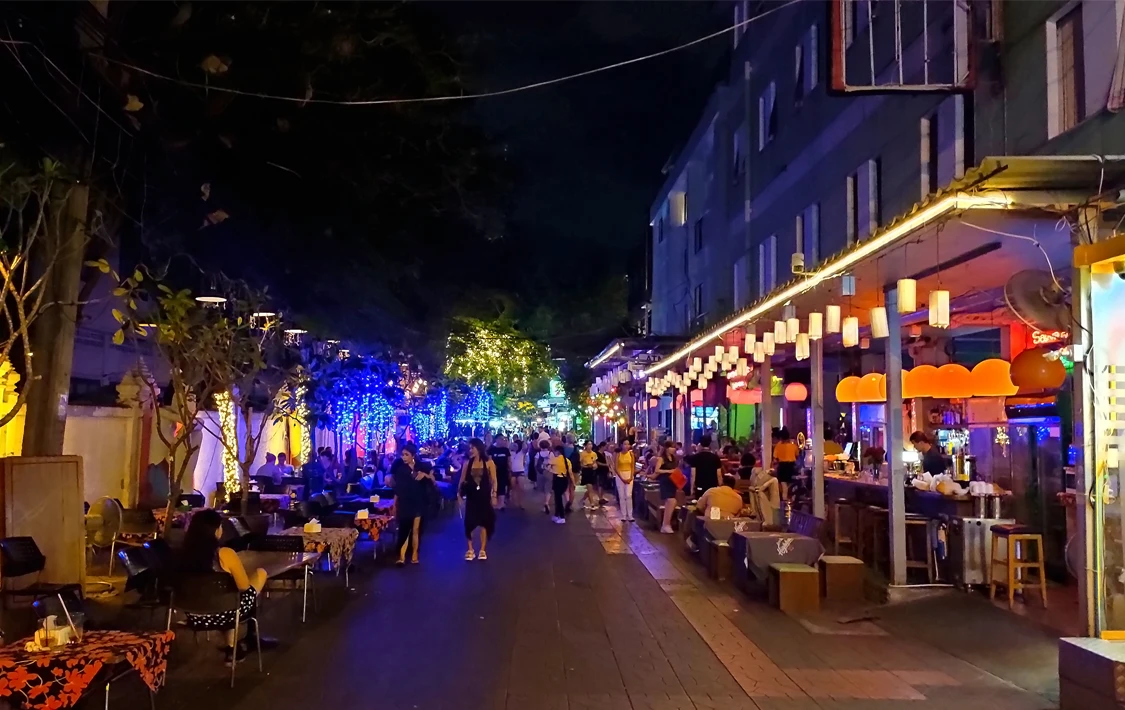
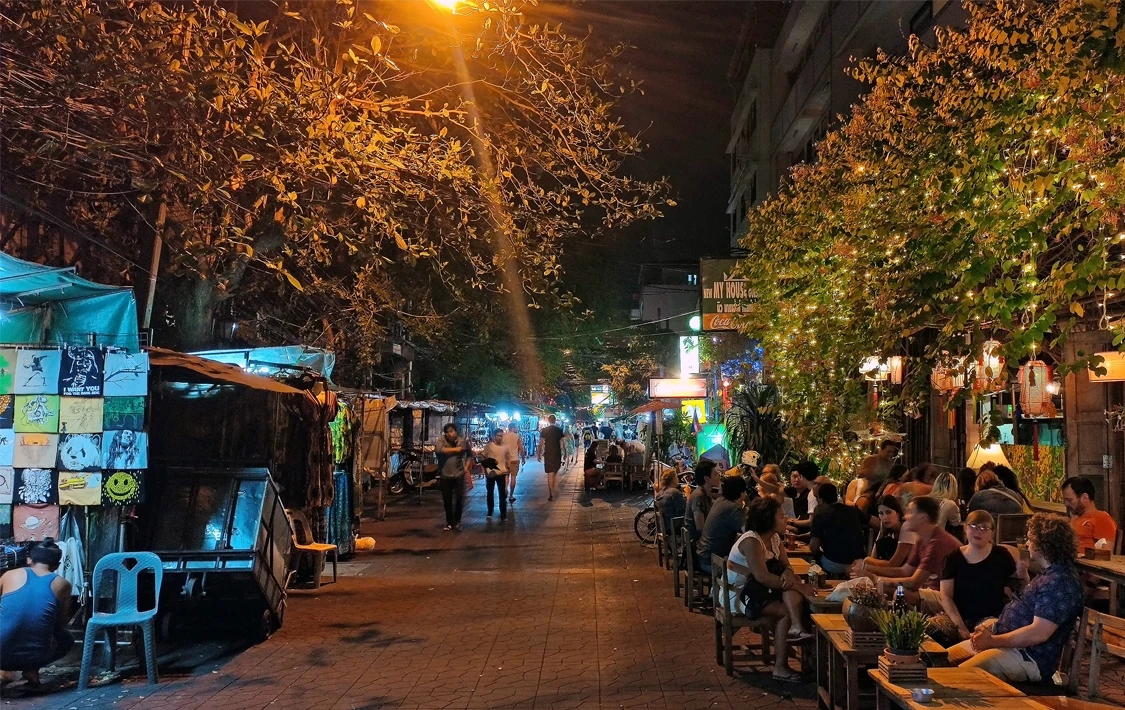
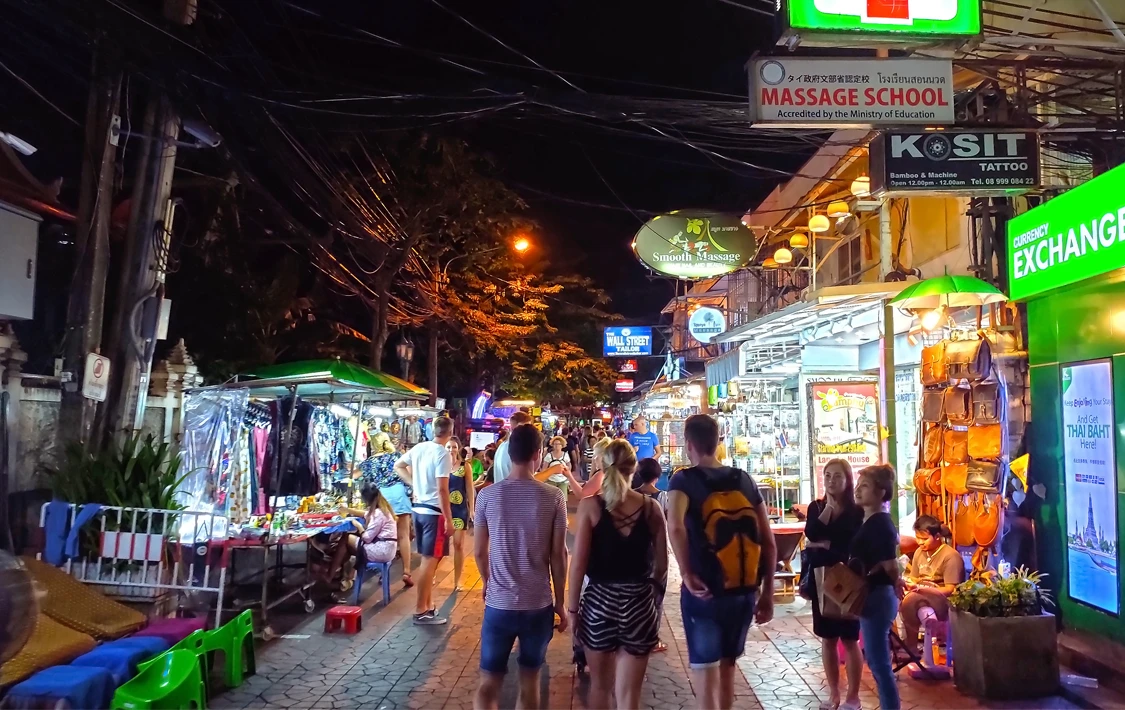
Even though Khao San Road enjoys immense popularity and attracts huge numbers of visitors, its approximately 400 metres of length make space somewhat limited. As a result, nearby Ramputtri Road has developed into another hotspot in Bangkok.
The U-shaped street runs alongside a temple complex, meaning that one side of your walk is constantly bordered by a white temple wall. Compared to Khao San Road, Ramputtri Road is noticeably quieter. The many inviting restaurants offer a wide variety of Asian dishes.
With its abundant lighting, the street creates a relaxed and chilled atmosphere and somewhat resembles the Khao San Road of earlier times.
Combine your Ramputtri Road visit with Khao San Road
Since Ramputtri Road is located just around the corner from Khao San Road, I recommend combining both visits. The best time to come is in the evening, enjoy a delicious dinner here, and then continue with a stroll or a drink on the more eccentric Khao San Road.
Useful information about Ramputtri Road
9. Chinatown Bangkok – The Vibrant and Chaotic District
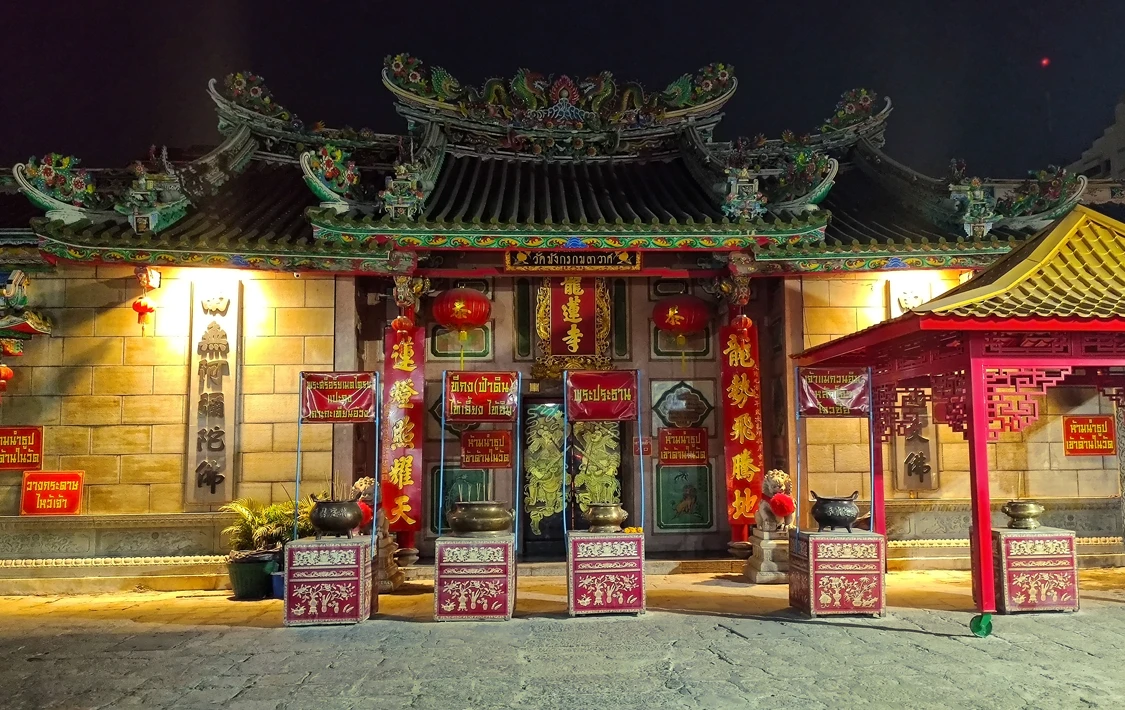
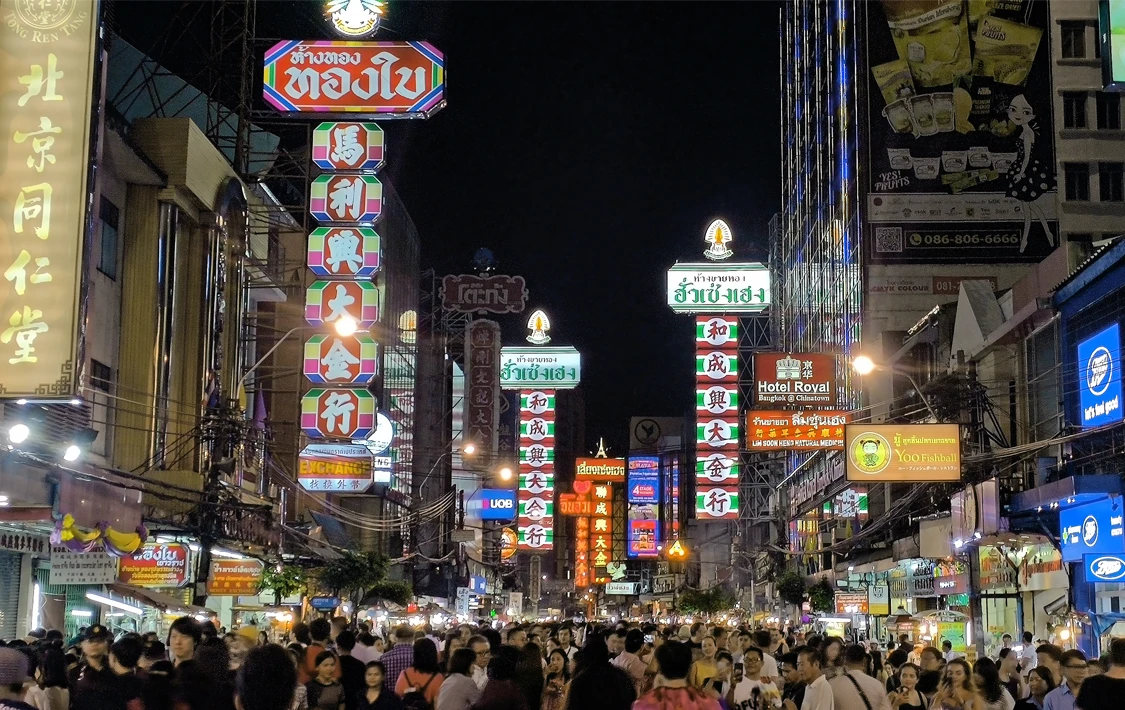
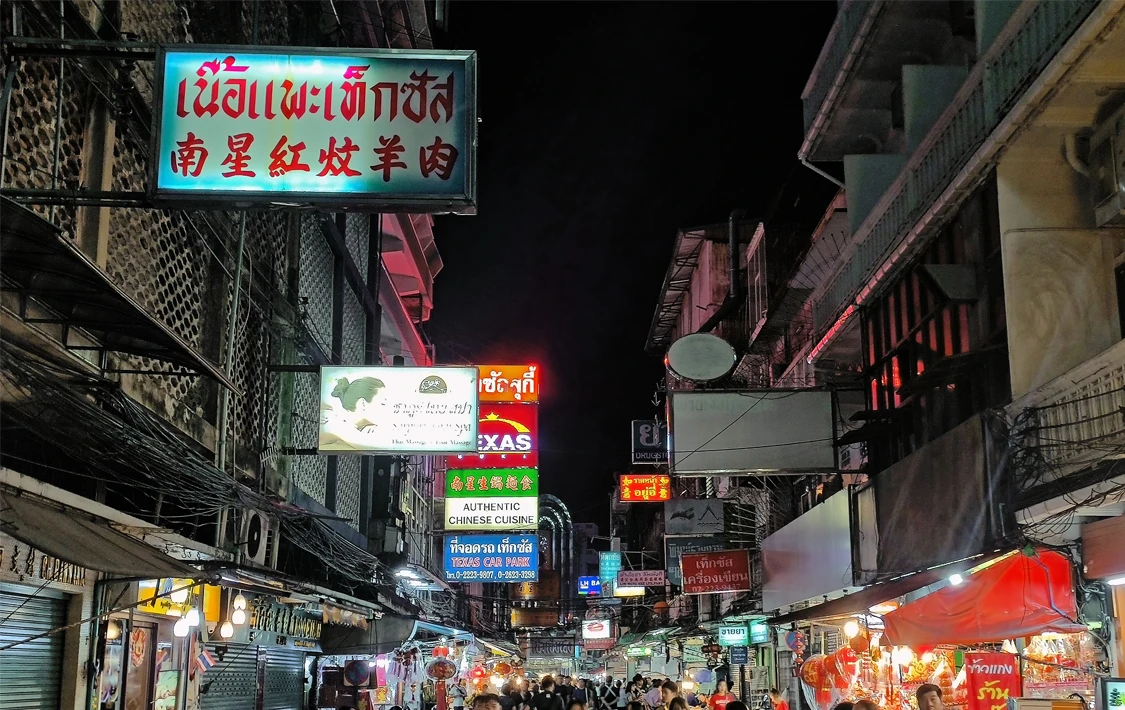
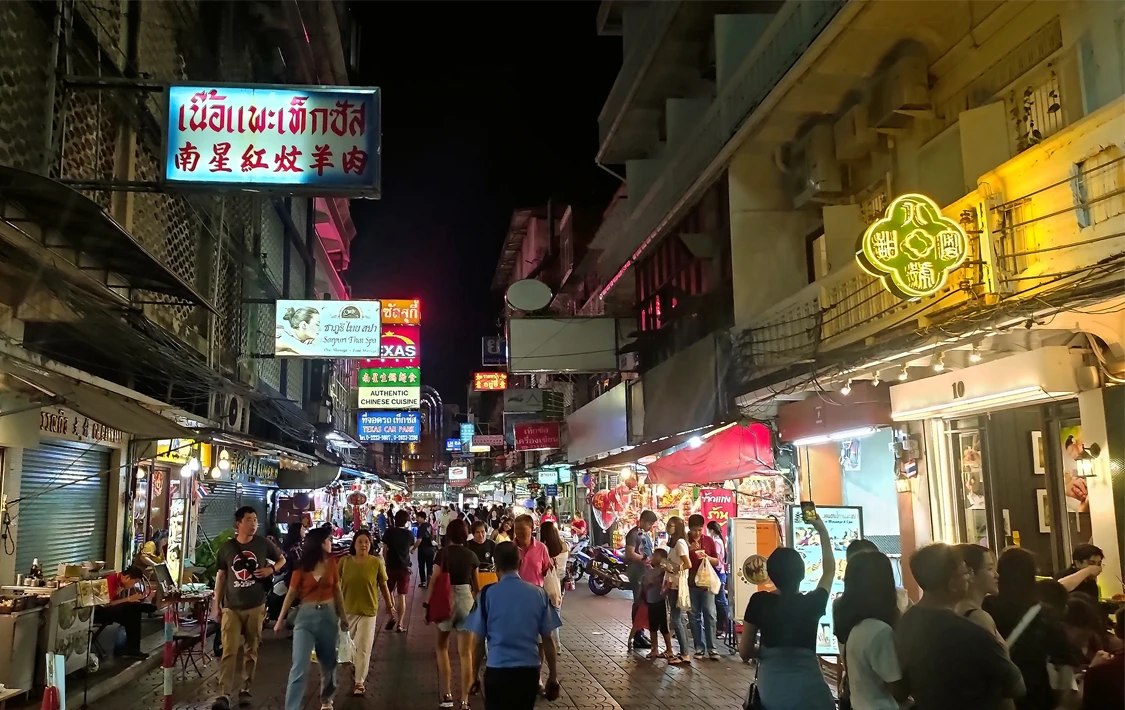
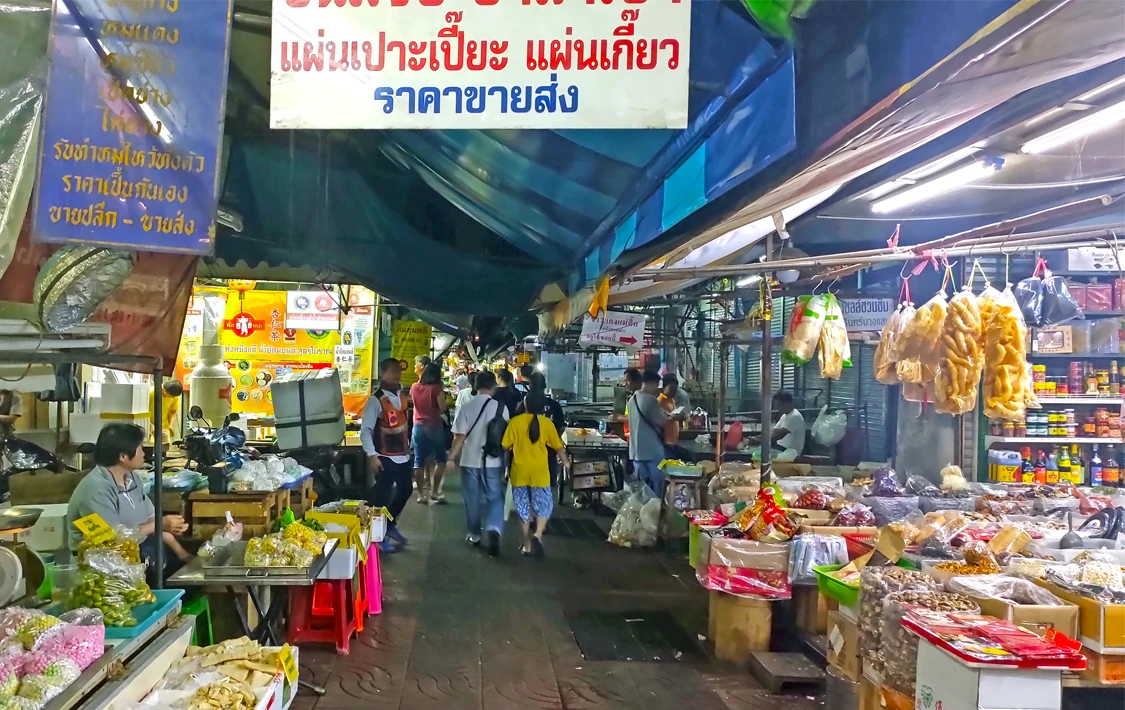

Bangkok’s Chinatown is one of the largest overseas Chinese communities in the world and presents itself as lively, colourful, and wonderfully chaotic. There is so much to discover in Chinatown that an entire travel guide could easily be dedicated to this district alone. If you want to explore all attractions, one day will hardly be enough.
Plan your Chinatown visit for the weekend
If possible, I recommend visiting Chinatown on a weekend evening. During weekends, large sections of Yaowarat Road are closed to traffic and transformed into pedestrian zones.
This street is an excellent starting point for your Chinatown adventure, especially if your time is limited. Along chaotic Yaowarat Road, you will pass colourful neon signs, food stalls, street food vendors, markets, and gold shops. Compared to the Western world, stepping into Yaowarat Road feels like entering a completely different universe.
Chinatown as a labyrinth
The labyrinth-like layout of Chinatown makes Yaowarat Road such a good starting point because countless narrow alleys branch off from here. Each of these side streets has its own charm and offers a wide variety of street markets.
Simply let your senses guide you…
Temples in Chinatown
Chinatown is home to several smaller temples, most of them built in traditional Chinese style. The most impressive among them is Wat Traimit, which is said to house the world’s largest Buddha statue made entirely of solid gold.
The statue stands three metres tall and weighs an astonishing 5.5 tonnes!
Useful information about Chinatown
10. Baiyoke – Spectacular Views over Bangkok
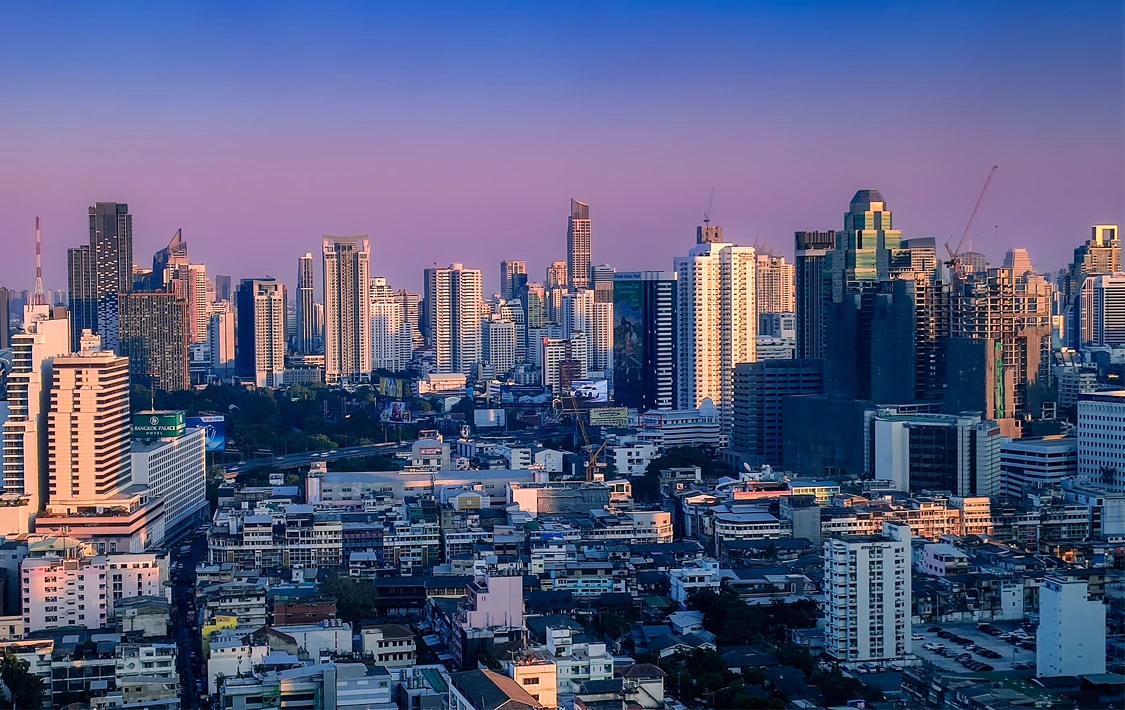

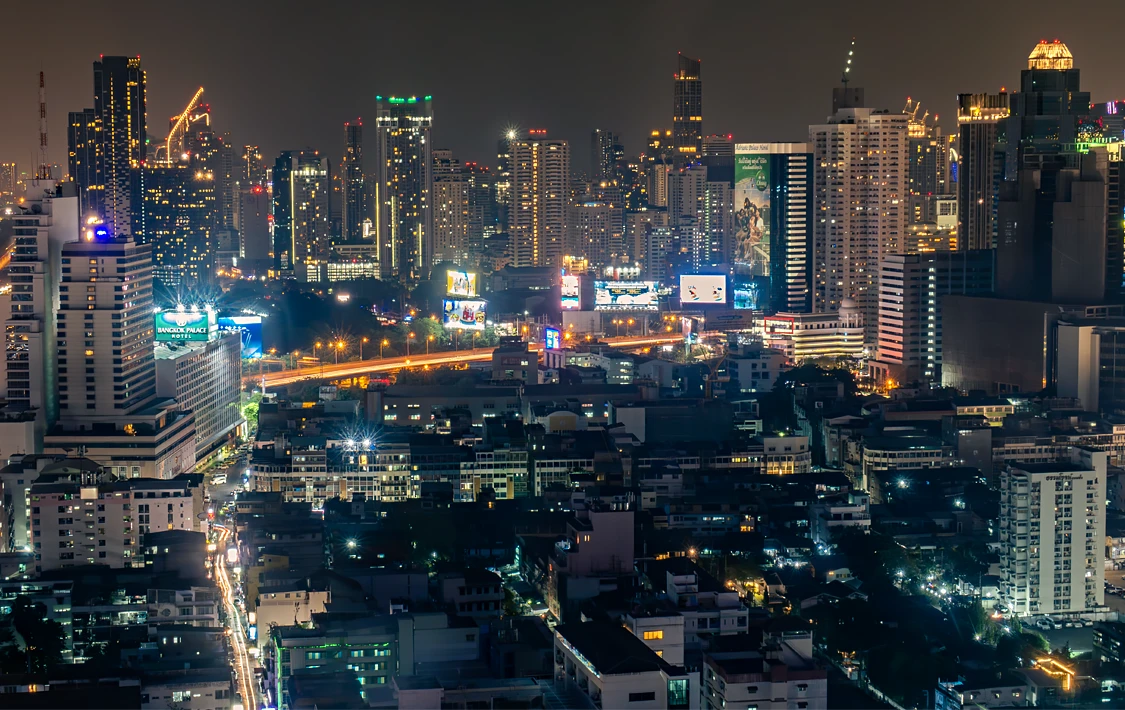
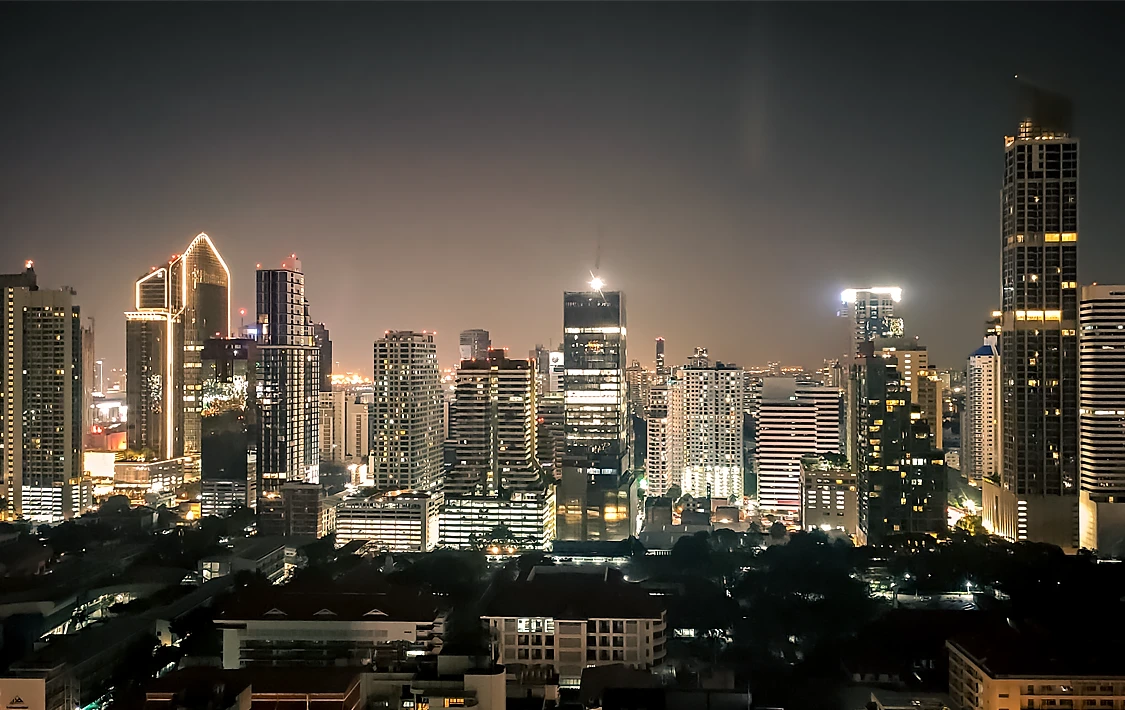
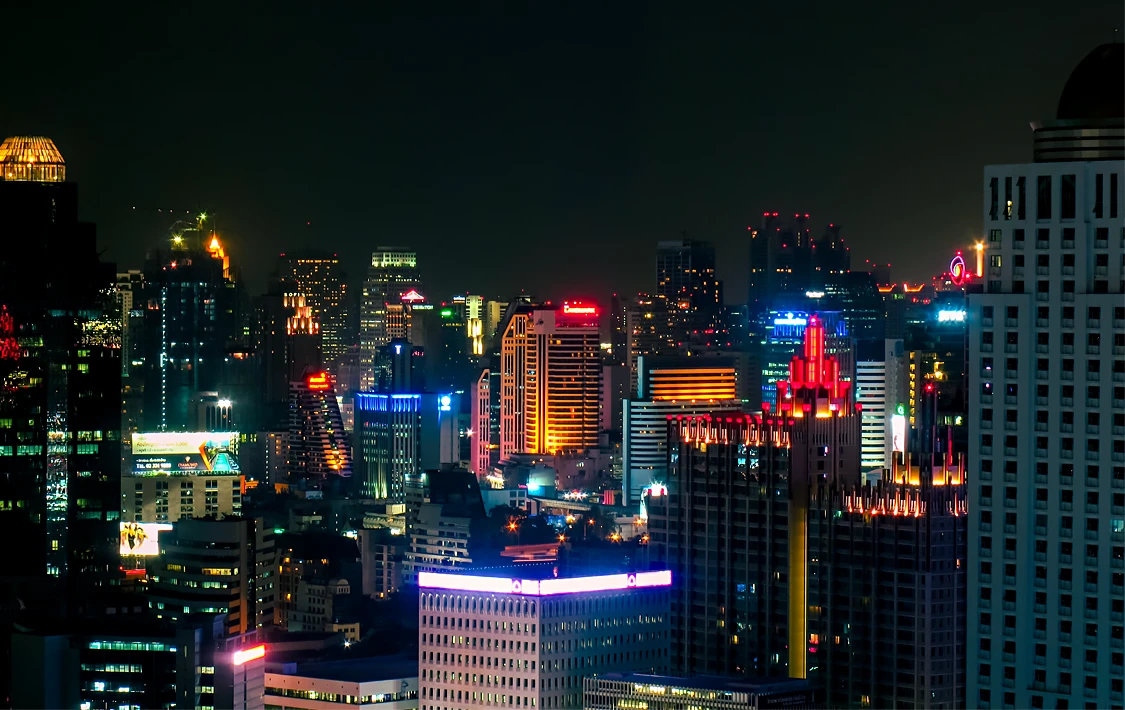
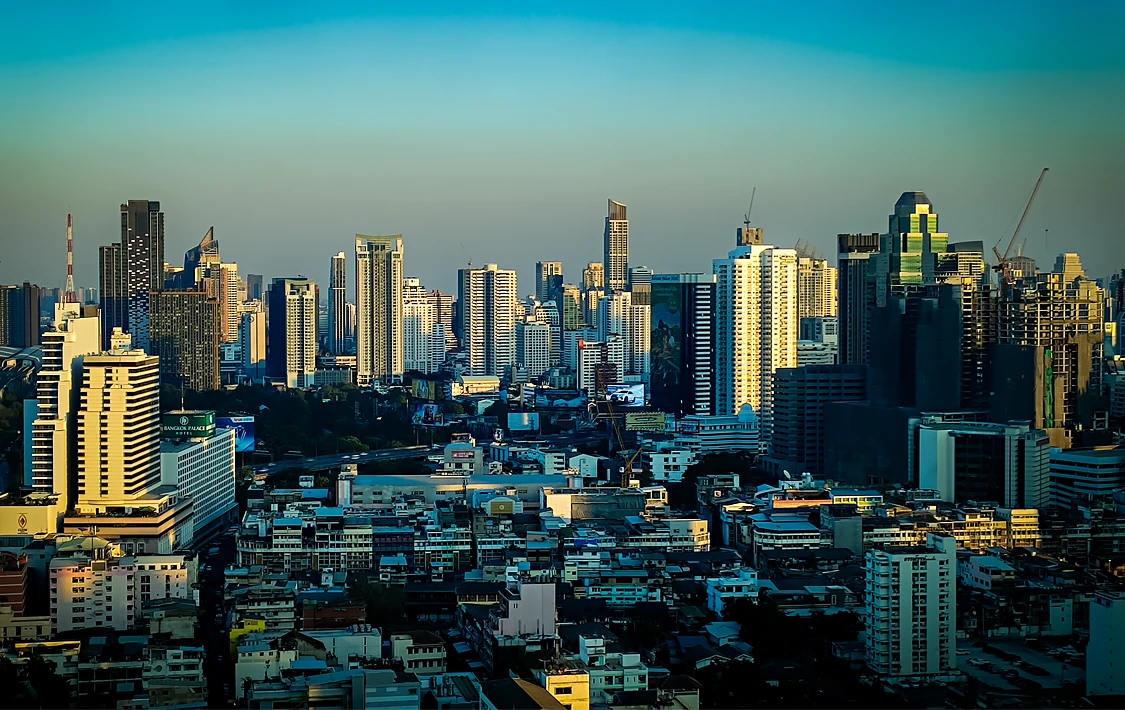
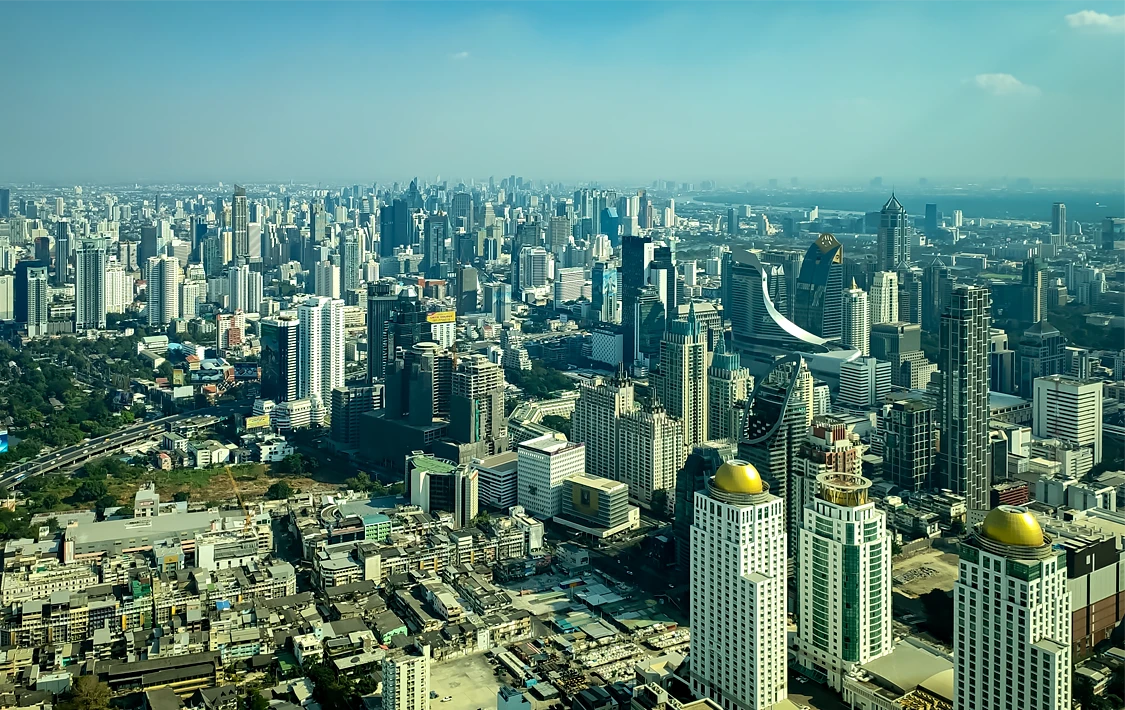
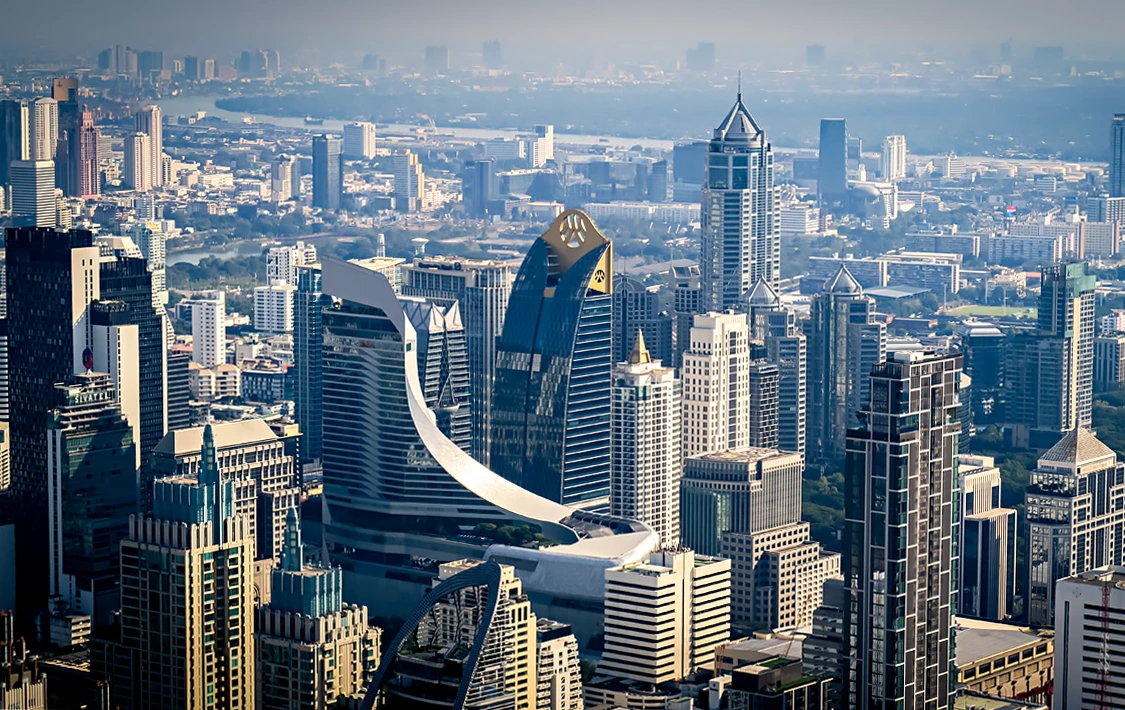
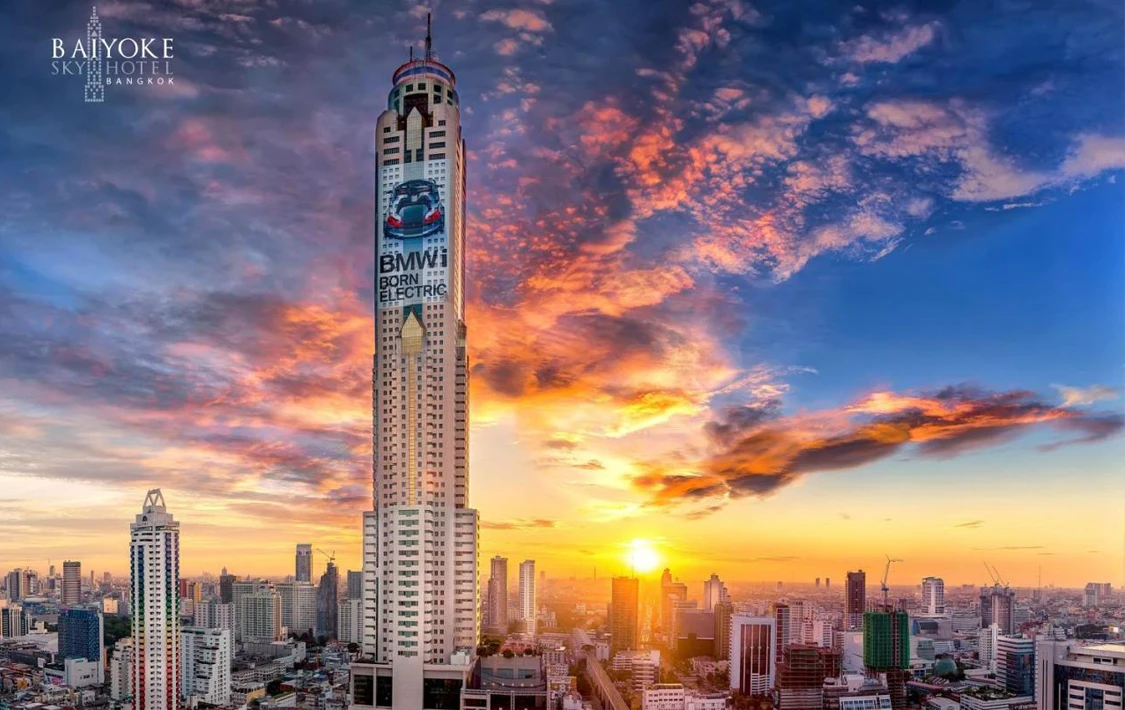
At 328 metres tall, the Baiyoke II Tower was Thailand’s tallest building until 2017. The skyscraper houses several offices, but most of the space belongs to the Baiyoke Sky Hotel. Thanks to its central location, the hotel is especially popular with tourists, not least because of its famous observation deck.
Around the tower, you’ll find countless street markets, food stalls, and local eateries. A walk around the area quickly turns into an adventure of its own.
Glide above Bangkok like a bird – Visit one of the city’s best observation decks
The Baiyoke Sky Tower II is best known for its spectacular observation deck, located on the 84th floor at around 300 metres above ground. On the rotating Sky Walk Revolving Roof Deck, you’ll glide above Bangkok while enjoying breathtaking 360-degree views across the city and its impressive skyline.
If you enjoy photography, visiting this viewpoint is almost mandatory. You’ll likely capture some unforgettable shots from up here. I recommend arriving around 5 pm, allowing you to experience Bangkok’s skyline in daylight and again as the city slowly lights up at dusk.
Especially in the evening, Bangkok transforms into a sea of lights, creating an unforgettable atmosphere.
Additional information
- Further information can be found on the official website.
- Skip the queues and book your tickets online.
- Want to stay at the Baiyoke Sky Hotel? You can book your stay here.
Heavenly dinner high above Bangkok
If you enjoy unique dining experiences, the Baiyoke Sky Terrace might be exactly what you’re looking for. On the 81st floor, high above Bangkok, you can enjoy dinner on one of four rooftop balconies. A large buffet offers both Asian and Western cuisine, with an all-you-can-eat concept. Combined with the stunning skyline views, the atmosphere is truly memorable.
End your day with a drink overlooking the skyline
To finish off an eventful day, I recommend stopping by the Baiyoke Sky Bar for a final drink. The bar itself may not be one of Bangkok’s absolute highlights, but since you’re already there, it’s an easy addition.
Prices remain relatively reasonable, and you’ll get one last opportunity to admire Bangkok’s illuminated skyline.
Useful information about the Baiyoke observation deck
Useful information about dinner at Baiyoke
11. Lumpini Park – Reminiscent of New York’s Central Park
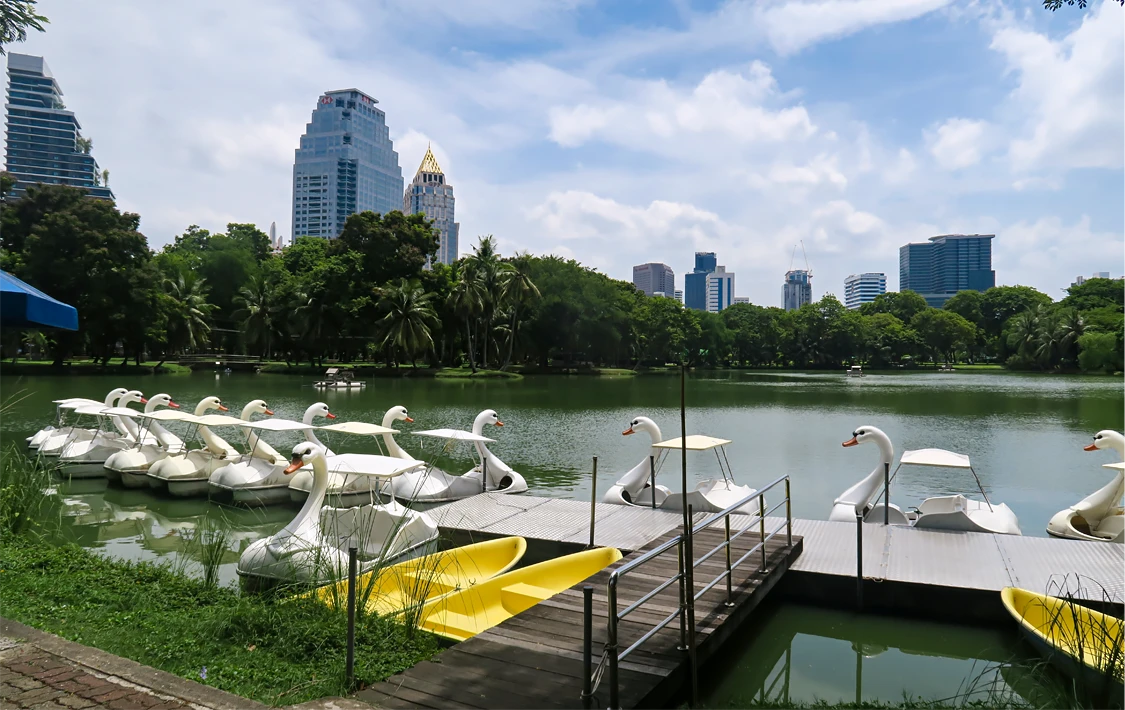
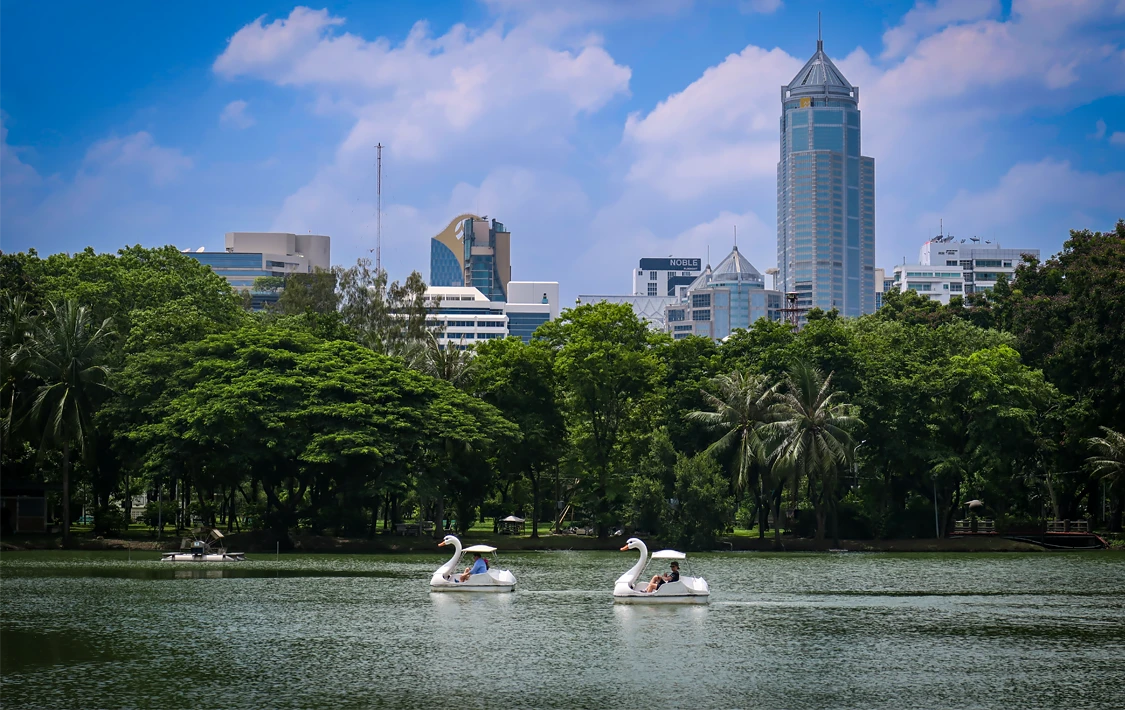


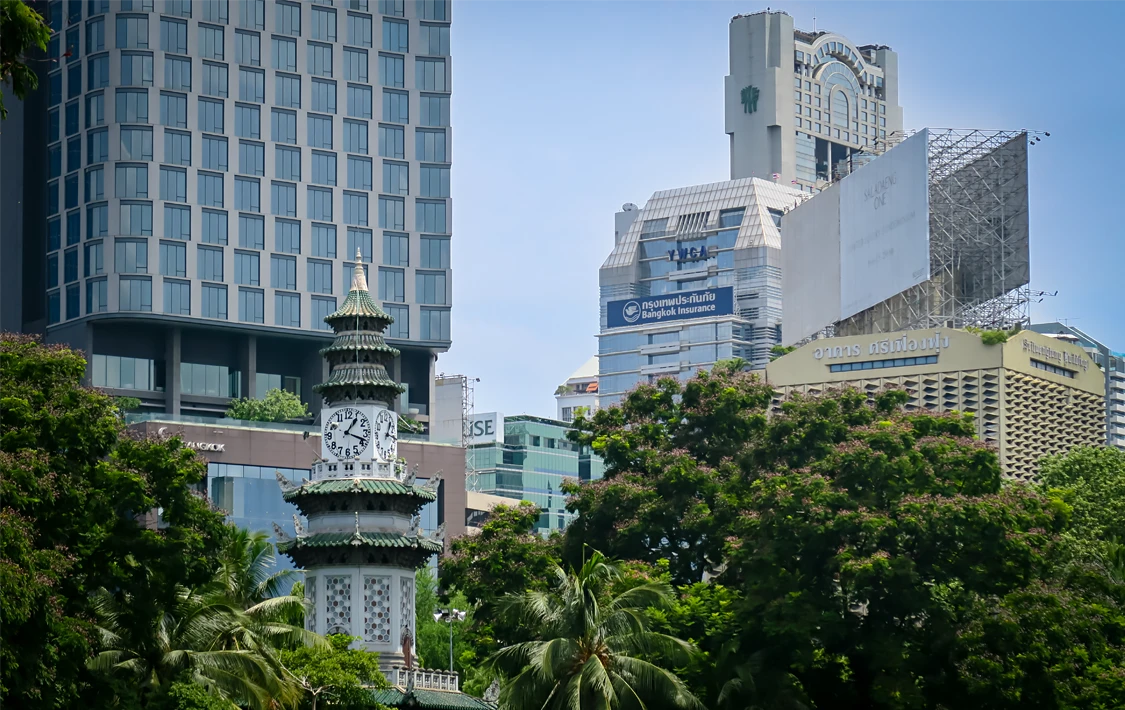
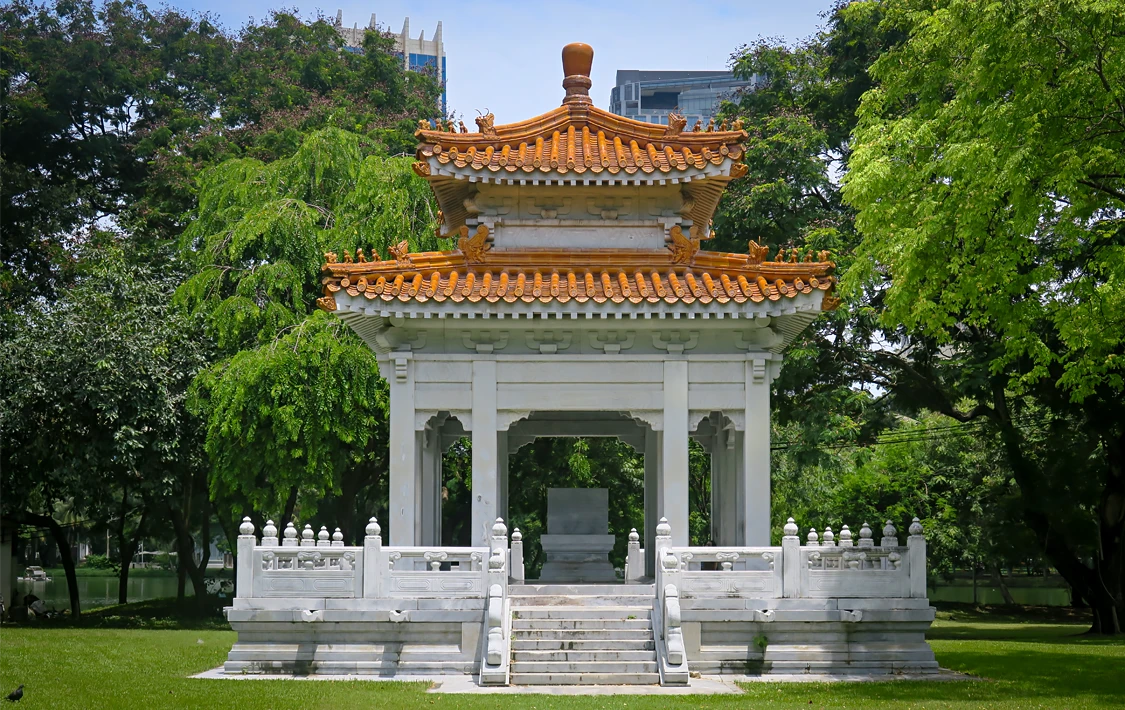
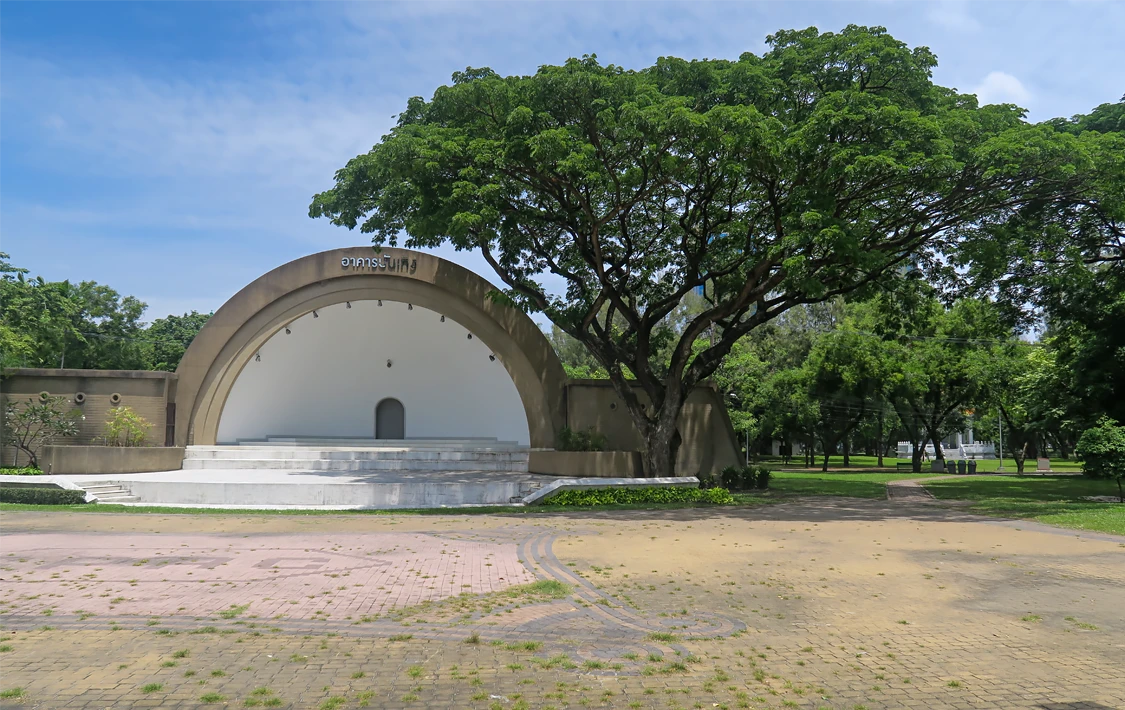

Lumpini Park is one of the few green spaces in Bangkok and, with an area of more than 500,000 m², also the largest park in Thailand’s capital. The park was named after Lumbini, the birthplace of Buddha in Nepal. Surrounded by skyscrapers, the atmosphere feels somewhat reminiscent of New York’s Central Park, although on a much smaller scale.
At the main entrance, you’ll find a monument to King Rama VI, who commissioned the park in 1920. In the heart of Lumpini Park lies an artificial lake where you can rent a paddle boat and take a break from Bangkok’s hectic pace. The park is also ideal for a peaceful walk in greener surroundings.
Relaxing, Tai Chi, Jogging, Wildlife Spotting – Lumpini Park offers something for everyone
Lumpini Park is especially popular among locals during the early morning hours and on weekends. Throughout the park, you’ll encounter couples, joggers, Tai Chi enthusiasts, as well as a surprisingly diverse flora and fauna.
You’ll come across birds, insects, smaller animals, and especially monitor lizards. Some even joke that Lumpini Park is overrun with giant lizards. Despite their impressive size, these reptiles are generally not shy and seem very accustomed to people.
While Lumpini Park may not rank among Bangkok’s absolute highlights for me personally, it is the perfect place to escape the bustling and chaotic metropolis for a few hours.
Useful information about Lumpini Park
12. MBK Center Bangkok – Where Shopping Dreams Come True

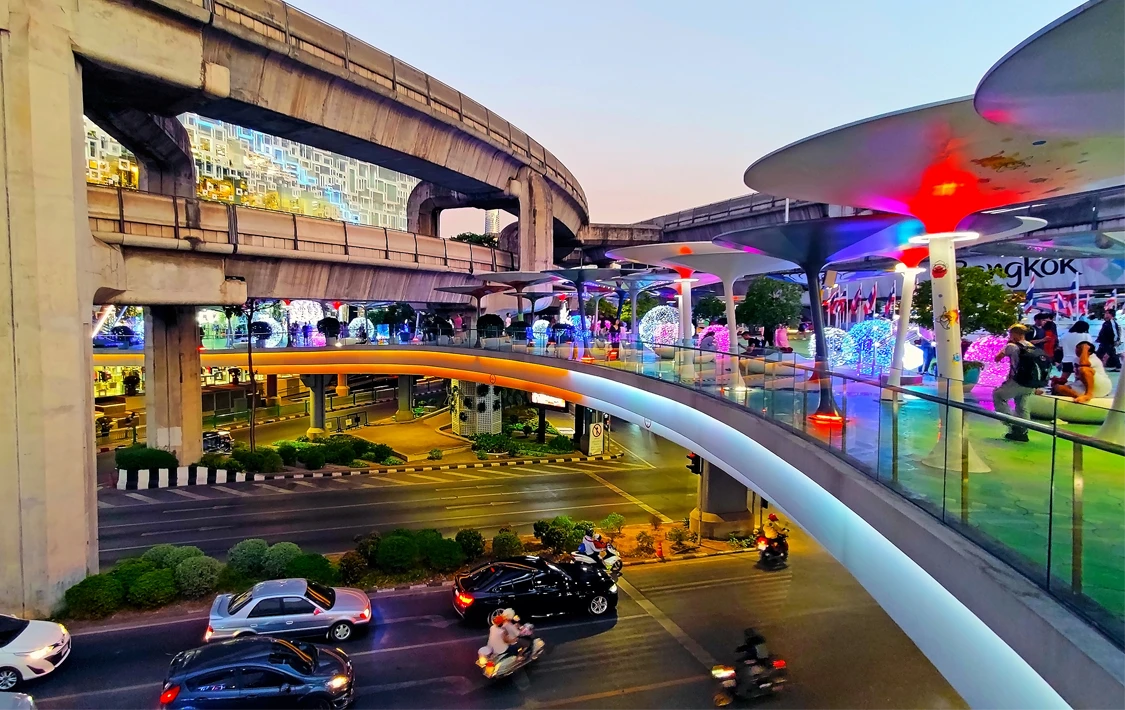
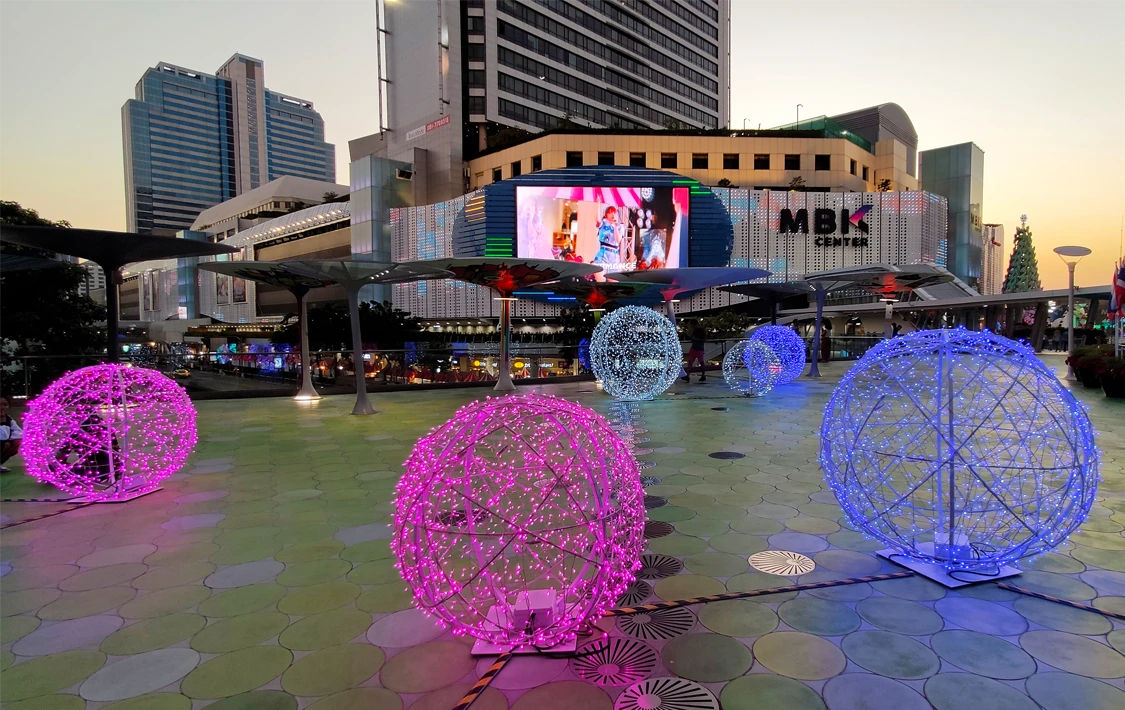
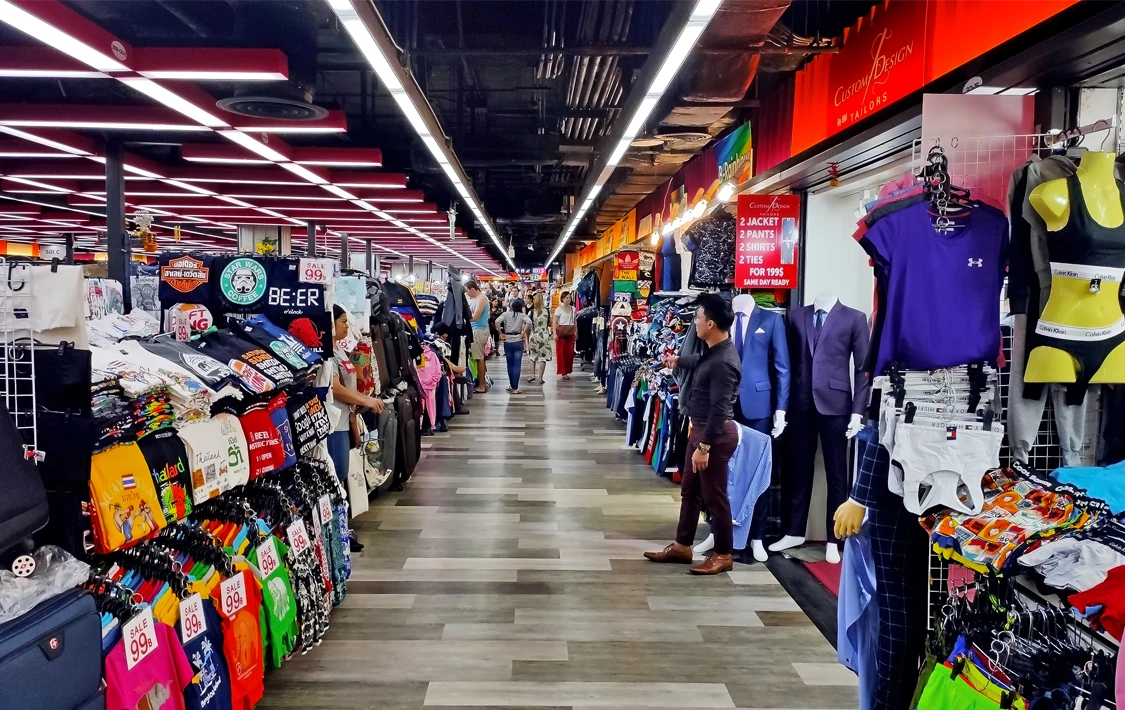
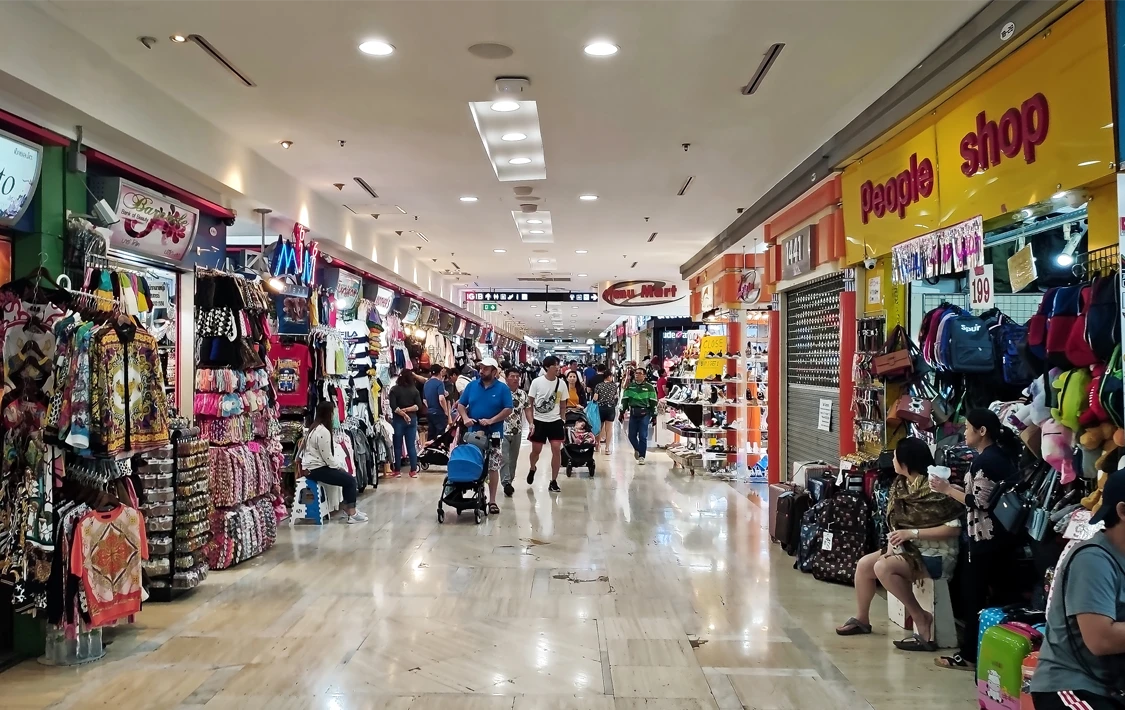
The MBK Center is probably the most famous shopping mall among tourists in Bangkok. Stretching over 330 metres, this consumer paradise offers shopping across six floors and houses around 2,500 shops and stores.
The variety inside MBK Center is enormous, and you could easily spend an entire day exploring. From clothing, jewellery, tailor shops, sunglasses, photography equipment and electronics to bags, shoes, watches, fabrics and textiles, the selection seems almost endless.
The shopping mall is especially known for its countless small stores selling imitation designer brands. In general, product quality is decent considering the prices, and you’ll often find good value for money. In many shops, bargaining is still common, so this is the perfect place to test your negotiation skills.
Impressive surroundings around MBK Center
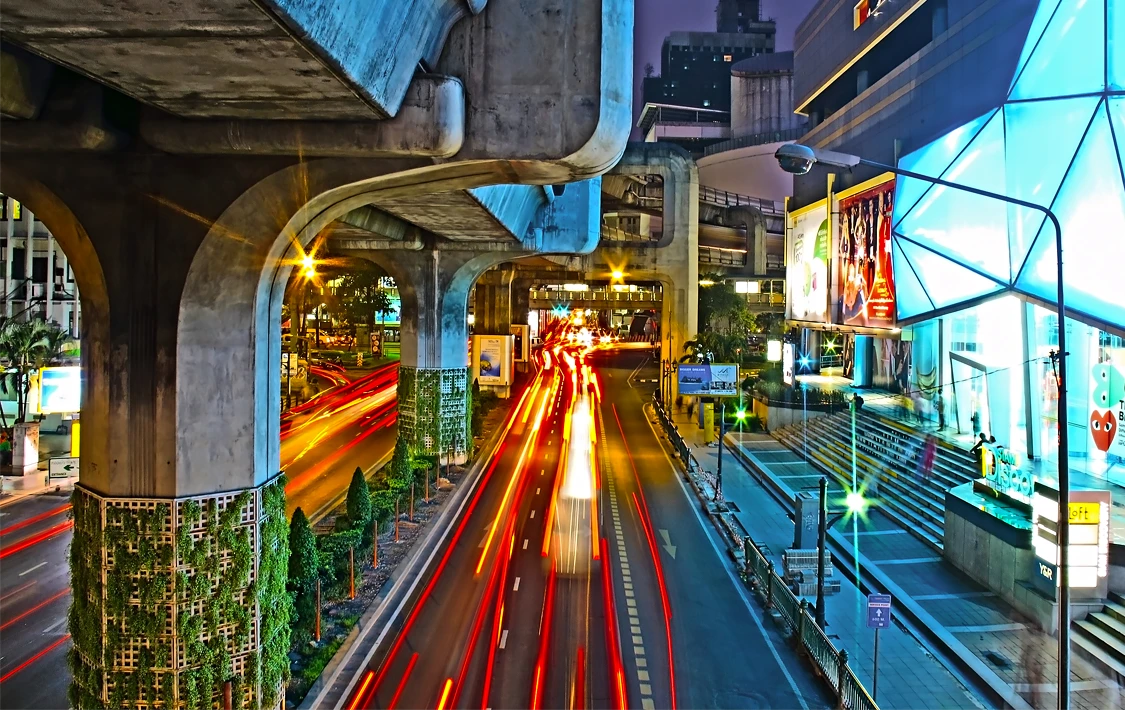
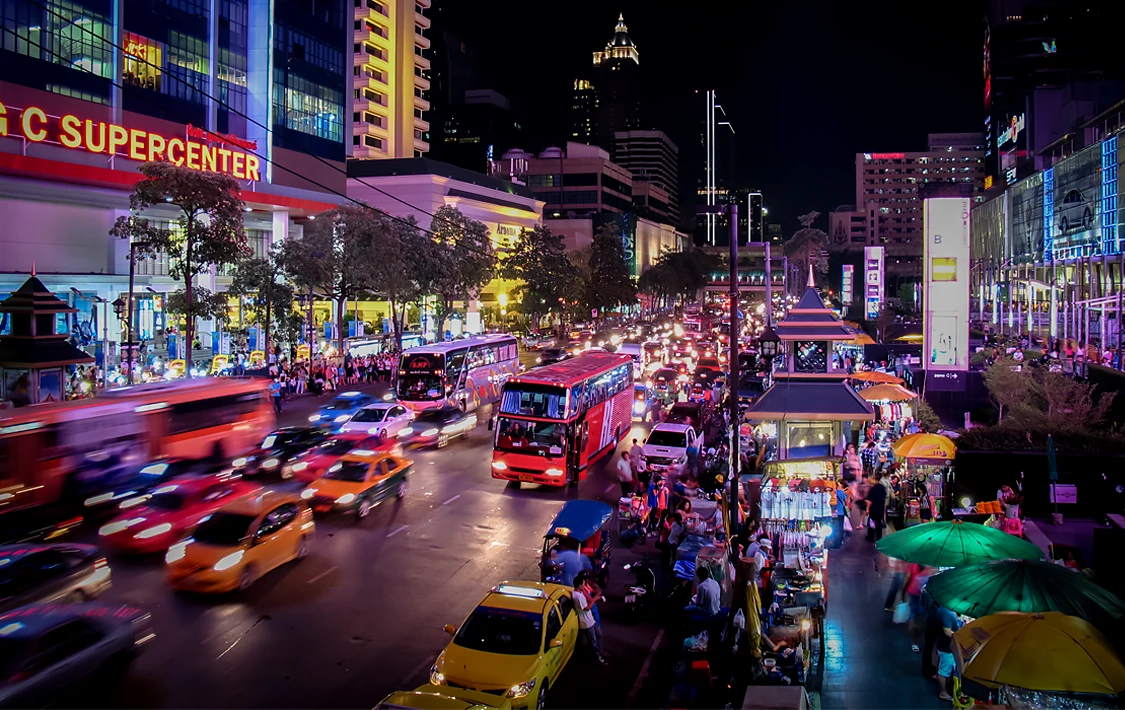
The area surrounding MBK Center is busy at almost any hour, with heavy traffic and large crowds. Yet this lively atmosphere is exactly what makes the surroundings so fascinating.
From the elevated skywalk, you can watch Bangkok’s gigantic and often chaotic traffic flow while the Skytrain rushes overhead. Especially in the evening, a walk along the skywalk becomes worthwhile as the city transforms into a sea of flashing lights and neon colours.
While you’re here, don’t miss exploring the nearby Pathum Wan district.
Useful information about MBK Center
Hotel Tips for Bangkok
Where I stayed
Finding a suitable hotel in Bangkok is probably the least of your worries. The metropolis offers countless accommodation options, ranging from budget-friendly stays to luxury palaces.
I personally stayed at the Baiyoke Sky Hotel, which offers stunning views over Bangkok’s skyline. Hotel guests can also visit the observation deck and Sky Bar free of charge.
The location of the Baiyoke is relatively central, and most Bangkok attractions can be reached easily within a short time by metro, on foot, or by taxi. The rooms are spacious and practical, which is why I can confidently recommend this hotel.
Would you also like to stay at the Baiyoke Sky Hotel? You can check prices and availability here.
Siri Heritage Bangkok
The Siri Heritage Bangkok offers tastefully designed rooms and provides a peaceful retreat amid the vibrant city. Thanks to its central location, major attractions such as the Grand Palace, Wat Phra Kaeo, and Wat Pho can easily be explored on foot.
The hotel also features a shaded swimming pool, offering a welcome opportunity to cool down after a day of sightseeing in Bangkok’s tropical temperatures.
Riva Surya Bangkok
At Riva Surya Bangkok, located directly on the Chao Phraya River, you can enjoy a relaxed and peaceful stay. Its ideal location allows you to reach attractions such as Wat Phra Kaeo, the Grand Palace, and even Khao San Road on foot.
Some rooms offer stunning views over the river, adding to the hotel’s tranquil atmosphere. The hotel also features a riverside swimming pool, providing the perfect place to unwind after a day exploring Bangkok’s bustling streets and attractions.
Best Time to Visit Bangkok’s Attractions
The best time to explore Bangkok’s attractions is between November and March. During these months, Bangkok experiences its dry season, meaning rainfall is relatively low and conditions are generally more pleasant for sightseeing.
However, even during this period, daytime temperatures usually remain above 30°C (86°F).
The months between May and October are less ideal for visiting Bangkok. During this time, the rainy season brings humid and often uncomfortable weather conditions, with temperatures frequently rising well above 30°C.
Recommended Travel Duration for Bangkok’s Attractions
Bangkok is a huge city with an incredible amount to discover. From vibrant nightlife, shopping centres, street markets, and world-famous street food to impressive temples and cultural landmarks, Bangkok’s attractions are incredibly diverse.
You could easily spend several weeks in the city and still continue discovering new places. The attractions presented in this guide were explored over three days, although this felt rather tight in terms of time.
Of course, you can also select only a few of the attractions mentioned while skipping others. Even within two days, it is possible to visit many of Bangkok’s highlights.
Personally, I recommend spending 2 to 4 days in Bangkok. As an additional option, consider adding another day for a day trip to Ayutthaya, where you can explore some of Thailand’s most impressive historical temple ruins.
Conclusion About Bangkok’s Attractions

Many travellers either love Bangkok or completely dislike it. Personally, I find myself somewhere in between.
If you want to gain insight into Thailand’s culture, Bangkok is one of the best places in the Land of Smiles to do so. The city is also home to several of Thailand’s most famous attractions, and in my opinion, every traveller visiting Thailand should spend at least a few days in Bangkok.
There is an enormous variety of attractions to discover throughout the capital. Overall, I enjoyed Bangkok, although cities such as Hong Kong or Singapore fascinated me even more.
Do You Have Questions About Bangkok’s Attractions?
Do you have any questions about this Bangkok attractions travel guide? I’d be happy to answer them.
Simply use the contact form below. I look forward to reading your comment and hearing about your experiences or recommendations.
*Affiliate Disclosure
Please note that this website contains affiliate links. This means that we may receive a small commission if you purchase products or services through these links. Using affiliate links does not affect the price you pay in any way. These commissions help us maintain this website and continue creating high-quality travel guides and content for you.