
Asia | Cambodia
Angkor Wat Temples and Attractions – Useful Travel Tips for Your Stay in Siem Reap
In the heart of Cambodia, a journey through time unfolds, revealing the rich history of the Khmer Empire. Angkor, once known as Kambuja, was the thriving center of this powerful kingdom from the 9th to the 15th century. During its peak, more than one million people lived in the region, covering an area of around 1,000 km² – making Angkor one of the first major cities in human history.
Over the centuries, archaeologists have uncovered more than 1,000 temples, sanctuaries, and ancient cities, all bearing witness to this unique past. Today, the most impressive remnants of the Khmer Empire can be explored in the vast Angkor Archaeological Park, which spans over 400 km². In this travel guide, you’ll learn more about the temples and get practical tips for your visit.
The main temples of Angkor Wat can also be conveniently explored on a group tour. If you prefer a more personalized experience, you’ll find a guide recommendation further below – one I personally booked for three days.
Not in the mood to read? Then check out the Angkor Wat temple photo gallery.
What to expect in this Angkor Wat temple guide:
Angkor Wat – Tips on How to Explore the Temples
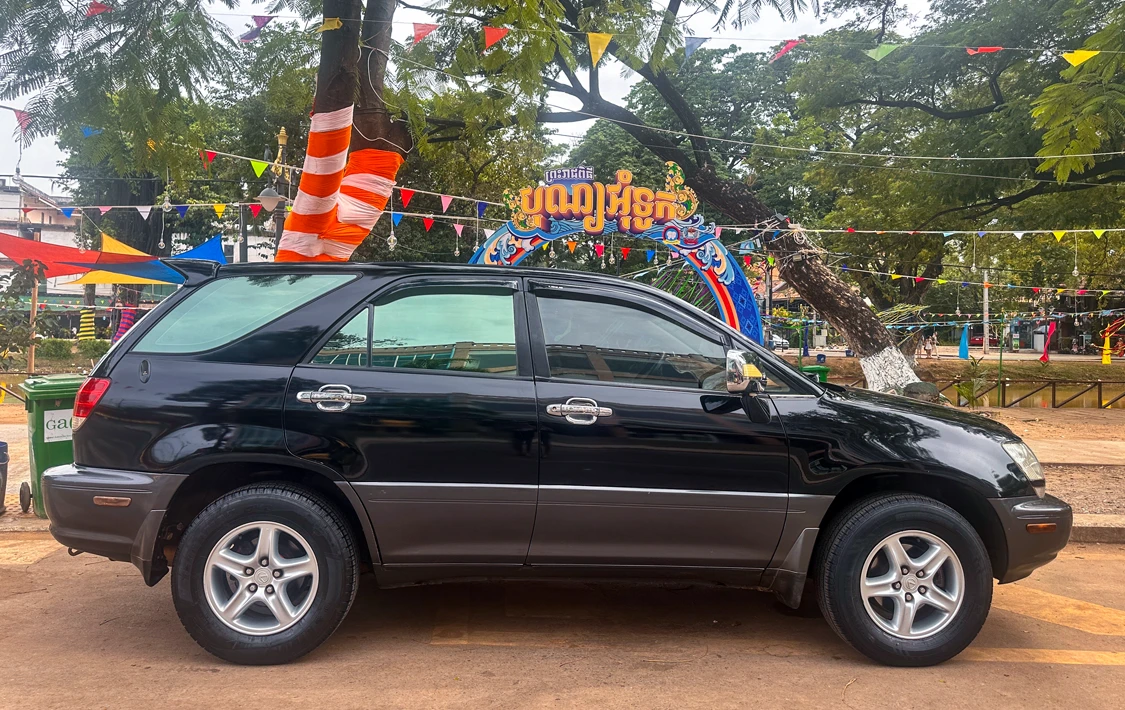
The vast temple complex around Angkor Wat covers an impressive 400 km². Although the most famous sights are located within a smaller area, careful planning is recommended for your visit. There are several ways to explore Angkor Wat, which I’ll outline below:
By bicycle
If your visit focuses on the main highlights or you’re only staying for one day, exploring Angkor Wat by bike can be a great option. There are plenty of rental shops in Siem Reap offering bicycles for temple tours. Keep in mind that temperatures can get extremely hot, so a good level of fitness is recommended.
Rental prices usually range between 1 and 4 USD per day and often include a lock, sometimes even a helmet. However, many bikes are not in the best condition and rarely come with lights.
The distance from Siem Reap city center to the entrance of the Angkor Archaeological Park (south gate) is around 8 km and takes about 30 minutes. Inside the park, you can explore routes like the Grand Circuit (26 km) or the Small Circuit (17 km).
By tuk-tuk
This is one of the most popular ways to get around in Siem Reap. Tuk-tuks are widely available, and most drivers offer full-day tours to the main temples. The flexibility makes this option especially attractive for exploring the area.
It’s best to agree on the price and duration before starting your trip. Depending on the season and your negotiation skills, prices typically range between 20 and 40 USD. You can also book a tuk-tuk driver online in advance.*
As part of a group tour
If you prefer to leave the planning to someone else and just relax, a guided group tour might be the right choice. It’s the most convenient way to explore the temples of Angkor Wat, though it comes with less flexibility. Various tours are available online.
How I explored Angkor Wat
Personally, I prefer to travel individually – flexible, independent, and tailored to my needs. Since Angkor Wat had been on my bucket list for a long time and I’m a big fan of temples, I wanted my trip to live up to my expectations. That meant not only visiting the famous temples but also the more remote ones.
That’s why a bike tour wasn’t an option for me, and group tours aren’t really my thing.
After some research, I came across a driver named Sophara, whom I hired for three days. You can choose between a tuk-tuk or a car. Prices are around 15 USD per day for a tuk-tuk and 30 USD for a car.
I was extremely happy with his service and can highly recommend Sophara as a driver. His driving was always safe and thoughtful, and communication in English was easy and smooth.
You’ll find more details, including his contact information and suggested routes, here.
Overview of the different Angkor Wat temple complexes
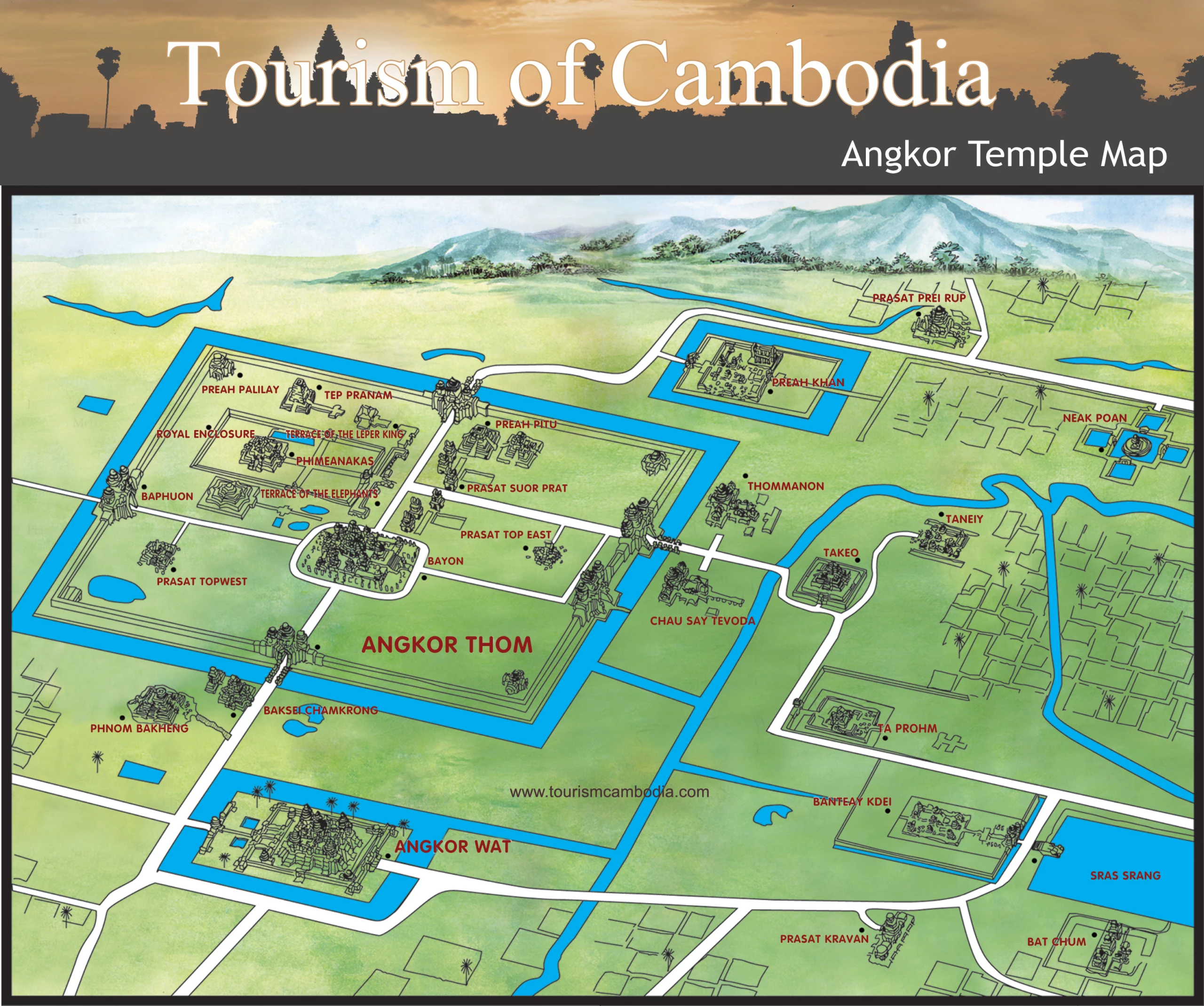
Within the vast Angkor Archaeological Park, you’ll find a fascinating variety of temple complexes that reflect the rich heritage of the Khmer civilization. Broadly speaking, the area can be divided into seven main sections that you should consider visiting during your trip:
- Angkor Wat: The crown jewel of Angkor, this masterpiece of Khmer architecture is the largest temple complex and a symbol of national pride in Cambodia.
- Angkor Thom: With its impressive city gates and the central Bayon Temple, famous for its iconic “smiling faces,” Angkor Thom is a remarkable urban complex that represents the power of the Khmer Empire.
- East Baray: An ancient man-made reservoir that once served both ritual and economic purposes. The ruins surrounding the East Baray offer insights into the sophisticated water management system of the Khmer.
- West Baray: Another impressive reservoir that was part of the region’s complex irrigation system. Here, you can explore traces of temples and ancient settlements.
- Roluos-Gruppe: A collection of early temples, including Preah Ko and Bakong, which served as precursors to the later Angkor temples and provide insight into the development of Khmer architecture.
- Koh Ker: Located away from the main sites, Koh Ker stands out with the impressive Prasat Thom and other temples hidden deep in the jungle.
- Weitere Tempel: Beyond the main areas, there are countless additional temples and sanctuaries, each with its own story. Every temple is a unique testament to the past.
Below, I’ll introduce the individual temples in more detail and give you a brief insight into their history. Don’t worry, I won’t go too deep into historical details here – there are far more qualified experts and books for that. However, if you’re interested in deeper background information, I recommend booking a guide. You can find suitable guides online here.
Angkor Wat – The World-Famous Temple





The largest religious monument in the world
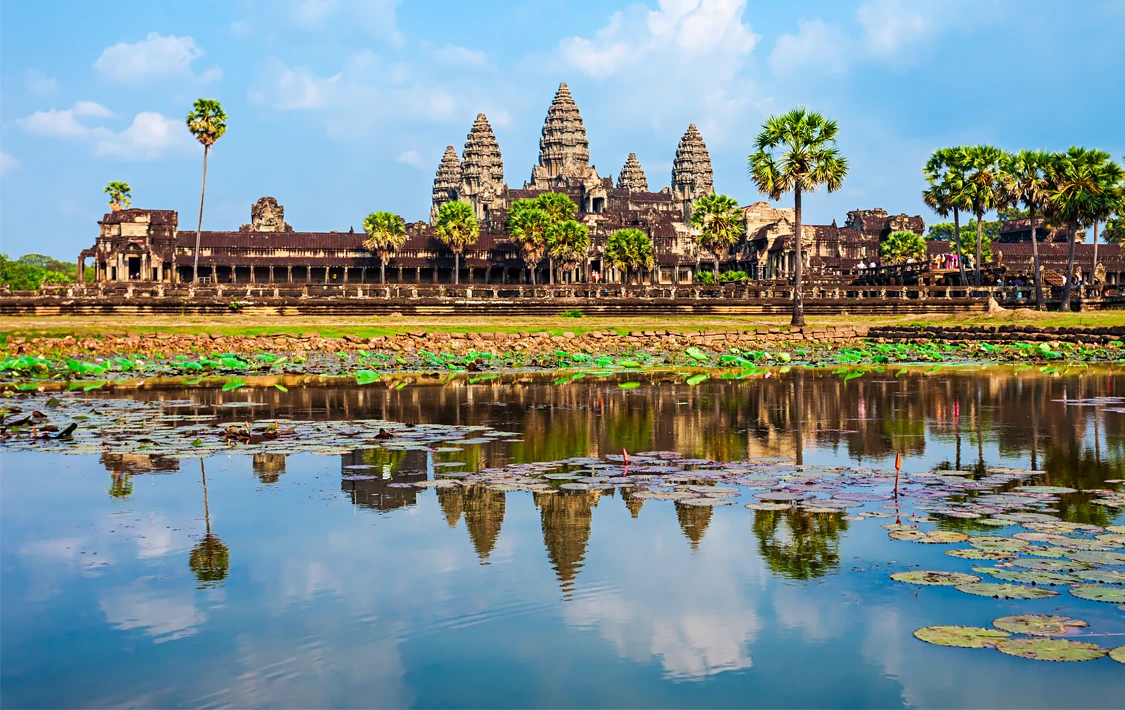
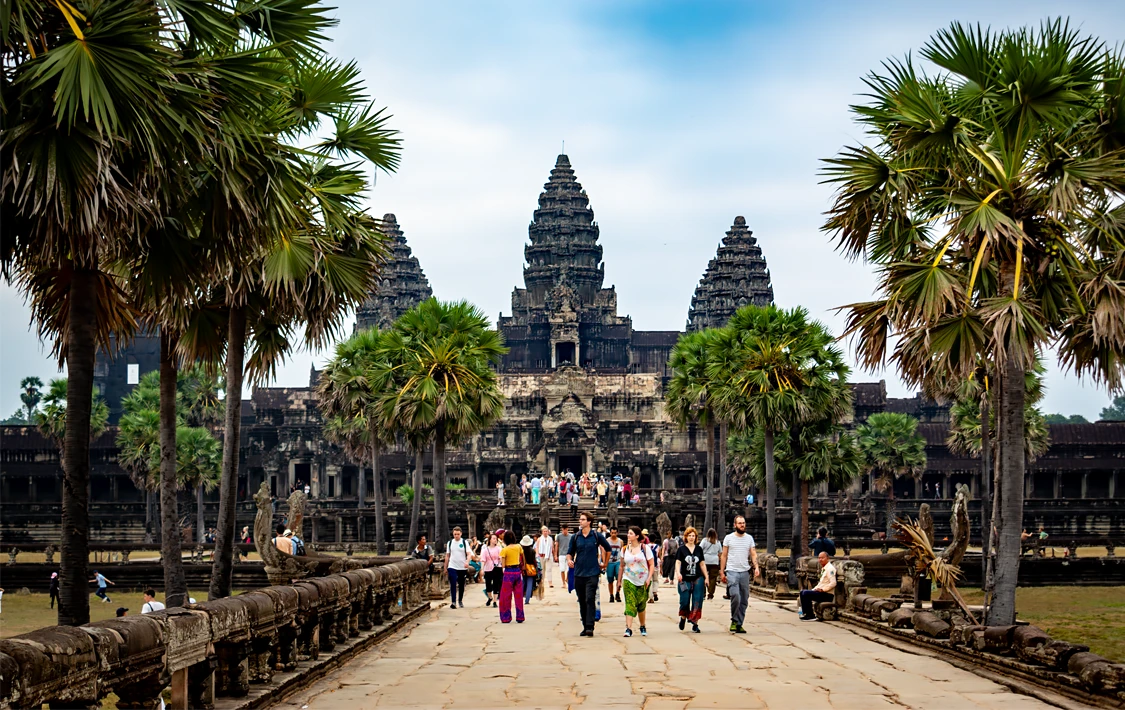
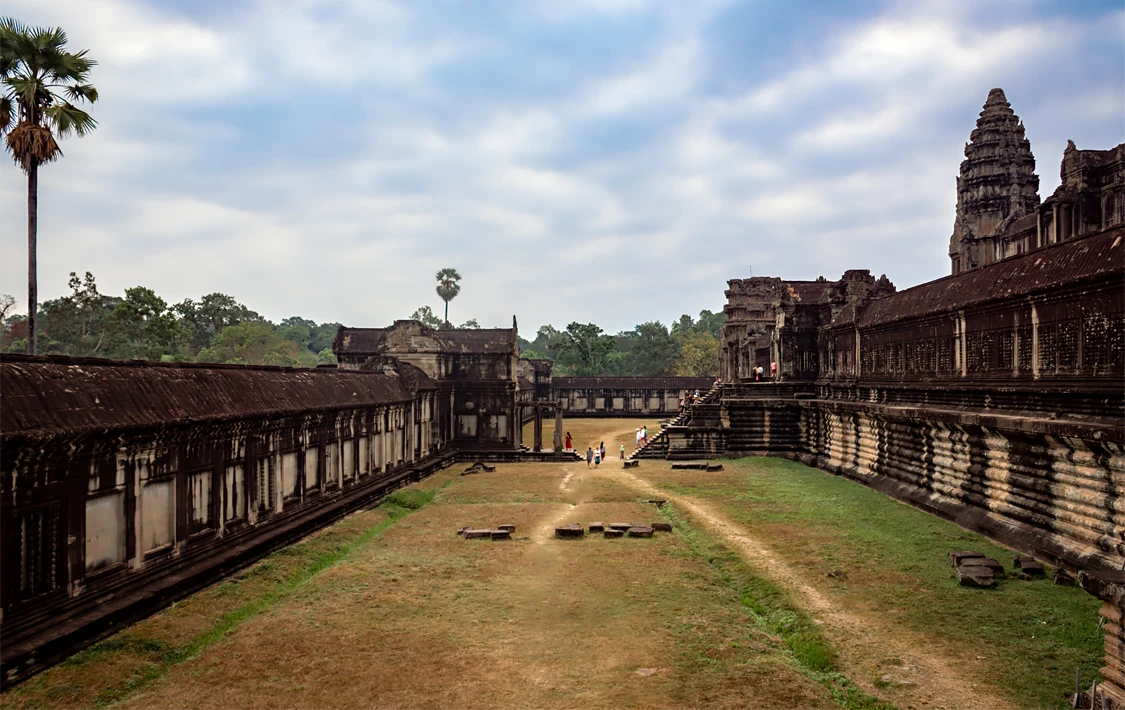
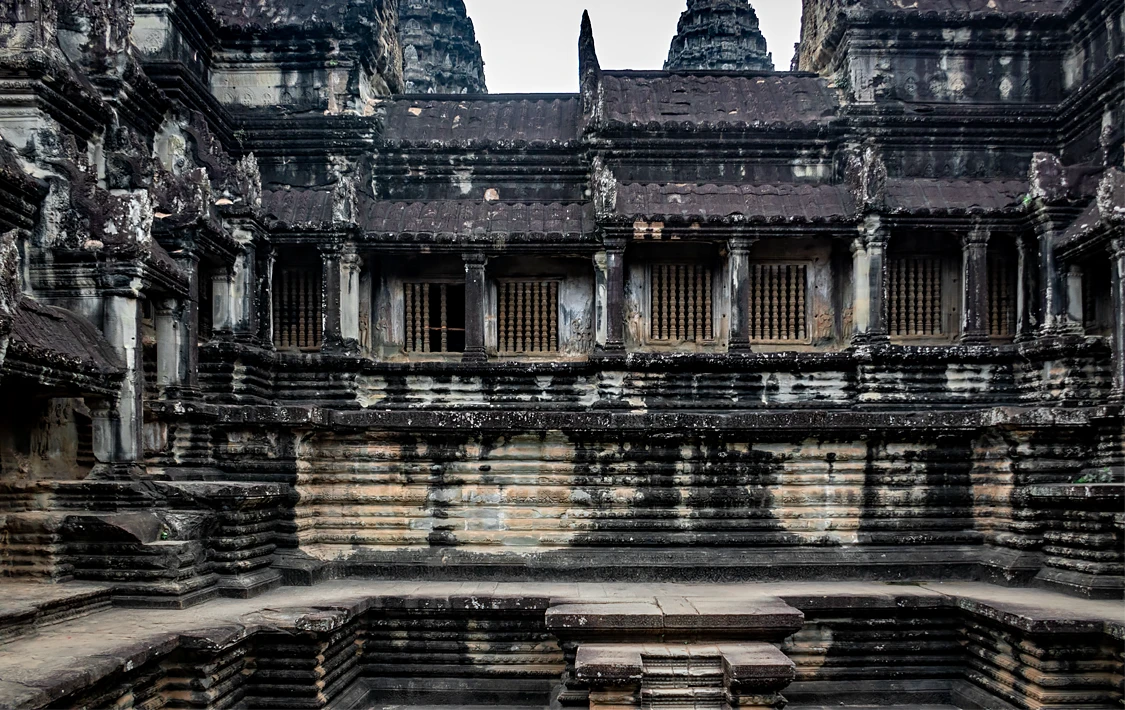
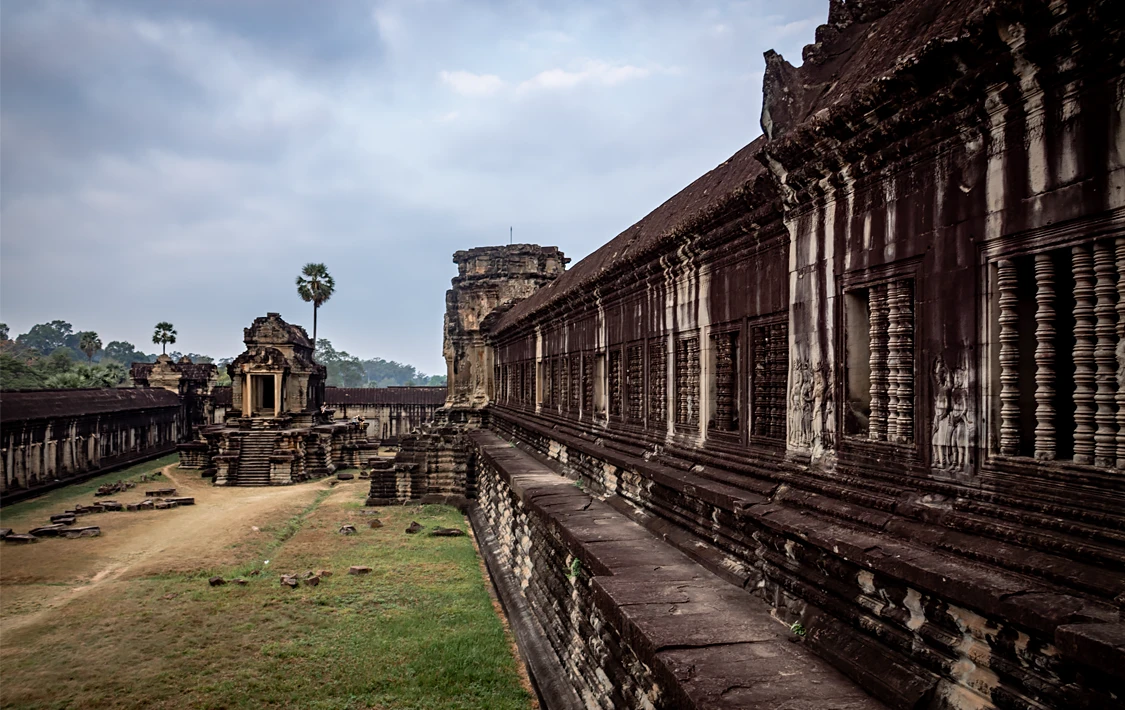
Built in the 13th century, Angkor Wat is the largest religious monument in the world and undoubtedly the most famous site within the entire Angkor complex. The temple impresses with its sheer size, with the entire area, including its surrounding moats, stretching approximately 1,500 by 1,300 meters.
At the time, the region was marked by intense power struggles, which were eventually brought under control by King Suryavarman II, who is also believed to be the builder of Angkor Wat.
It’s hard to imagine how this incredible structure was built hundreds of years ago purely by human hands, without modern machinery or tools. Especially considering that the sandstone used for construction had to be transported from a site around 50 kilometers away – a true testament to the advanced architectural knowledge of that era.
Golden age and rise
The golden age and rapid rise of Angkor were largely driven by a vast and innovative irrigation system. This system enabled abundant rice harvests, ensured food supply for the population, and brought prosperity to the region.
However, what once fueled Angkor’s growth may also have contributed to its downfall. As the population expanded, the demand for water increased, while prolonged periods of drought put immense pressure on the system. According to researchers, this imbalance ultimately led to the collapse of the once-great kingdom.
In the footsteps of the gods
As you make your way toward the center of the temple, you’ll pass through corridors, galleries, and numerous remarkable structures. Reaching the heart of Angkor Wat, you’ll find the sacred core of the temple, spread across three terraces.
The uppermost terrace, with its five iconic towers, holds special significance. It is believed that the central tower once housed the god Vishnu himself. This level also marks the most central and elevated point of Angkor Wat, and you have the opportunity to climb to the top. From there, you can enjoy breathtaking views over the entire temple complex – a perspective that truly makes you feel above it all.
Keep in mind that after sunrise, waiting times to access the upper level can stretch to several hours, while in the afternoon, queues are often shorter.
Sunrise photography
You enter the temple via a long causeway that crosses the surrounding moat. Following this path, you’ll reach two small ponds located in front of the temple. The pond on the left side is particularly popular.
You’ve probably seen those iconic photos of the sun rising behind Angkor Wat, reflected in the water, right? Most of these stunning images are taken from this exact spot.
Naturally, everyone wants to capture that perfect shot – which means it can get quite crowded and hectic. So in reality, the atmosphere is often the complete opposite of the calm, romantic scenes you see in those photos.
Angkor Thom – Overview of the Temple Complex

Angkor Thom was the last capital of the Angkor Empire and was built in the 13th century under King Jayavarman VII. It was also the most enduring city, remaining in use until the late 17th century, when the empire eventually declined. The name Angkor Thom translates to “Great City” and was home to around 100,000 inhabitants. At its peak, it was larger than any city in Europe.
Within the city walls, priests, officials, and high-ranking soldiers lived in temples, palaces, and other structures, while the general population resided outside the walls in simple wooden houses.
Although Angkor Thom stands in the shadow of the world-famous Angkor Wat, the overall complex is significantly larger. The city, covering around 9 square kilometers, is surrounded by a 12-kilometer-long wall and a moat approximately 100 meters wide and 6 meters deep. It can be entered through five main gates. Inside, you’ll find some of the most iconic temples of the Angkor Archaeological Park.
A collection of temples within Angkor Thom
Unlike Angkor Wat, Angkor Thom is not a single temple but a vast complex made up of multiple temples. These form the area known as Angkor Thom. The main temples include:
Die Tempe in Angkor Thom:
- Bayon
- Baphuon
- Phimeanakas
- Preah Palilay
- Tep Pranam
- Preah Pithu Komplex
- Terrasse des Lepra Königs
- Terrasse der Elefanten
- Prasats Suor Prat
- Khleangs
Below, I’ll introduce you to the most important temples in more detail.
Angkor Thom – Der Bayon Temple
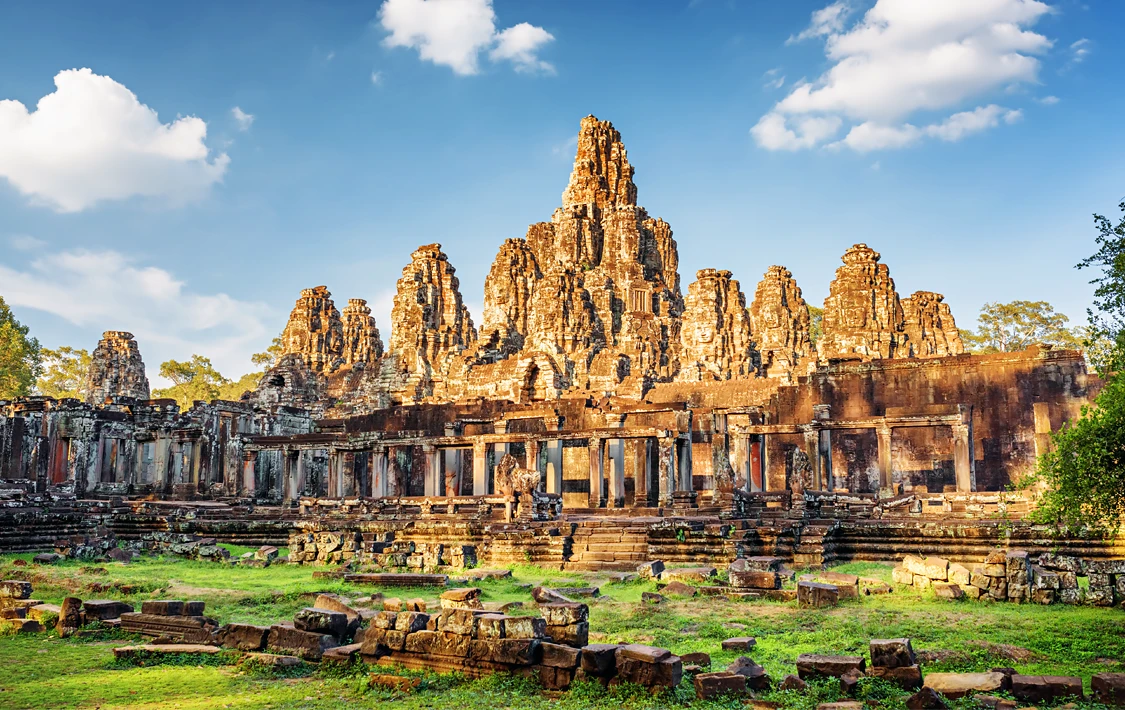

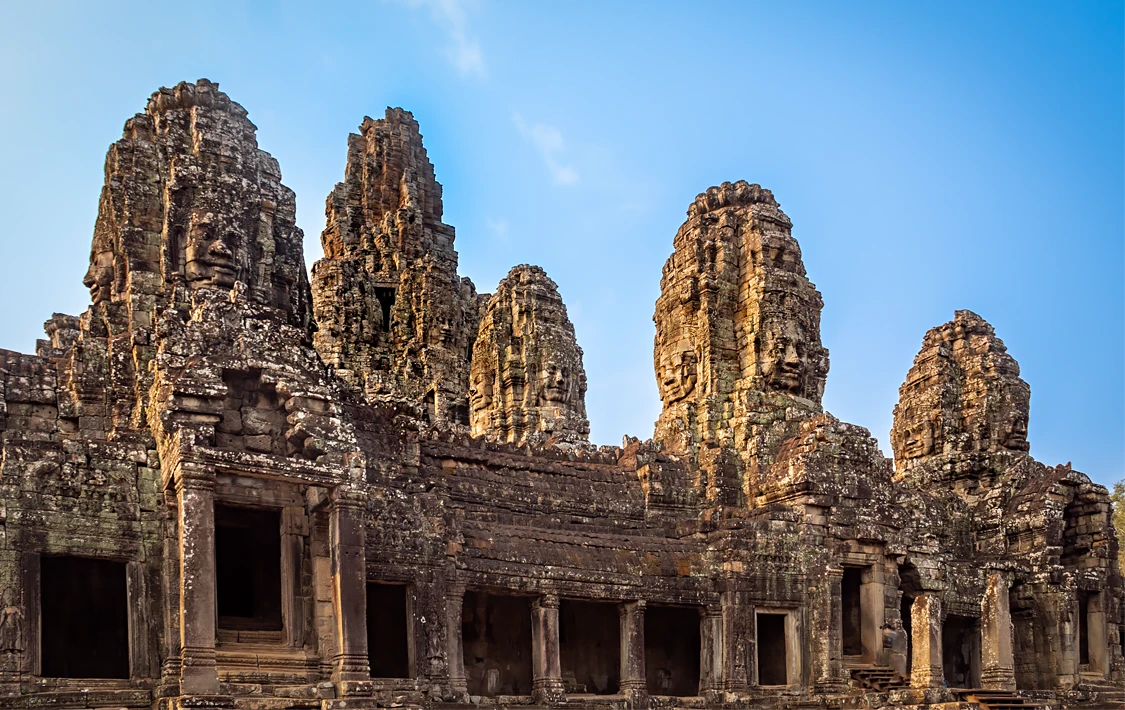
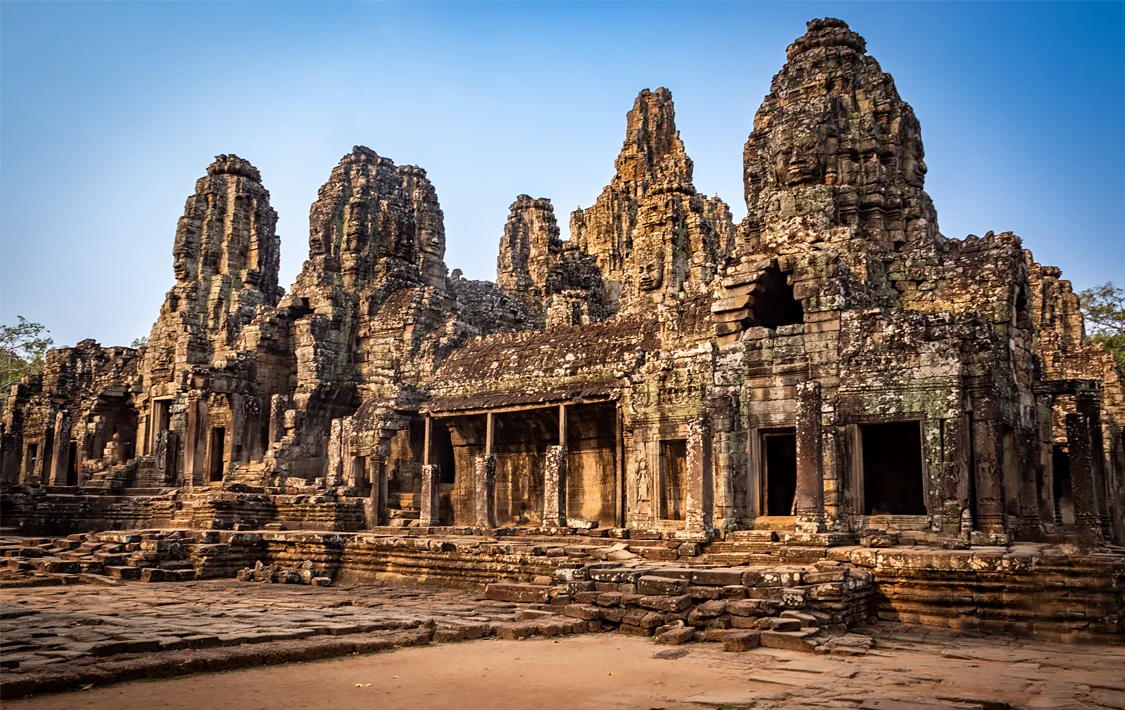
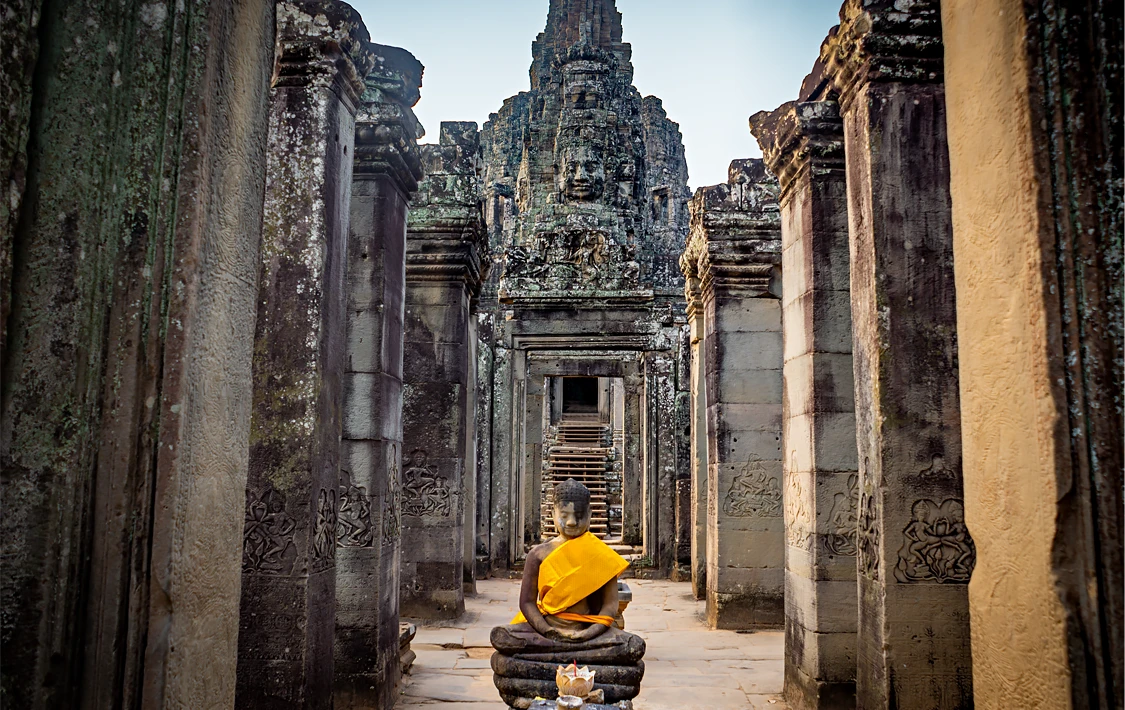
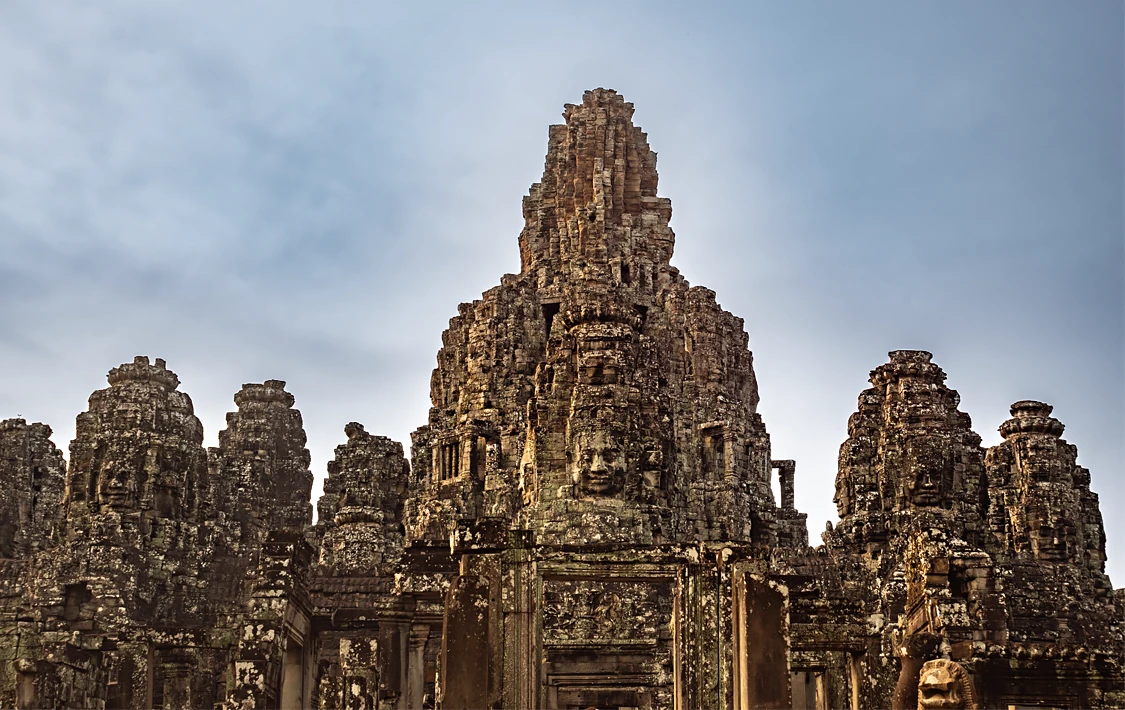
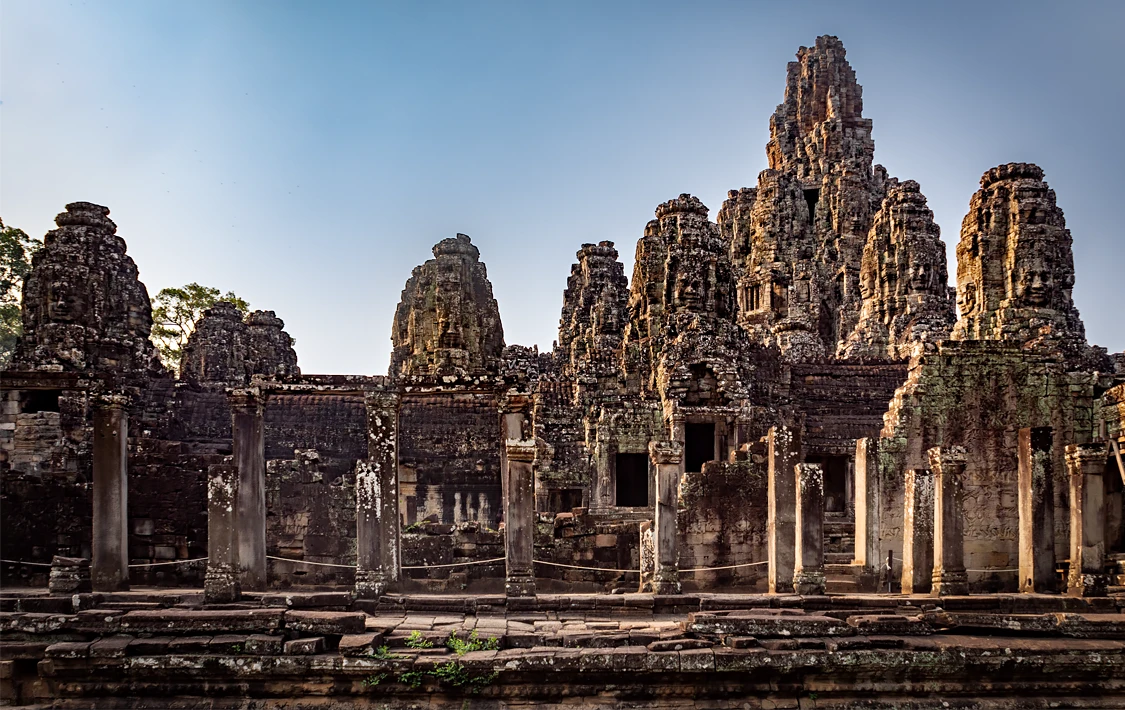
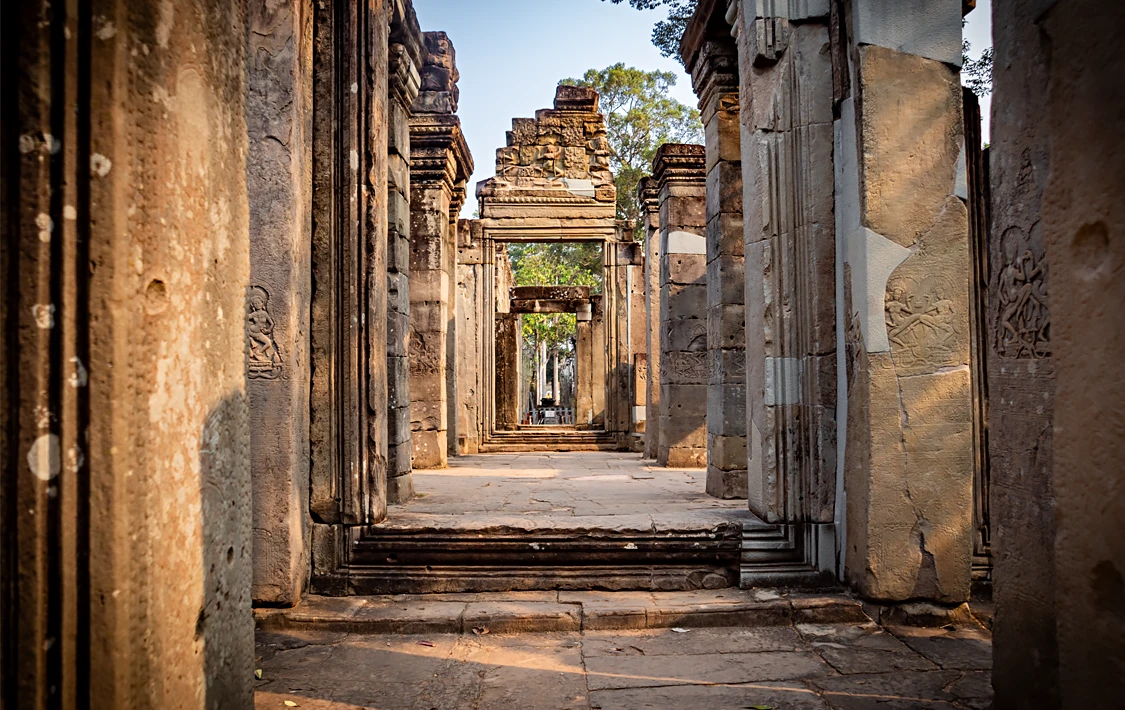
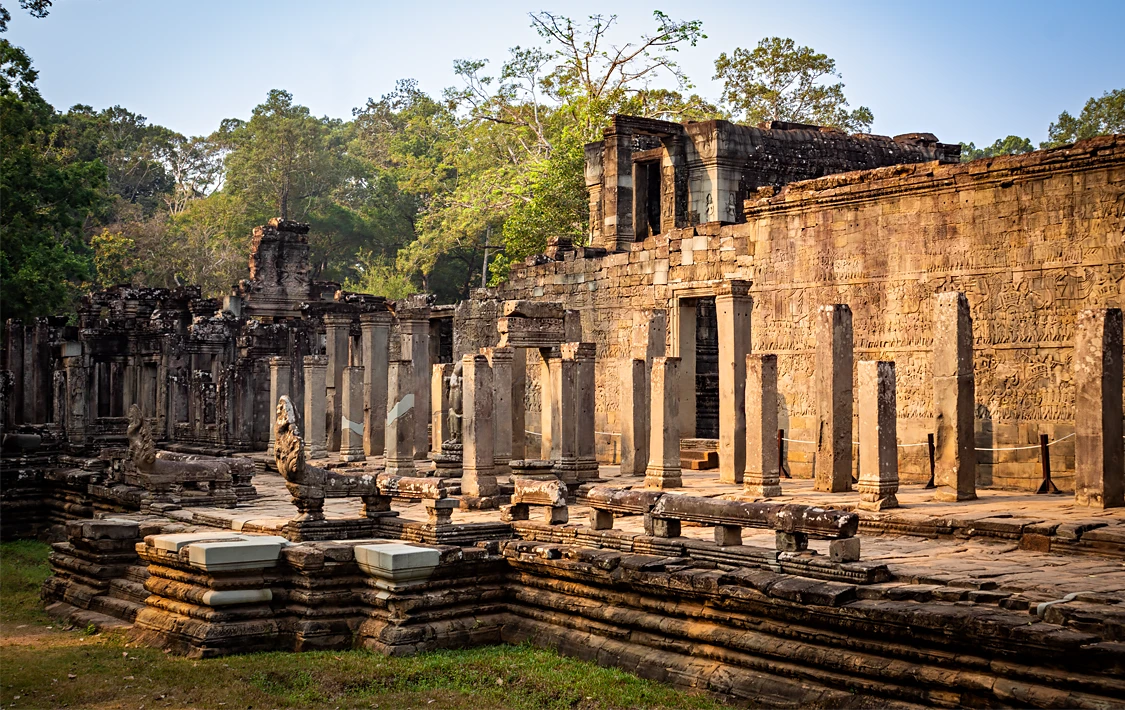
The Bayon Temple forms the center of Angkor Thom and is one of the most iconic and impressive sites within the complex. The highlight of the temple is its intricately carved towers, decorated with massive stone faces.
Originally, Bayon was surrounded by 54 towers, each representing a province of the Angkor Empire – today, 37 of them still remain. In total, around 200 faces and thousands of detailed reliefs can be found throughout the temple.
Alongside Angkor Wat, Bayon is one of the top attractions in the Angkor Archaeological Park and is therefore very popular with visitors.
Angkor Thom – Der Baphuon Temple

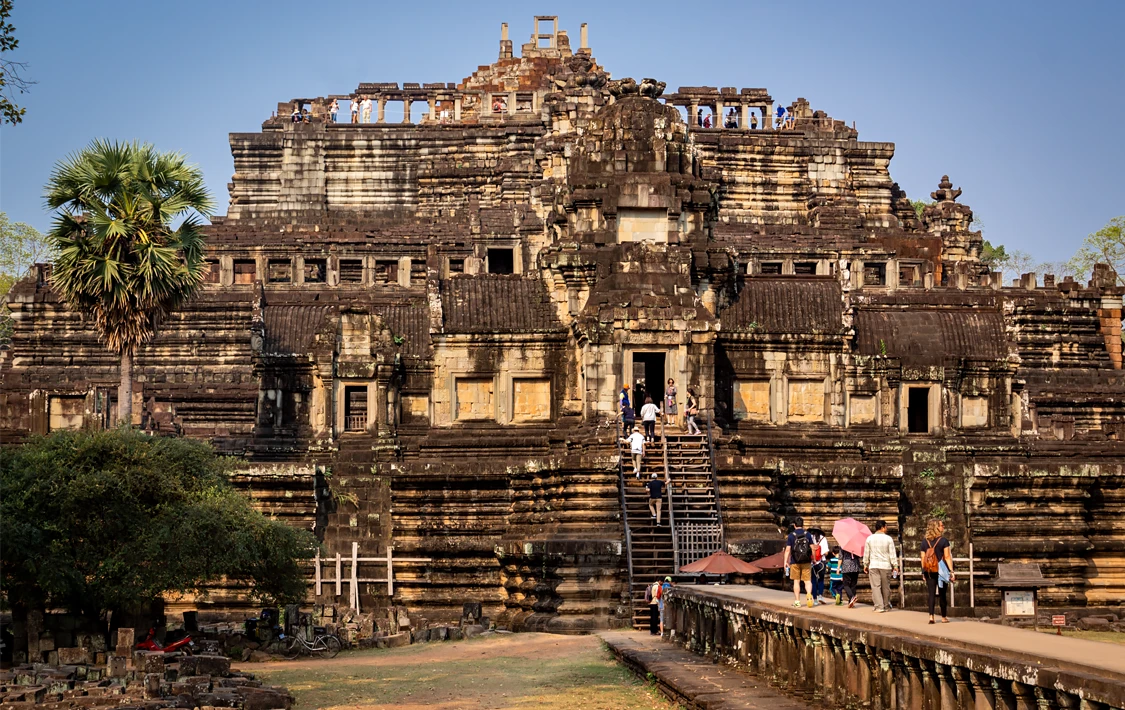
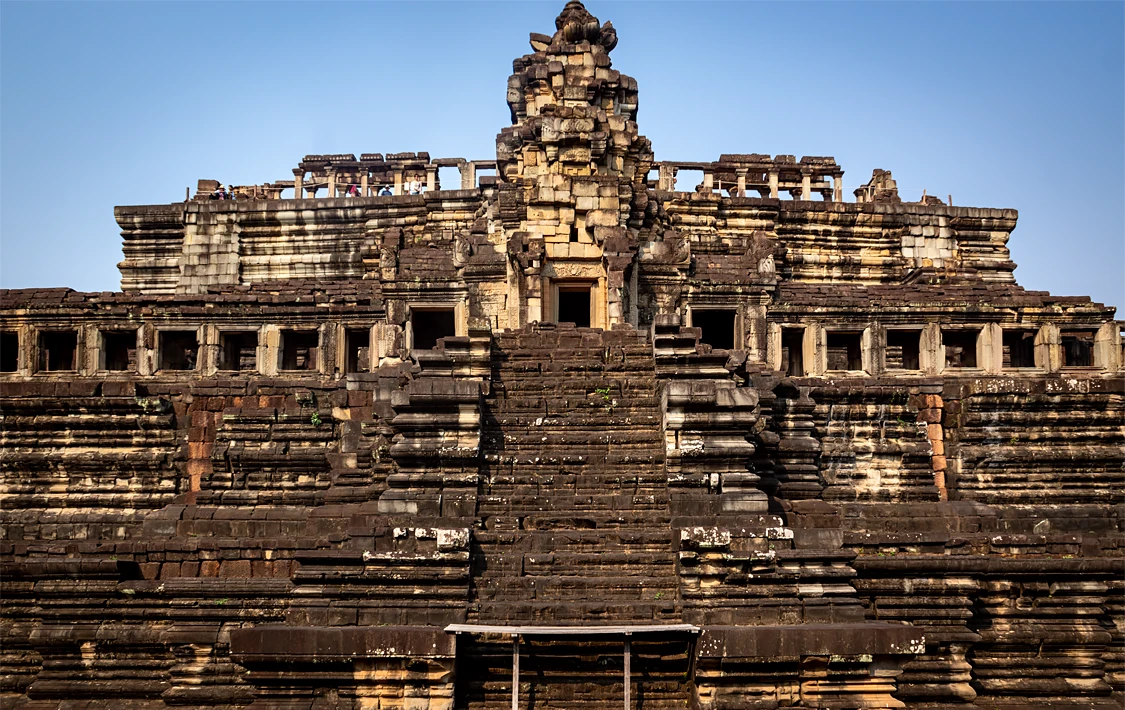

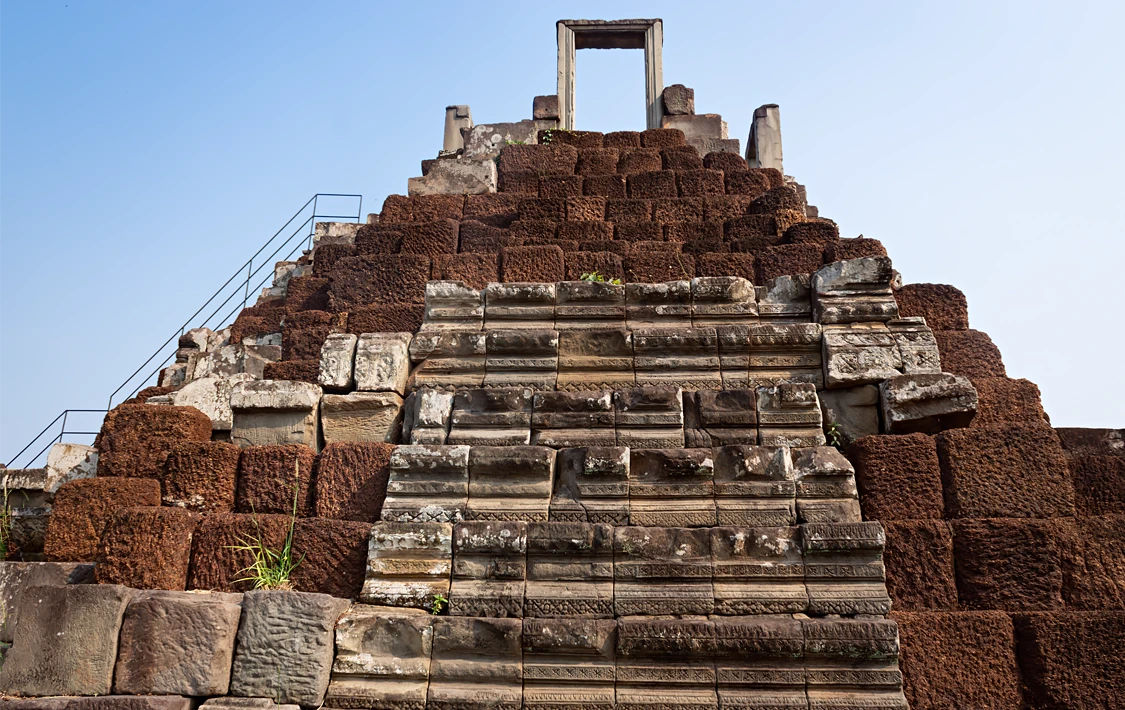
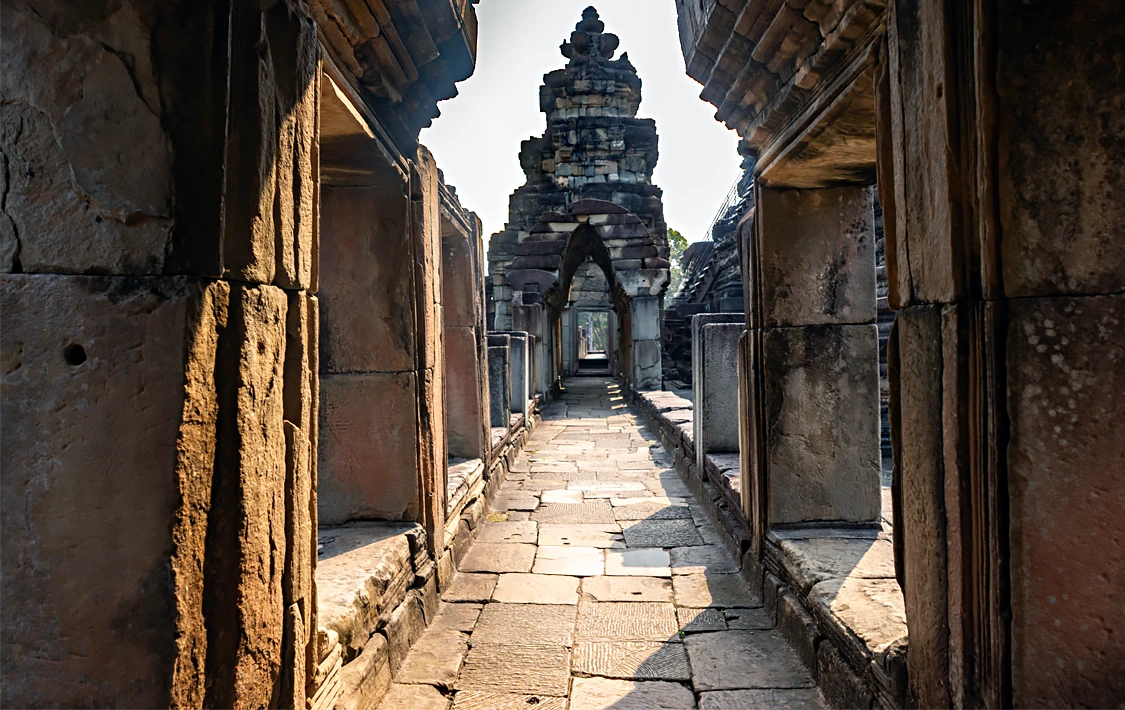
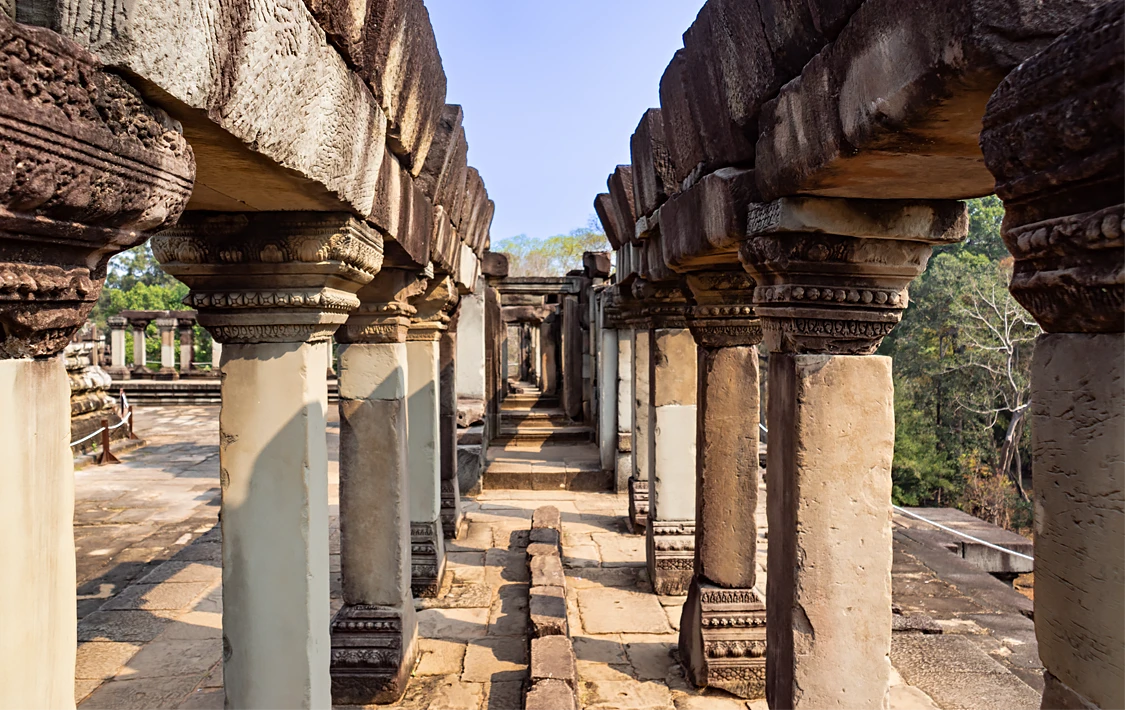
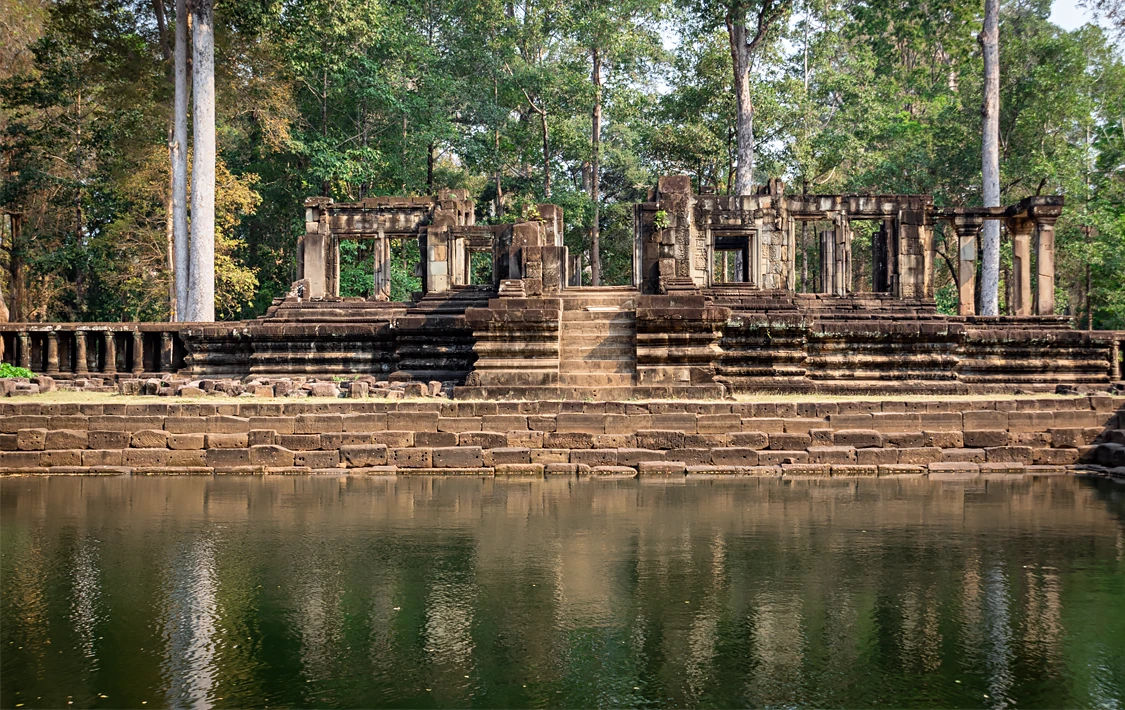
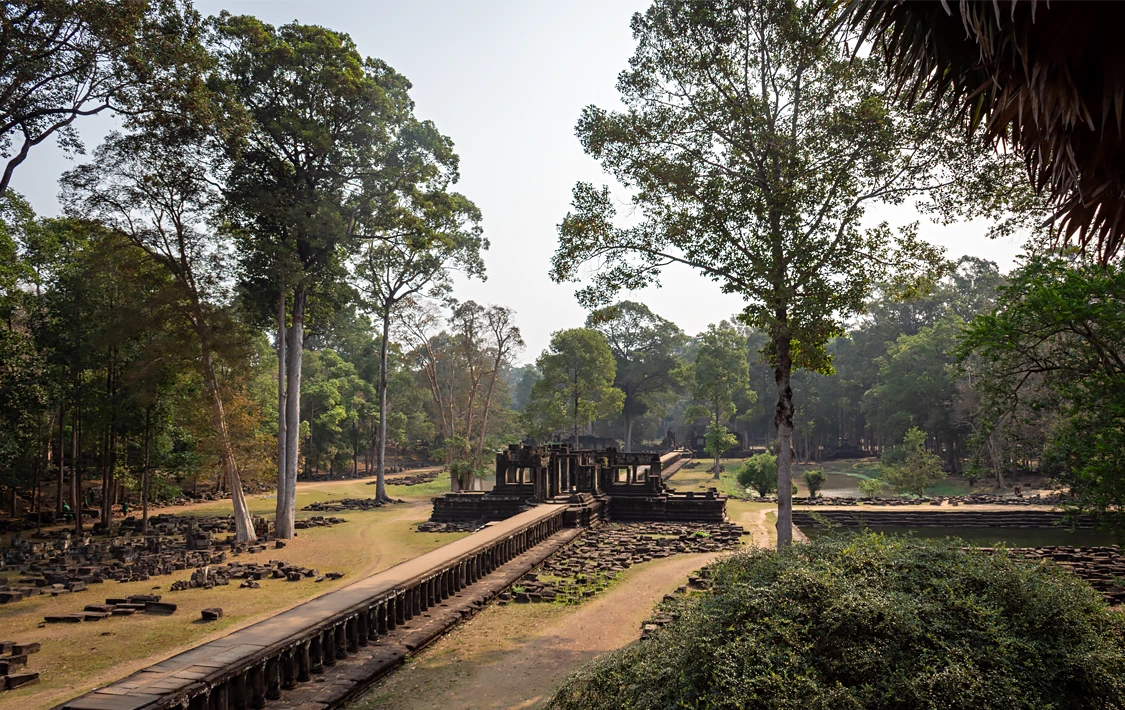
The Baphuon Temple is, alongside Bayon, one of the most well-known temple complexes within the city of Angkor Thom. You reach the site via a stone causeway of around 180 meters, leading to a structure built across four terrace levels. Baphuon underwent one of the most extensive restoration projects in the Angkor Archaeological Park, lasting nearly 50 years.
The lowest level of Baphuon is impressive in size, measuring approximately 425 by 125 meters and rising about 24 meters high. Once you’ve made the climb, you’ll be rewarded with stunning views over the temple and the surrounding landscape.
Compared to Angkor Wat or the Bayon Temple, the atmosphere here is noticeably quieter and less crowded.
Angkor Thom – Der Preah Palilay Temple
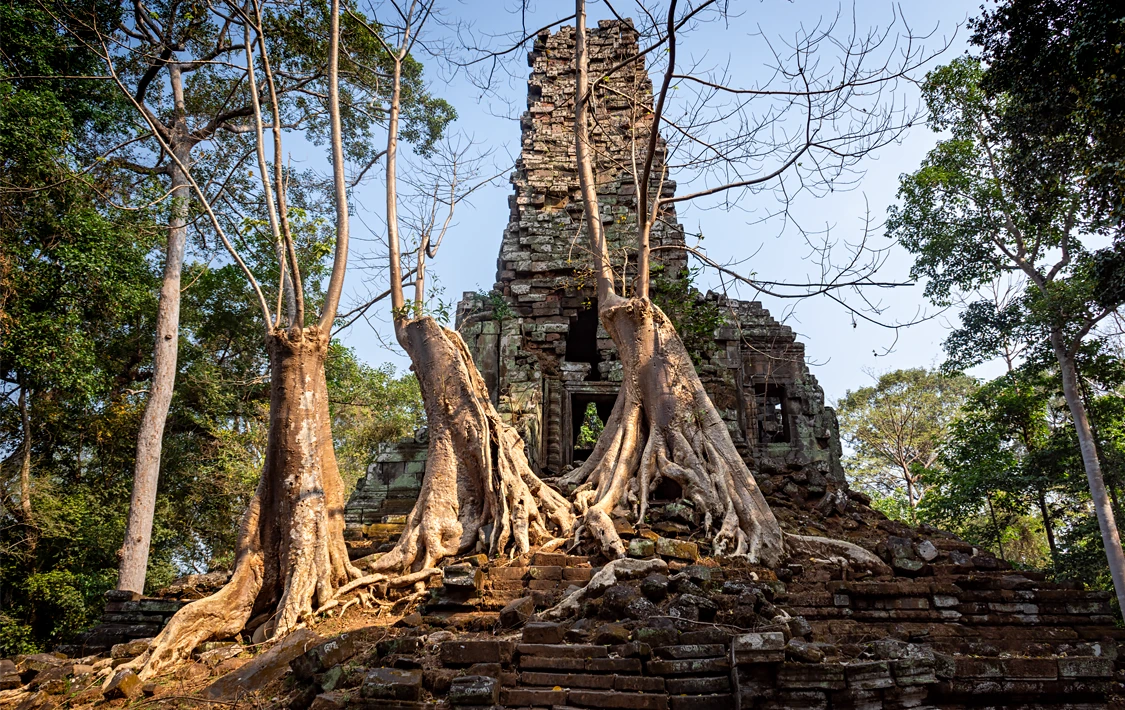
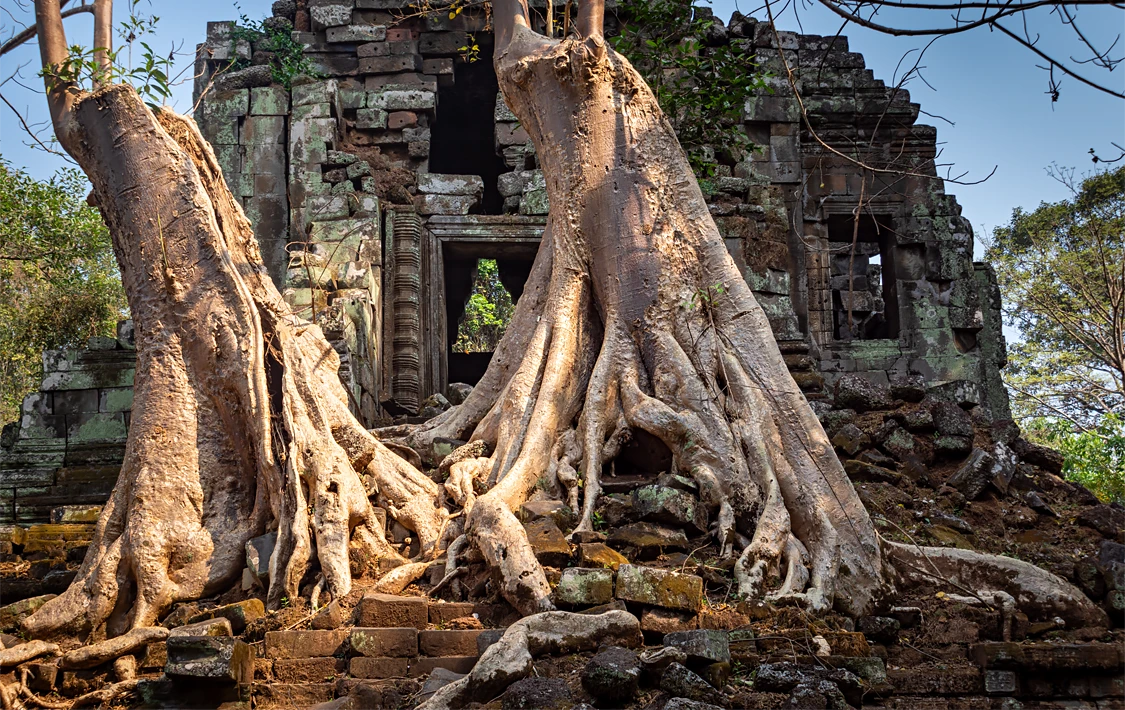


The Preah Palilay Temple is a small and charming temple, set in a peaceful and idyllic environment. One of its most distinctive features are the three tree trunks growing on the temple’s platform.
Due to its smaller size, this temple is relatively quiet and visited by fewer tourists. While there are certainly more spectacular temples in Angkor, it’s definitely worth a short stop to capture a few beautiful photos.
Other temples around Angkor Wat & Angkor Thom
In the immediate surroundings of Angkor Thom, you’ll find many more temples to explore. It’s nearly impossible to visit all the sites within the Angkor Archaeological Park in a limited amount of time. Below, I’ll briefly introduce some of the most important ones.
Thommanon & Chau Say Tevoda Temple
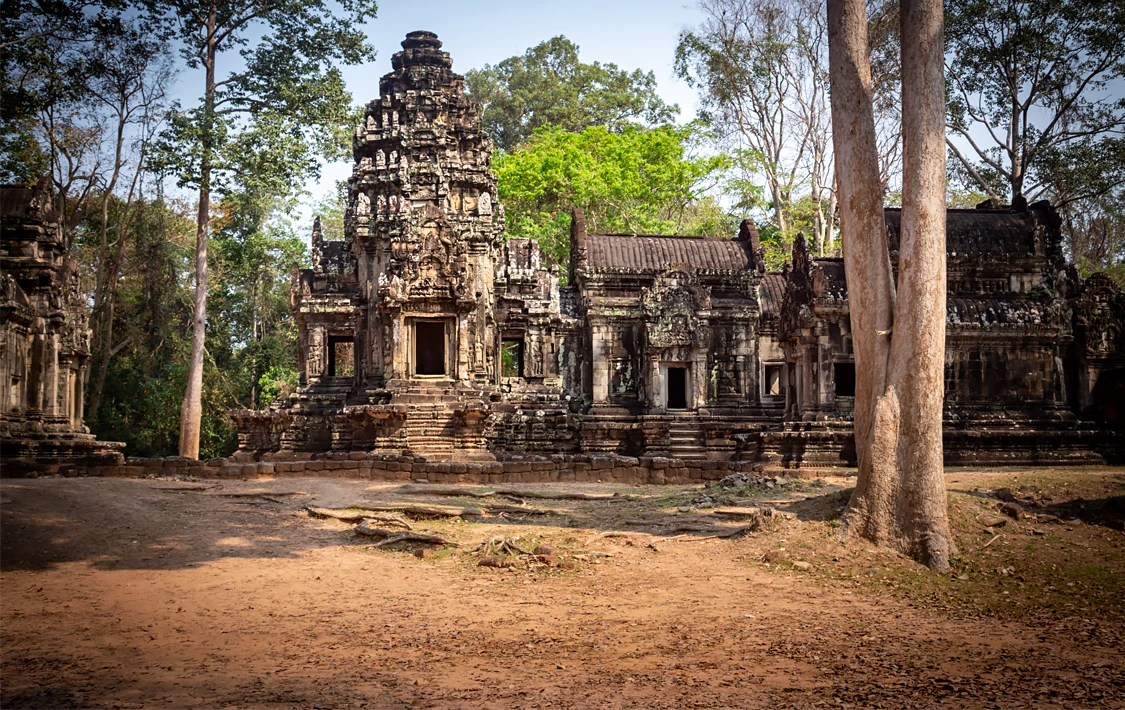

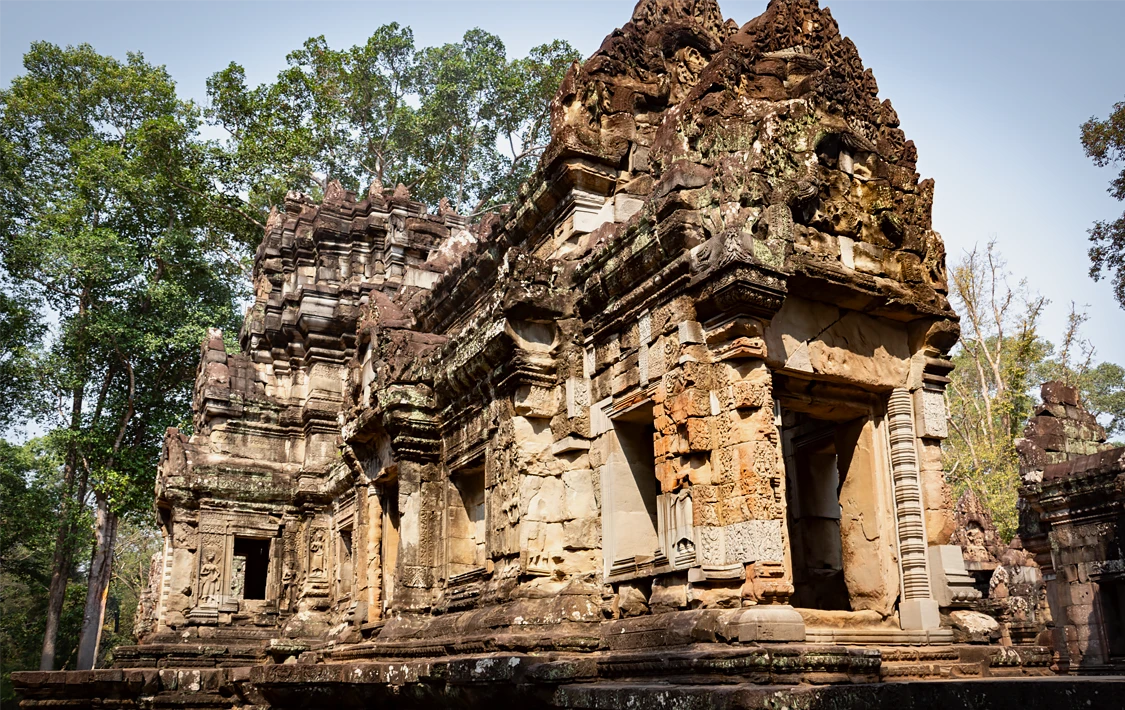
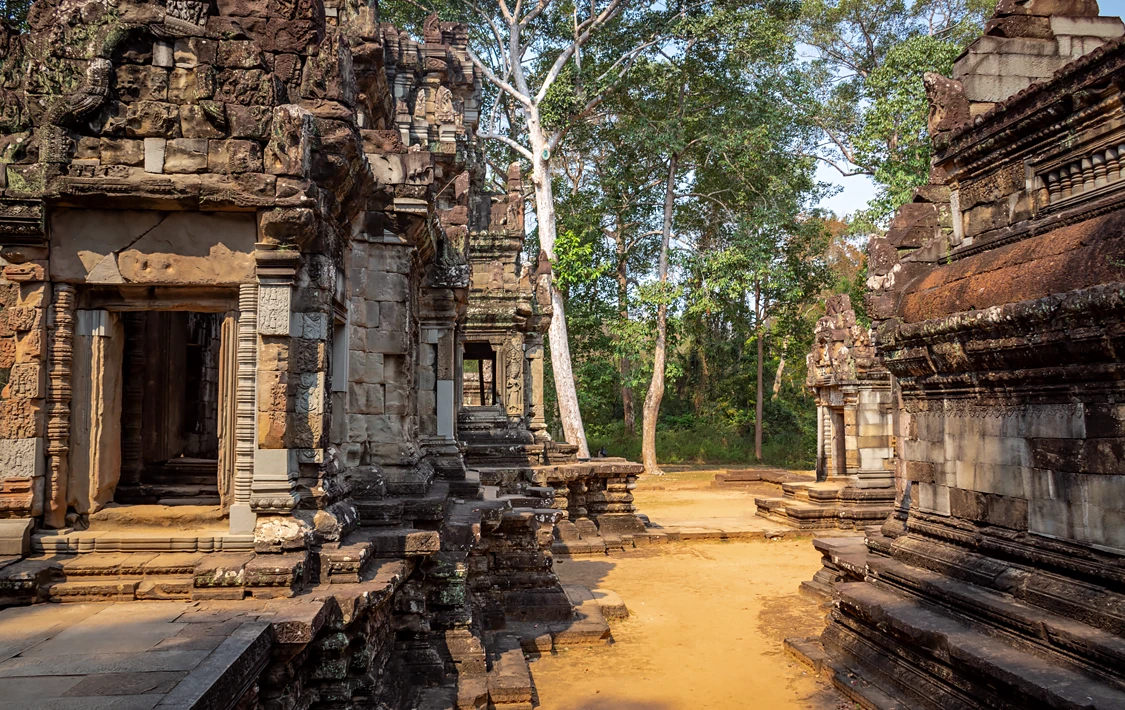

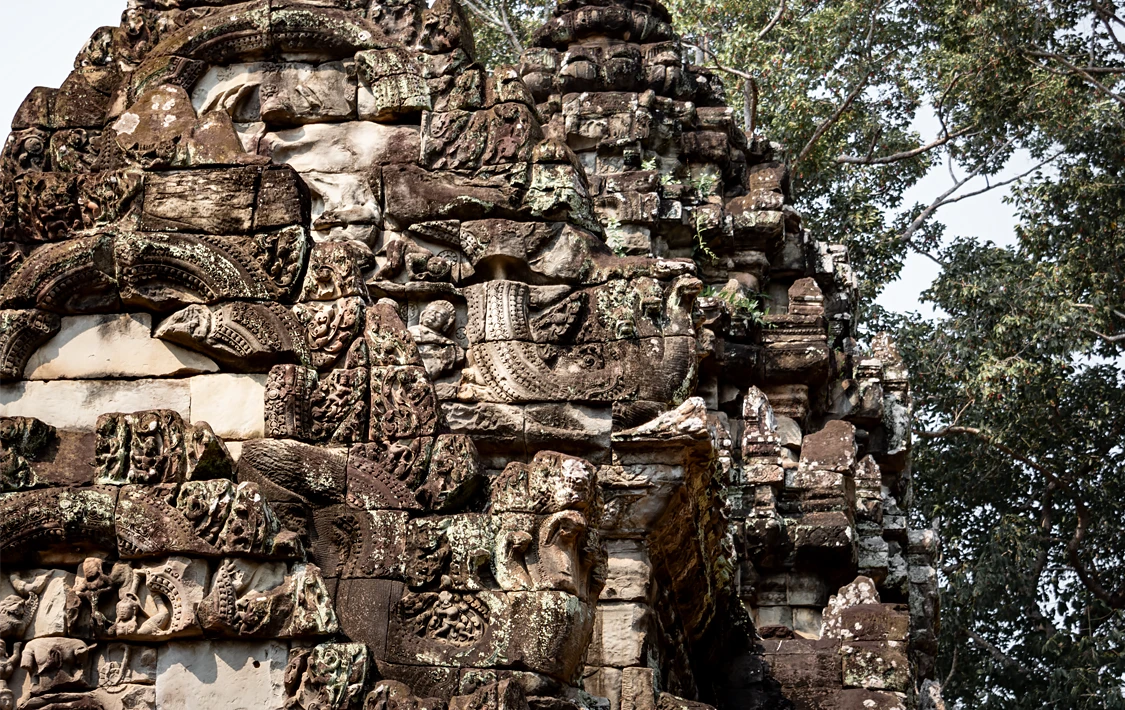
Two small and charming temples that can be explored on a short loop in about 30 minutes. Both sites feature some well-preserved reliefs and are usually skipped by large tour groups – making the atmosphere much more relaxed compared to the main attractions.
The approximately 900-year-old site was extensively restored as early as the 1960s.
Ta Keo Temple

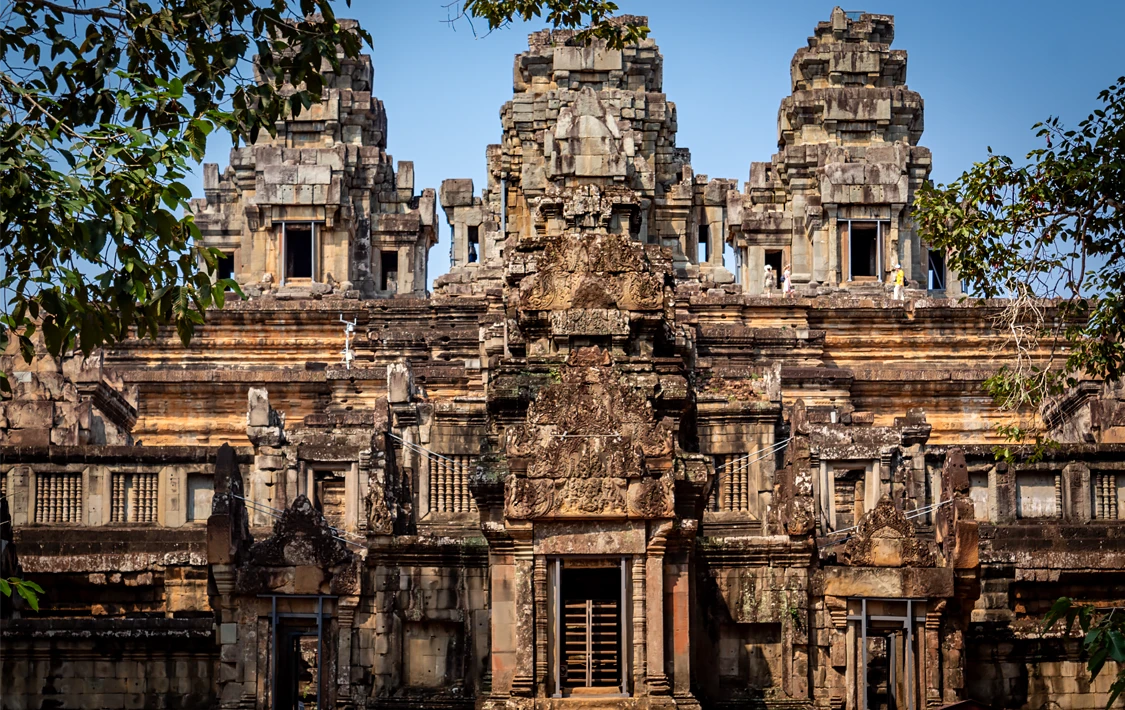
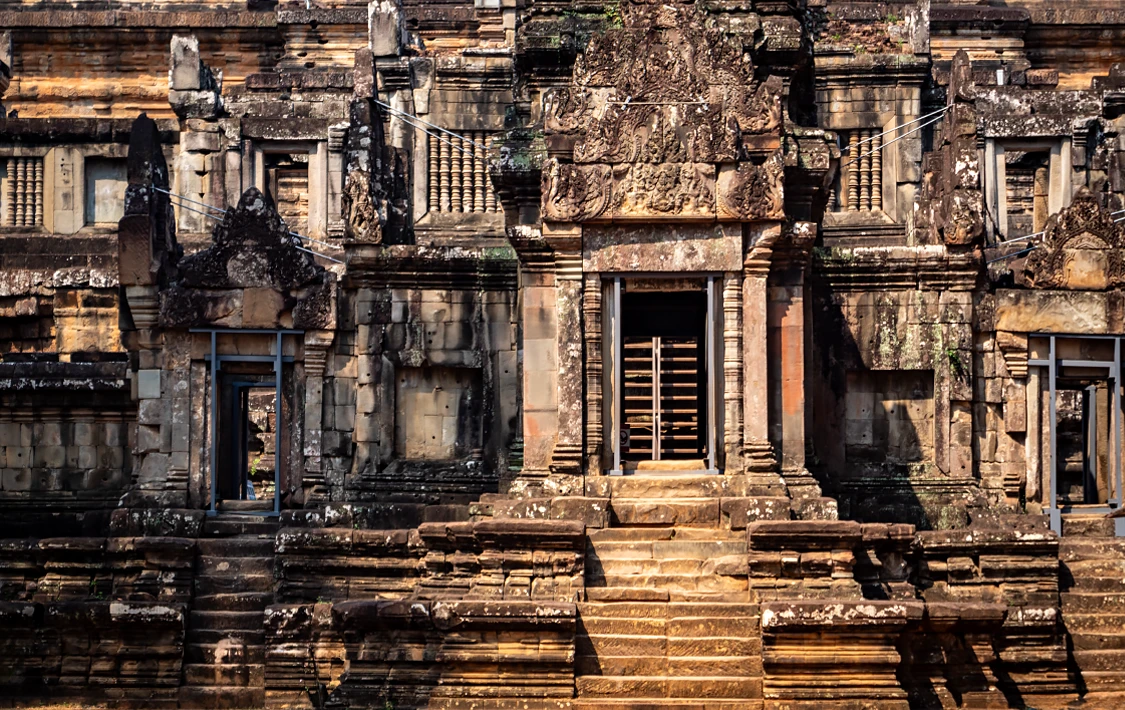
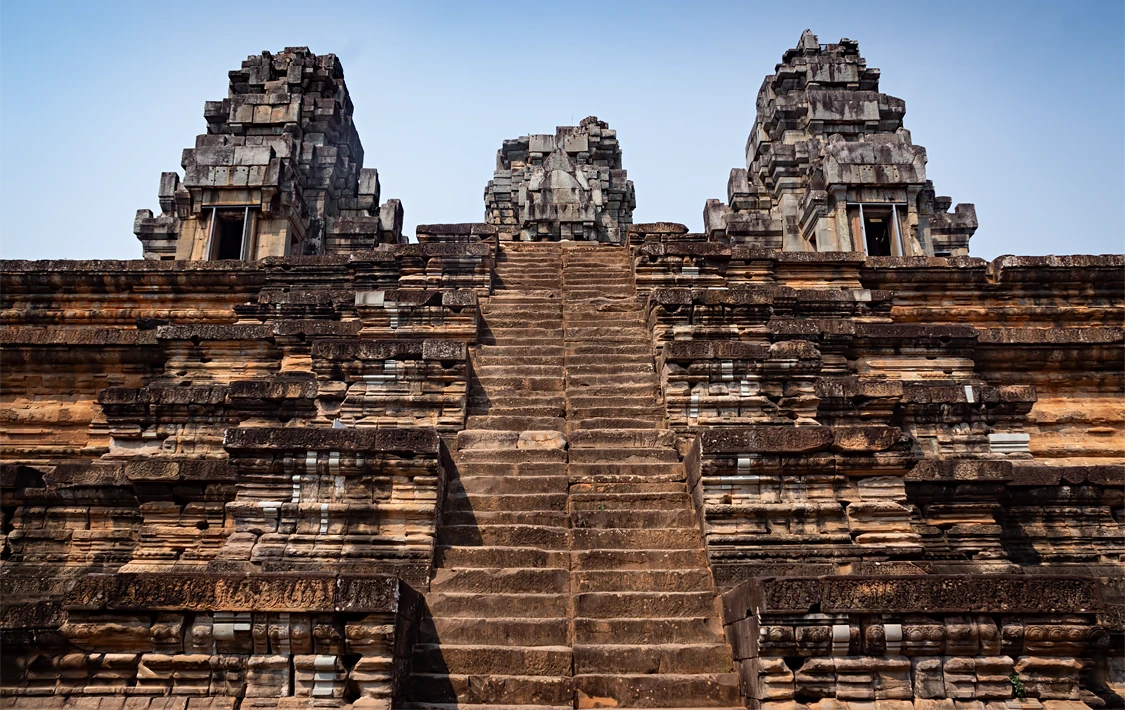
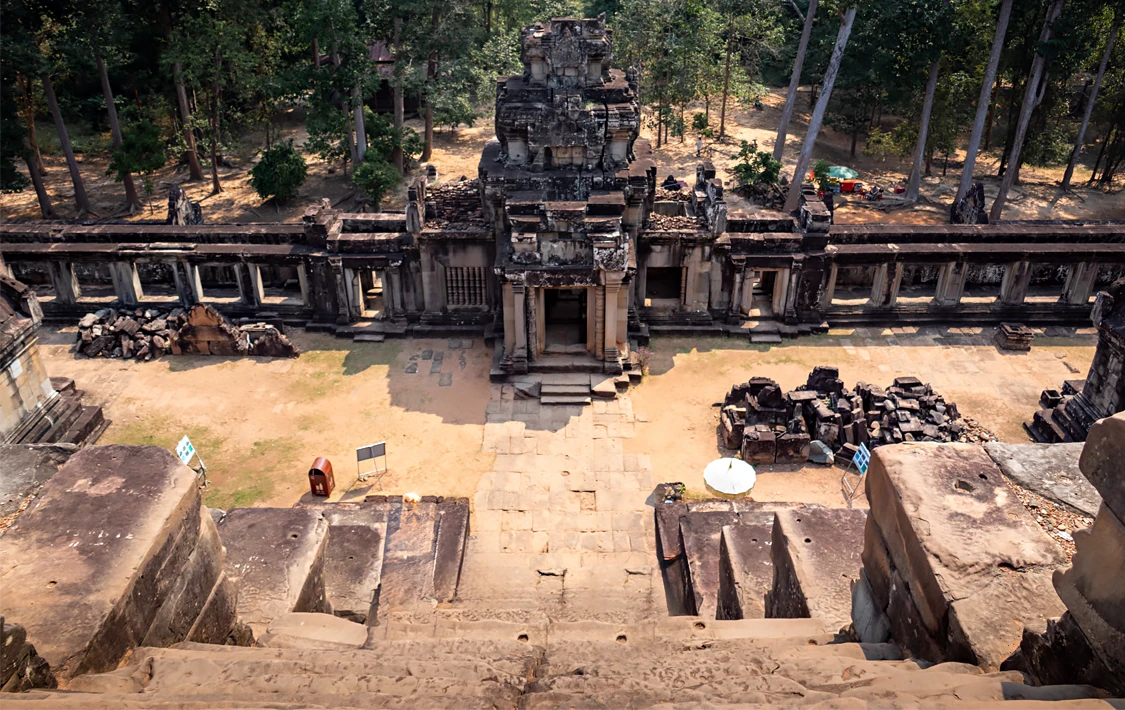
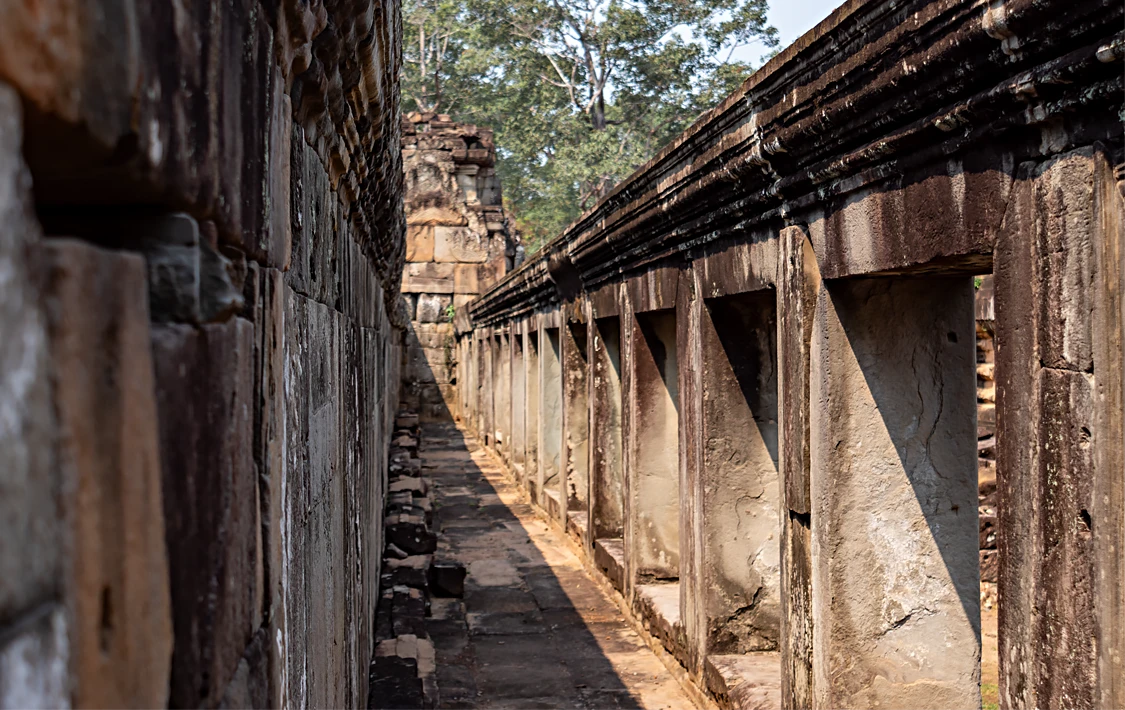
What I find particularly fascinating about Ta Keo Temple is the story behind it. Originally built around the year 1000, Ta Keo was intended to become the new state temple of Angkor and was dedicated to the Hindu god Shiva. However, just before its completion, the temple was struck by lightning.
At the time, this was considered a bad omen, and as a result, construction was abandoned and the temple was never finished. Considering the immense resources required to build such a structure back then, it’s remarkable that it was simply left to decay.
The name Ta Keo translates to “Crystal Temple,” and for good reason. Due to the lightning strike, most of the decorative carvings were never completed, leaving the walls largely plain. The smooth, undecorated surfaces almost resemble crystal – which is how the temple got its name.
Phnom Bakheng Temple

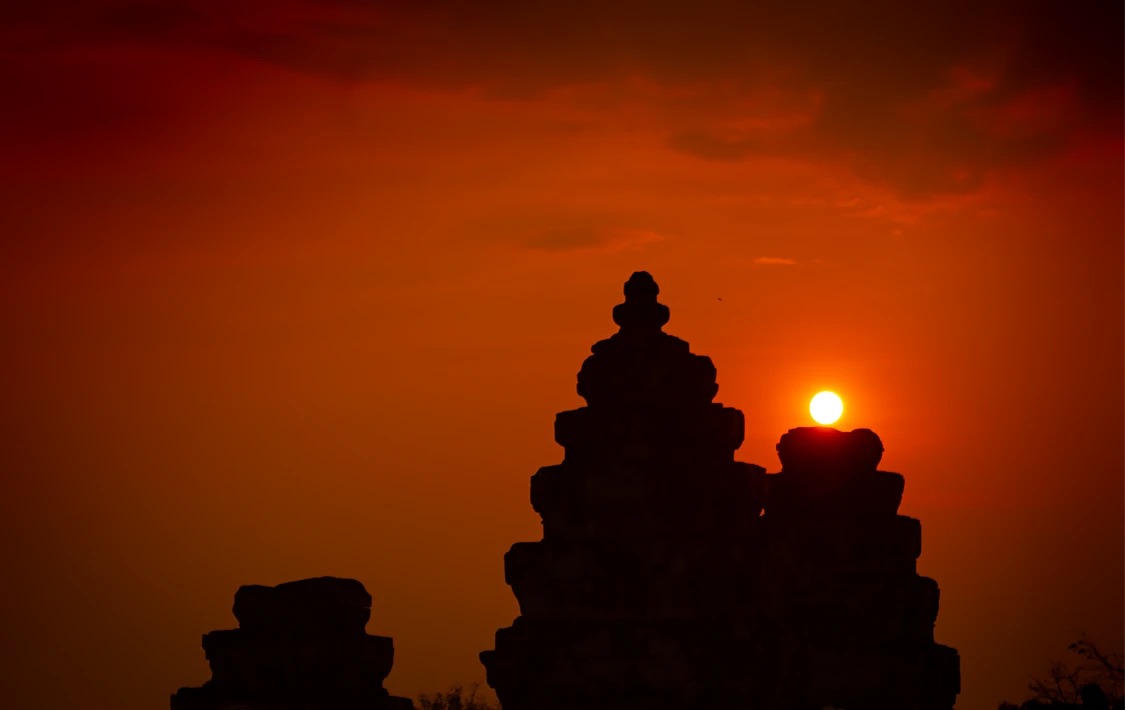

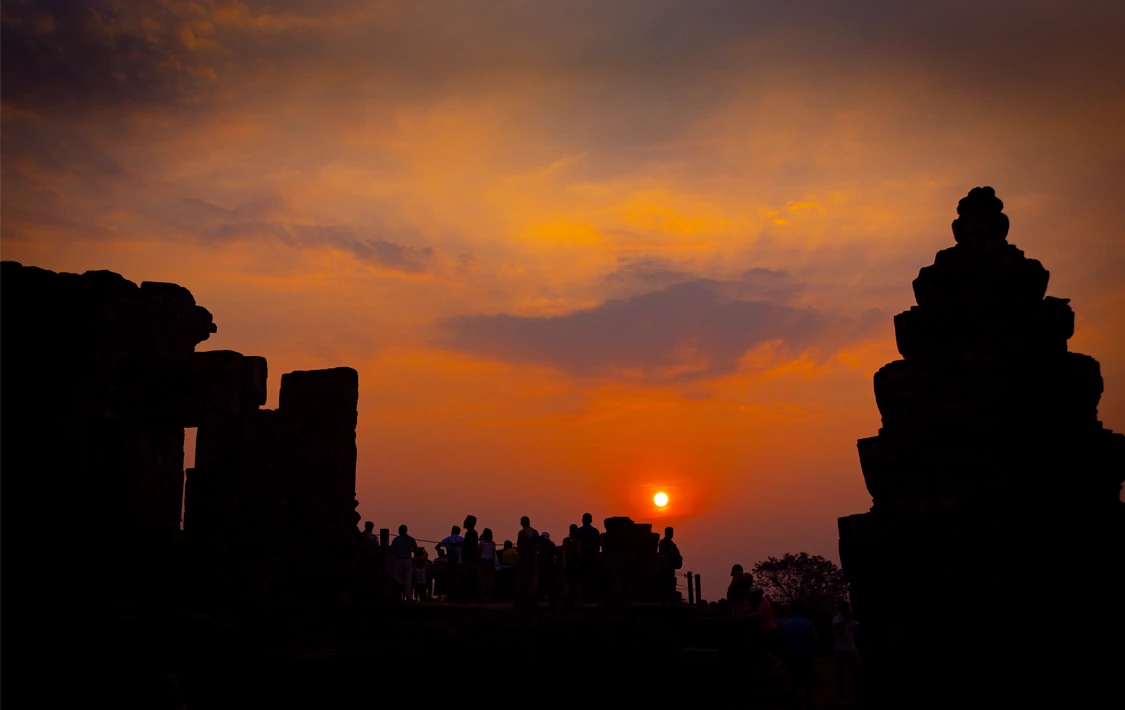
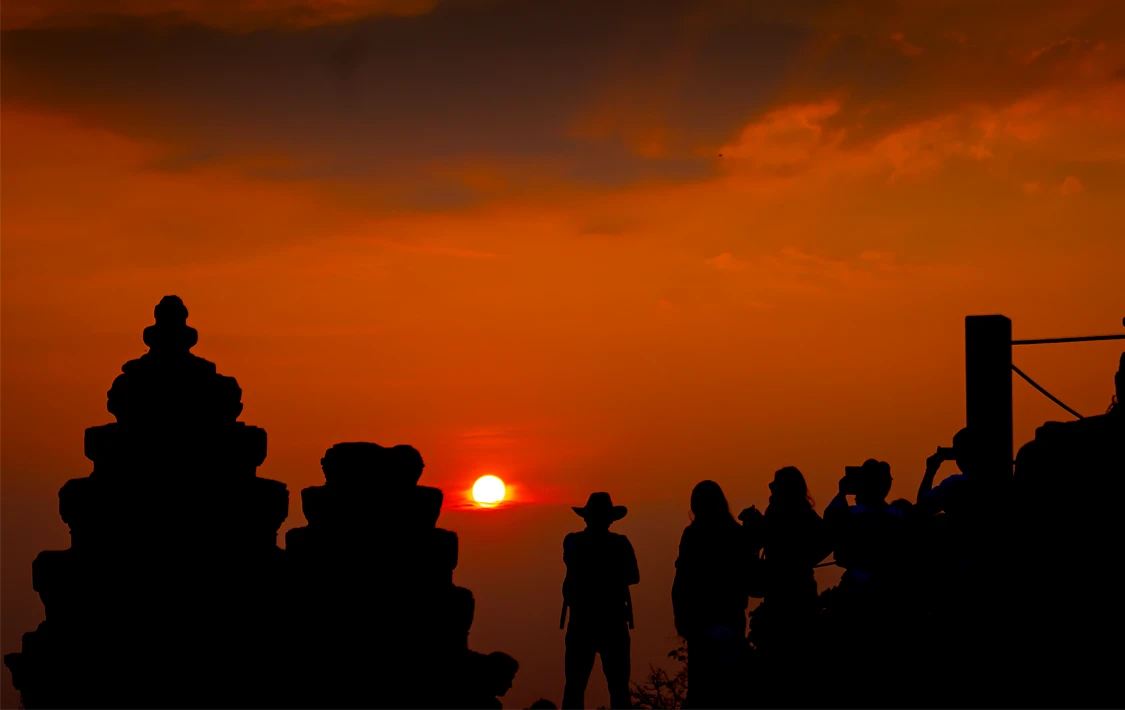
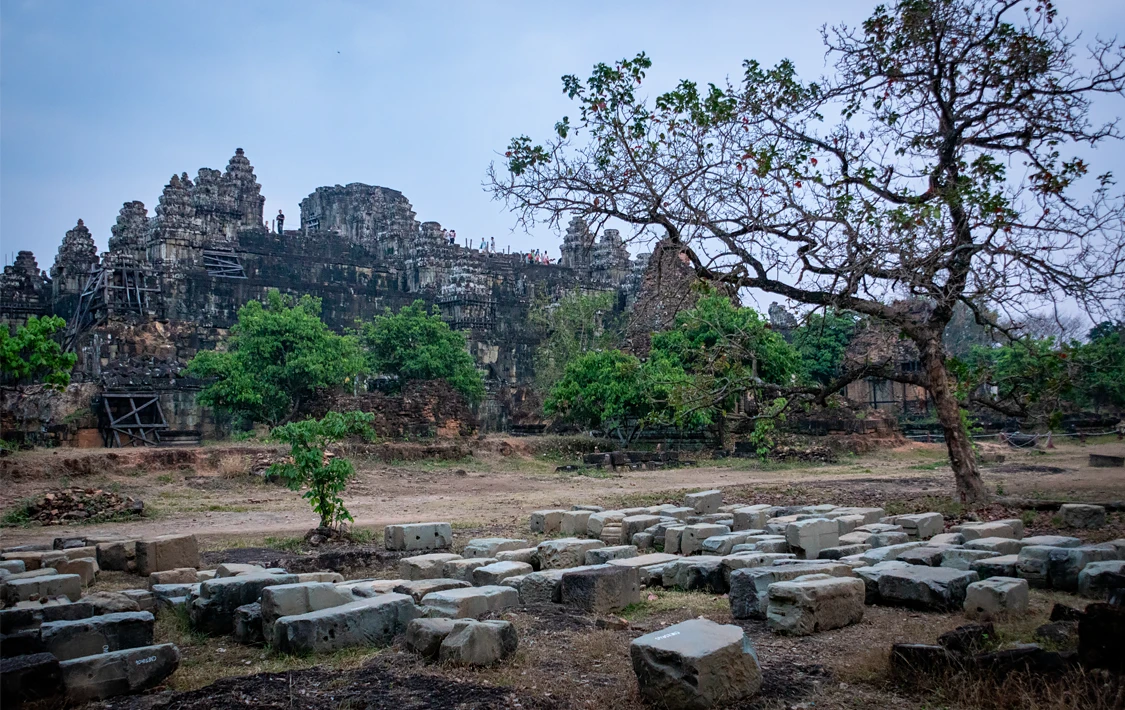
Phnom Bakheng Temple was built around the year 900, making it one of the oldest structures in the entire Angkor Park. It was constructed during the reign of King Yasovarman I, who relocated the capital from Roluos to this area. Phnom Bakheng was designed as a large pyramid-shaped temple and served as the new state temple at the time.
The site also played a role in more recent history. Due to its location on a 55-meter-high hill, the highest point in the otherwise flat Angkor region, the temple became a strategic stronghold during the reign of the Khmer Rouge. From this elevated position, all directions could be monitored far into the surrounding landscape.
Today, the temple is especially popular for sunrise and sunset. While it’s relatively quiet during the day, it gets extremely crowded early in the morning and in the evening – so much so that visitor limits have been introduced. Only around 300 people are allowed on the temple at a time to enjoy the colorful spectacle in the sky.
Make sure to arrive early to avoid disappointment. Also important to note: there are no options to buy water or food at the temple. Since you may spend several hours here, including waiting time, be sure to bring enough supplies – your body will thank you in the heat.
Ta Prohm Temple – Famous from Hollywood
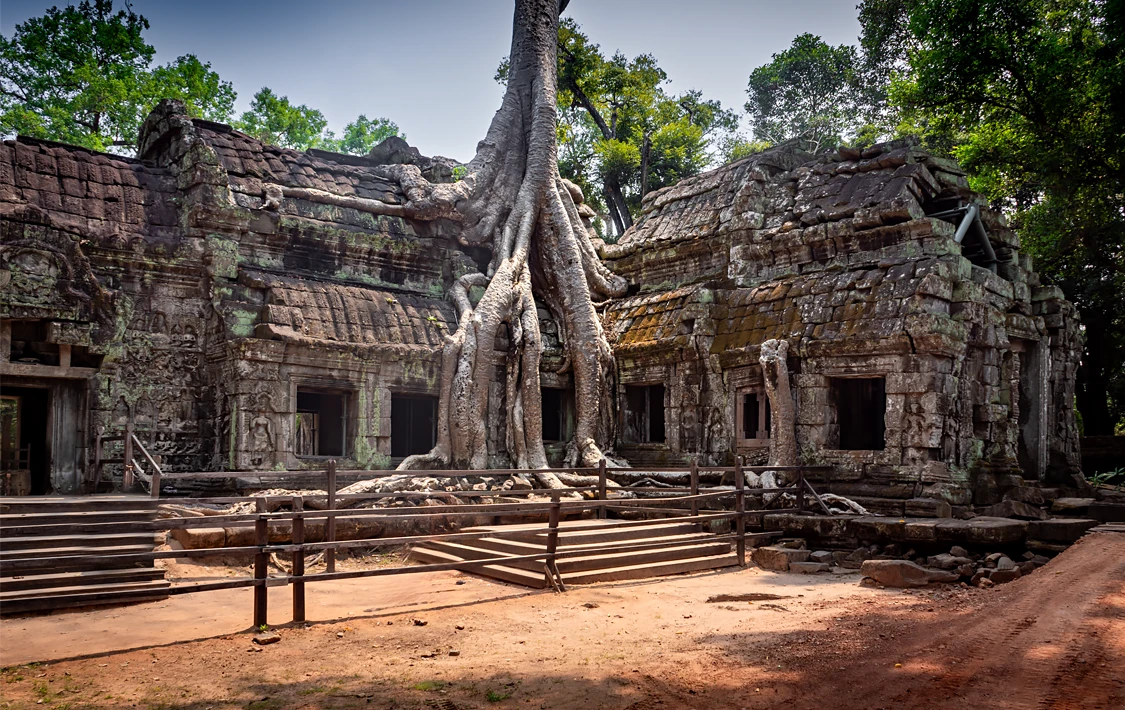


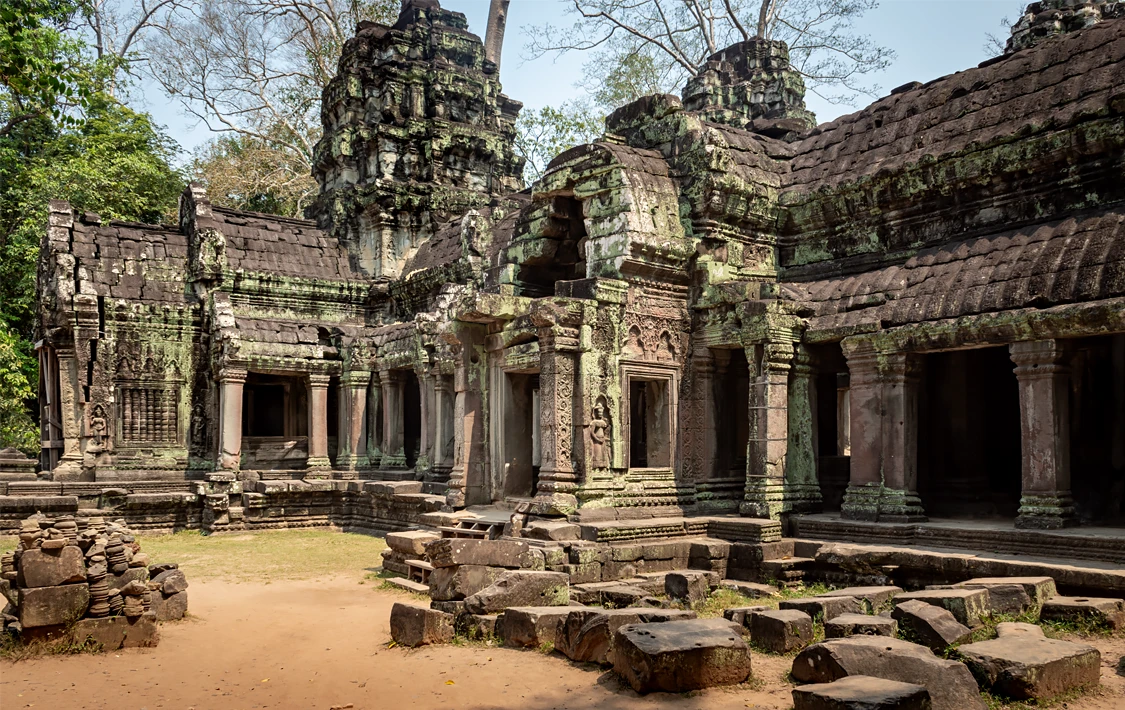
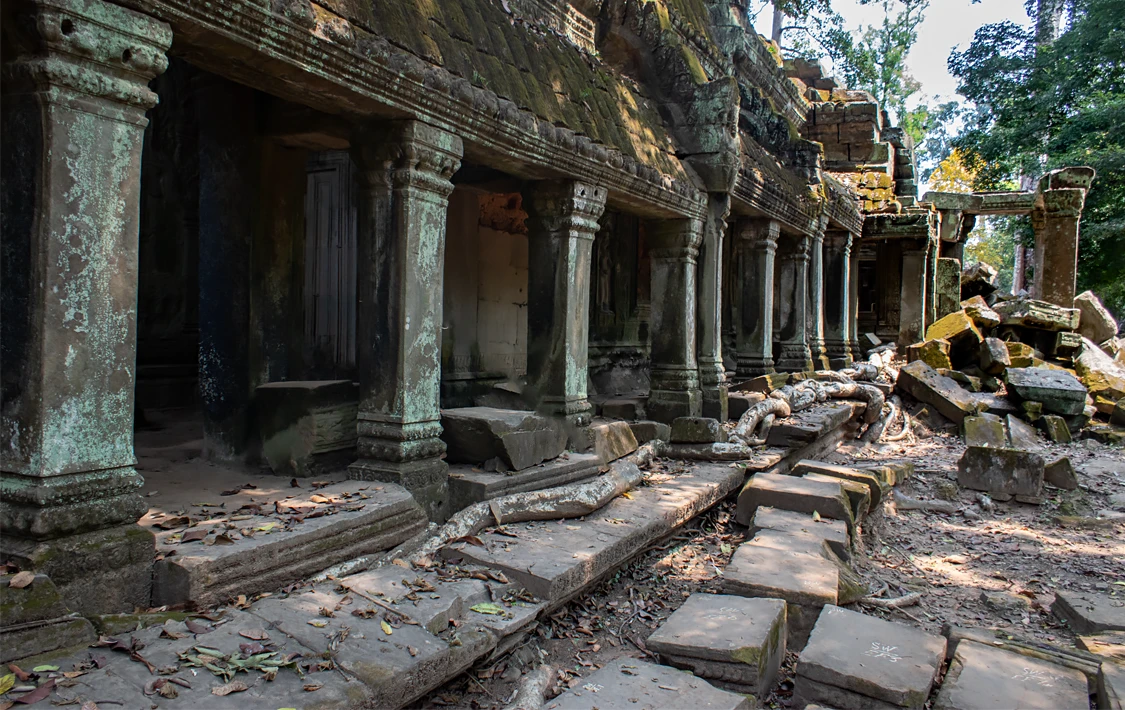

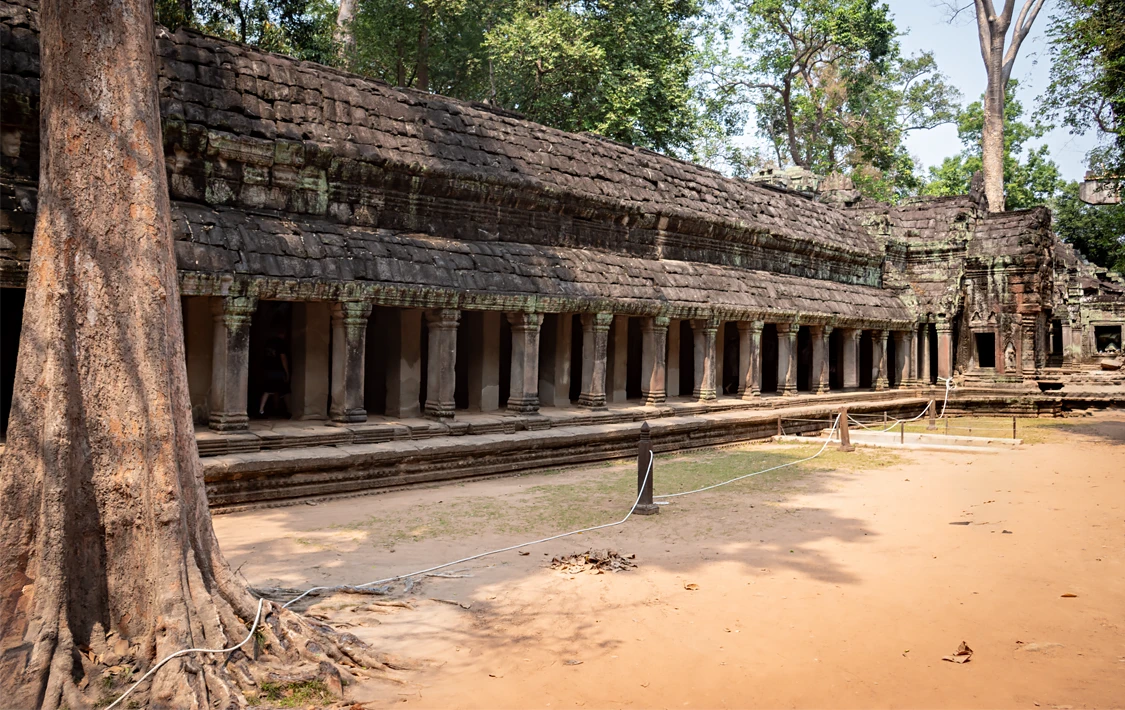
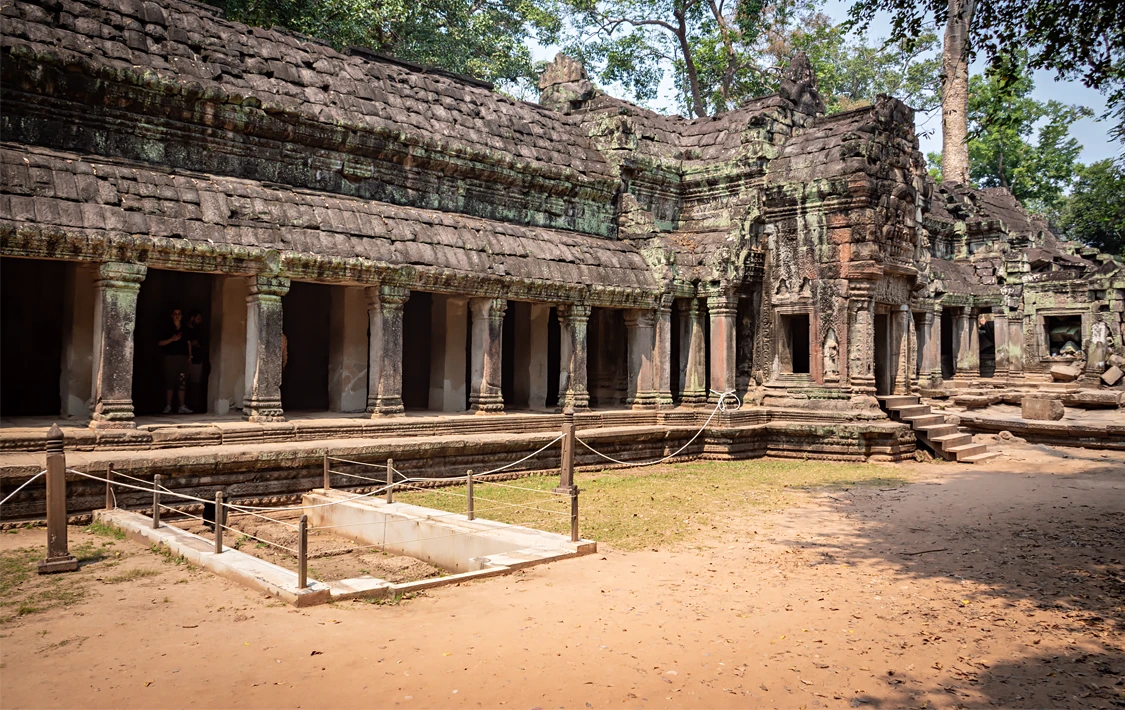
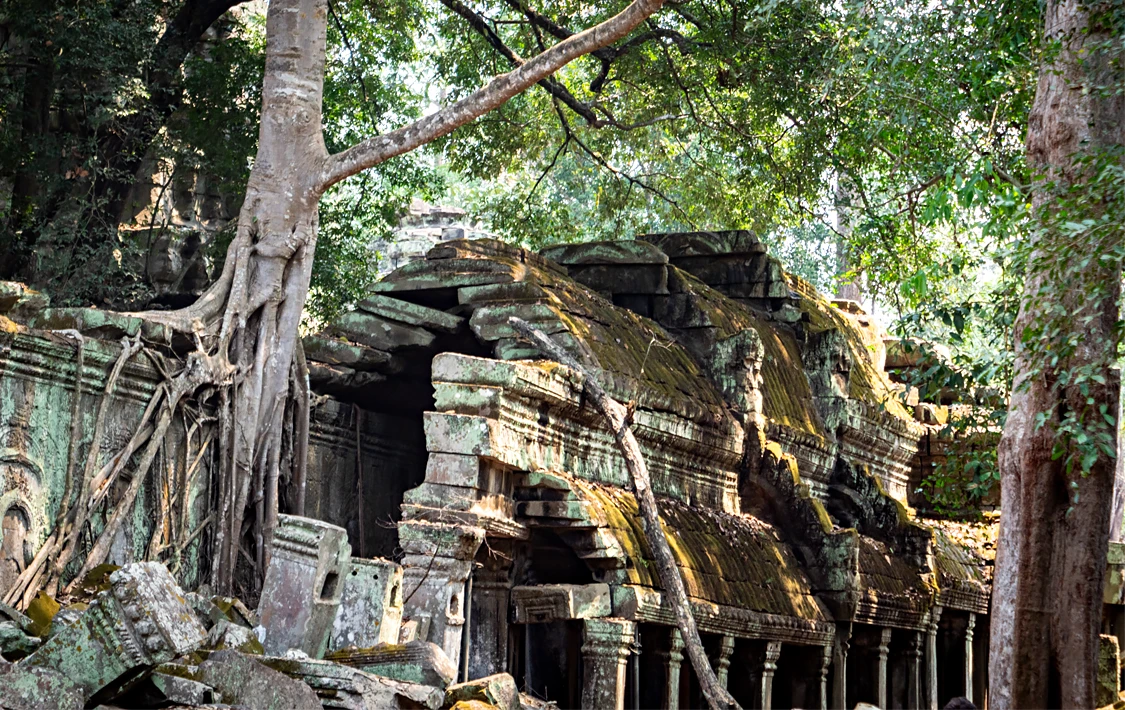
Do you enjoy Hollywood movies? Then you might have already seen Ta Prohm Temple on the big screen or on TV. In the blockbuster Tomb Raider, Angelina Jolie, starring as Lara Croft, searches for the relic “Triangle of Light,” said to grant its owner control over time. One part of this relic is eventually found in Ta Prohm Temple.
A defining feature of this 12th-century temple complex is the way massive tree roots have grown over and through its walls and structures. Although the site has been restored, it was intentionally left in a partially ruined state to preserve the atmosphere of how it was originally rediscovered.
At its peak, the area surrounding the temple was home to around 3,100 villages with a total population of approximately 80,000 people, covering an area of nearly 60 hectares.
Preah Khan Temple
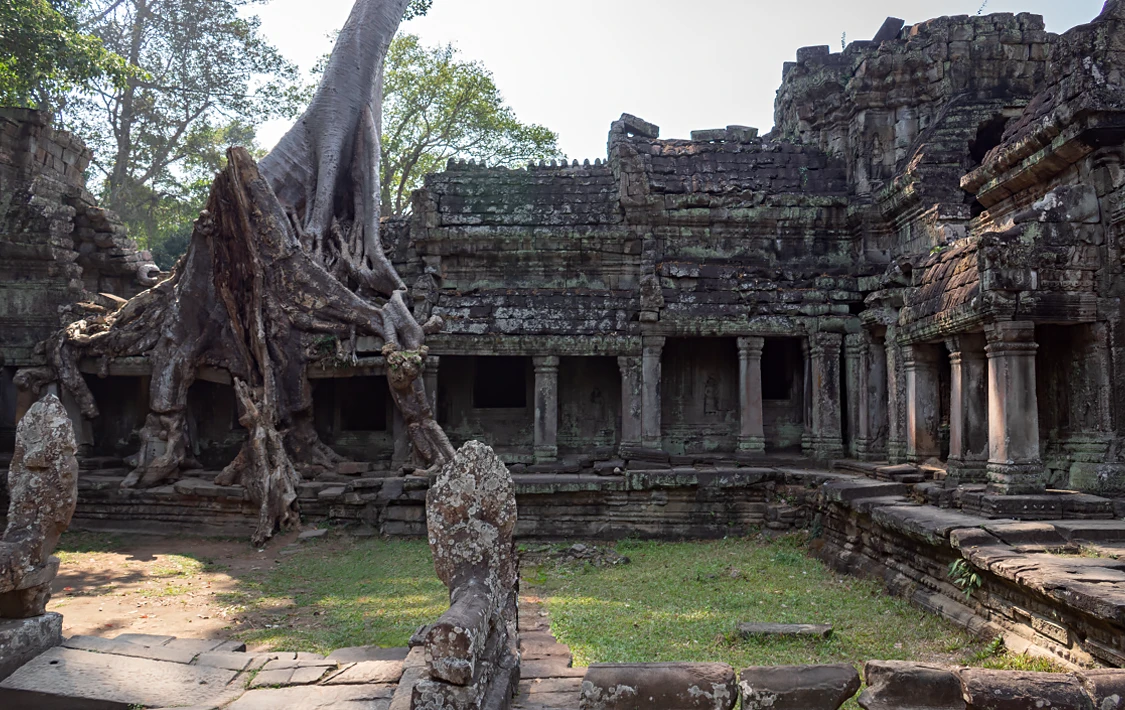
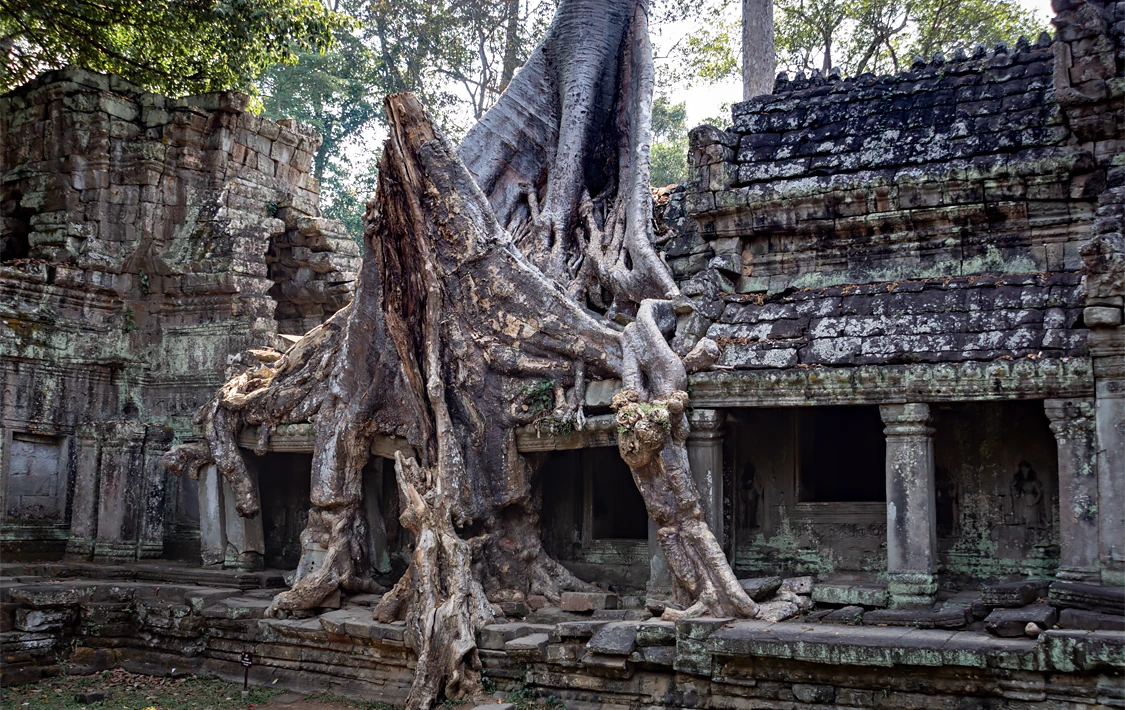
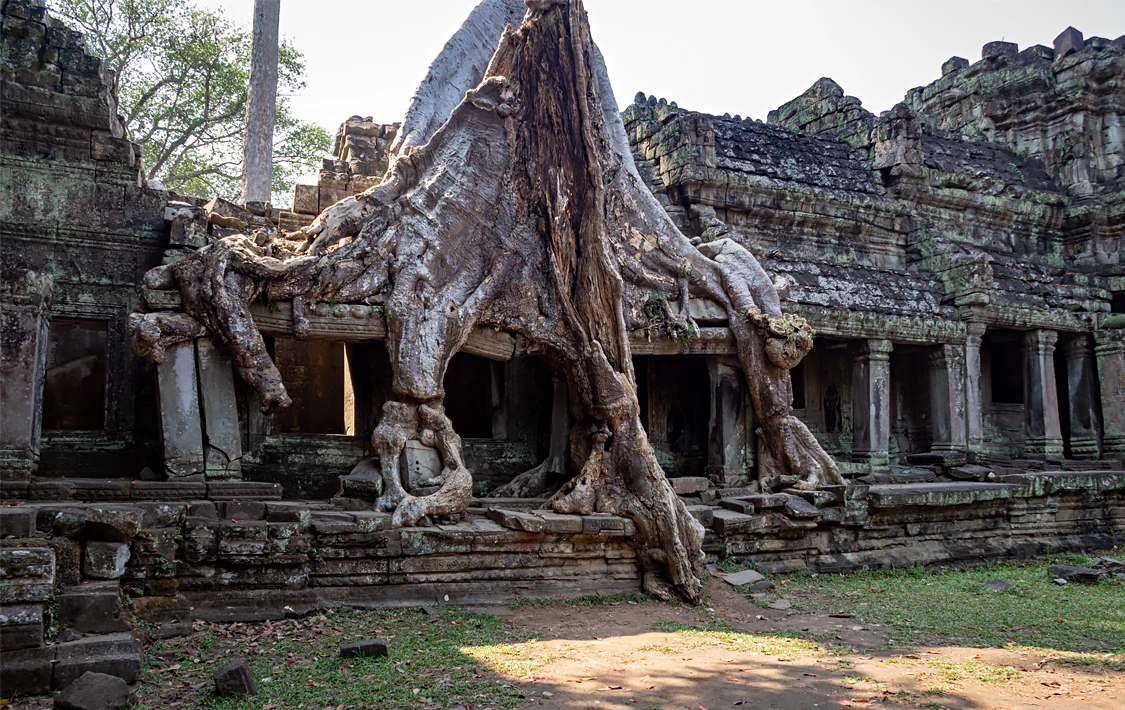
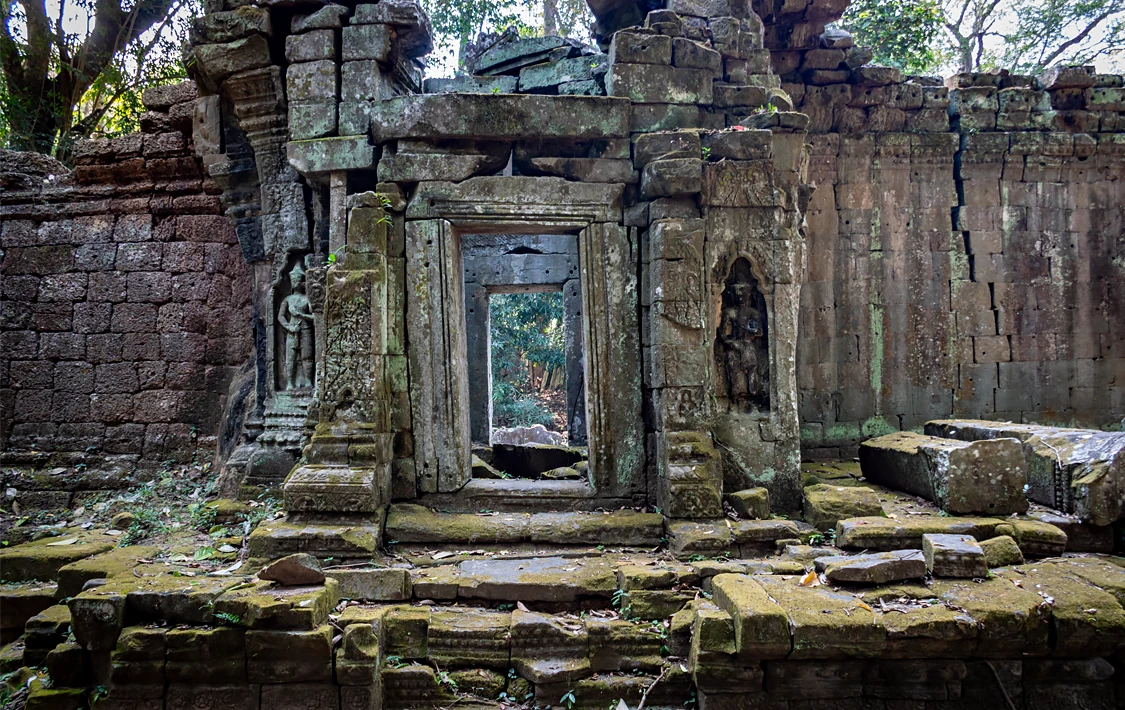
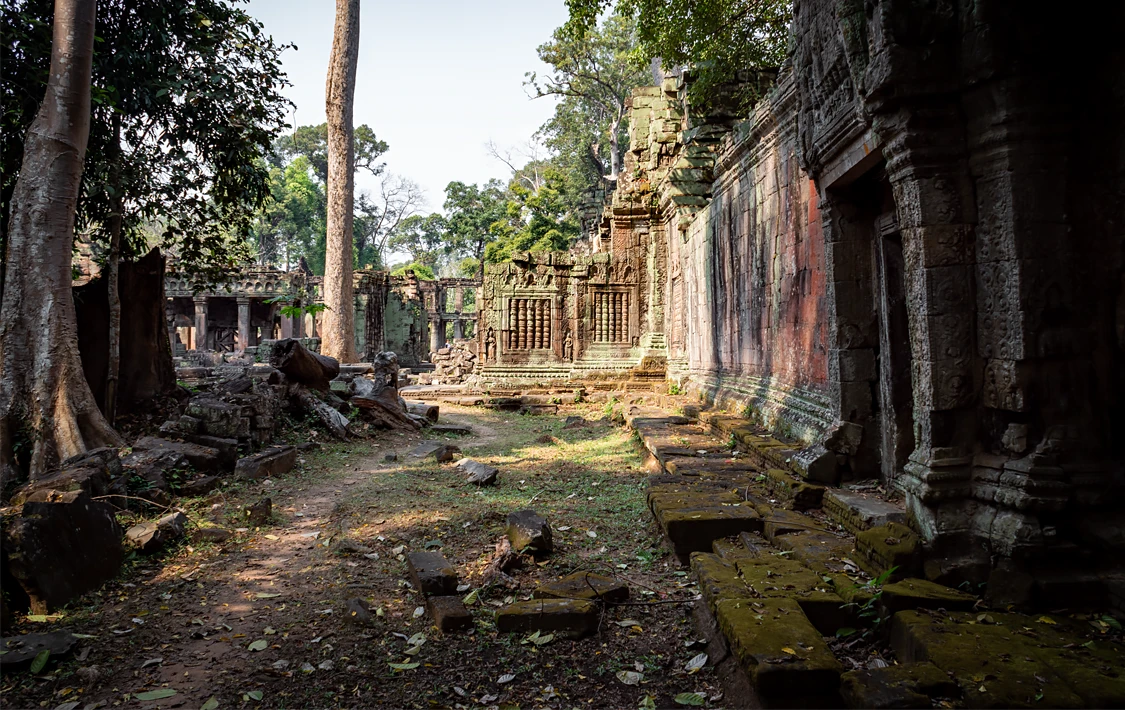
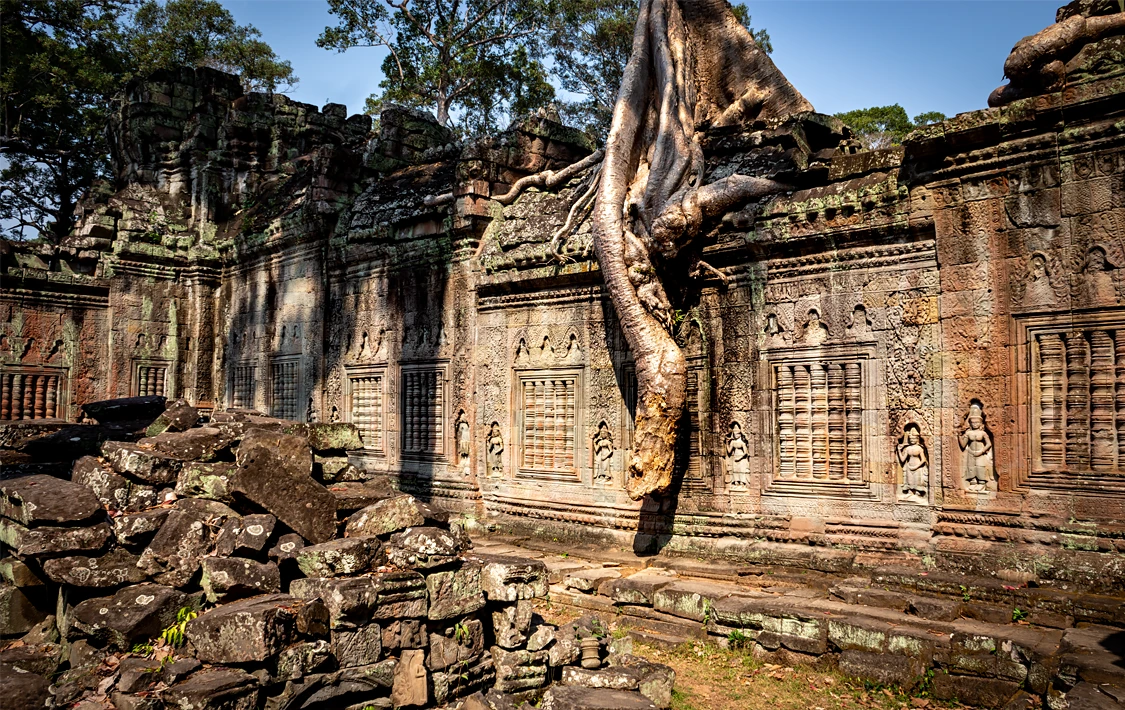

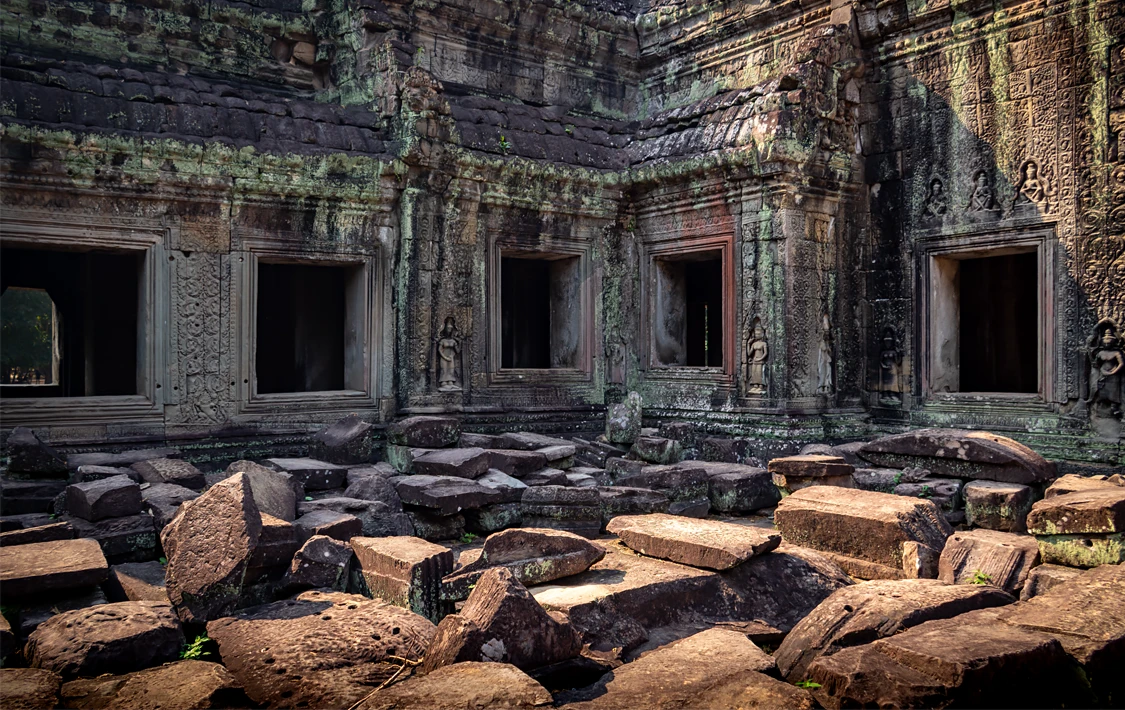
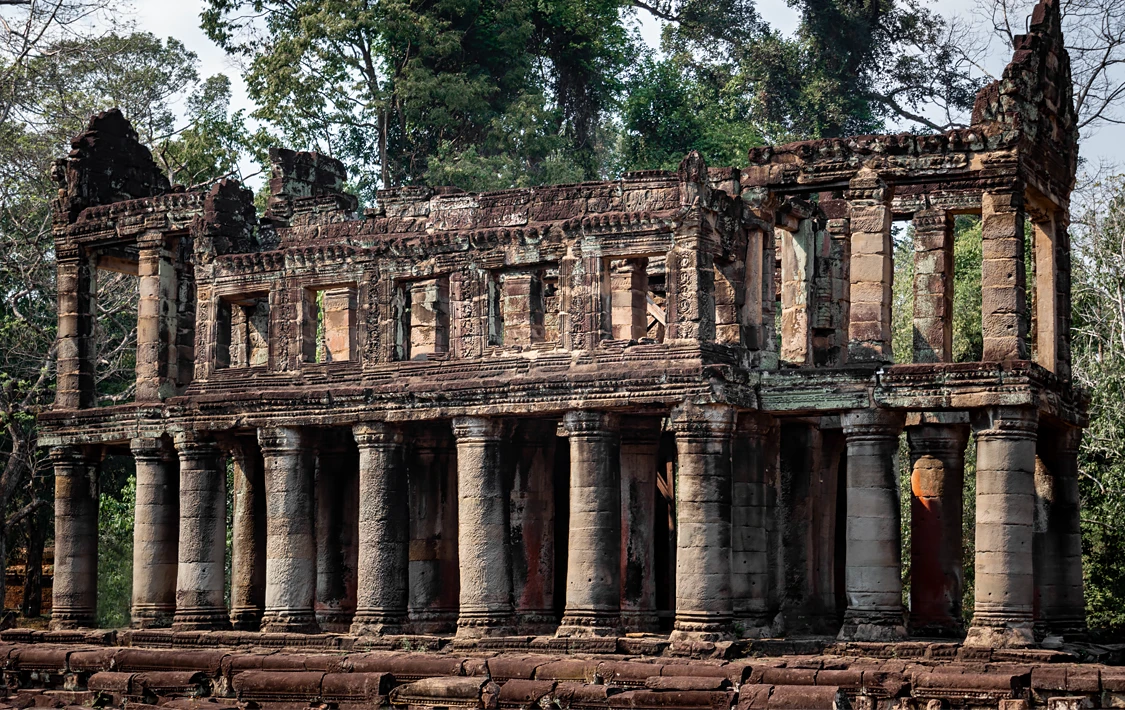
It is believed that Preah Khan Temple served as a temporary capital under King Jayavarman VII until the completion of the Angkor Thom complex and was built in honor of his father. Constructed in the late 12th century, the temple was also the site of one of the most significant battles of the Khmer Empire. During a fierce conflict with the Cham, their king is said to have been killed at this very location.
This majestic temple complex is surrounded by a moat and stretches across an area of approximately 800 by 700 meters, covering around 56 hectares. At its peak, an estimated 100,000 people lived in the surrounding area. Similar to Ta Prohm, parts of the temple are still overgrown with trees and massive roots, giving it a truly atmospheric and ancient feel.
Banteay Kdei Temple
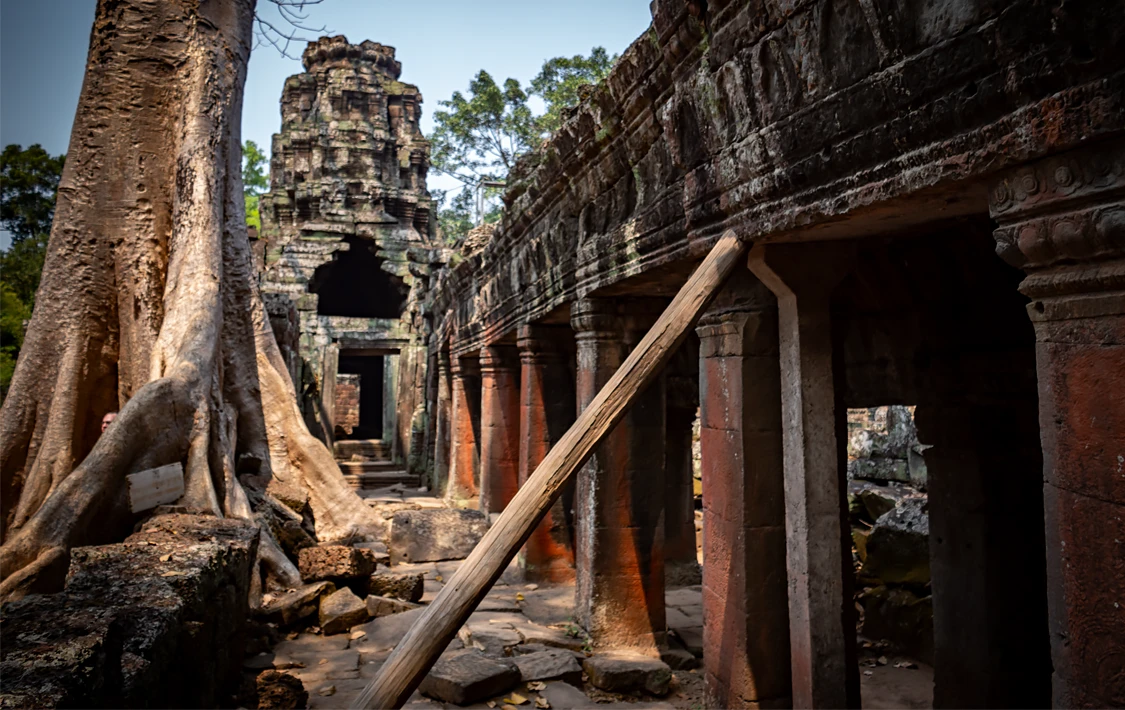
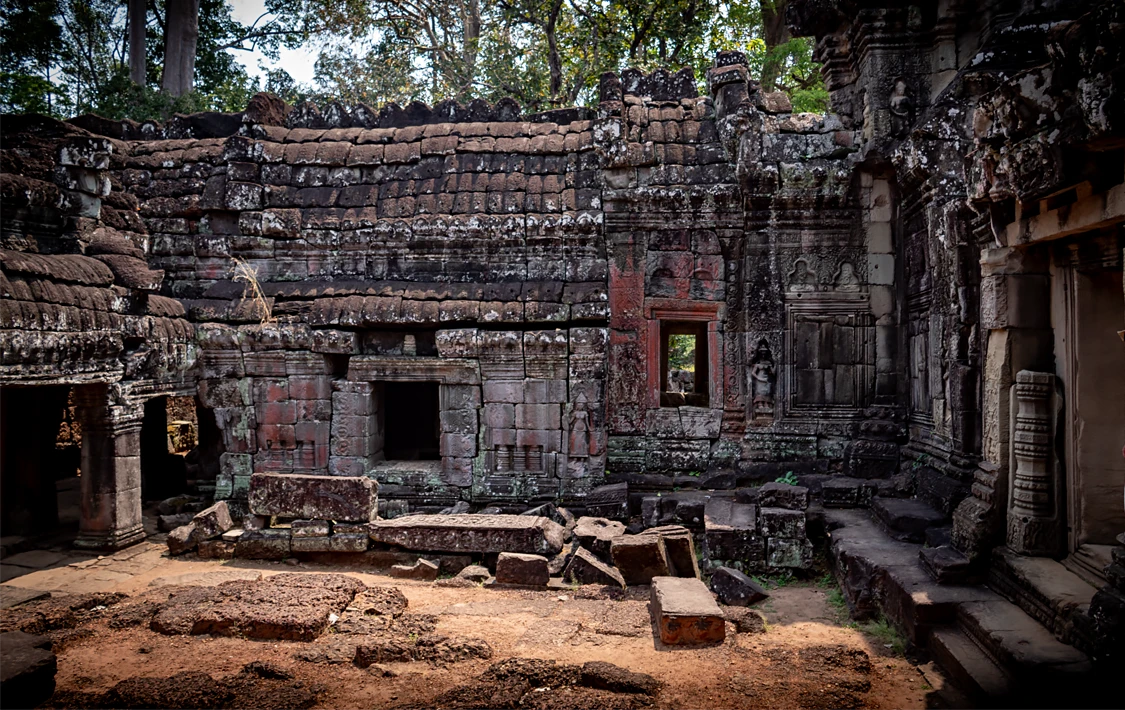

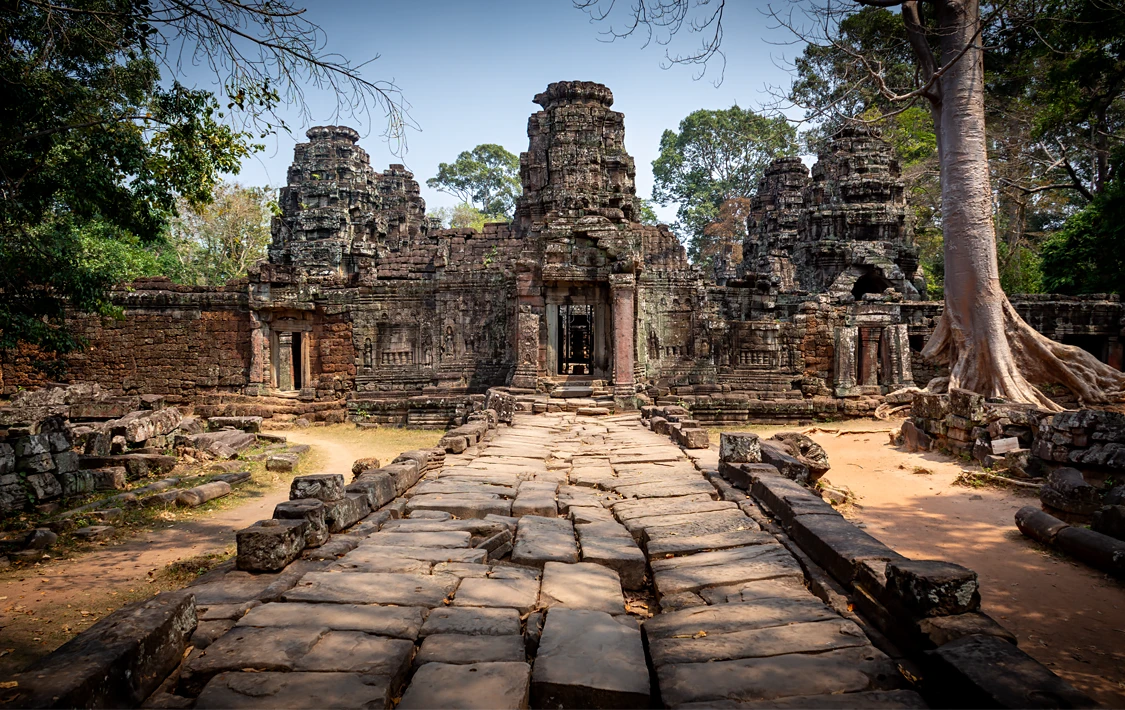
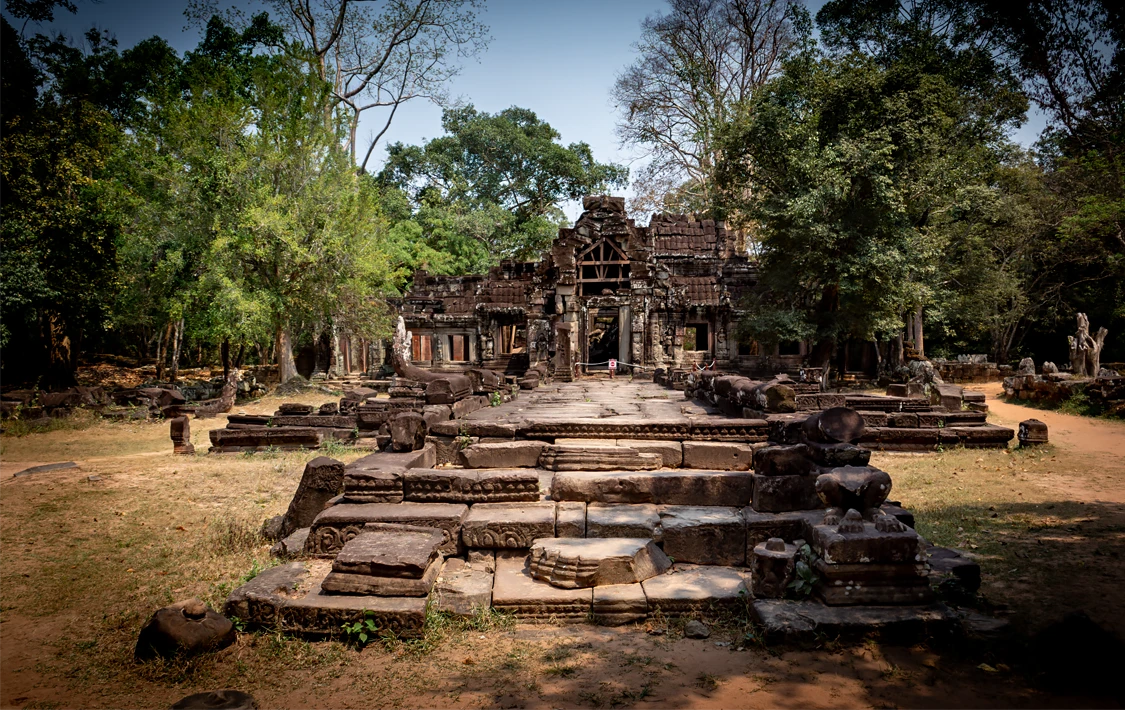

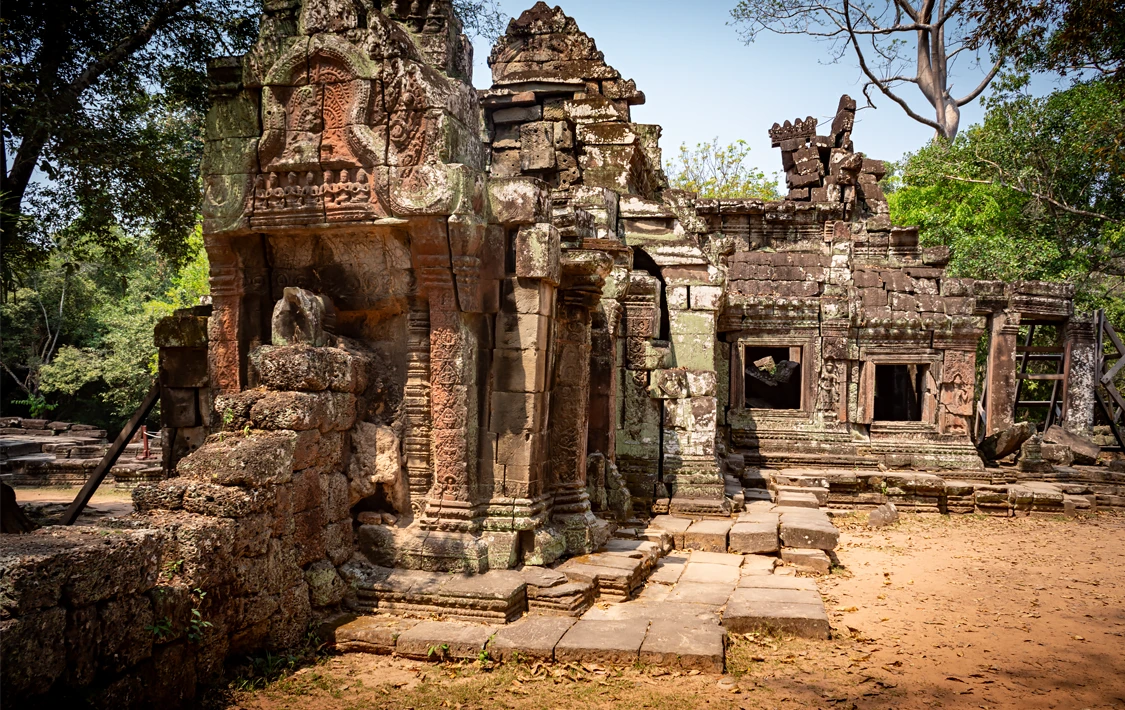

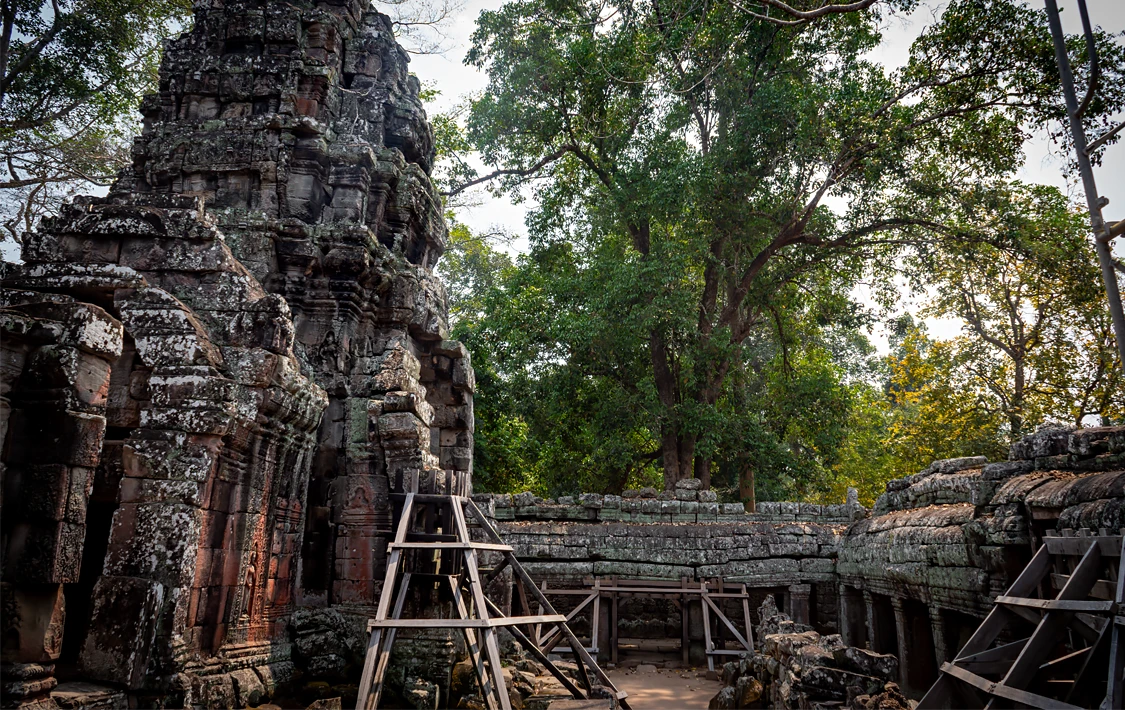
Banteay Kdei was built in the late 12th to early 13th century during the reign of Jayavarman VII and remains largely unrestored to this day. Its architectural style is similar to Ta Prohm and Bayon, though on a smaller scale.
Since this temple has not undergone extensive restoration compared to other sites, it is often overlooked by large tour groups. As a result, you’ll experience a much more relaxed atmosphere here than at the main sightseeing spots.
Neak Pean Temple

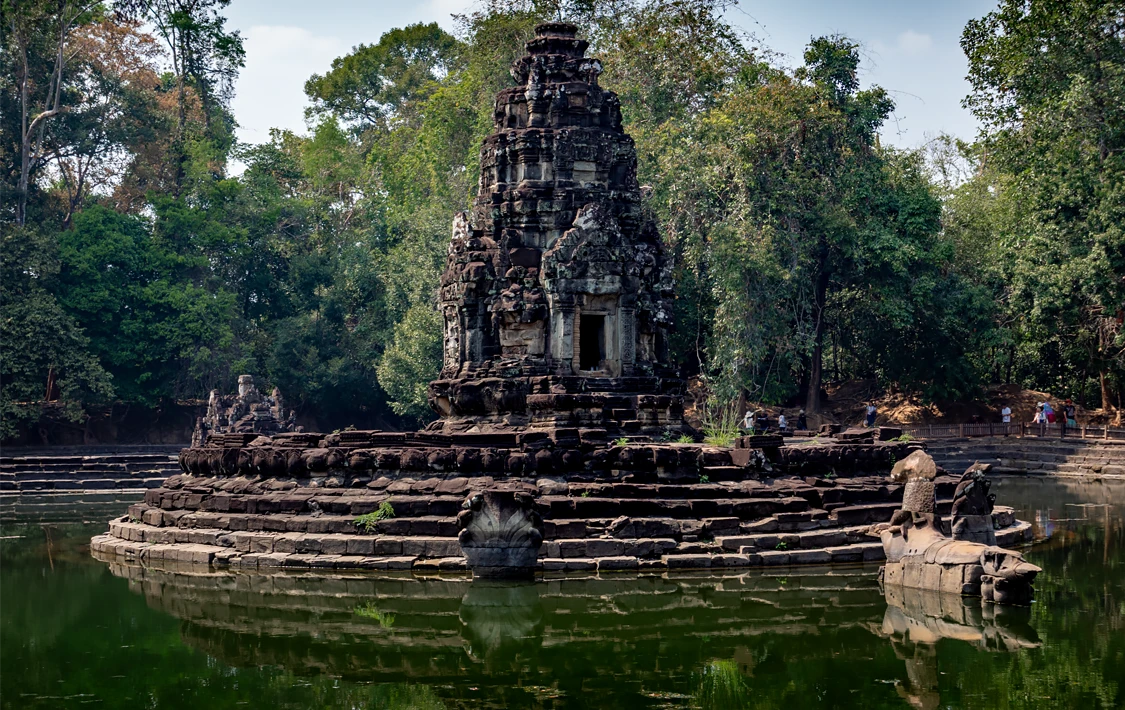
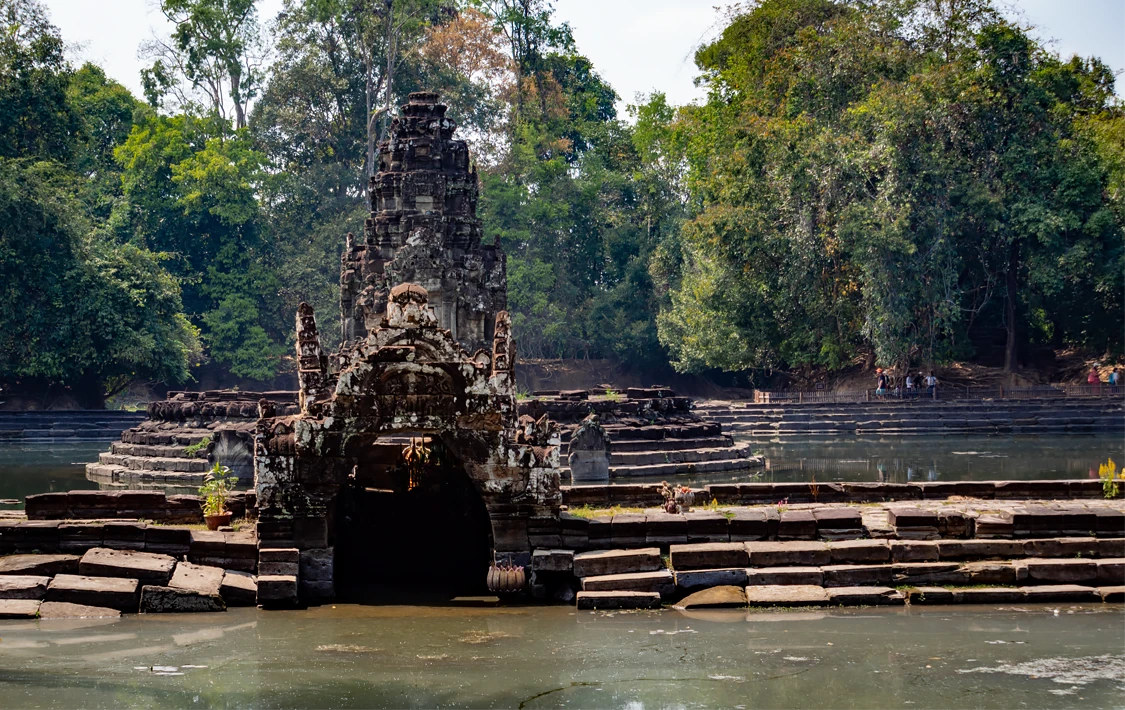

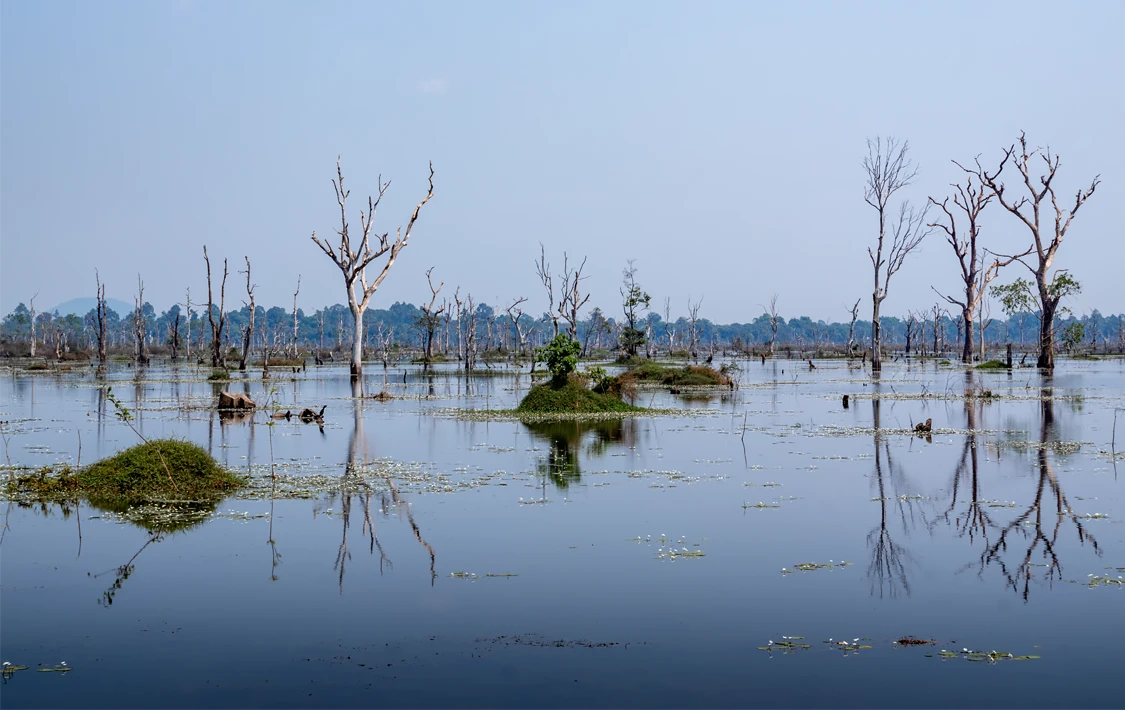

Neak Pean Temple might not be the standout attraction, but its setting is absolutely stunning. The sanctuary is located on an island in an artificial lake within the Northern Baray.
For me, the real highlight isn’t the temple itself, but the journey to get there. You reach Neak Pean via a wooden walkway that crosses the lake, which is surprisingly filled with trees – a truly unique and atmospheric approach.
Built in the 12th century, the temple is surrounded by four symmetrical water basins. Each of these basins features a small shrine, representing an elephant, a human, a lion, and a horse.
Pre Rub Temple
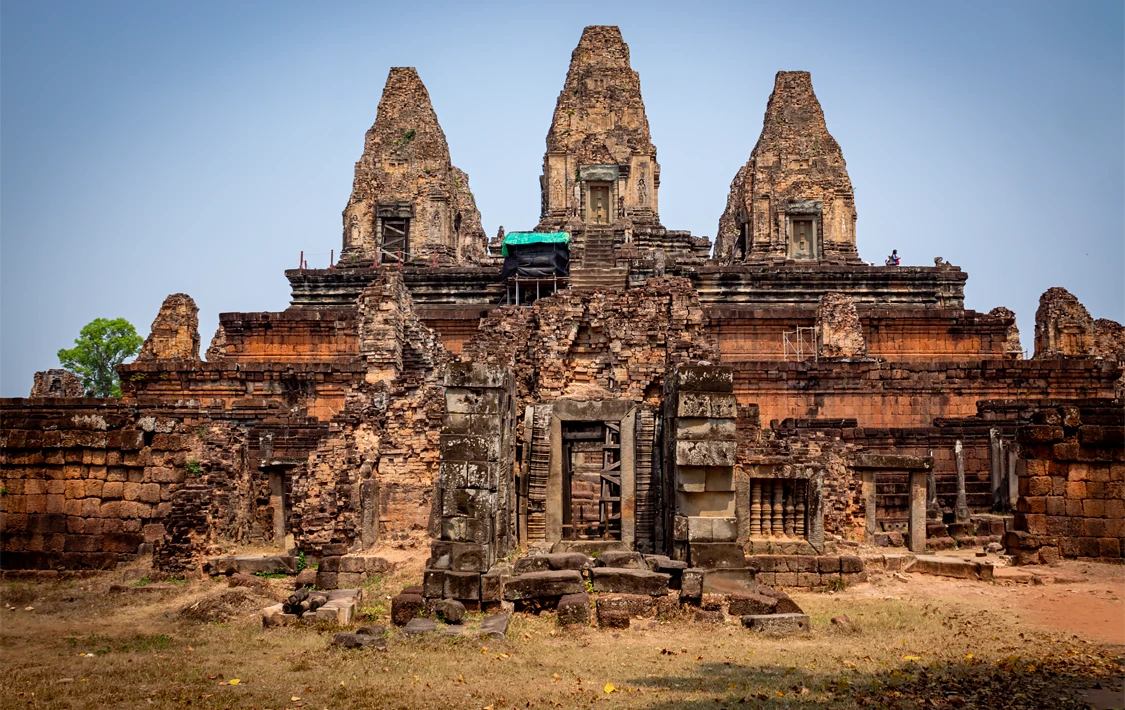
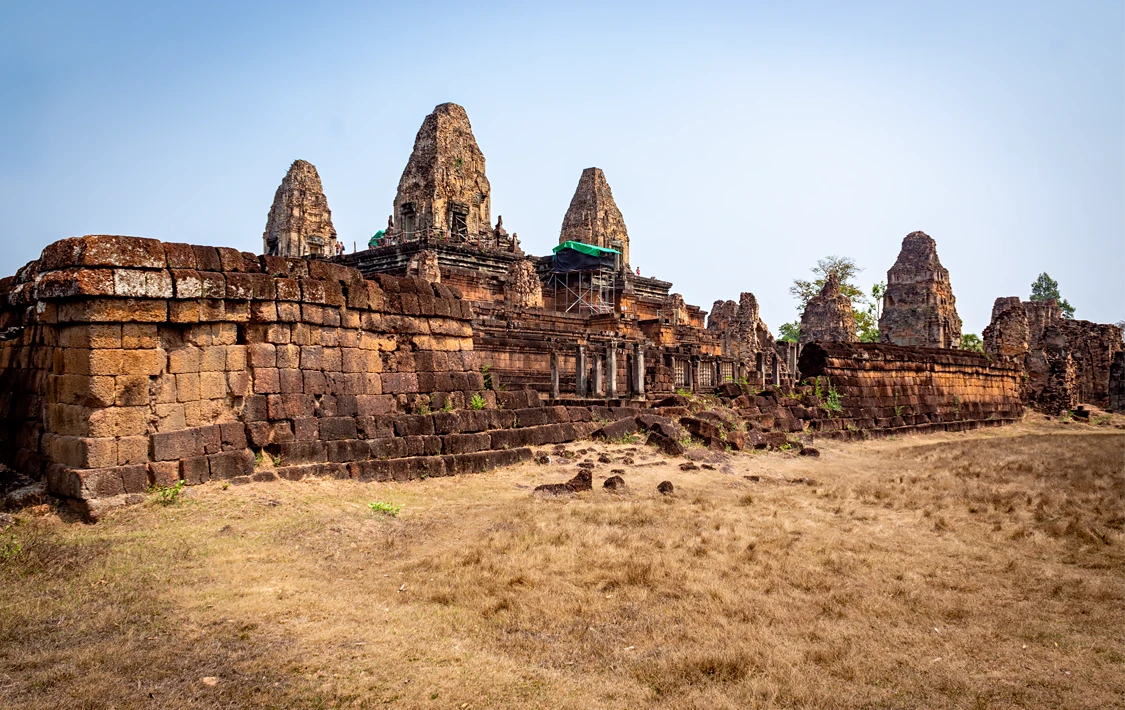
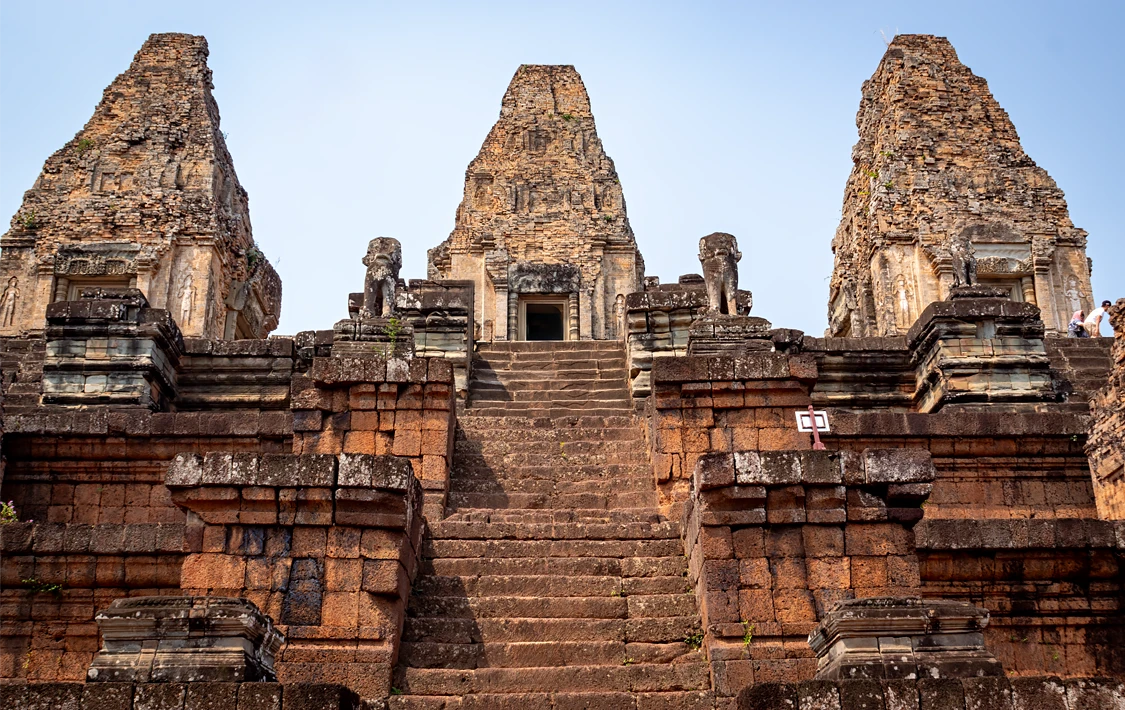
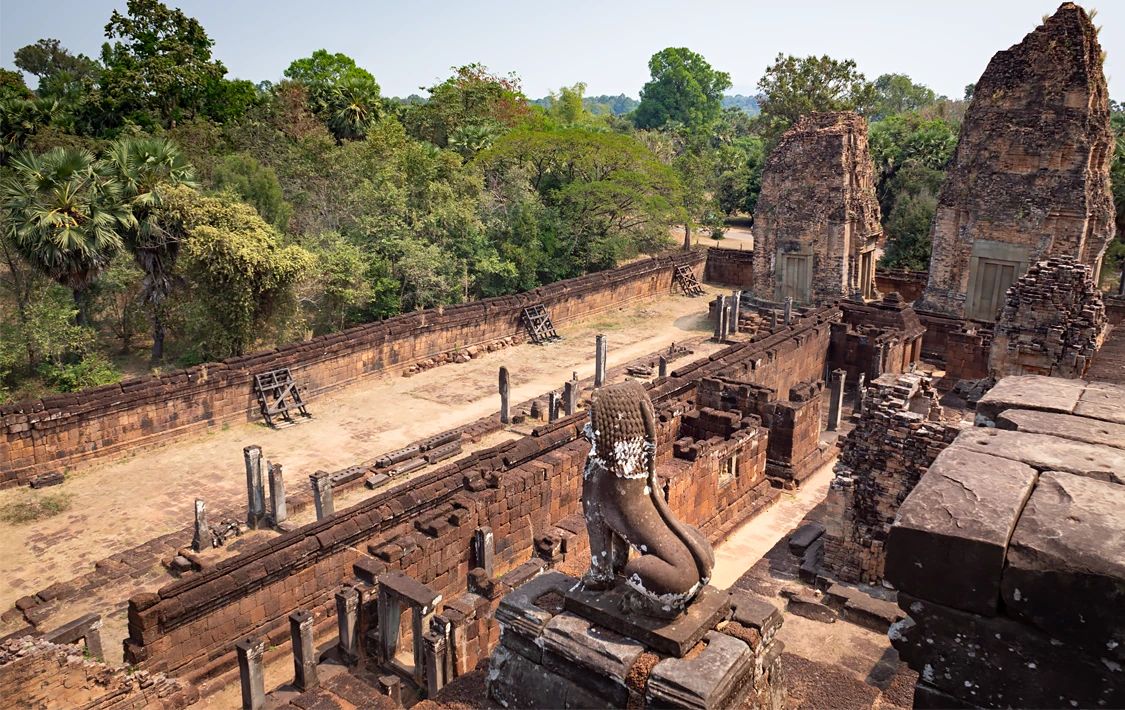
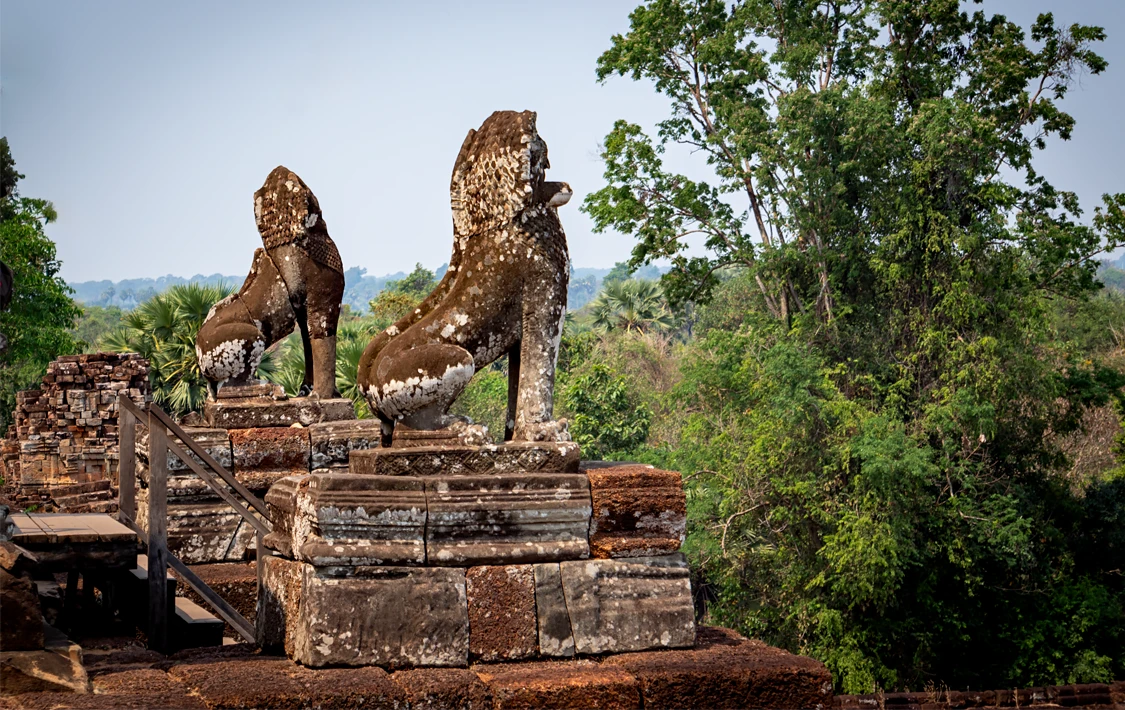

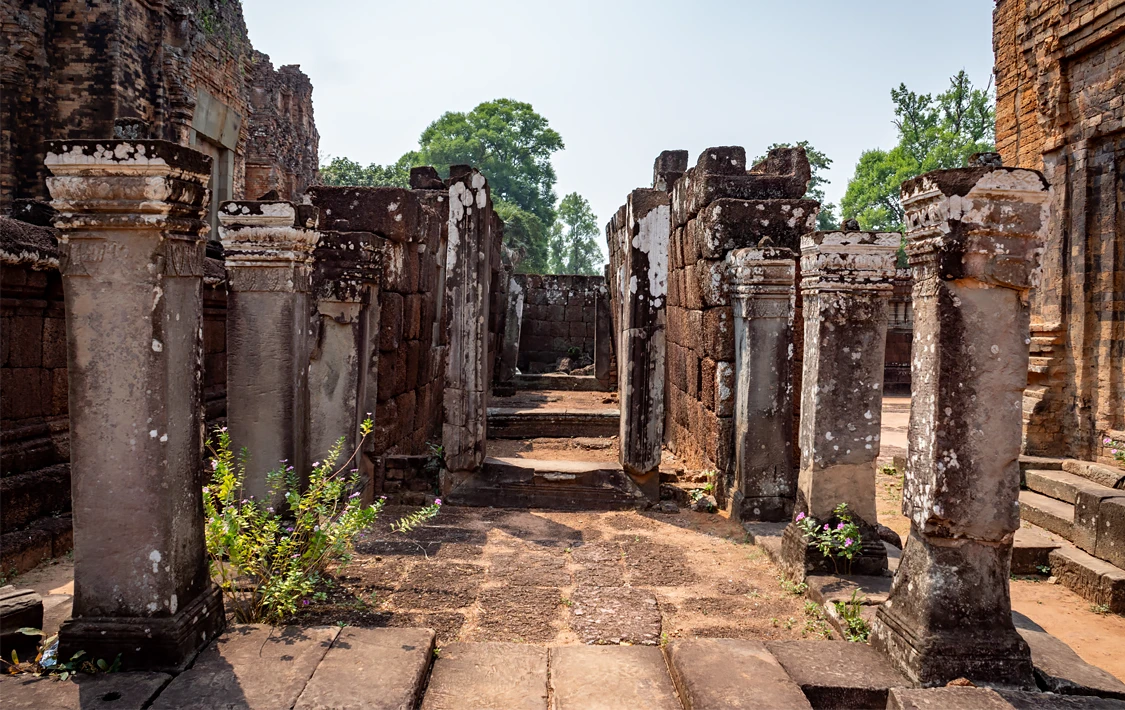
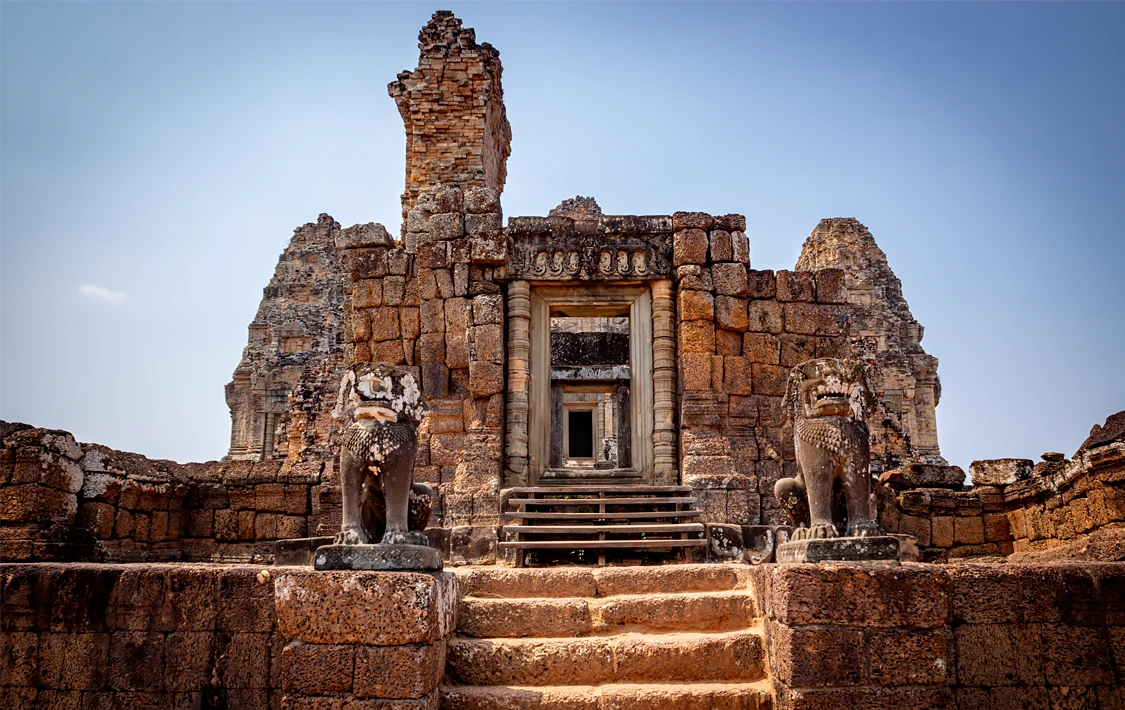
Pre Rup Temple dates back to the year 961, making it one of the oldest temples in the Angkor Archaeological Park. Built on a base measuring approximately 127 by 117 meters, the structure consists of a two-tiered platform topped by a steep three-tiered pyramid, crowned with five towers.
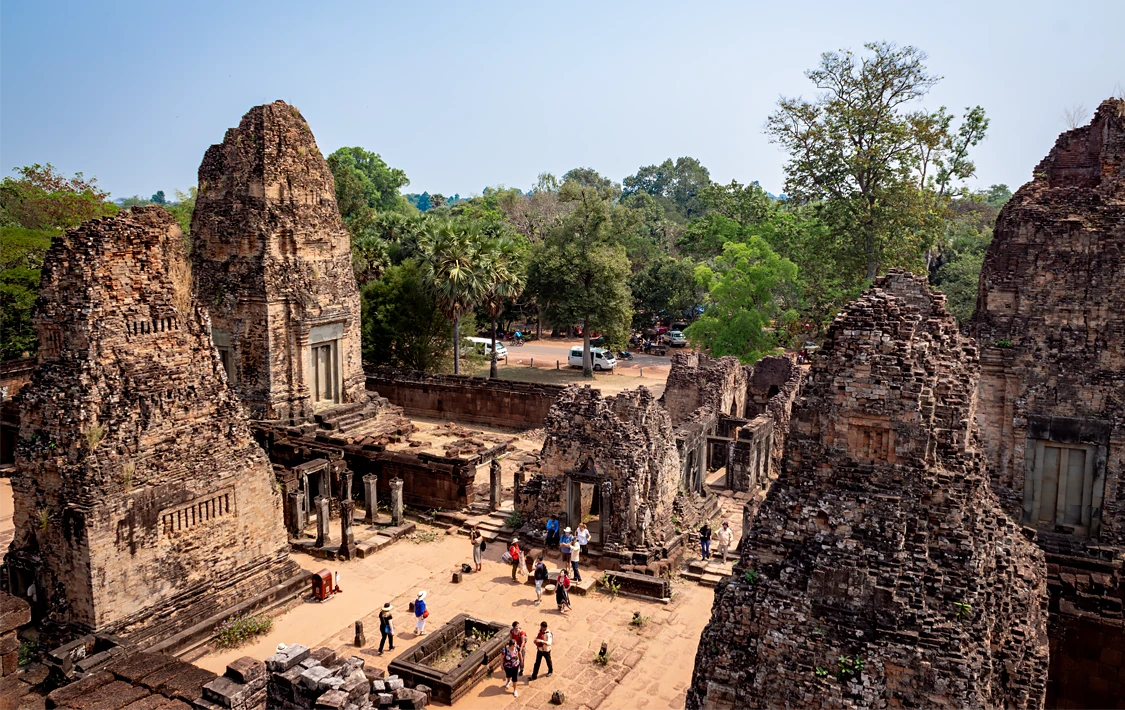
It is considered one of the most important temples of the 10th century and was primarily used as a cremation site. From the top of the temple, you’ll enjoy fantastic views over the surrounding landscape.
Despite its significance, Pre Rup is far less crowded than many of the other major attractions. Honestly, it’s hard to understand why – this place is truly a highlight.
The Koh Ker Temple Complex
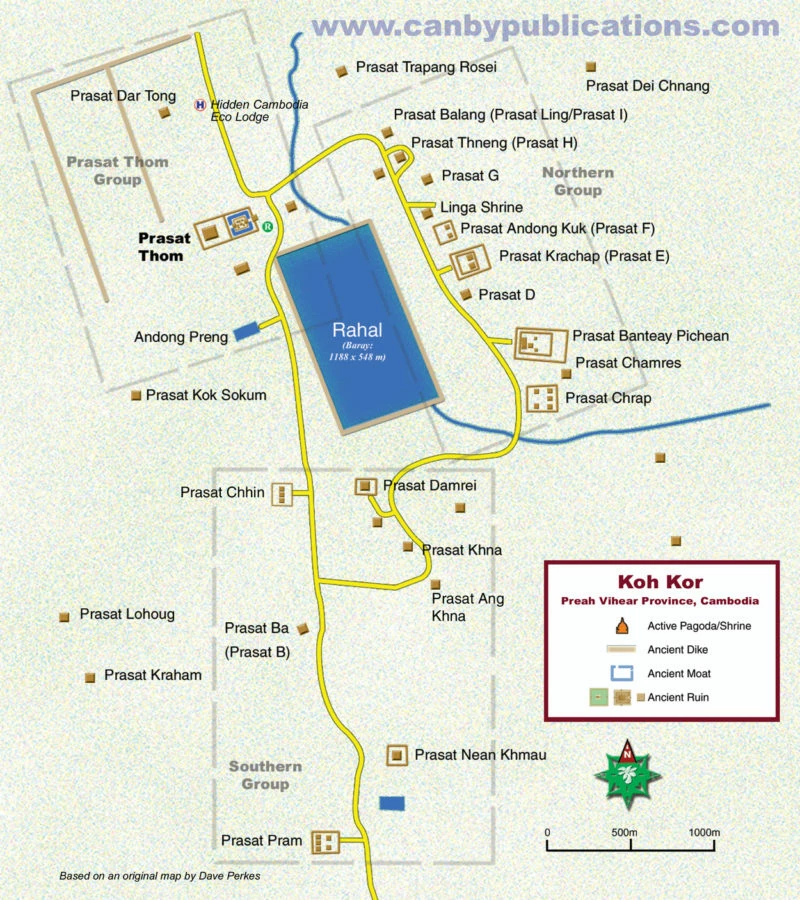
Koh Ker was once a large temple city covering an area of around 81 km² and served as the capital of the Khmer Empire from 928 to 944. To date, more than 180 sanctuaries have been discovered within the area, although most have only been restored to the extent that they are accessible. Similar to Ta Prohm and Preah Khan, many of the structures here are overgrown with tree roots, giving the site a wild and atmospheric feel.
Koh Ker is located around 120 km north of Siem Reap, and an additional entrance fee of around 10 USD applies for visiting the site.
Koh Ker – Beng Melea Temple
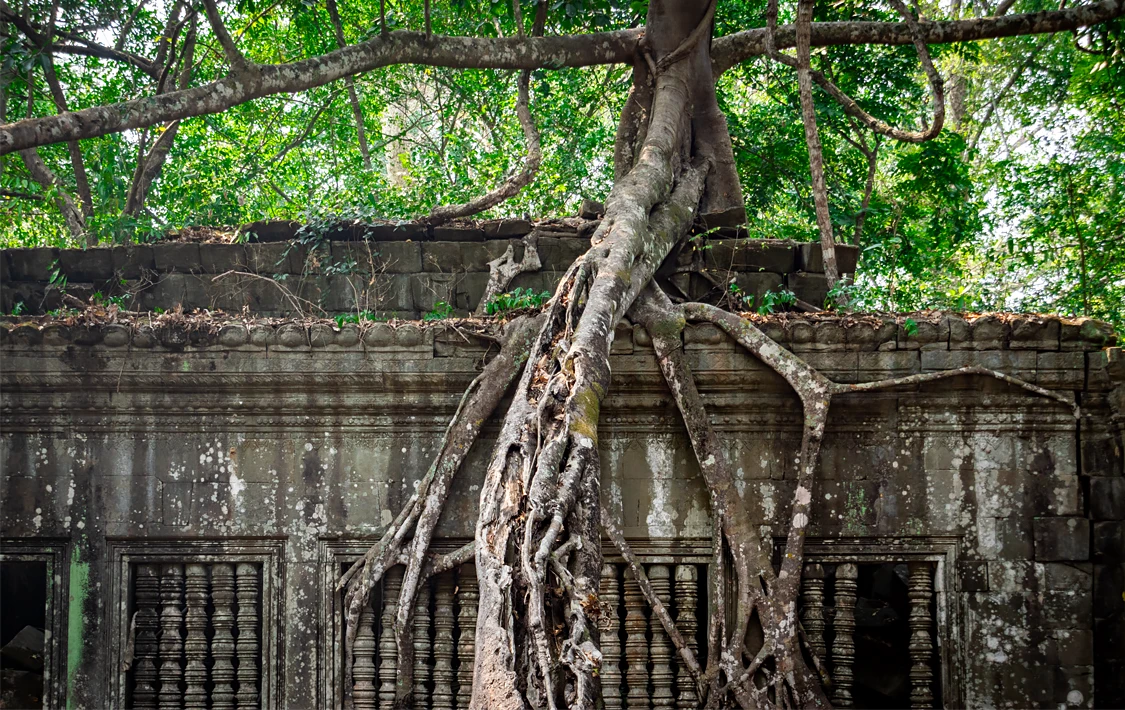
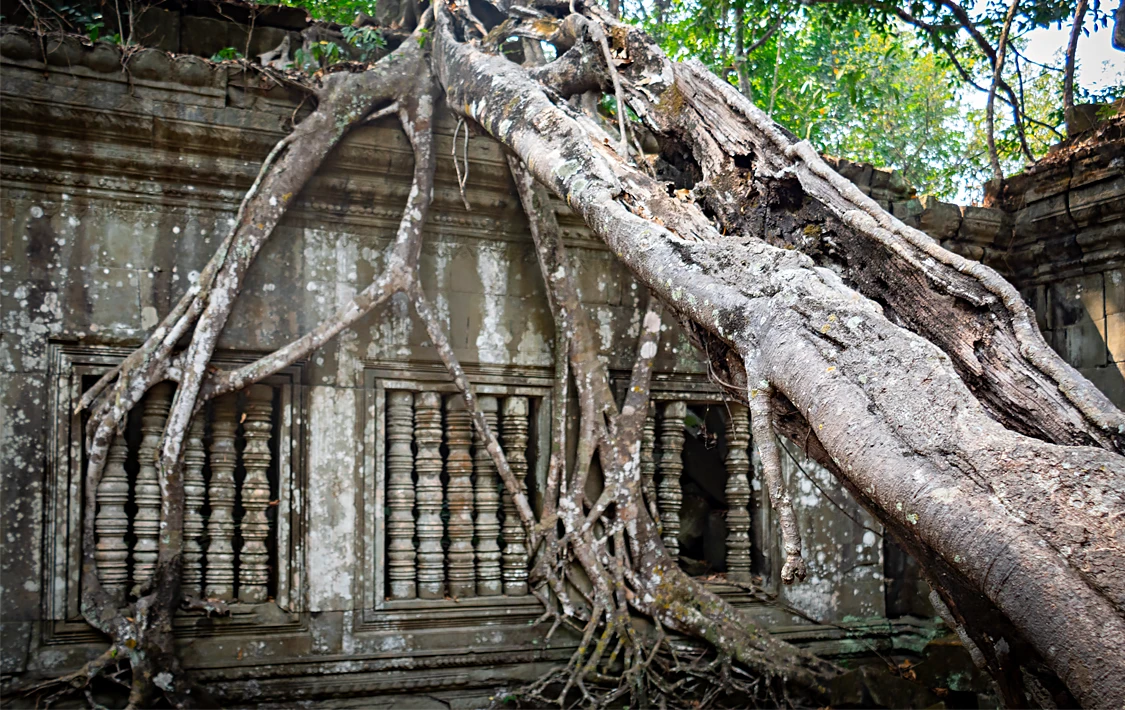


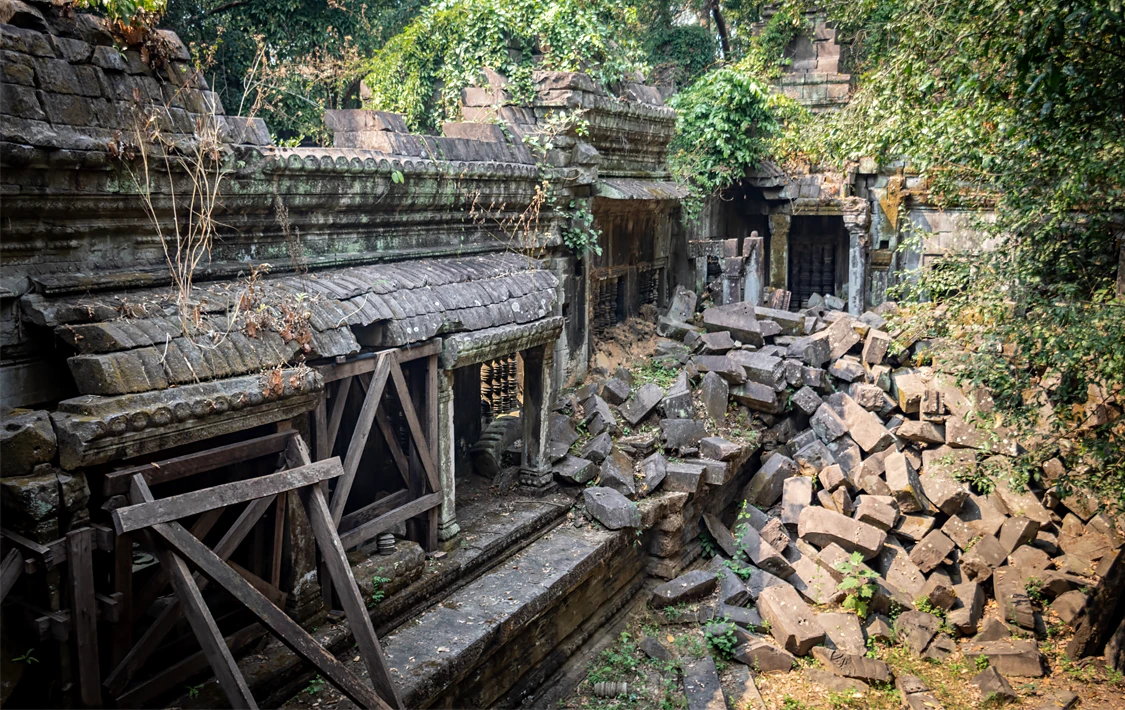
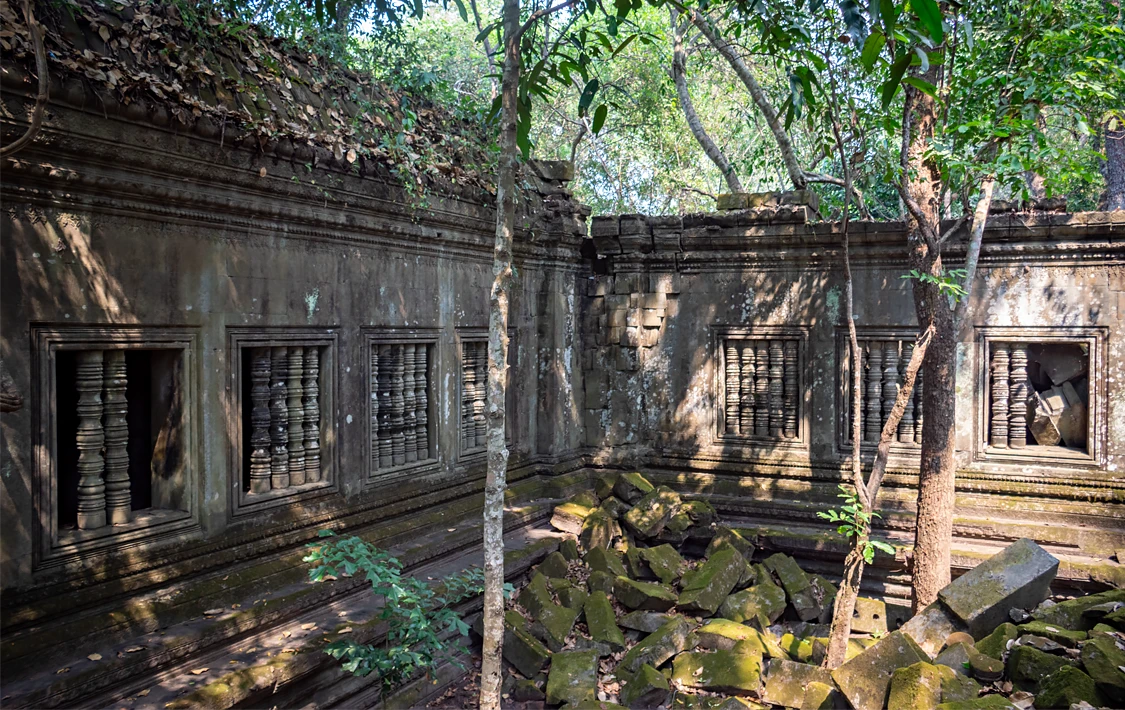

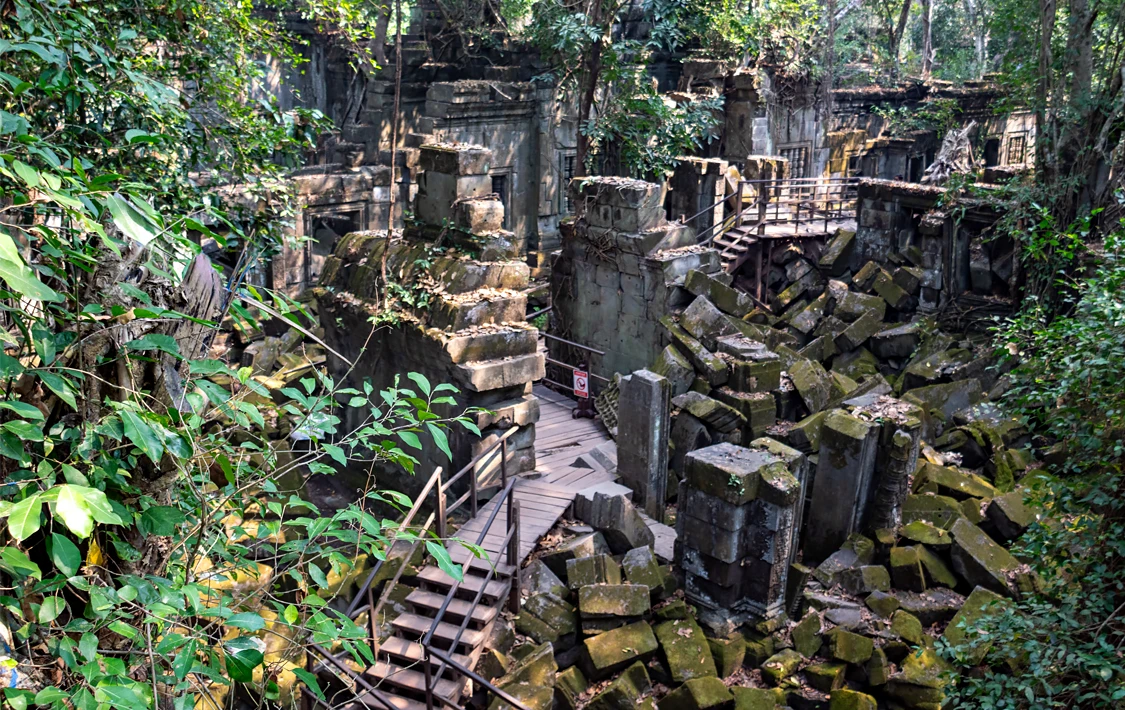

Beng Mealea Temple is not actually part of the Koh Ker complex, but was once an independent city. However, it is often included as a stop on the way, as it lies roughly halfway along the route. The temple itself covers an area of approximately 181 by 152 meters and once formed the center of a city surrounded by a moat about 45 meters wide, stretching 1,025 meters from west to east and 875 meters from north to south. It is believed to have been built in the mid-12th century.
Constructed from sandstone and now largely in ruins, the temple was heavily mined until around 2001. Today, it is still considered a hidden gem and remains relatively untouched by mass tourism. However, Beng Mealea is gaining more attention, especially due to its walls and structures overgrown with trees and massive roots, creating a truly unique atmosphere.
A wooden walkway leads you through the temple complex, making it easy to explore. Visiting Beng Mealea is definitely one of the highlights of the Angkor region.
Koh Ker – Prasat Krahom & Prasat Thom


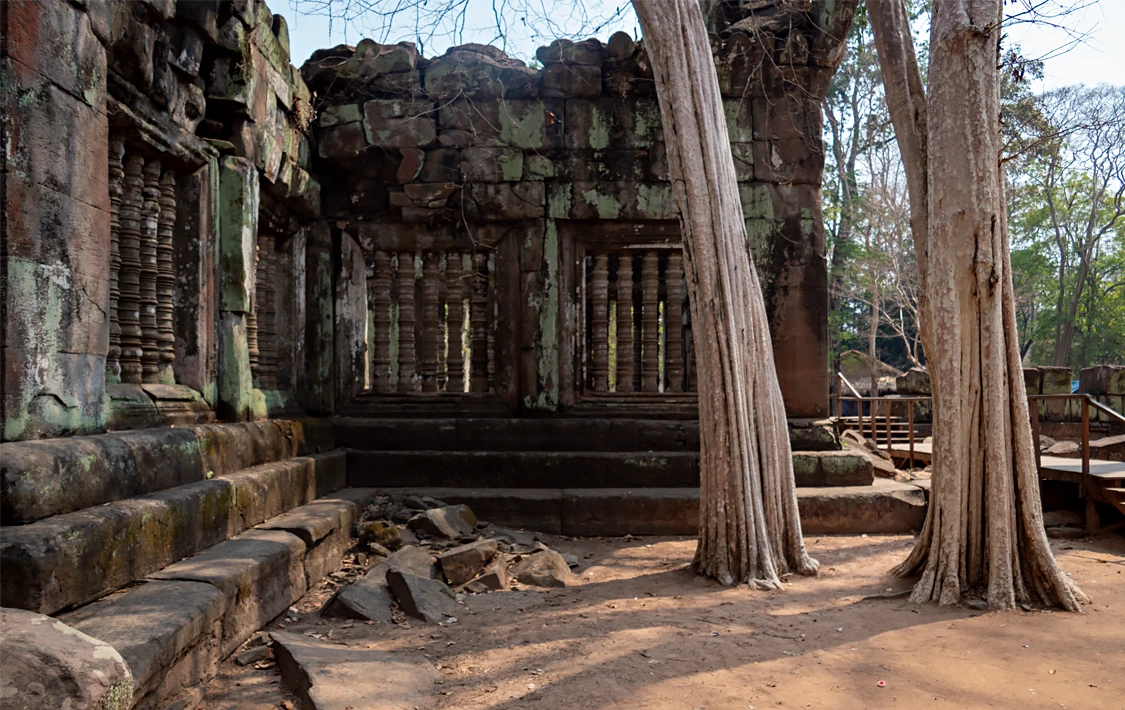
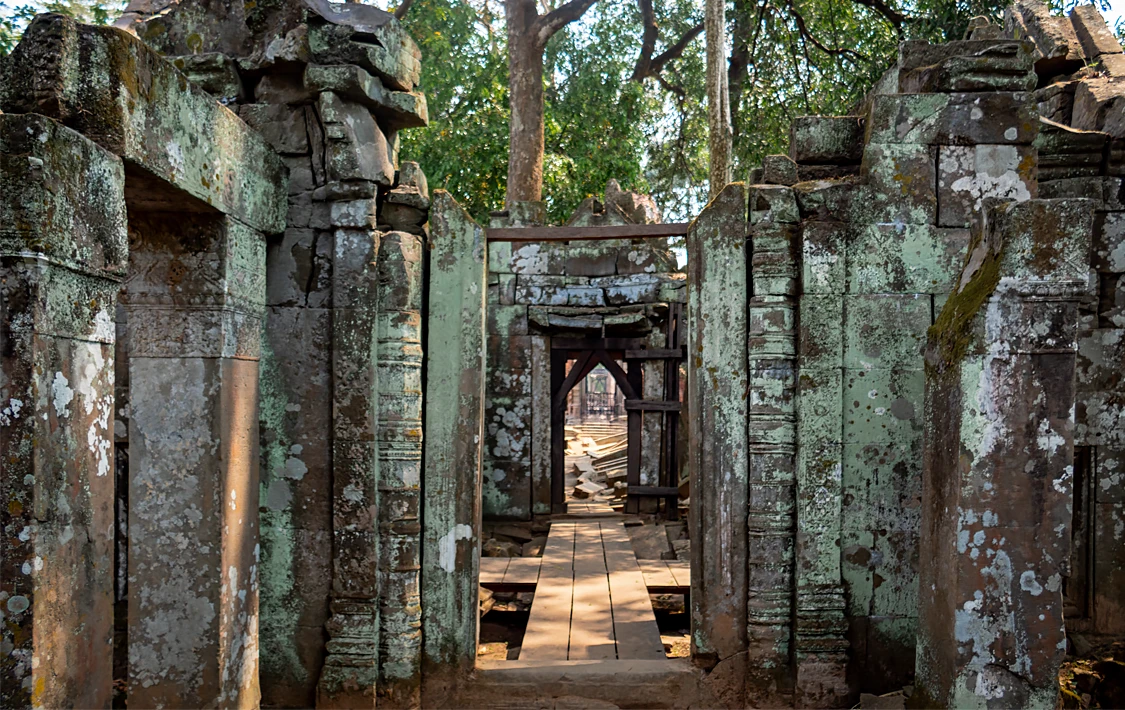
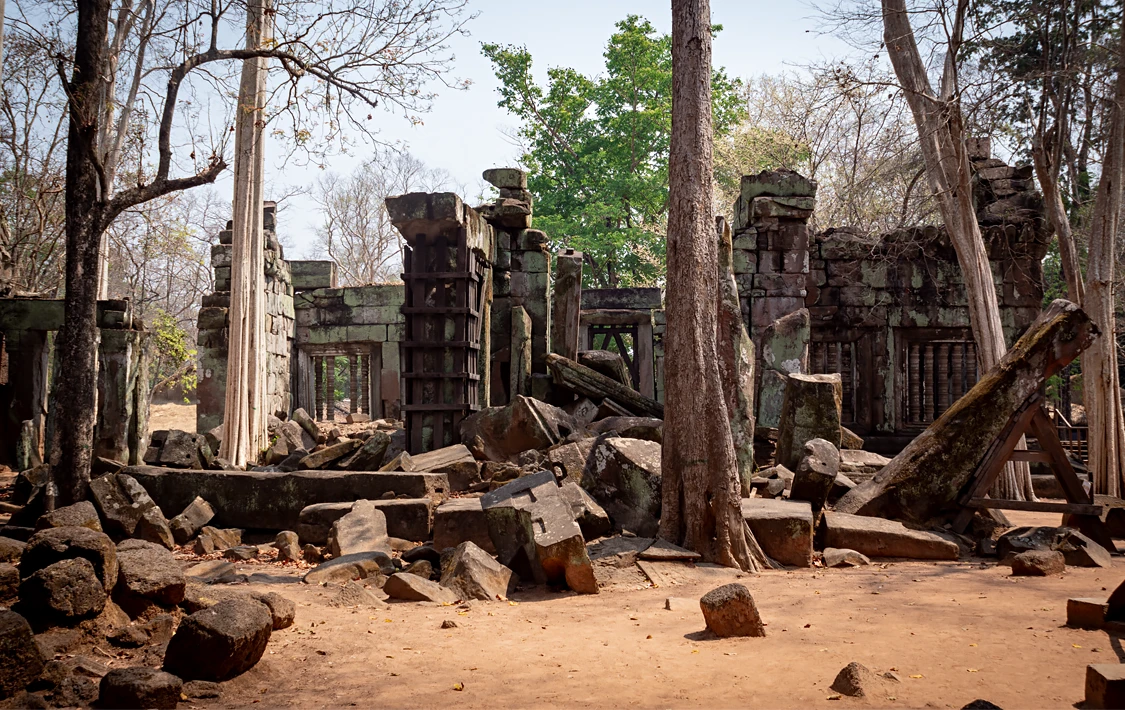
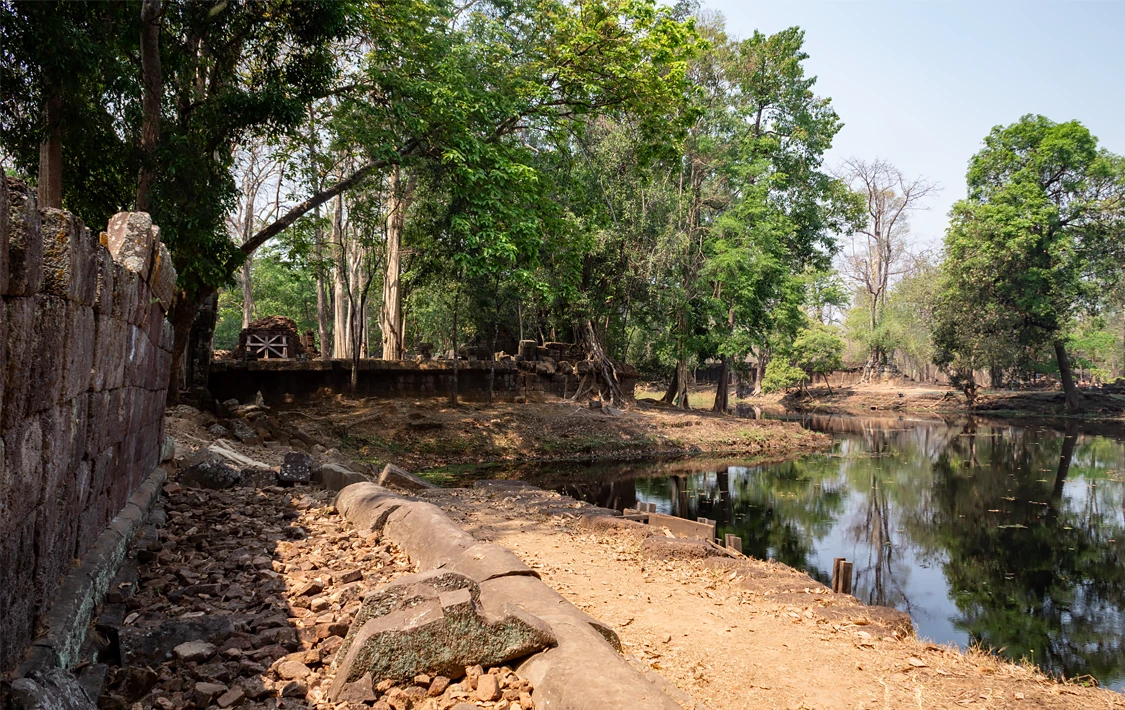
Prasat Krahom serves as the entrance gateway to the Prasat Thom temple. The name “Prasat Krahom” translates to “Red Temple,” referring to the red bricks used in its construction.
A causeway leads from Prasat Krahom across a moat to Prasat Thom, guiding you into the inner part of the temple complex. Unlike many other temples, this site is built in a linear layout.
The temple is set in a peaceful natural environment and is partially overgrown with trees. As you follow the central axis of the complex, you’ll eventually reach the pyramid-shaped Prasat Prang at the end of the path.
Koh Ker – Prasat Prang Temple
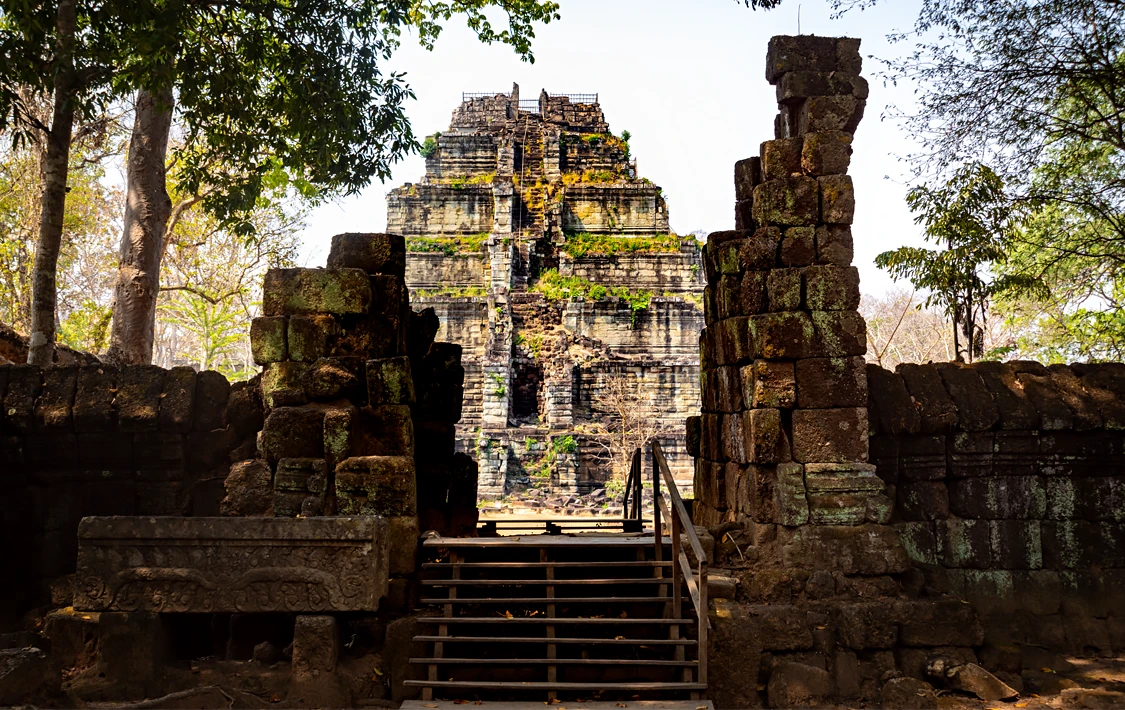
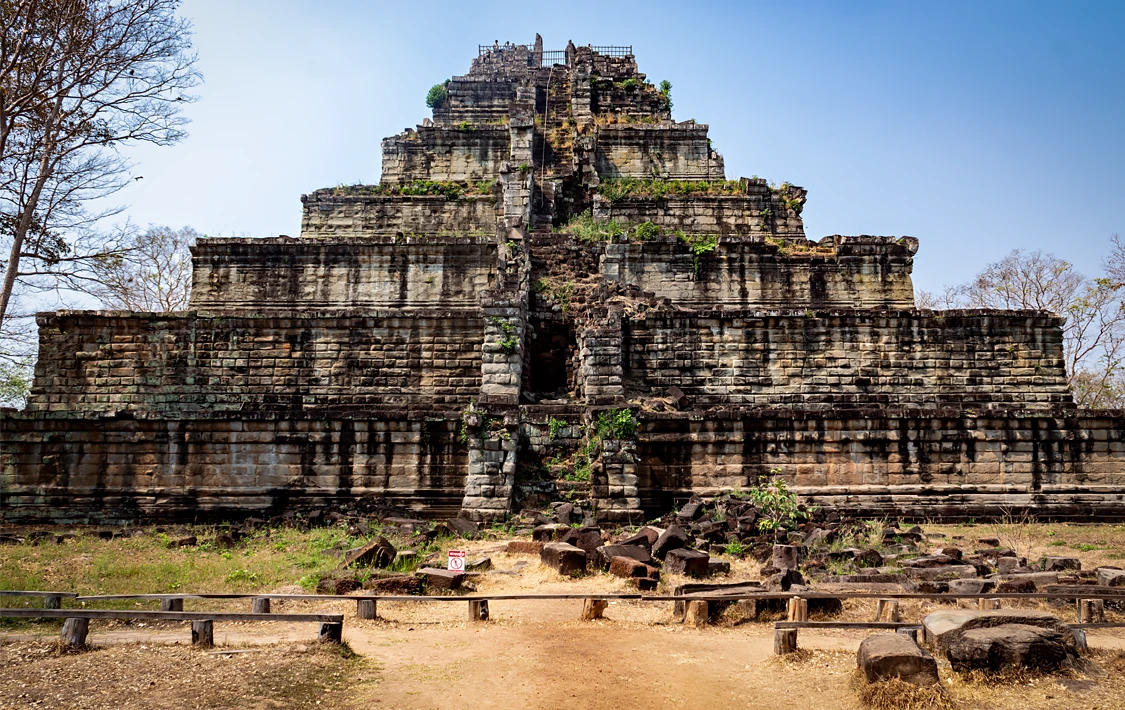
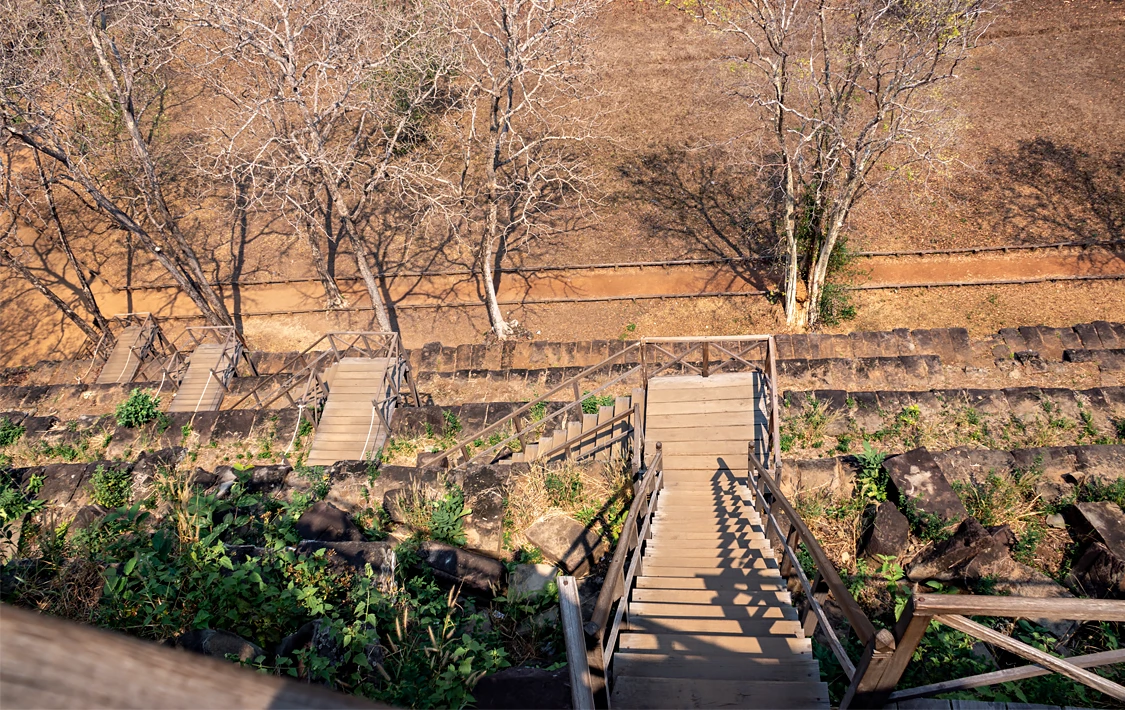
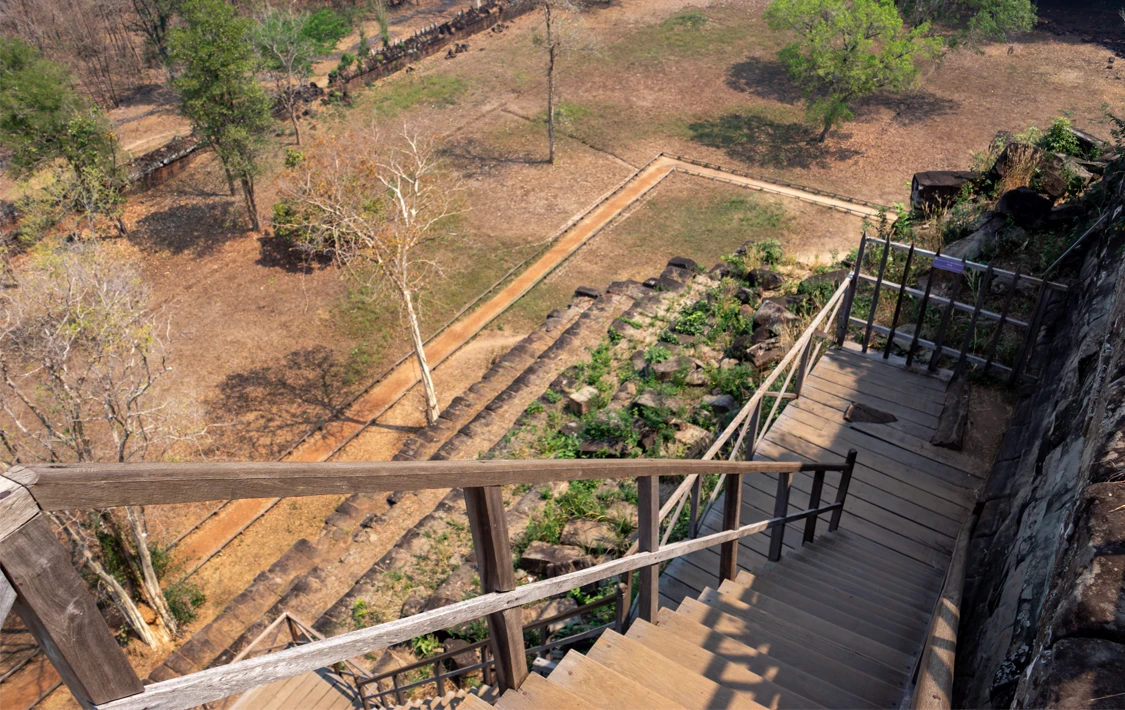
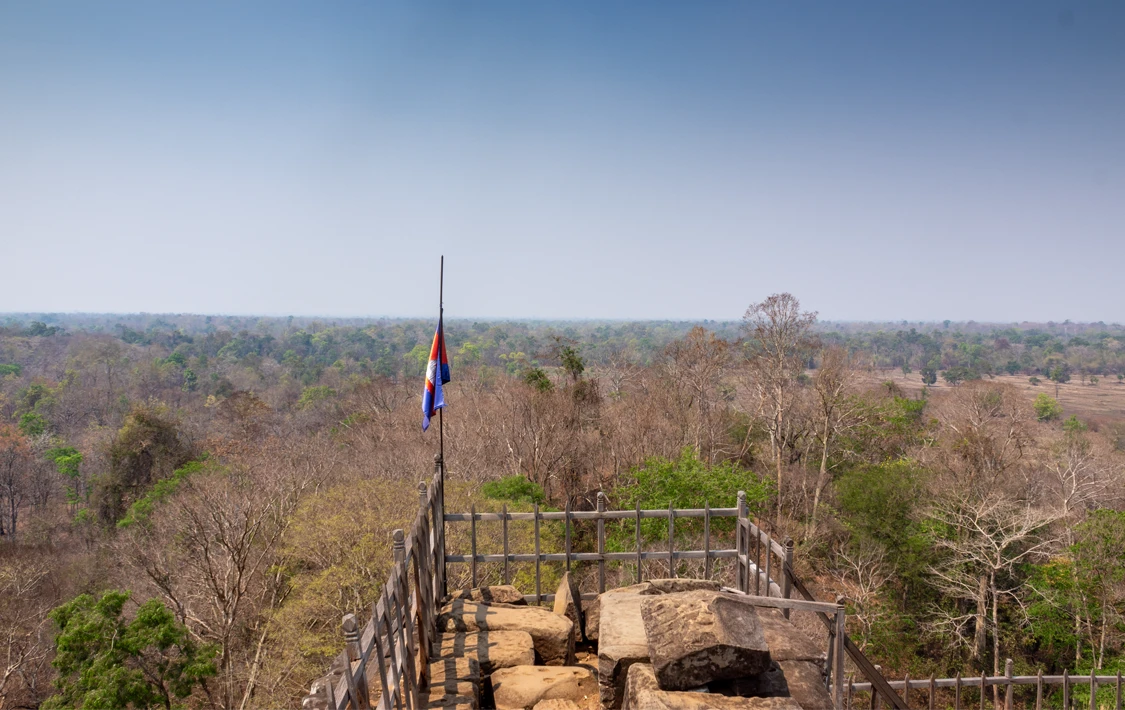
Prasat Prang is the iconic landmark of the Koh Ker complex. Built in 928 in the form of a seven-tiered pyramid, it rises to a height of around 36 meters.
A wooden staircase allows you to reach the top of the pyramid, where you can enjoy a stunning panoramic view of the surrounding landscape. Despite its impressive setting, the site was almost completely deserted during my visit.
Koh Ker – Prasat Pram Temple
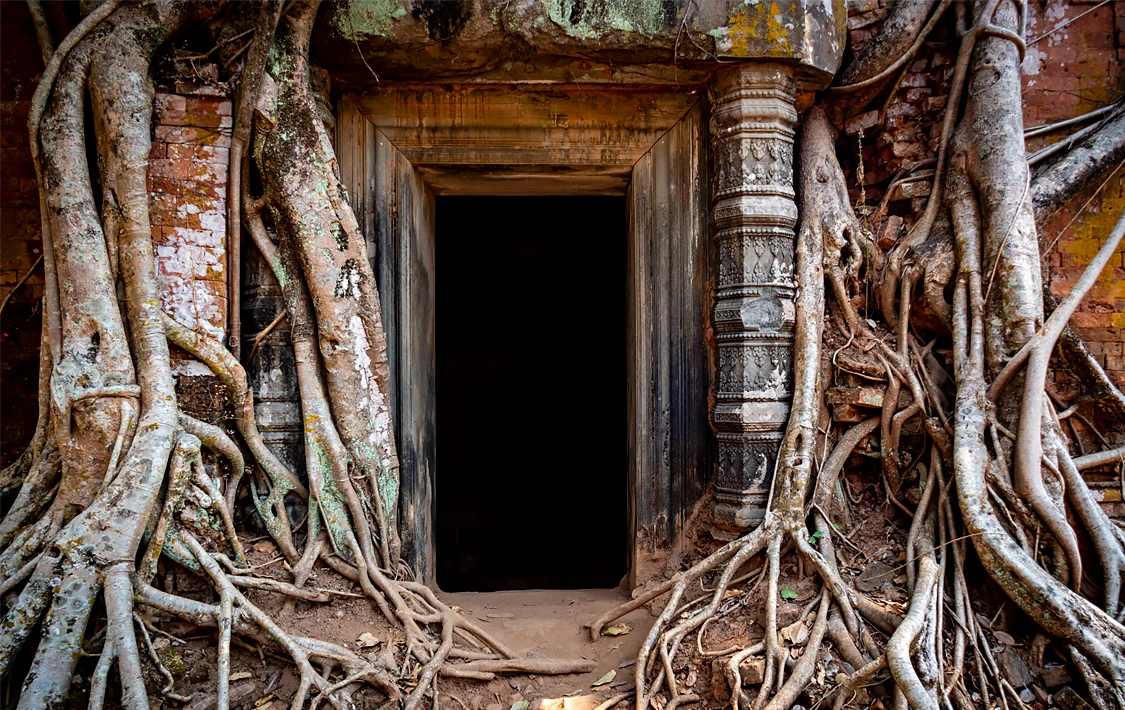


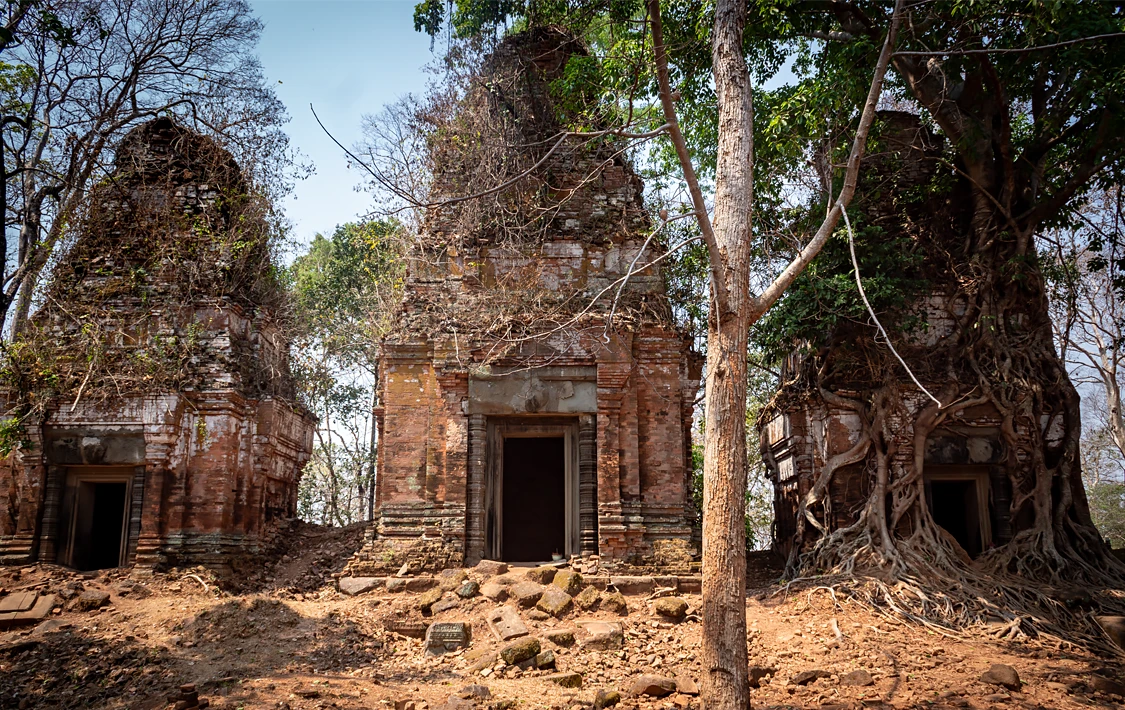
The Prasat Pram complex consists of five towers, two of which are overgrown with trees, creating a stunning and unique backdrop for photos.
During my visit, it was incredibly loud here – but not because of tourists, as there were hardly any. Instead, the noise came from countless cicadas. I usually enjoy their sound, as it brings back memories of warm summer nights and holidays, but this was on another level – something I had never experienced before.
Hotel recommendations for Angkor Wat / Siem Reap
Where I stayed
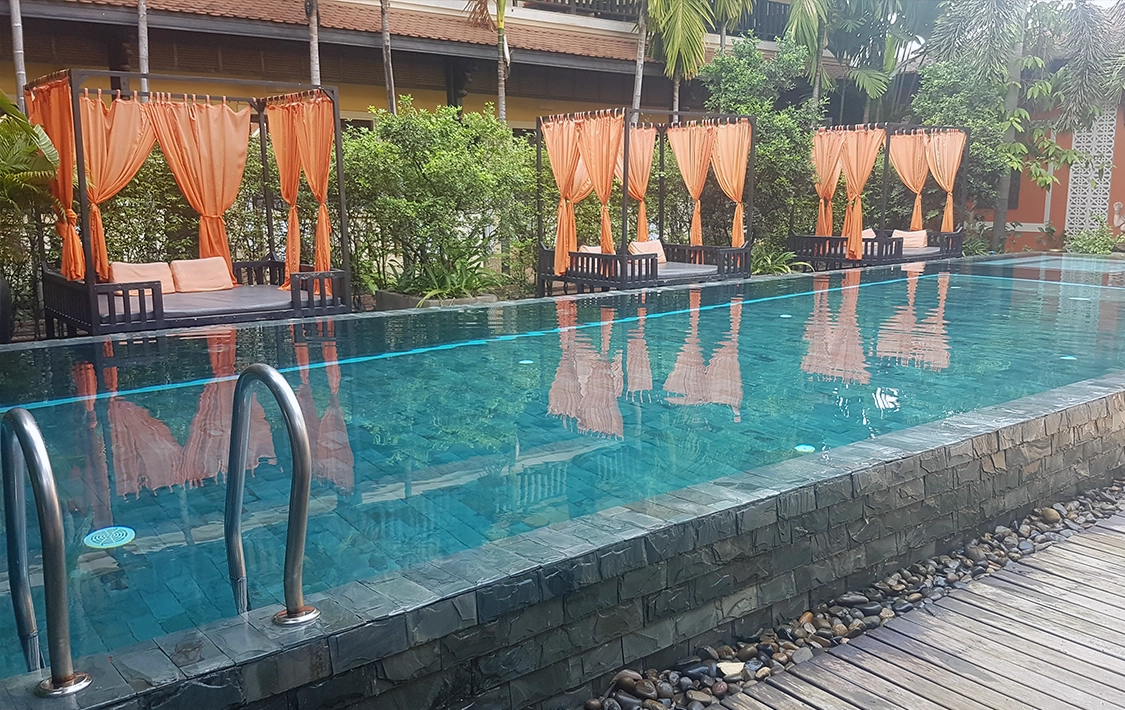
I booked my accommodation in Siem Reap at the Residence Indochine D’Angkor. The hotel is located about 2 km outside the city center in a quiet and peaceful area. However, there are very few dining options nearby. That said, you can easily reach the city by tuk-tuk within minutes for just 1–2 USD, or even walk if you feel like it.
The rooms were very clean, and the staff was exceptionally friendly and helpful. After a full day of exploring, I especially enjoyed relaxing at the hotel’s pool. Surrounded by tropical plants and equipped with several sun loungers, it’s the perfect place to unwind and reflect on the day.
You can also have dinner at the hotel – it’s affordable and tasty, although slightly adapted to Western tastes, which some might actually prefer. Breakfast is available as an add-on for around 5 USD.
Great central location with pool and amenities
If you’re looking for a hotel in a very central location without compromising on comfort, the Steung Siemreap Hotel is a great choice. It’s just a 3-minute walk from Pub Street, where you’ll find a wide range of food, bars, and entertainment. The Night Market Street, with plenty of shopping options, is also only about a 6-minute walk away.
Despite its central location, the hotel offers a quiet atmosphere as it’s situated on a side street. The rooms are designed in a more modern style, and the hotel also features a pool – a big advantage in Siem Reap, where temperatures can reach up to 40°C.
After a long day exploring the temples, cooling off in the pool can be an absolute blessing – trust me, I know what I’m talking about.
Hotel in a prime central location with great amenities
You won’t find a more central location in Siem Reap than the Siem Reap City Angkor Boutique. It’s perfectly situated between Night Market Street and Pub Street, both just a 2-minute walk away. If location is your top priority, this is hard to beat.
The hotel offers modern rooms with solid amenities. The only downside is that it doesn’t have a pool.
Still, the Siem Reap City Angkor Boutique is definitely one of my recommended places to stay in Siem Reap.
Best value for money
The Rithy Rine Angkor Residence offers, in my opinion, one of the best value-for-money options in Siem Reap. It’s centrally located on Night Market Street and about an 8-minute walk from Pub Street. Despite its great location, the area is relatively quiet, allowing you to get a good night’s sleep.
This modern city hotel features comfortable rooms and even includes a swimming pool. If I were to visit Siem Reap or Angkor Wat again, I would most likely choose this accommodation.
Entrance fees for Angkor Wat (Angkor Archaeological Park)
The entrance fees for Angkor Wat are not exactly cheap and are relatively high compared to other destinations in Asia. Tickets must be purchased at the official Angkor Enterprise ticket office. They are personalized and non-transferable.
After payment, you’ll receive a pass with your photo printed on it (the photo is taken directly at the counter, so you don’t need to bring one).
Important: Make sure your photo on the pass is clearly visible and of good quality. This can save you a lot of trouble. Your pass will be checked every time you enter the park and at individual temples. I had issues myself because my photo quality was poor – so definitely pay attention to this!
- 1-day pass: $37.-
- 3-day pass: $62
- 7-day pass: $72.-
You can check the latest prices on the official Angkor Enterprise website.
If you’ve booked a tuk-tuk driver or a private car, they will easily take you to the ticket office. However, be prepared for waiting times – queues can get quite long, especially during peak hours.
Recommended duration for visiting Angkor Wat (Angkor Archaeological Park)
You can see the most important temples and highlights in just one day, but I’d definitely recommend planning more time if you’ve already made the journey to Siem Reap.
In two to three days, you can explore most of the key sights in Siem Reap and the Angkor Wat area. If you want to cover all temples, lakes, waterfalls, and additional attractions, you should plan four to five days or more.
My trip was planned for five days in total. Two days were reserved for arrival and departure, and I spent three full days exploring the Angkor Archaeological Park and its temples.
Conclusion on visiting the Angkor Wat temples in Siem Reap
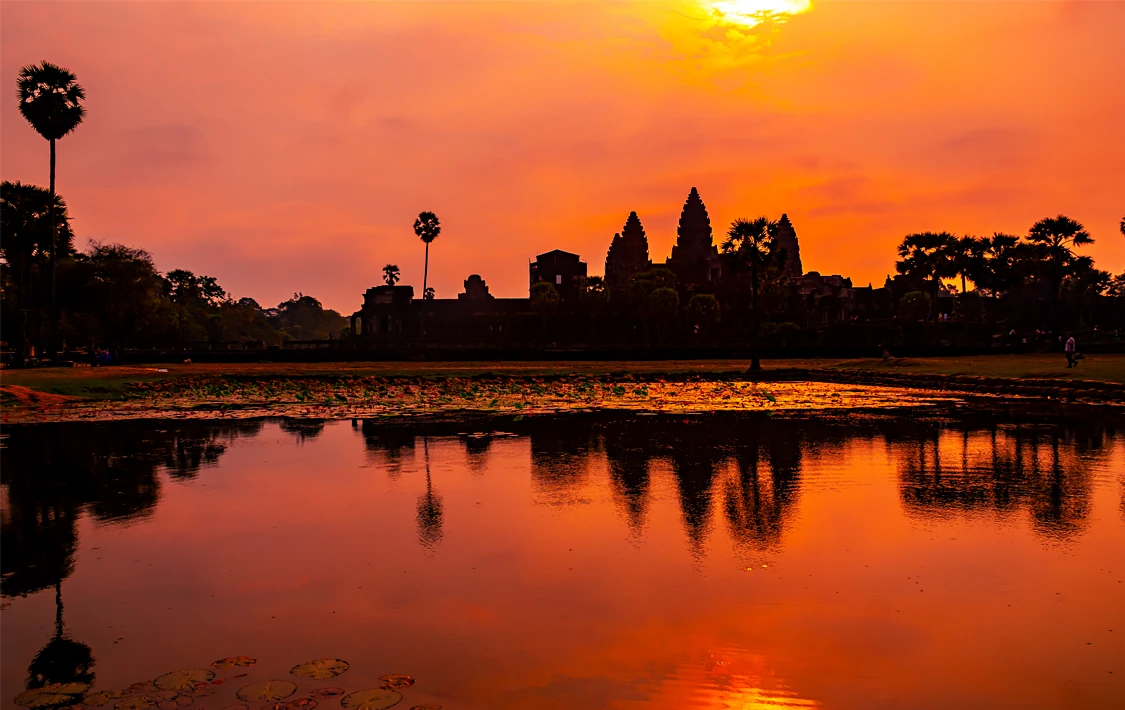
Who hasn’t seen those surreal, almost kitschy photos of Angkor Wat with the sun rising in the background? I’m usually not one to be swayed by glossy, heavily edited images – but this time, even I couldn’t resist. The idyllic scenery of this historic place was simply too tempting, and as a big fan of temples, Angkor Wat had long been on my bucket list.
The more I researched this destination in Cambodia, however, the clearer it became that this wouldn’t be a quiet, off-the-beaten-path adventure. Instead, it’s a region heavily shaped by mass tourism. So don’t be fooled by the dreamy photos that suggest a peaceful atmosphere.
That said, I can absolutely recommend visiting Angkor Wat. The entire complex is simply massive and will undoubtedly leave you in awe. It’s hard to believe that these remarkable structures were built hundreds of years ago. The park is filled with history and cultural significance – you’ll constantly find yourself amazed.
At the same time, you’ll also notice the poverty and the country’s moving history. Around the temples, you’ll often be approached by people trying to sell goods or asking for money. Some can be quite persistent, and many are children. Despite this, I never felt unsafe or threatened. Still, it’s something to be aware of – everyone is trying to make a living from tourism, which is understandable.
Do you have questions about the Angkor Wat temples and attractions?

Have you been to Angkor Wat yourself? Do you have any helpful tips or questions about this guide? Leave a comment – I’d love to hear from you!
*Affiliate disclosure:
Please note that this website uses affiliate links. This means we may earn a small commission if you purchase products or services through these links. Using affiliate links does not affect the price you pay, and it helps us maintain this website and continue providing high-quality content for you.