
 Hi, I’m Andy
Traveler and photographer.
I don’t travel just to see places. I travel because I want to know if there’s more than just everyday life. More about me
20 Kuala Lumpur Attractions – Discover the Capital of Malaysia
Many travellers say that Kuala Lumpur lacks attractions and is not worth visiting, except perhaps as a stopover for connecting flights. But is Malaysia’s capital really as boring as it is often portrayed? As tastes differ, I’d like to introduce you to the top attractions in this travel guide, so you can decide for yourself whether Kuala Lumpur is worth a visit.
In this travel guide to Kuala Lumpur attractions, I hope to convince you that the city definitely has its own appeal. Even amidst the modern skyline, Kuala Lumpur offers a unique charm. From majestic skyscrapers to historic temples, the capital of Malaysia features a diverse mix of attractions that are well worth exploring. If you prefer discovering Kuala Lumpur’s attractions through a guided and organised tour, you’ll find a wide range of online options here*.
Not in the mood to read? Then check out our photo gallery of Kuala Lumpur instead.
What to Expect in This Kuala Lumpur Travel Guide:
1. Petronas Twin Towers – Kuala Lumpur’s Most Iconic Attraction

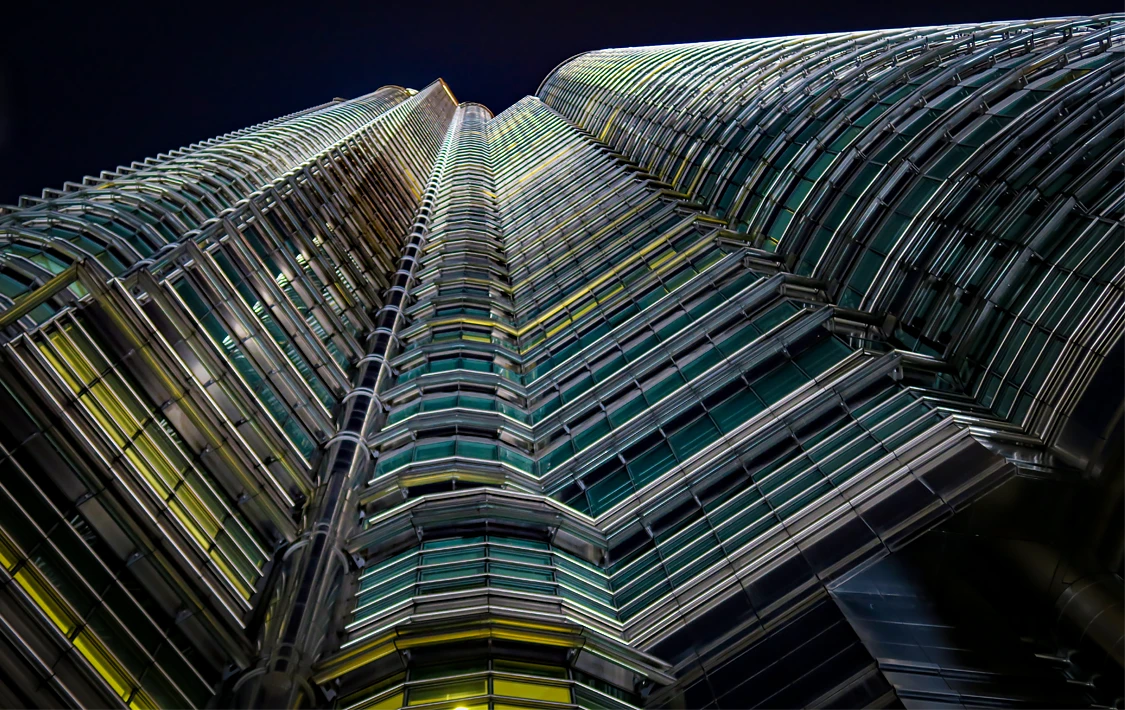


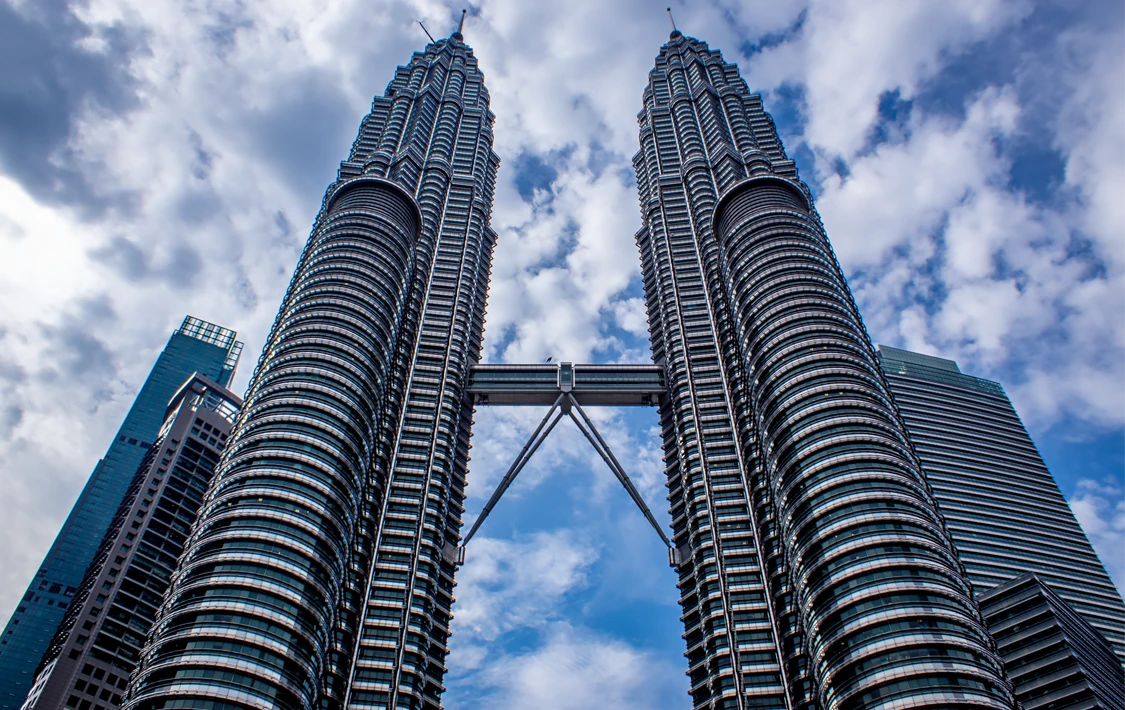
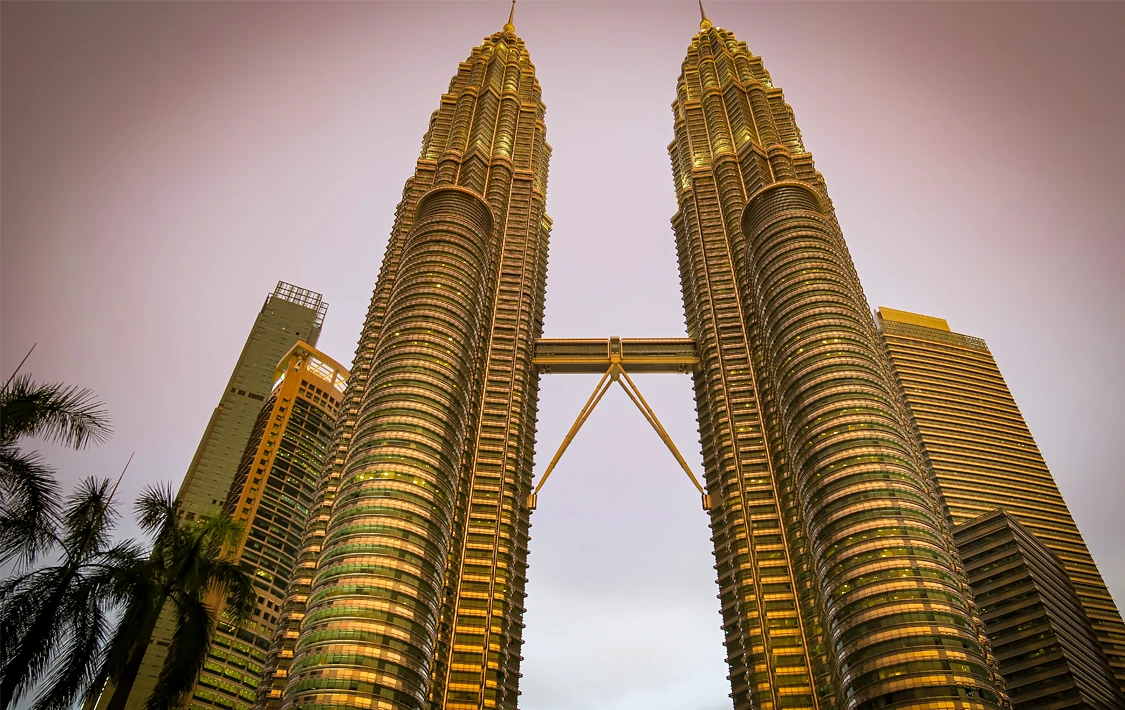
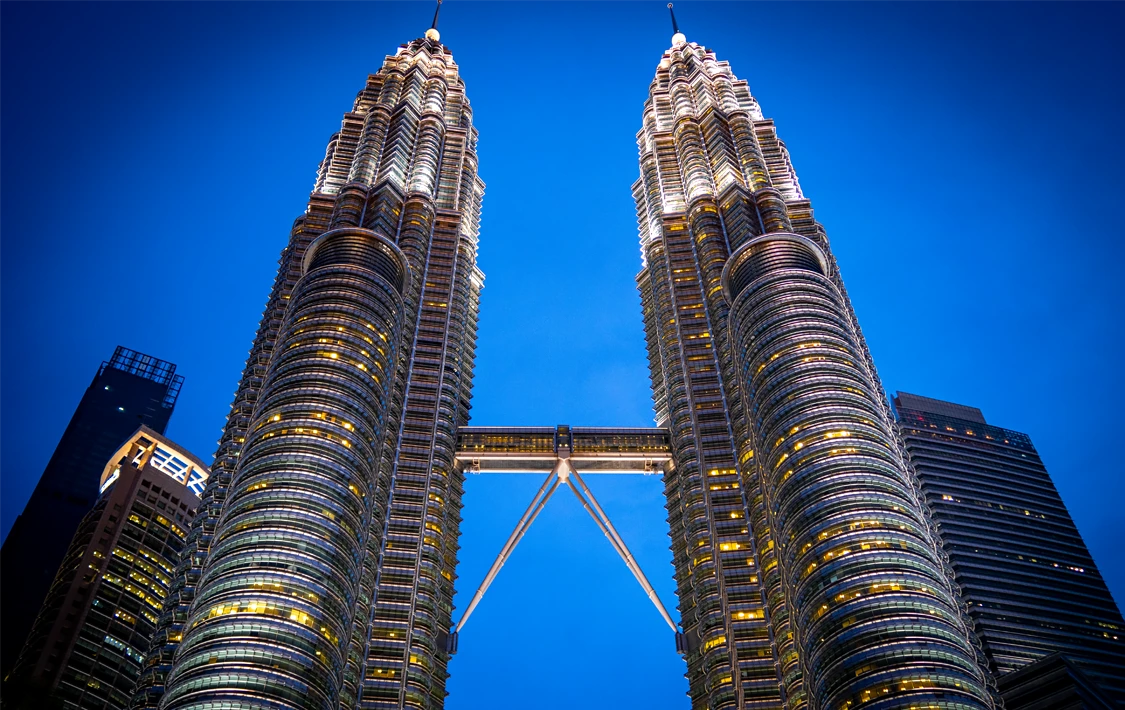
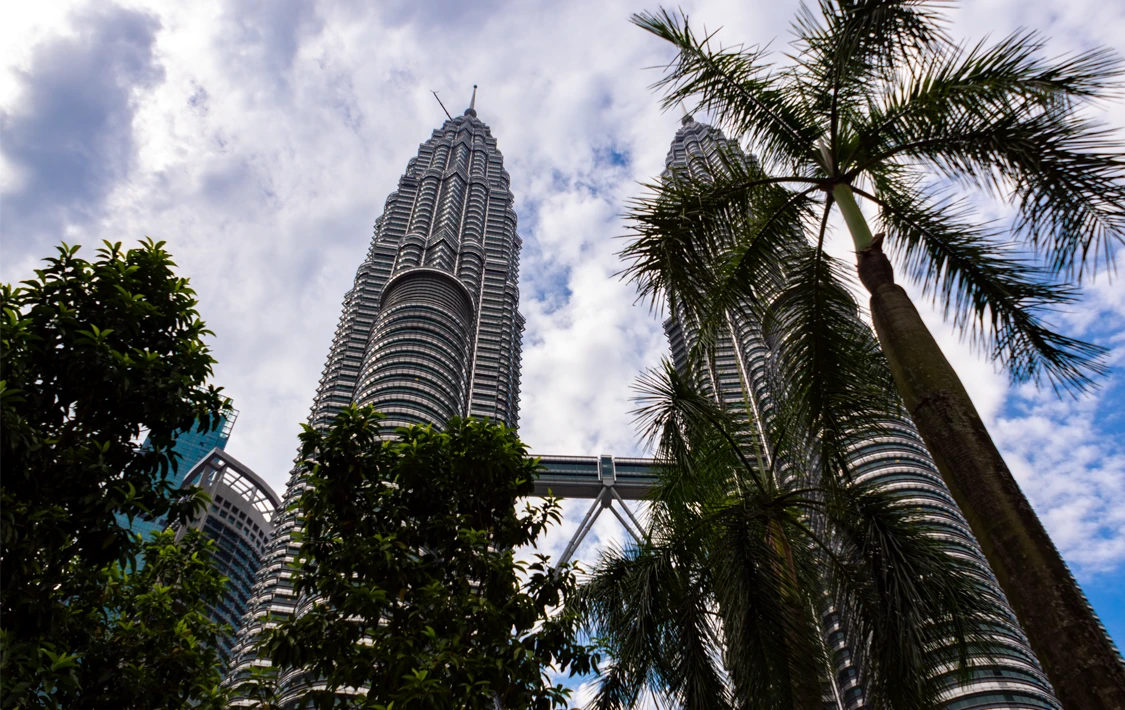
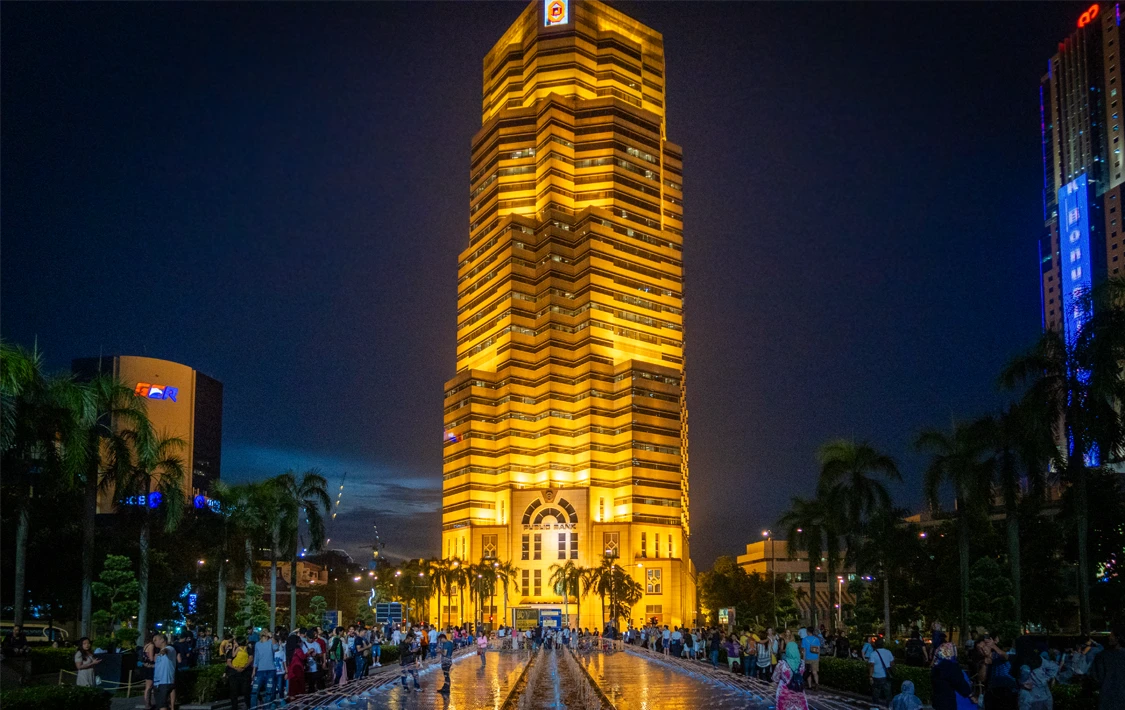
The Petronas Twin Towers are without doubt the most famous landmark in Kuala Lumpur. After their completion in 1998, the towers held the title of the tallest buildings in the world. Even today, they remain the tallest twin towers on the planet. You’ll spot them in almost every travel documentary, guidebook, and even in Formula 1 intros featuring Malaysia.
I’ve seen quite a few impressive skyscrapers while travelling, but the Petronas Towers definitely rank among the most beautiful thanks to their extravagant design. Especially at dusk, when the lights switch on, the 452-metre-high towers reveal their full beauty. Alongside the many Islamic design influences, the connecting Skybridge at 172 metres above ground immediately catches the eye. No matter what time you visit, the towers constantly change in atmosphere, colours, and mood. This ability to transform throughout the day makes them truly impressive.
Petronas Towers Observation Decks – Be Aware of Limited Tickets!
The iconic towers feature several impressive observation decks, offering spectacular views over Kuala Lumpur and its surroundings. During a guided tour in small groups of around 20 visitors, you’ll explore the famous Skybridge, the main observation floor, and another viewing platform lower down. At each stop, guides monitor the visit time, usually allowing around 10 to 15 minutes per platform, before the tour continues.
As access to the observation decks is limited to a certain number of visitors each day, it’s worth arriving early or booking your tickets online in advance*.
Fountain & Small Park in Front of the Towers – The Perfect Photo Spot
The small green park in front of the Petronas Towers offers one of the best panoramic views of the skyline. It’s an ideal location for capturing stunning photos of the skyscrapers. I recommend walking to the far end of the park, where you’ll get a fantastic perspective with the fountain in the foreground.
The area becomes very busy in the evenings, and enthusiastic locals often try to sell wide-angle phone lenses to visitors. At times, the persistent sales pitches can become a little annoying. However, around sunset, when the towers light up, the atmosphere becomes absolutely spectacular.
Shopping Paradise Around the Petronas Towers
The area surrounding the Petronas Towers is filled with shopping opportunities. One of the most famous is Suria KLCC, a luxury shopping mall featuring international brands and boutiques. Nearby, you’ll also find several other shopping centres, the Petrosains Science Discovery Centre, the Petronas Art Gallery, and the Malaysian Philharmonic Hall.
Useful Information About the Petronas Towers
2. KLCC Park Kuala Lumpur
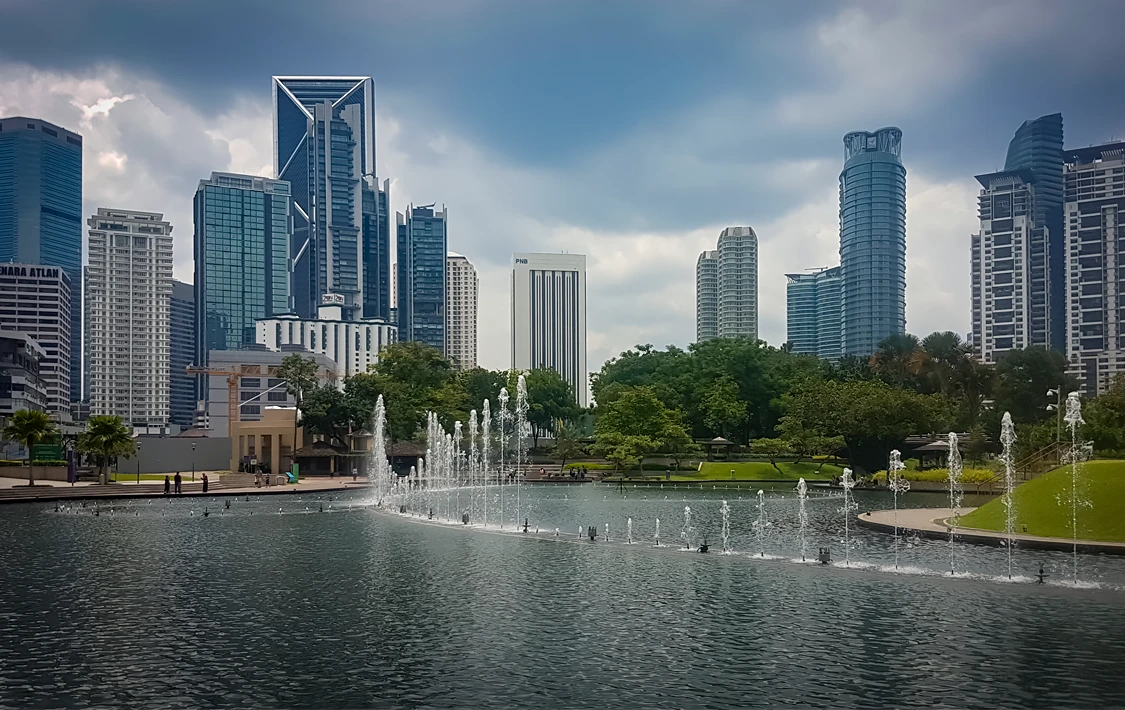
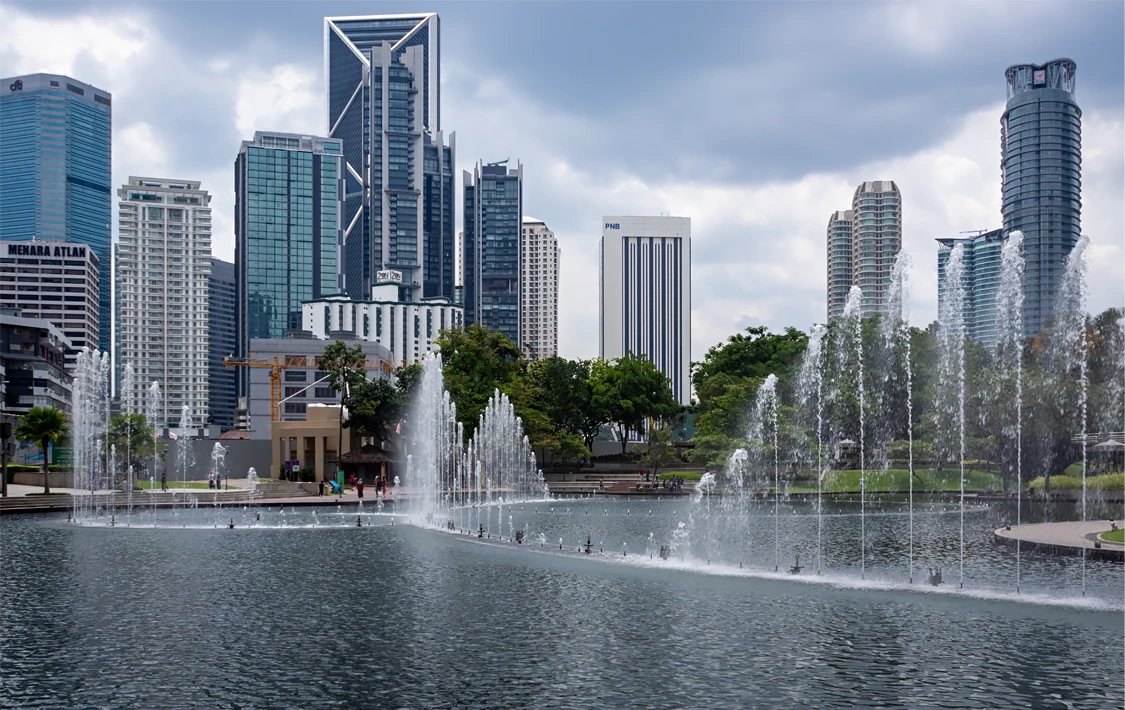


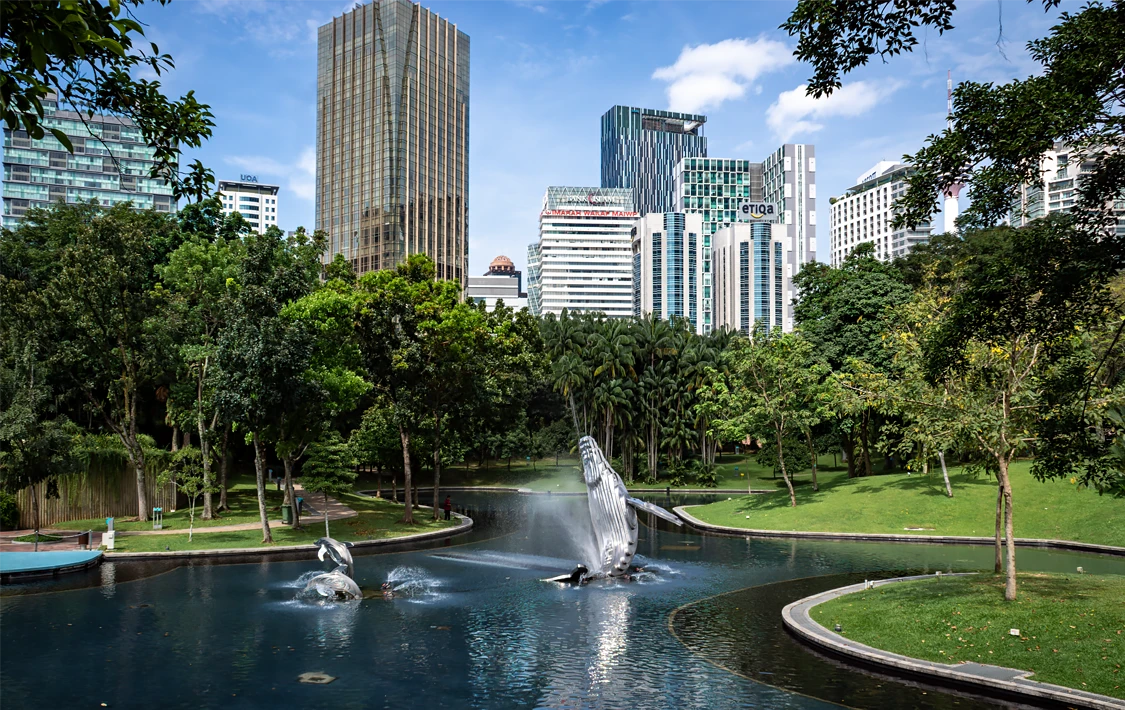
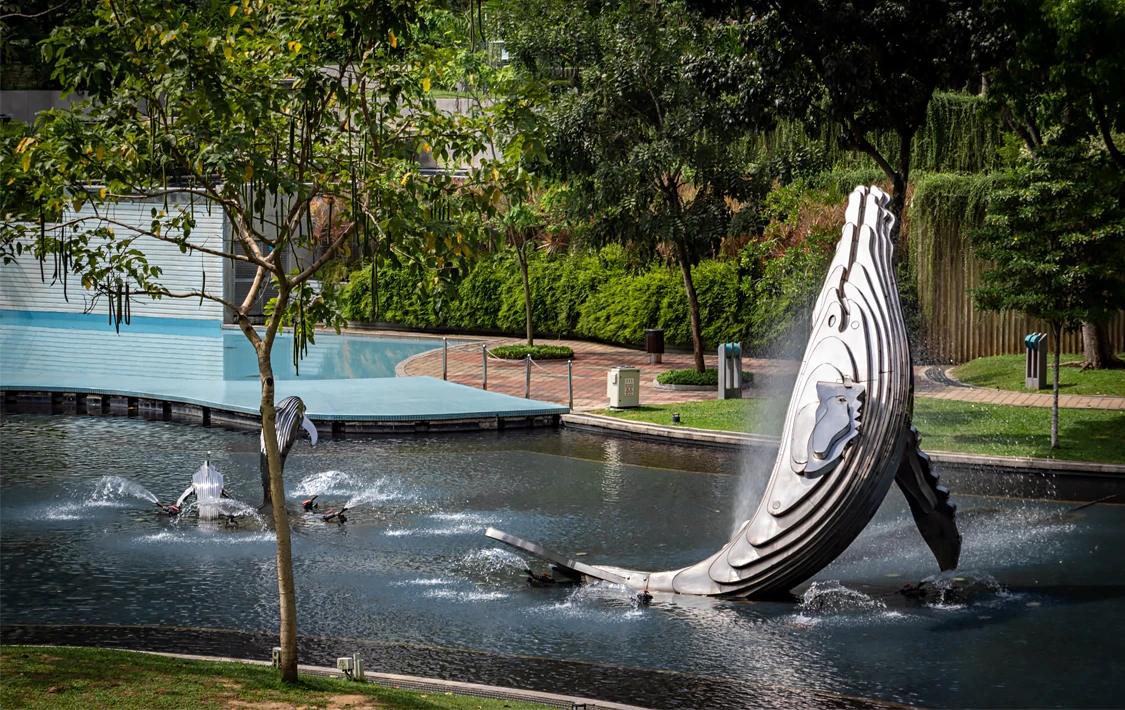

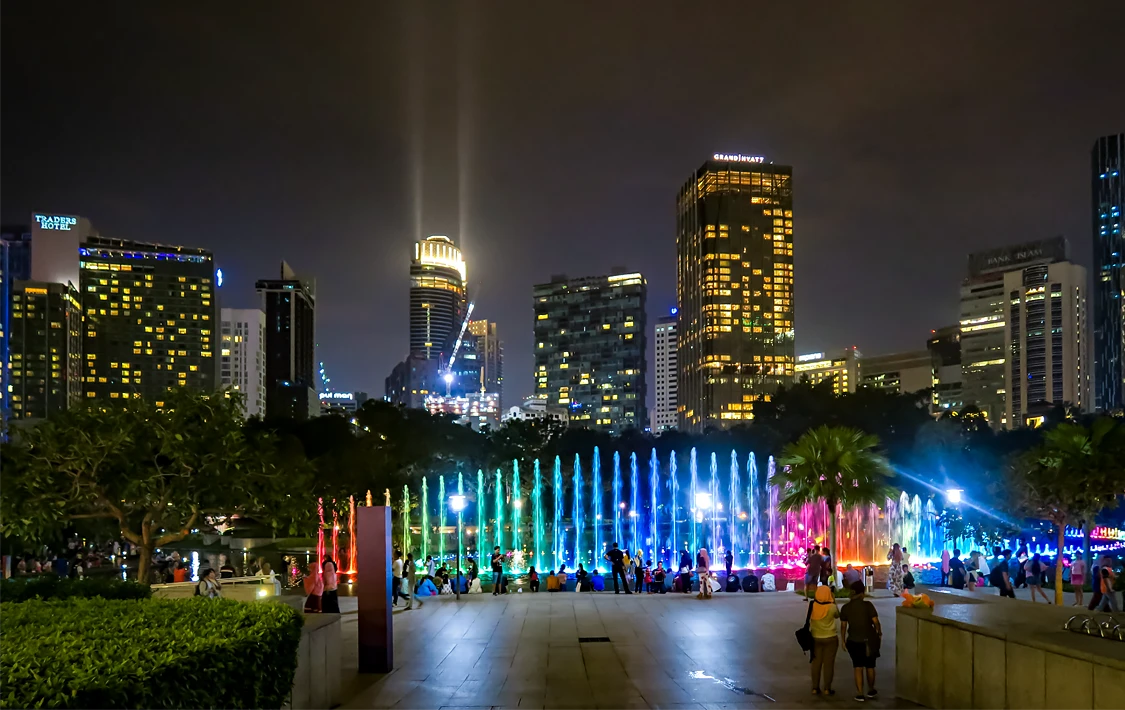
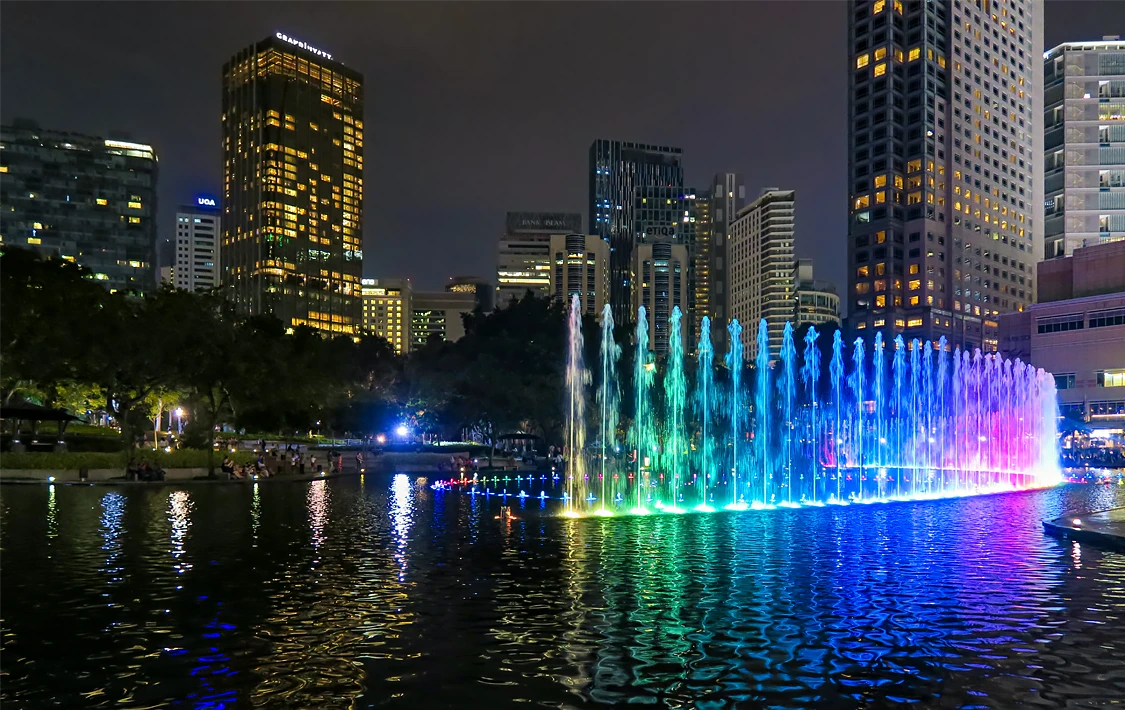
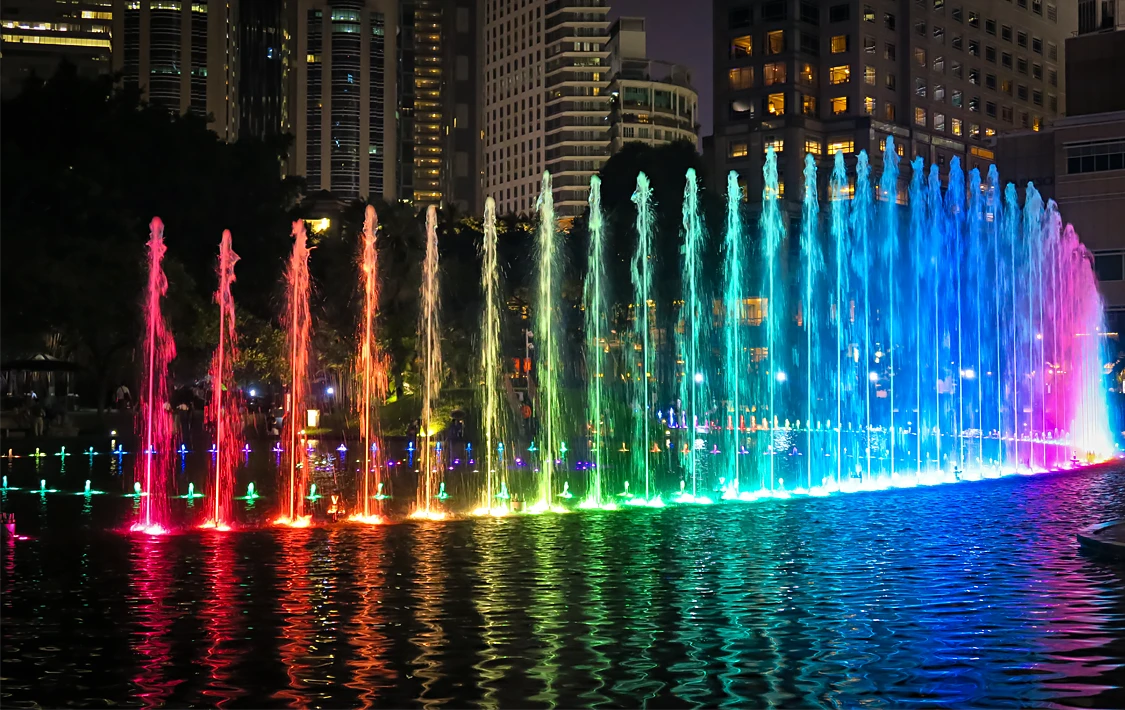
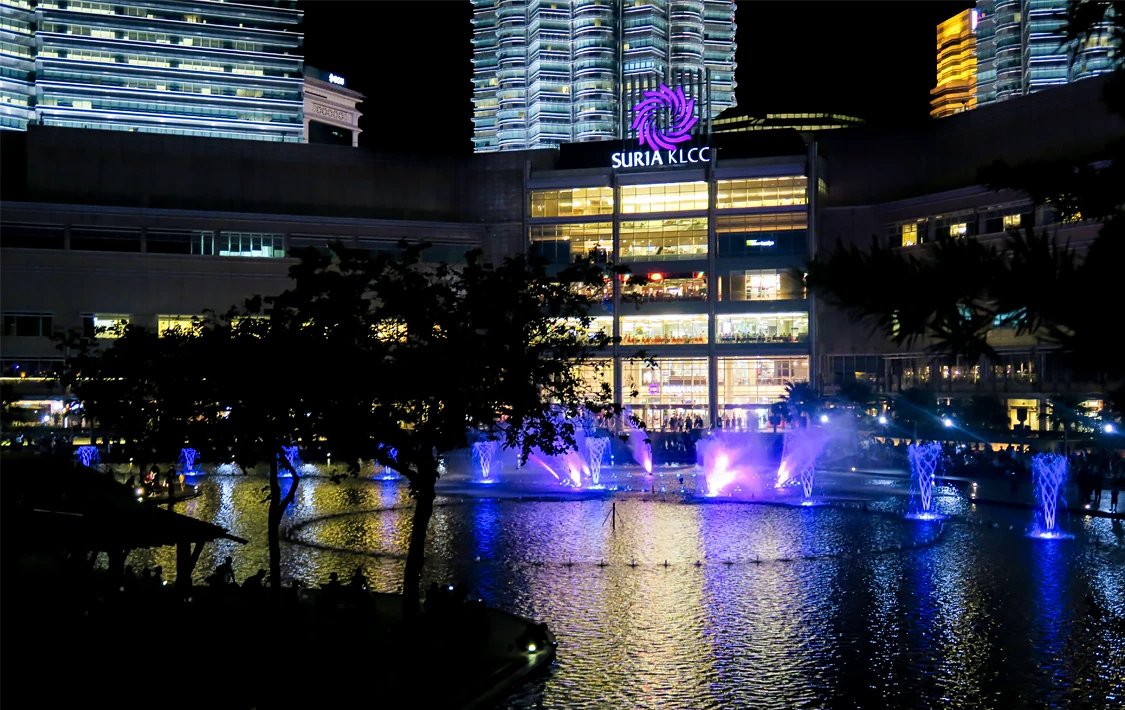
Looking for a break from the hectic city life of Kuala Lumpur? Then the green KLCC Park is the perfect place for you. Located directly behind the iconic Petronas Towers, the park offers a peaceful environment with artificial lakes, 1,900 native plant species, and 74 varieties of palm trees. Covering an area of 20 hectares, KLCC Park features a children’s playground, a jogging track, a water play area for kids, and a mosque. Right next to the park, you’ll also find the impressive Aquaria KLCC, home to various marine species (entrance fee: from RM 69).
Symphony Lake – The Highlight of the Park
The absolute highlight of KLCC Park is the 10,000-square-metre artificial Symphony Lake. Here, you can enjoy impressive fountain shows while the Petronas Twin Towers create a spectacular backdrop. The water show becomes especially magical in the evening during the nightly performances, when colourful lights and classical music transform the fountains into a unique spectacle. The water jets can reach heights of up to 42 metres.
Stunning Views of the Petronas Towers
Around Symphony Lake, you’ll enjoy fantastic views of the Petronas Towers and Kuala Lumpur’s skyline. For the best panoramic perspective, I recommend walking to the nearby bridge crossing the lake. From this elevated viewpoint, you’ll have an excellent view over the park, the city skyline, and the famous twin towers.
In general, I highly recommend taking a longer stroll through the park. Especially around the artificial lake, you’ll discover beautiful scenery and impressive perspectives of Kuala Lumpur’s skyline. If you enjoy travel photography, you’ll definitely find some great photo opportunities in KLCC Park.
Useful Information About KLCC Park Kuala Lumpur
3. Menara Kuala Lumpur (KL Tower)
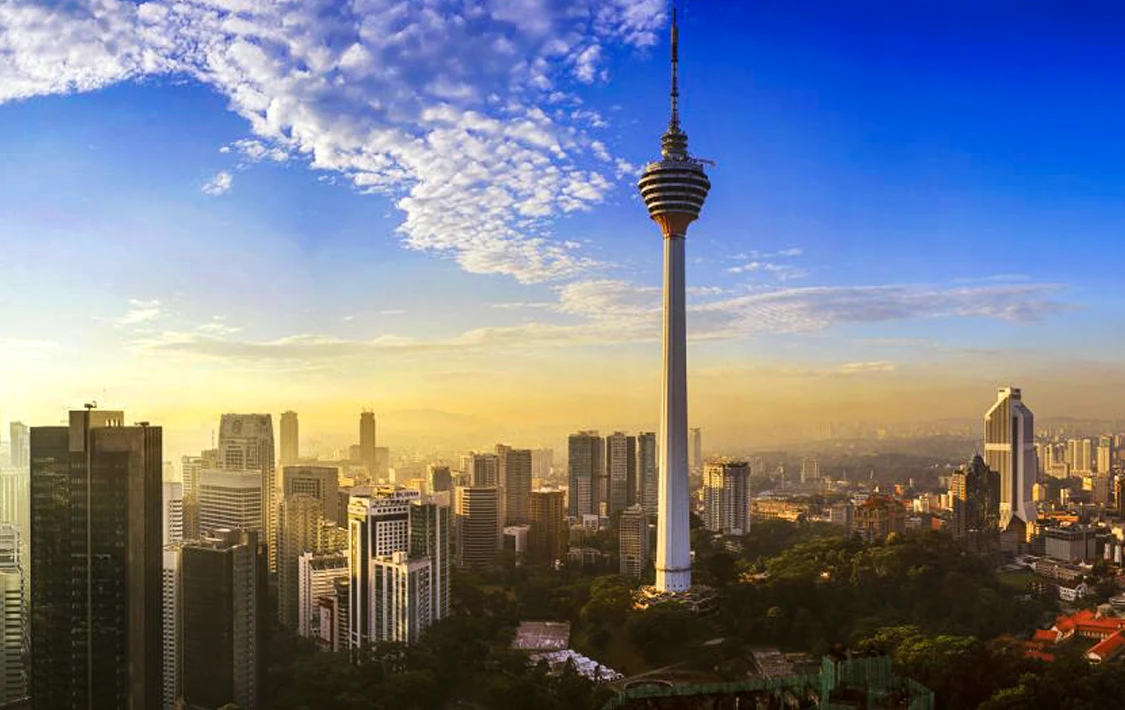
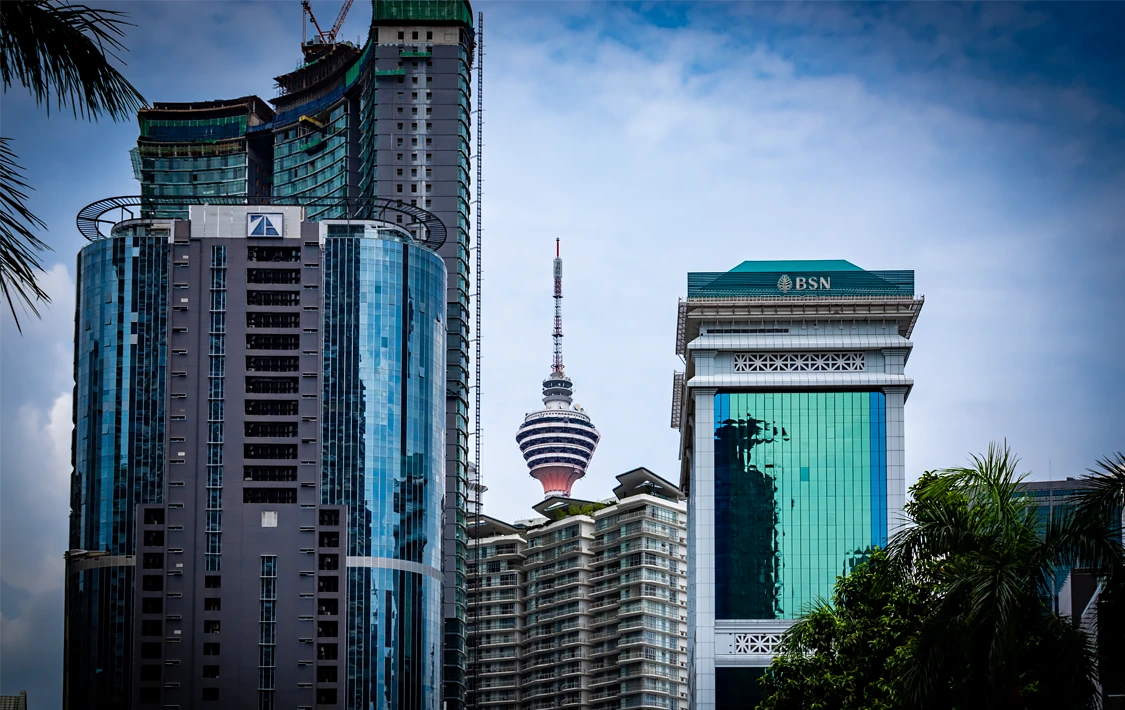
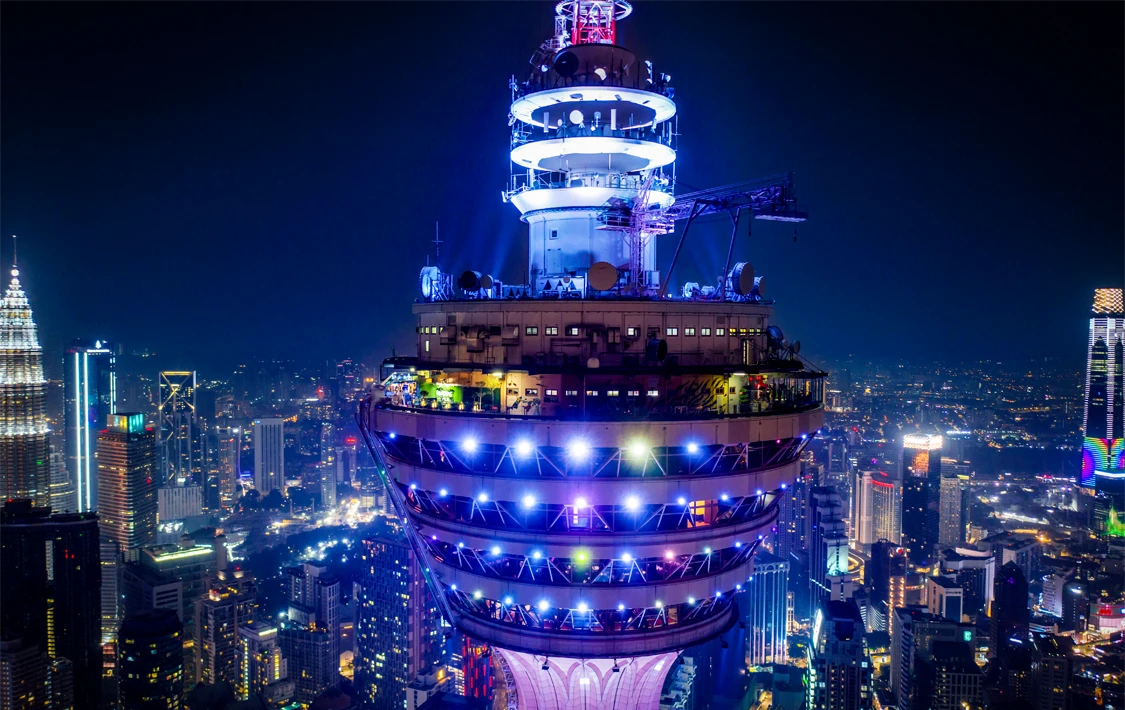
360-Degree Panoramic Views Over the City
Another fantastic 360-degree panoramic view over Kuala Lumpur awaits you at the 421-metre-high Menara KL Tower. Situated on a small hill, the tower is surrounded by a forest reserve featuring centuries-old trees, as well as native flora and fauna.
Kuala Lumpur’s Skyline Without the Petronas Twin Towers?
What would Kuala Lumpur’s skyline be without the Petronas Twin Towers? Probably only half as spectacular, right? Of course, visiting the Petronas Twin Towers Skybridge is a must when exploring Kuala Lumpur. While you’ll enjoy amazing views of the city and capture great skyline photos from there, one thing will be missing from your panorama: the Petronas Towers themselves.
That’s exactly what makes the Menara KL Tower observation deck different.
Even Better Than the Petronas Twin Towers Observation Deck?
Compared to the Petronas Towers observation decks, I personally think the Menara KL Tower offers the better experience. Why? Simply because from here, you’ll enjoy a perfect view of Kuala Lumpur’s skyline, including the Petronas Twin Towers, which complete the cityscape.
Additionally, the Menara observation deck sits at around 300 metres, making it more than 100 metres higher than the famous Skybridge at the Petronas Towers.
Rotating Atmosphere Restaurant & Base Jumping
At the top of the tower, at a height of 335 metres, you’ll find a base jumping platform, which has hosted international jumping events since 1999.
The Menara Tower is also home to a rotating restaurant with space for around 300 guests, completing a full rotation every 90 minutes. Sounds like the perfect place for lunch or dinner with spectacular city views, doesn’t it?
Useful Information About Menara Kuala Lumpur
4. Batu Caves – One of the Best Attractions in Kuala Lumpur
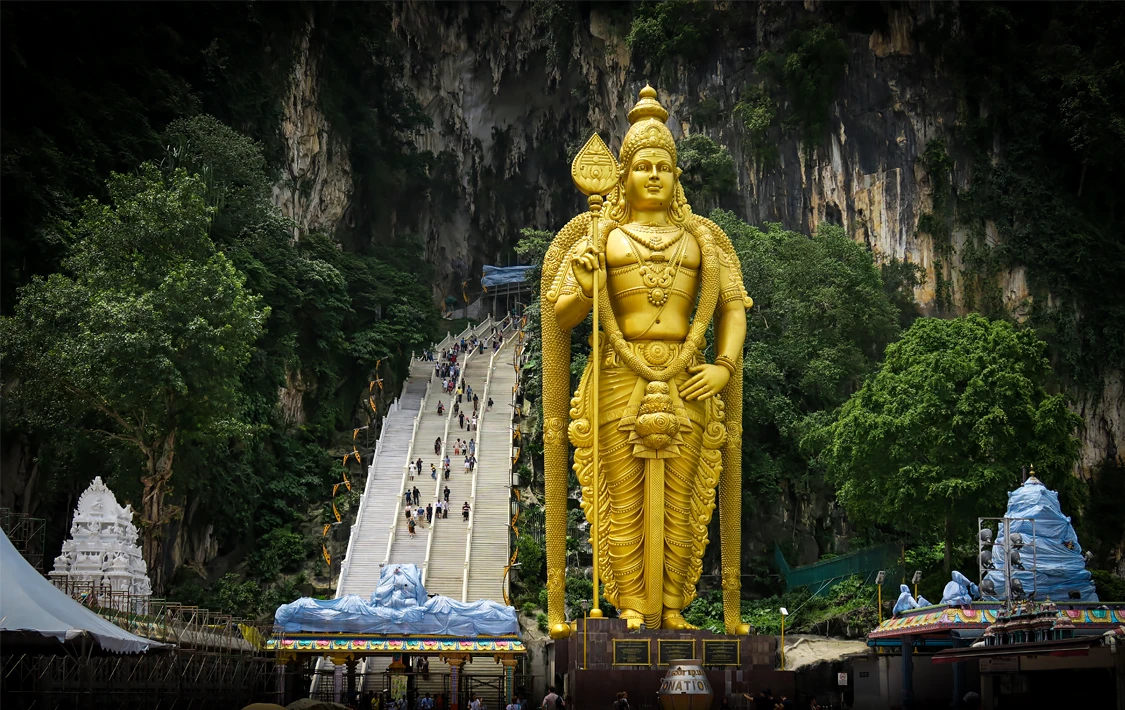

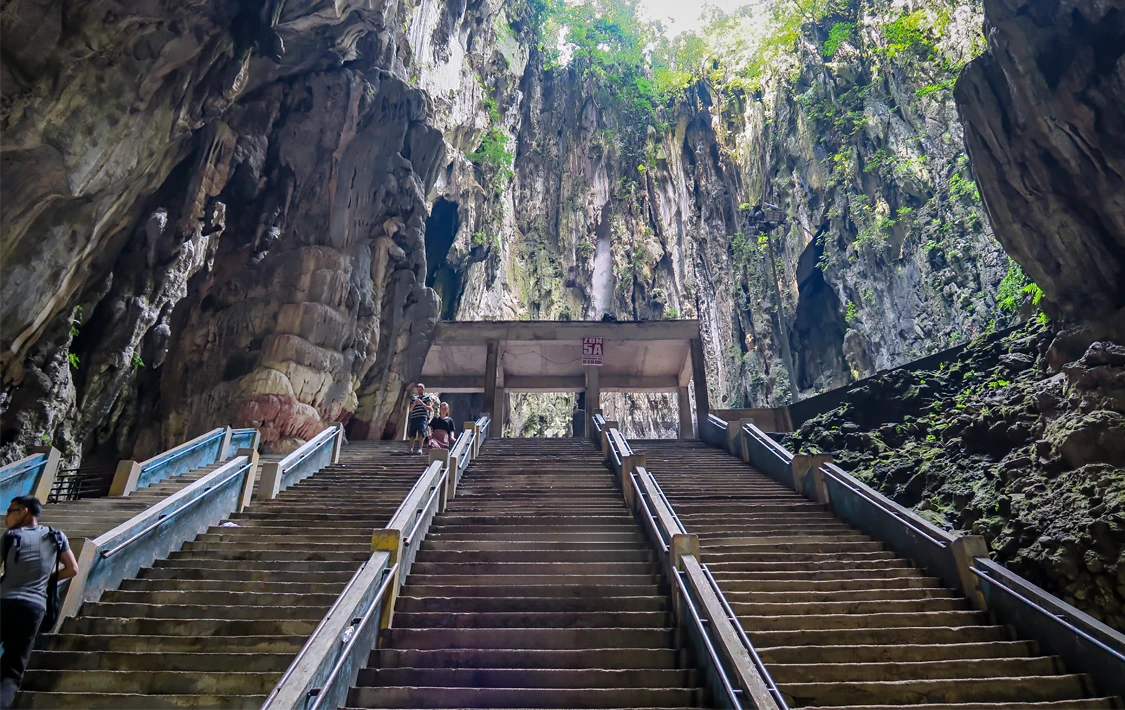

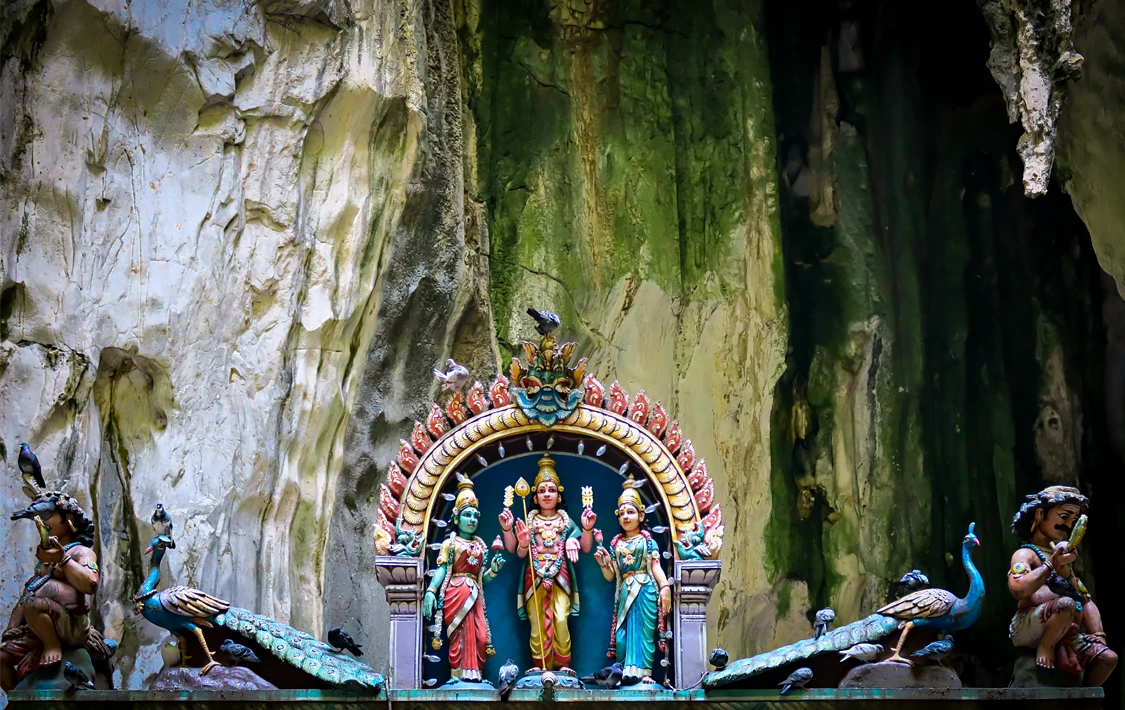

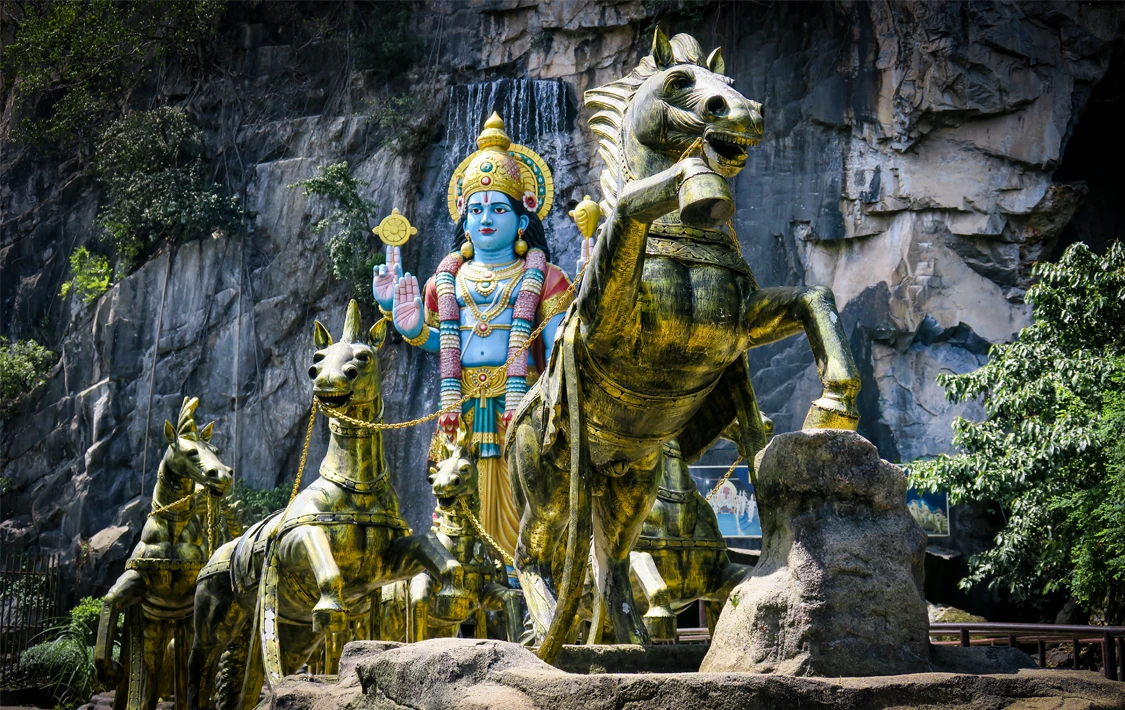
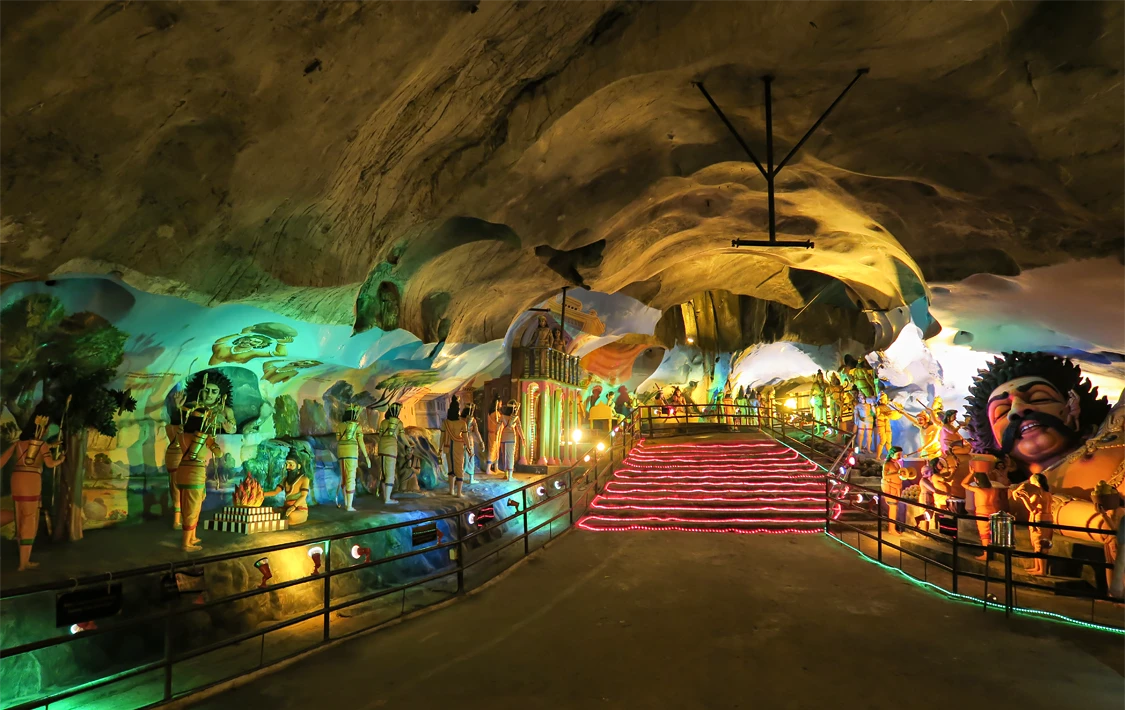
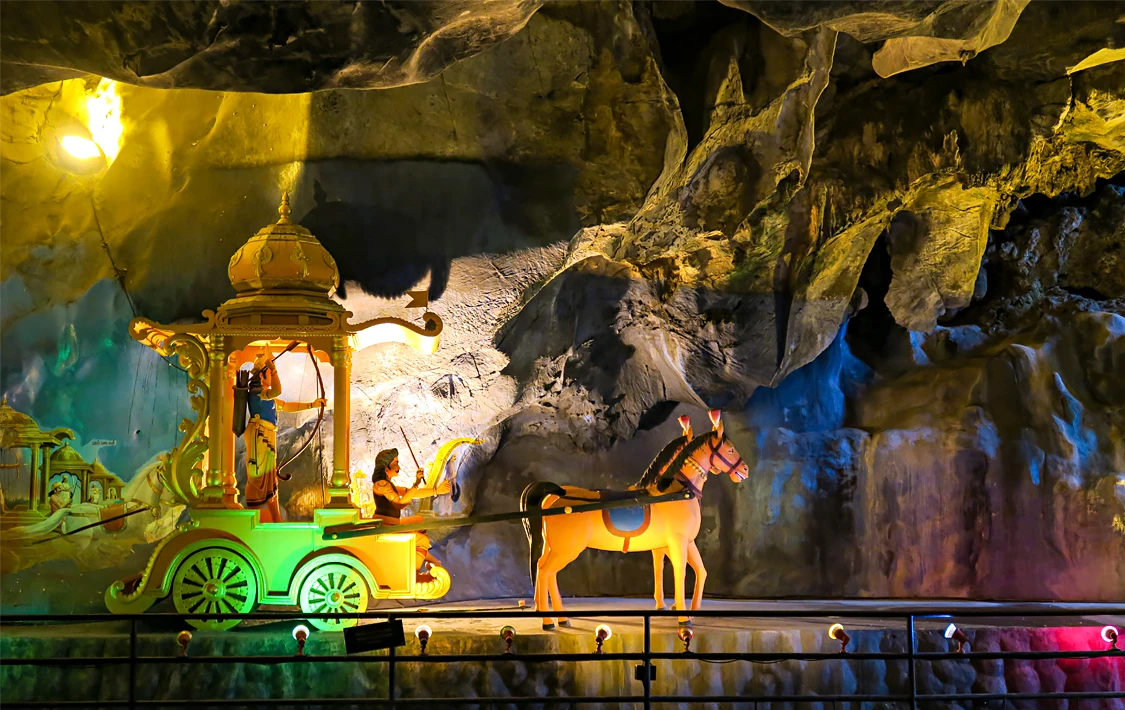
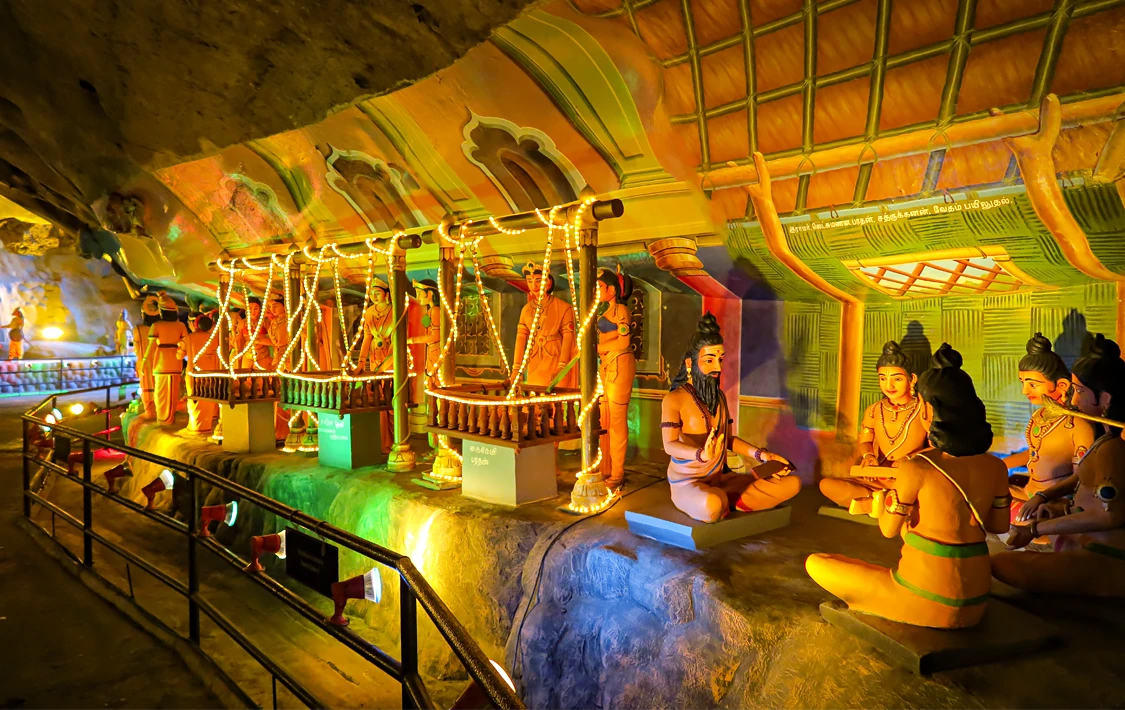
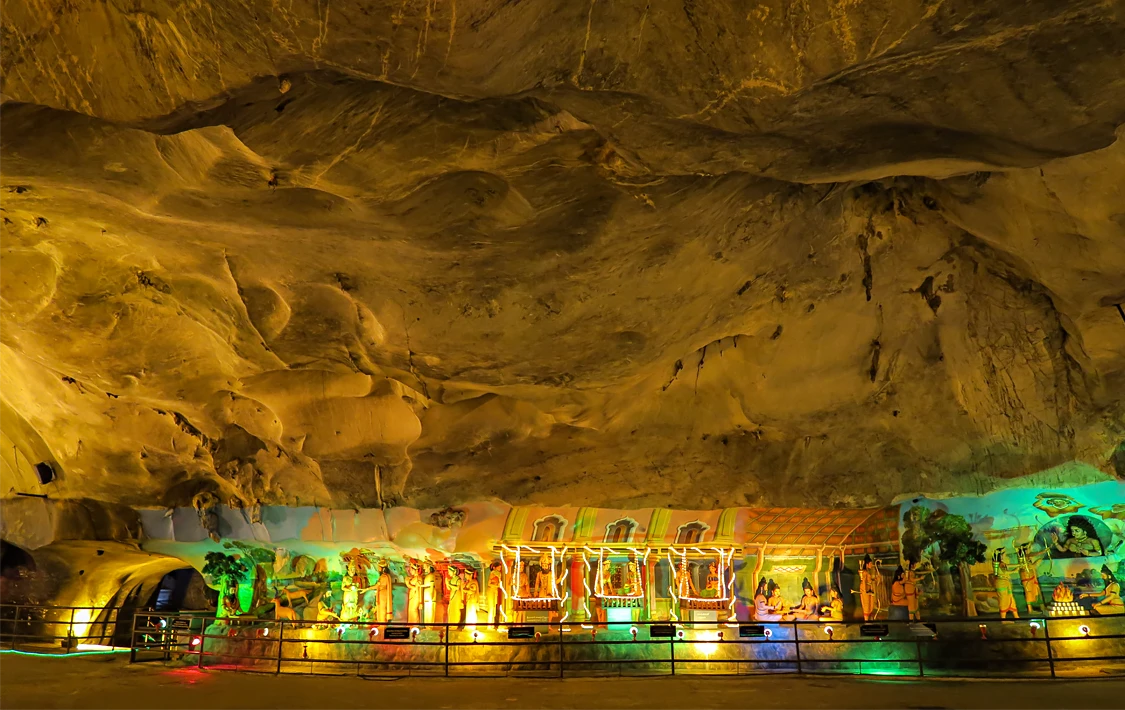
Around 15 kilometres outside of Kuala Lumpur, you’ll find the fascinating Batu Caves. The main cave reaches a height of around 100 metres, and inside the impressive limestone cave, you’ll discover several Hindu temples located in a truly spectacular setting. The entire atmosphere inside the cave is unique and definitely one of Kuala Lumpur’s most remarkable attractions.
272 Steep Steps to the Main Cave
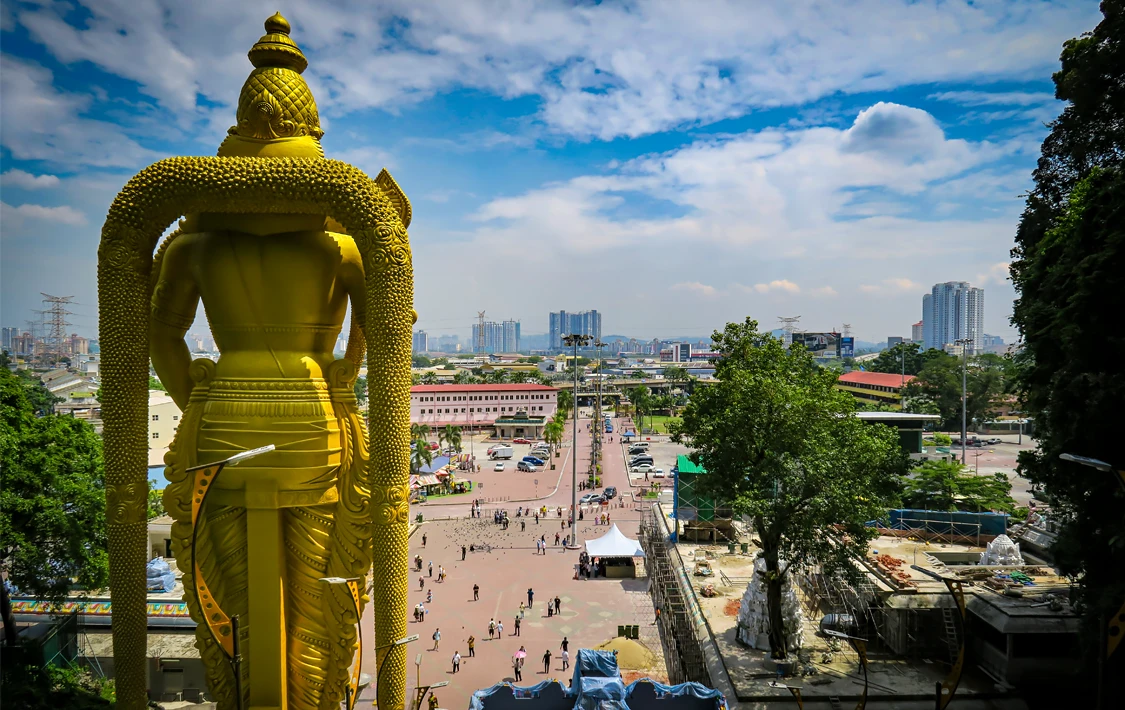
At the entrance to the caves stands the 42.7-metre-high statue of Lord Murugan, creating an iconic photo spot together with the colourful staircase behind it. To reach the main cave, you’ll need to climb 272 steep steps, which can become quite exhausting in Kuala Lumpur’s tropical temperatures.
Along the staircase, you’ll encounter plenty of monkeys waiting for food from tourists. Keep an eye on your valuables though, as the monkeys sometimes treat visitors like self-service shops. From the top platform, you’ll be rewarded with impressive views over Kuala Lumpur’s skyline. Entrance to the main cave is free of charge.
Dark Cave
Located slightly below the main Batu Cave, the Dark Cave stretches over two kilometres and remains relatively untouched. To protect the delicate ecosystem and wildlife inside, visits are only possible through guided group tours.
Hanuman Statue & Ramayana Cave
Another highlight is the giant Hanuman Statue, located on the way to Ramayana Cave, representing the Hindu monkey god. Nearby, you’ll reach the colourful Ramayana Cave, which resembles a gallery filled with statues and scenes from Hindu mythology. Dramatic lighting adds to the atmosphere and makes the cave especially worth visiting. Entrance costs RM 5.
At the foot of the mountain, you’ll also find additional shrines, statues, and temples. I recommend planning around half a day for your visit to fully explore the area.
Useful Information About the Batu Caves
5. Merdeka Square Kuala Lumpur – The Historical Heart of the City
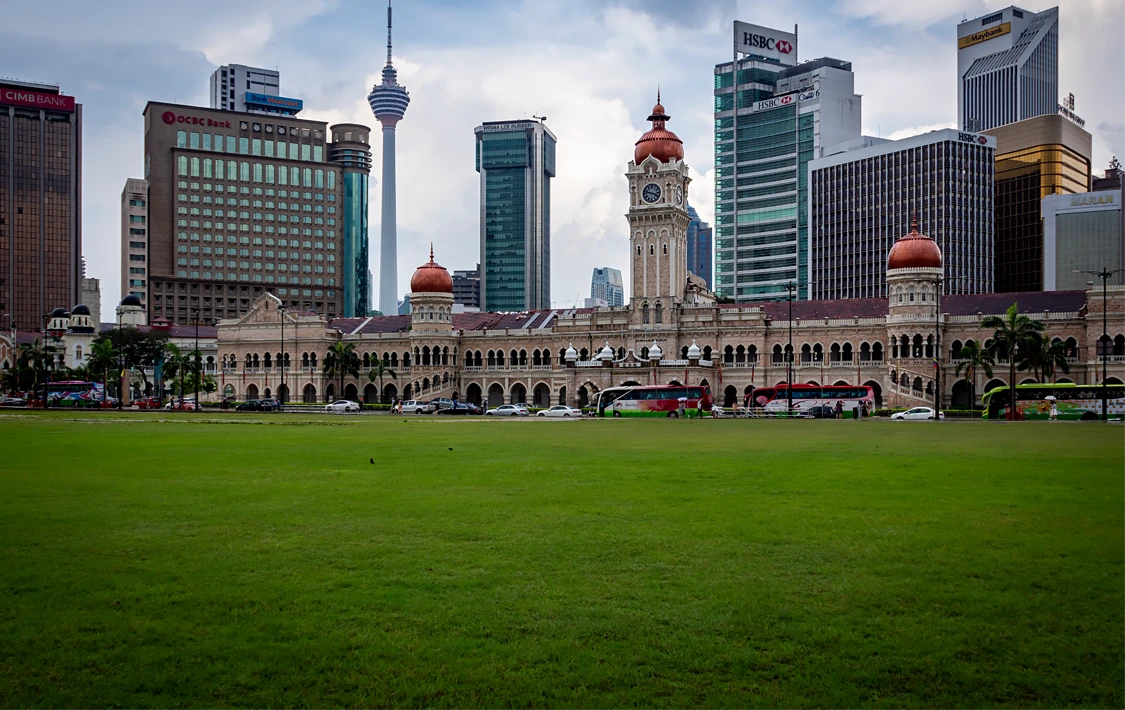

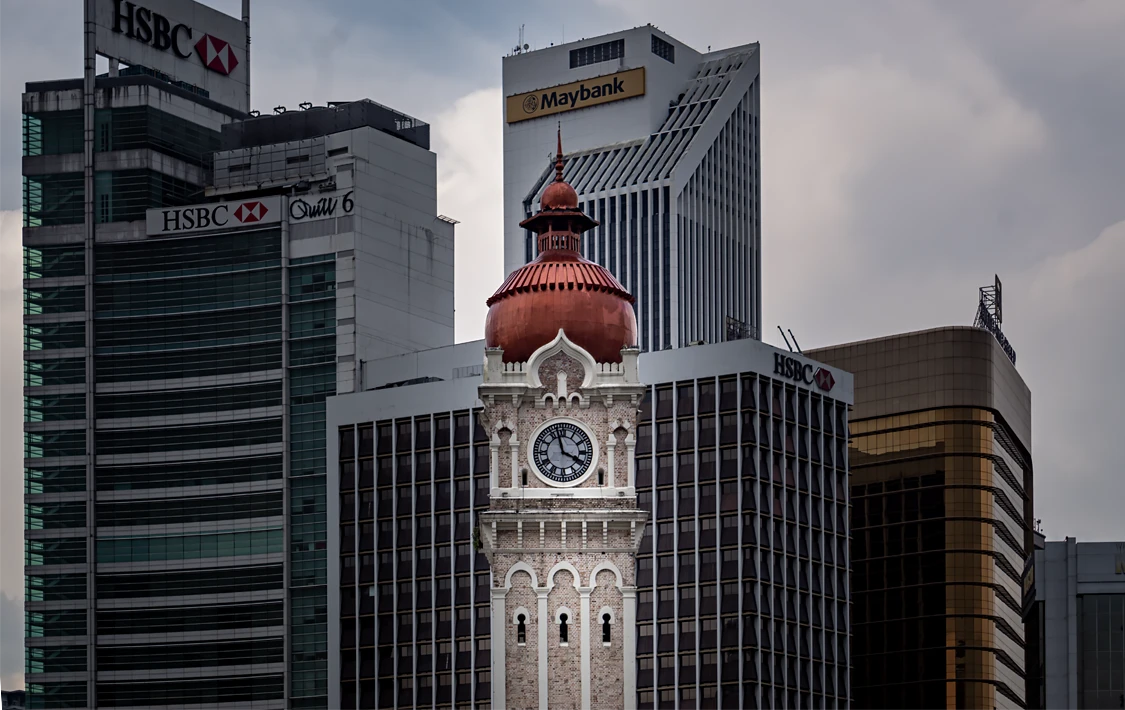
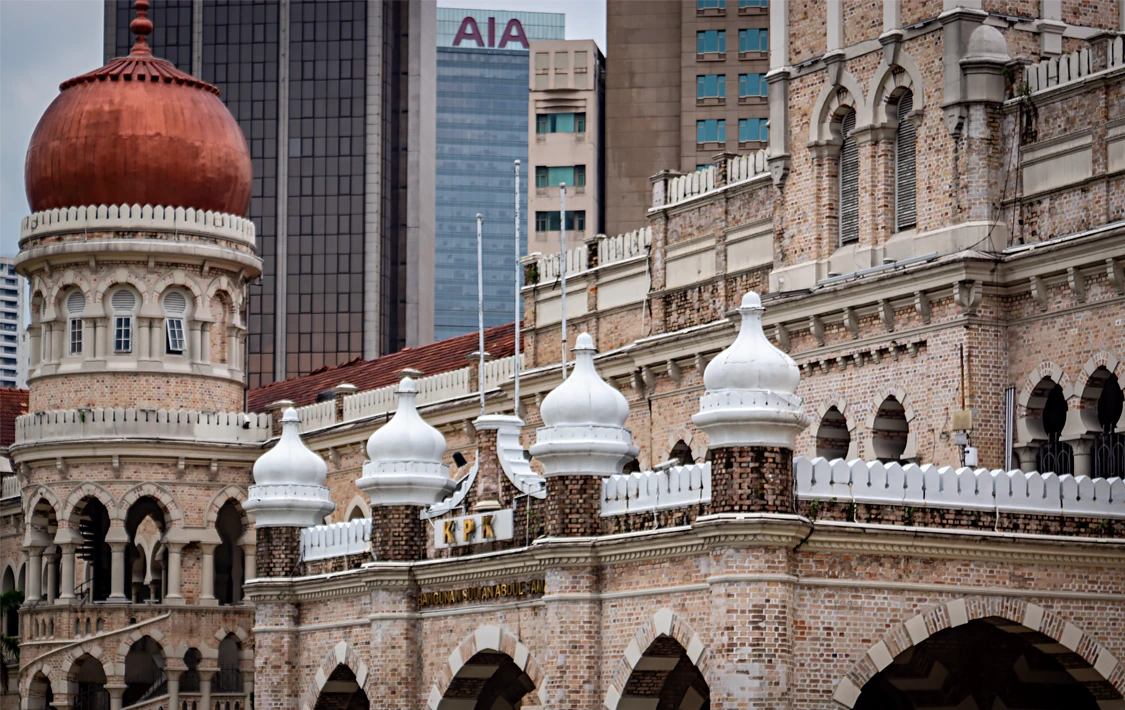
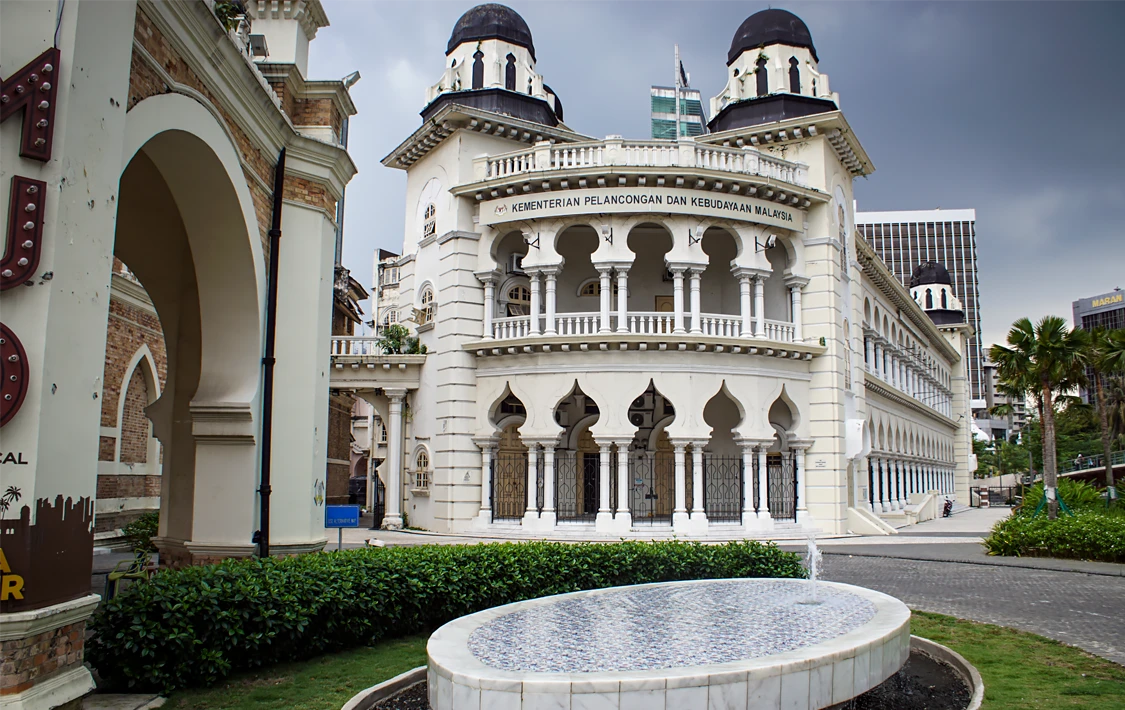

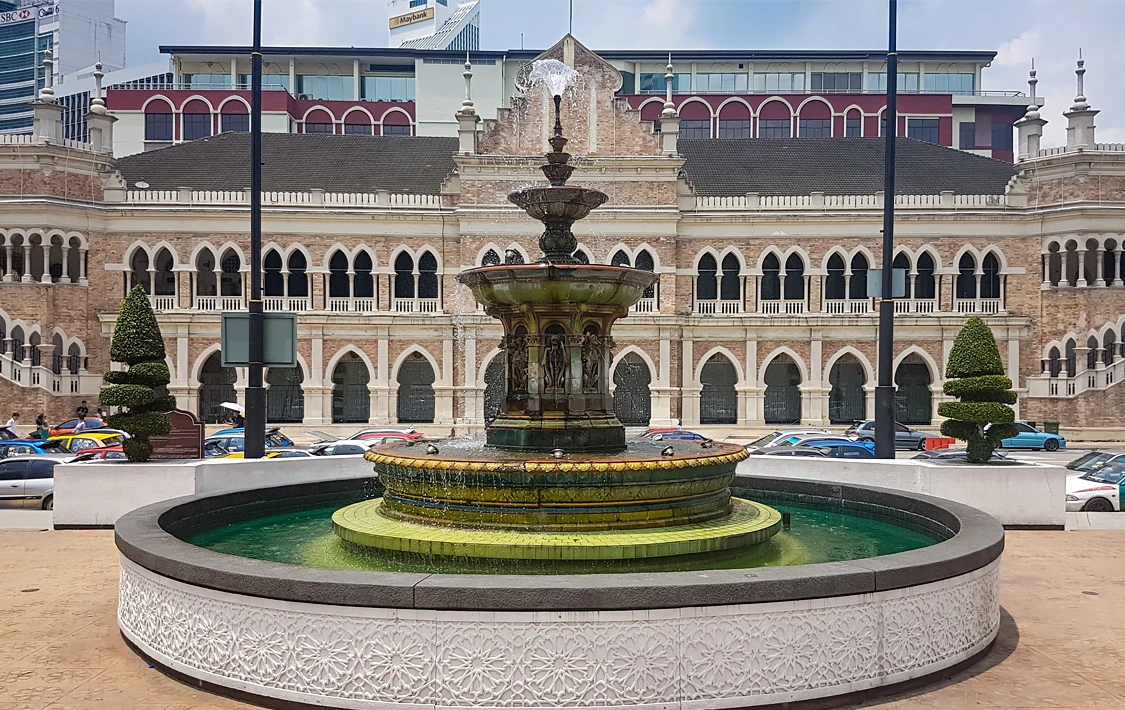
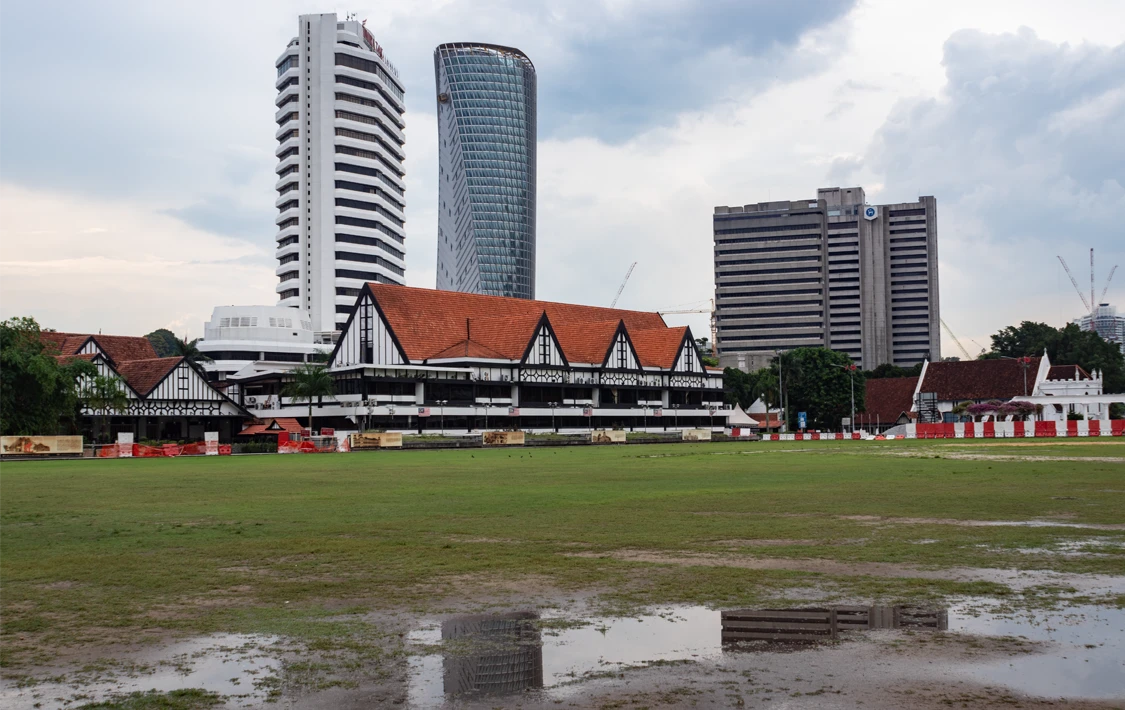
Merdeka Square, often referred to as Dataran Merdeka, belongs to the historical centre of Kuala Lumpur. This colonial district, where traces of the British Empire remain clearly visible, is considered one of the top attractions in Kuala Lumpur.
The End of British Rule
Merdeka Square is one of the most historically significant places in Malaysia. It was here, on 31 August 1957, that the country officially declared its independence from British rule. To commemorate this important event, you’ll find one of the world’s tallest flagpoles at the northern end of the square. At nearly 100 metres high, the Malaysian flag, known as the Jalur Gemilang, proudly waves above the city.
Starting Point for Exploring Kuala Lumpur
The square itself is essentially a large green field with well-maintained lawns. During colonial times, however, it served as a cricket field for the British elite. Today, this open area offers fantastic views of Kuala Lumpur’s historic buildings, contrasted against the modern skyline in the background. The combination creates a remarkable panorama
The square is surrounded by several impressive attractions, including:
- Sultan Abdul Samad Building
- Das National Textile Museum
- Der Royal Selangor Club
- Kuala Lumpur City Gallery
Sultan Abdul Samad Building – The Highlight of Merdeka Square
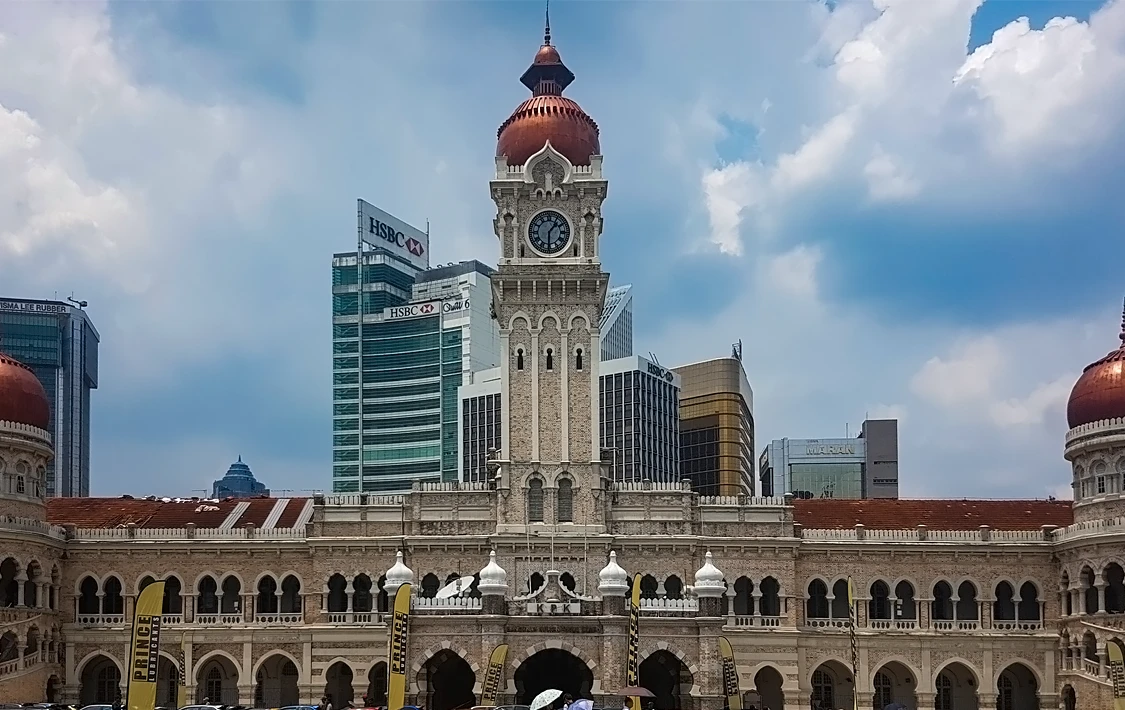
The impressive Sultan Abdul Samad Building was constructed between 1894 and 1897 by British architects Norman and Hubback. The architecture combines Indian, Oriental, and British influences, creating one of Kuala Lumpur’s most recognisable landmarks. Particularly striking are the onion-shaped domes, copper cupolas, arches, columns, and the 41-metre-high clock tower, often referred to as Kuala Lumpur’s version of Big Ben.
During British rule, the building served as the Federal Secretariat, while today it houses Malaysia’s Supreme Court. The building also witnessed an important historical moment, as the Malaysian Declaration of Independence was signed here on 31 August 1957
Useful Information About the Sultan Abdul Samad Building
- Access: Can unfortunately only be viewed from the outside
- Worth it: One of Kuala Lumpur’s most impressive architectural landmarks
- Location: View on Google Maps
National Textile Museum – A Lot to Discover
Located in another architecturally fascinating building, the National Textile Museum offers insight into Malaysia’s textile history and craftsmanship. The museum is considered one of Kuala Lumpur’s important cultural landmarks and covers topics such as traditional manufacturing techniques, materials, and textile production. Across four galleries, you’ll discover everything from prehistoric textile origins to Batik art, traditional Malaysian clothing, and jewellery collections.
- Pohon Budi Gallery: This gallery showcases the origins of textiles from prehistoric times and their development through trade. You’ll also learn about the tools, materials, and techniques that were traditionally used in textile production.
- Pelangi Gallery: Exhibition of textiles created using the Batik technique, where fabrics are treated with wax and dyed. The gallery displays extensive textile designs from China, as well as works from the Baba and Nyonya communities (Southeast Asian ethnic groups).
- Teluk Berantai Galerie: This gallery features collections of Malaysian and Indian textiles, gold-thread embroidery, traditional Malaysian costumes, and other cultural garments.
- Ratna Sari Galerie: Exhibition of jewellery and accessories made from diamonds, gold, silver, copper, pearls, and plant-based materials.
Useful Information About the National Textile Museum
-
- Location: View on Google Maps
- Opening Hours: Daily from 9:00 AM to 5:00 PM
- Entrance Fee: RM 5, approximately €1
- More Information: Available on the official Website
Kuala Lumpur City Gallery – Get an Overview of the City
If you’re new to Kuala Lumpur, the Kuala Lumpur City Gallery is an excellent starting point. The museum presents the city’s history, present, and future through exhibitions and miniature models. The highlight is a 12 x 15 metre illuminated miniature model of Kuala Lumpur. You’ll also find exhibitions featuring traditional wood carvings. View Location on Google Maps.
Wenn du dir einen Überblick zu Kuala Lumpur und der Geschichte verschaffen willst, dann bist du hier genau richtig!
Royal Selangor Club – Former Centre of Social Life
During British colonial times, the Royal Selangor Club was the centre of social life. People gathered here to play billiards and cards, enjoy theatre and music performances, or cheer on cricket matches.
The building was designed in 1894 by A.C. Norman, the same architect responsible for the Sultan Abdul Samad Building and the National Textile Museum. A fire destroyed the original structure in 1970, but it was later rebuilt true to the original style and expanded with an additional wing.
Today, the club remains exclusive to members and the wealthy elite. Without membership, entry is unfortunately not possible. However, the short walk around the area is worthwhile for the views alone. The surroundings offer excellent perspectives of the Sultan Abdul Samad Building, Merdeka Square, the Petronas Towers, and Menara KL Tower
6. River of Life & River of Life Bridge
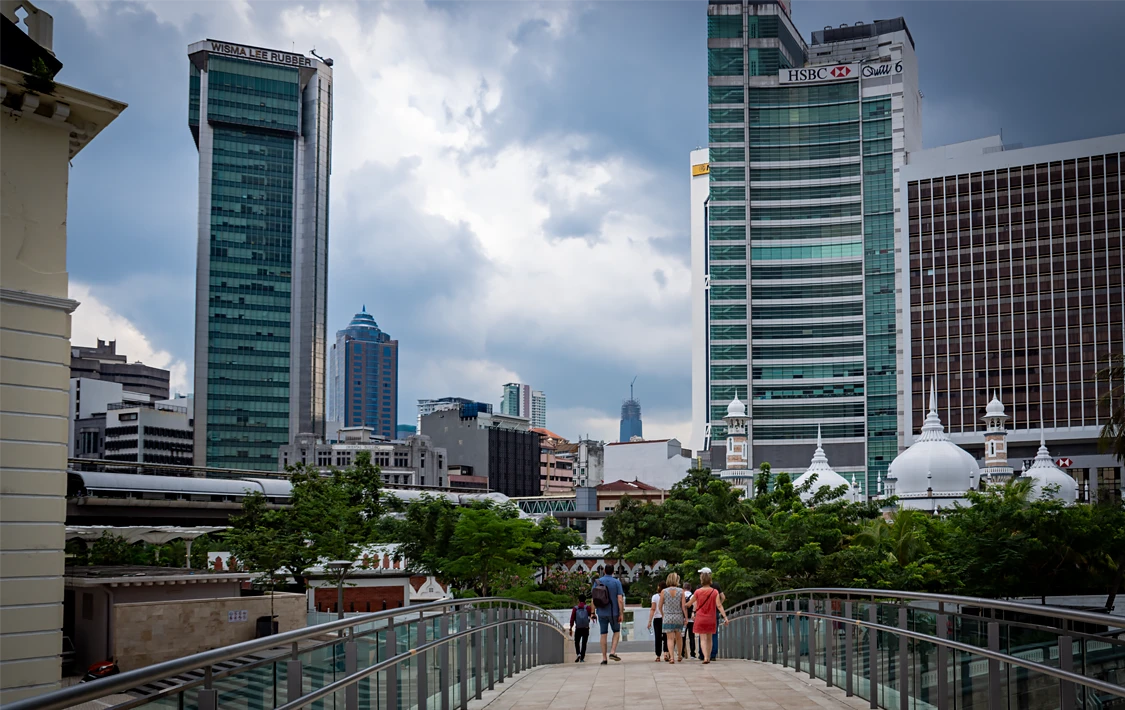
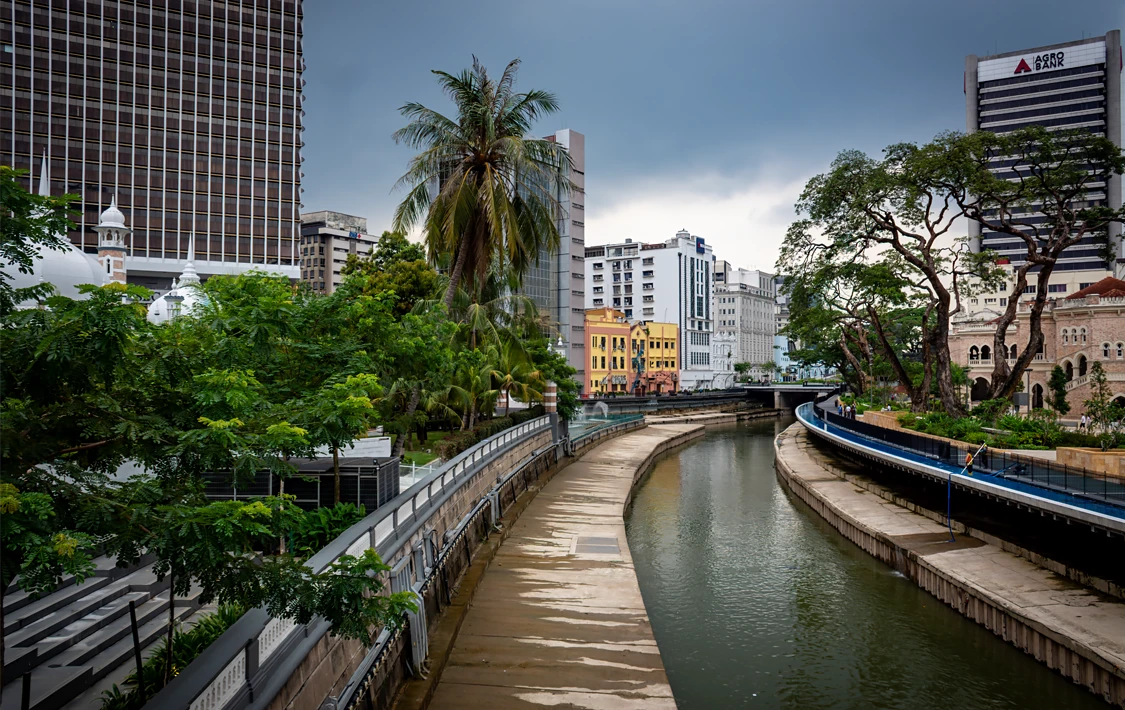
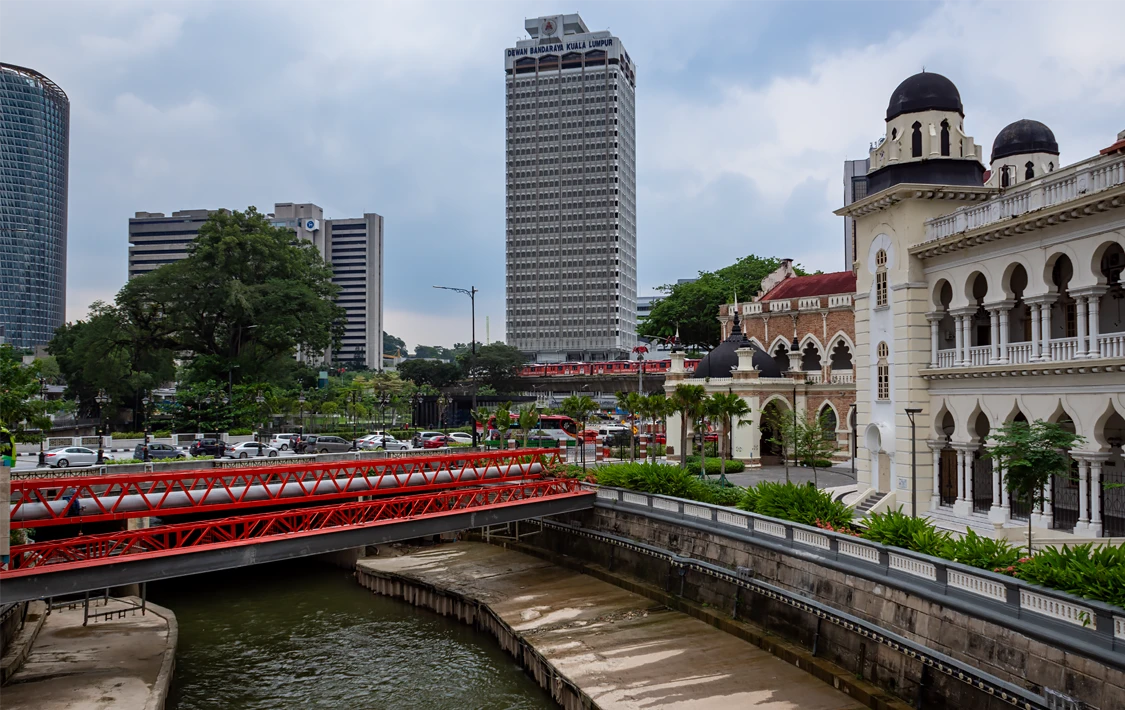

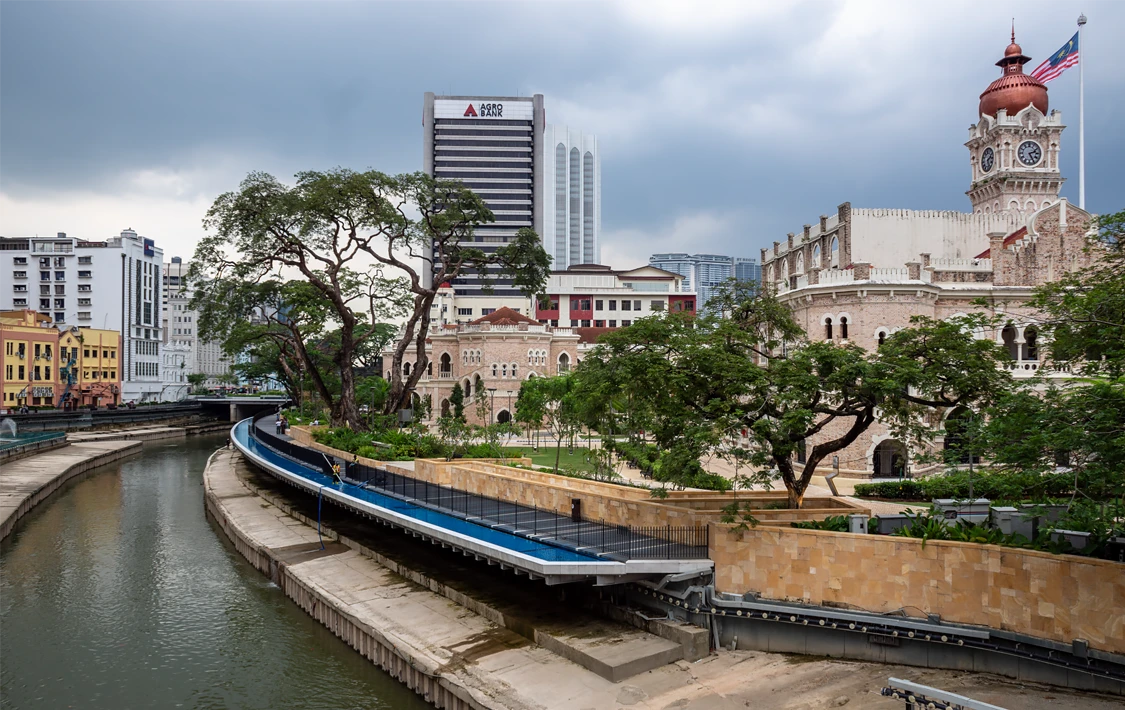

The River of Life offers several excellent viewpoints overlooking some of Kuala Lumpur’s surrounding attractions. Along the riverbanks, you’ll find the Masjid Jamek Mosque, the Masjid Jamek Fountain, and other architecturally interesting buildings. The scenery, atmosphere, and overall energy of this part of the city are truly unique within Kuala Lumpur.
Some of the best viewpoints can be found at the River of Life Bridge / Masjid Jamek Bridge, the Masjid Jamek Viewpoint, as well as at various other spots along the river.
The River of Life is located directly behind Merdeka Square and can easily be reached within a few minutes on foot. I highly recommend including the river and its surrounding attractions in your Kuala Lumpur itinerary.
Die River of Life Bridge
The River of Life Bridge, often referred to as the Masjid Jamek Bridge, is the ideal starting point for exploring the area. From the top of the bridge, you’ll enjoy fantastic views of the historical centre of Kuala Lumpur and its nearby landmarks.
Looking along the River of Life, you’ll spot the rear side of the Sultan Abdul Samad Building on one bank, while the minarets and arched rooftops of Masjid Jamek Mosque dominate the opposite side. Across from the bridge, you’ll also see architecturally interesting buildings such as the Ministry of Tourism and Culture and the Panggung Bandaraya Theatre.
The entire area combines historical architecture with modern city elements, creating one of Kuala Lumpur’s most interesting urban landscapes.
Useful Information About the River of Life
7. Masjid Jamek Mosche & Masjid Jamek Fountain
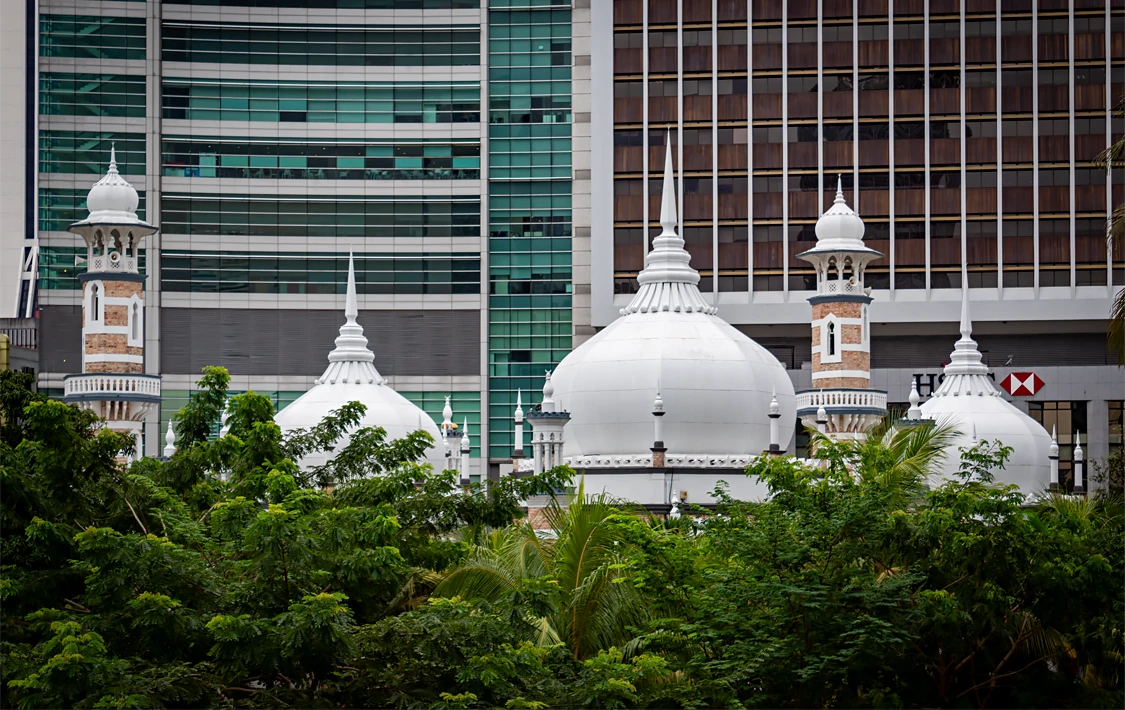
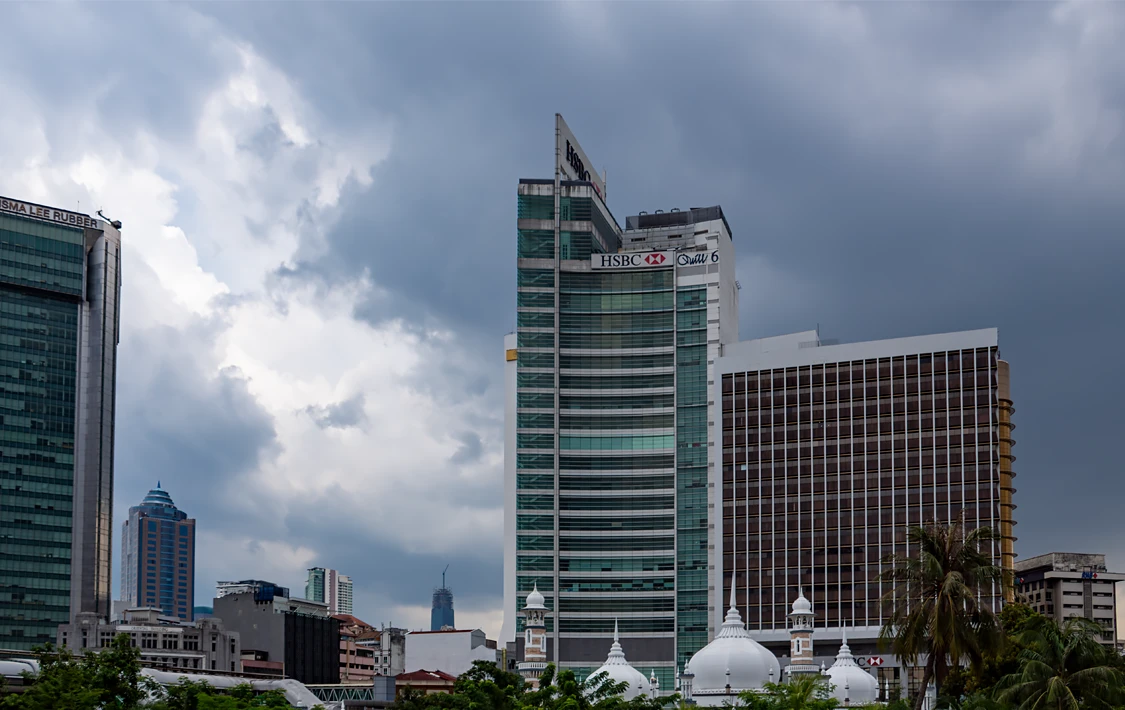
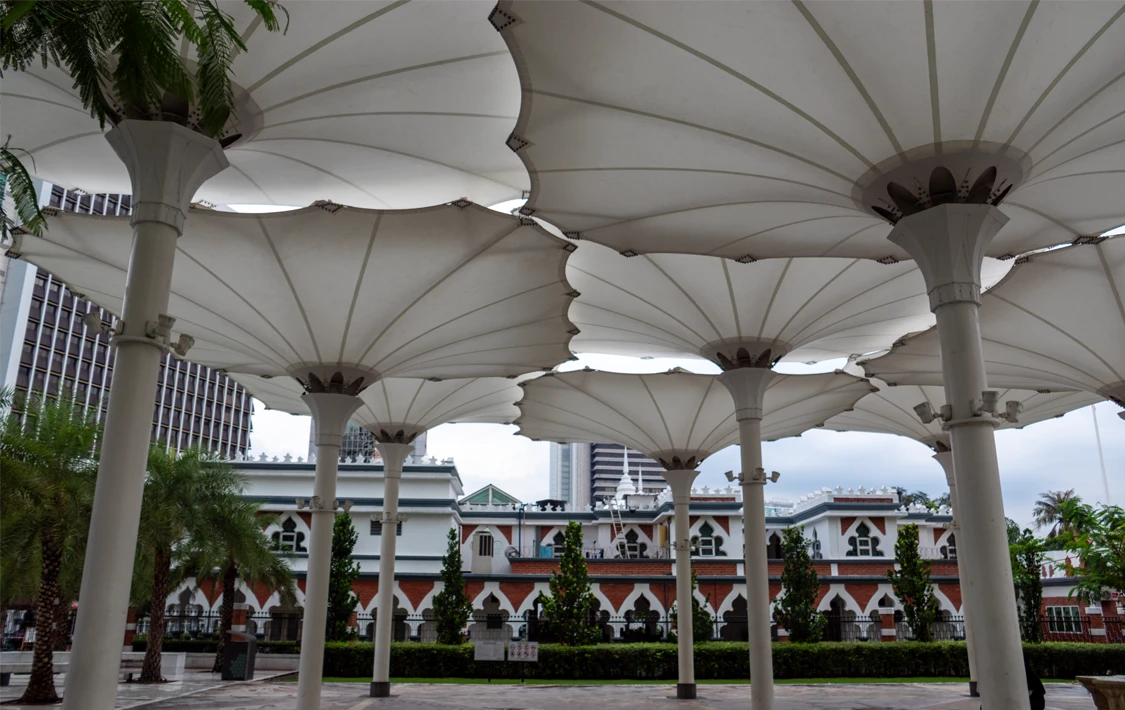
The Masjid Jamek Mosque, often referred to by locals as the Friday Mosque, is the oldest Islamic place of worship in Kuala Lumpur. Built in 1907 by British architect Arthur Benison Hubback, the mosque served as Kuala Lumpur’s main mosque until 1965, when it was replaced by Masjid Negara. This makes it the oldest mosque in the city.
The mosque’s most distinctive features are its three domes, with the tallest reaching around 20 metres in height. The architecture is further complemented by two 25-metre-high brick minarets, creating one of Kuala Lumpur’s most recognisable religious landmarks.
Unique Location & Worth Visiting in the Evening
The Masjid Jamek Mosque occupies a unique position on a small piece of land where the Klang River and Sungai Gombak River meet. One of the best photo spots is the Masjid Jamek Viewpoint, offering a fantastic panorama of the mosque and the surrounding rivers. View Photospot on Google Maps
A visit becomes especially worthwhile in the evening. After sunset, the River of Life area transforms into a blue illuminated spectacle, featuring artificial mist effects and water fountain shows. The fountain performances begin at 9:15 PM, with the final show starting at 11:00 PM.
Masjid Jamek Fountain
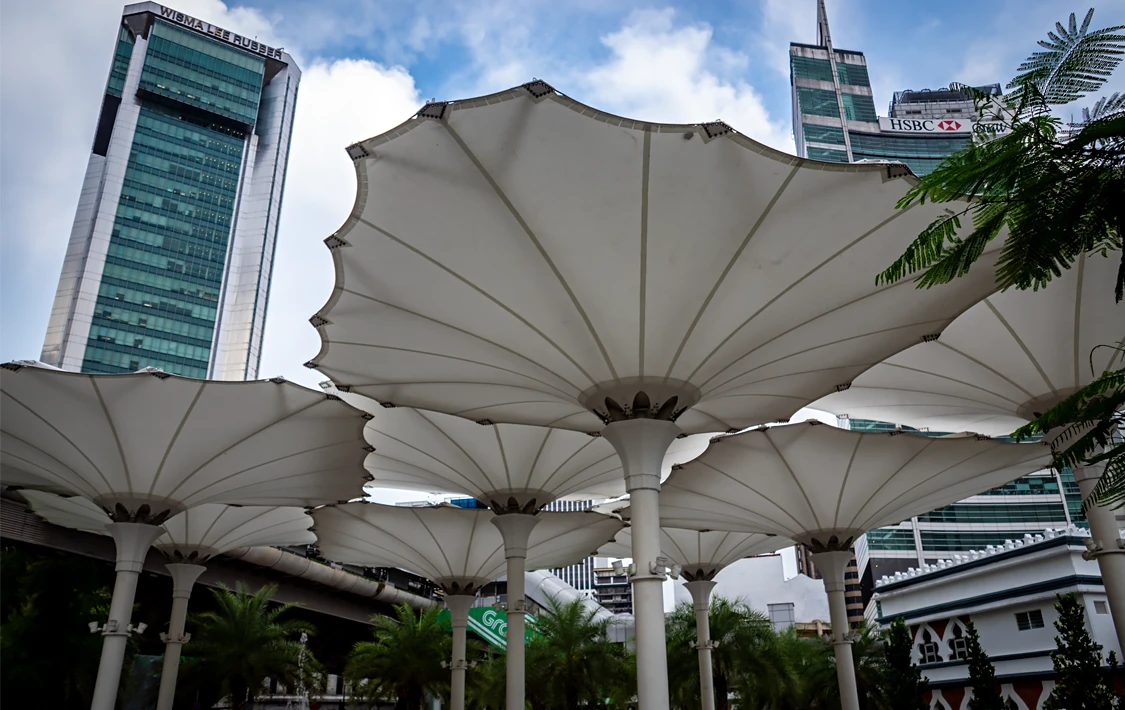
The Masjid Jamek Fountain is a small park located right beside the mosque, featuring benches, palm trees, and decorative fountains. The main attraction here is the collection of umbrella-shaped structures, which become beautifully illuminated after dark.
More Architectural Highlights Nearby
Around the mosque, you’ll find several additional historical buildings with charming facades, perfect for capturing memorable photos during your Kuala Lumpur trip. One of the most notable is the Panggung Bandaraya (City Theatre), dating back to 1904.
Useful Information About Masjid Jamek Mosque & Fountain
8. Chinatown Kuala Lumpur – Tradition, Street Art & Hidden Alleys
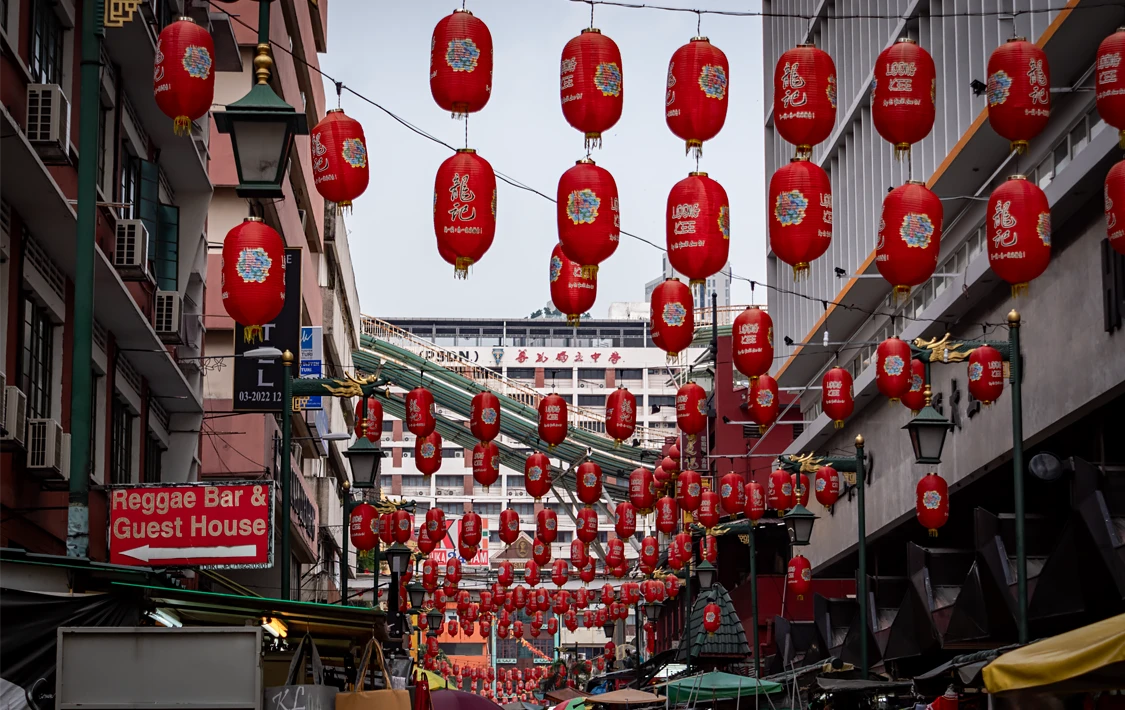

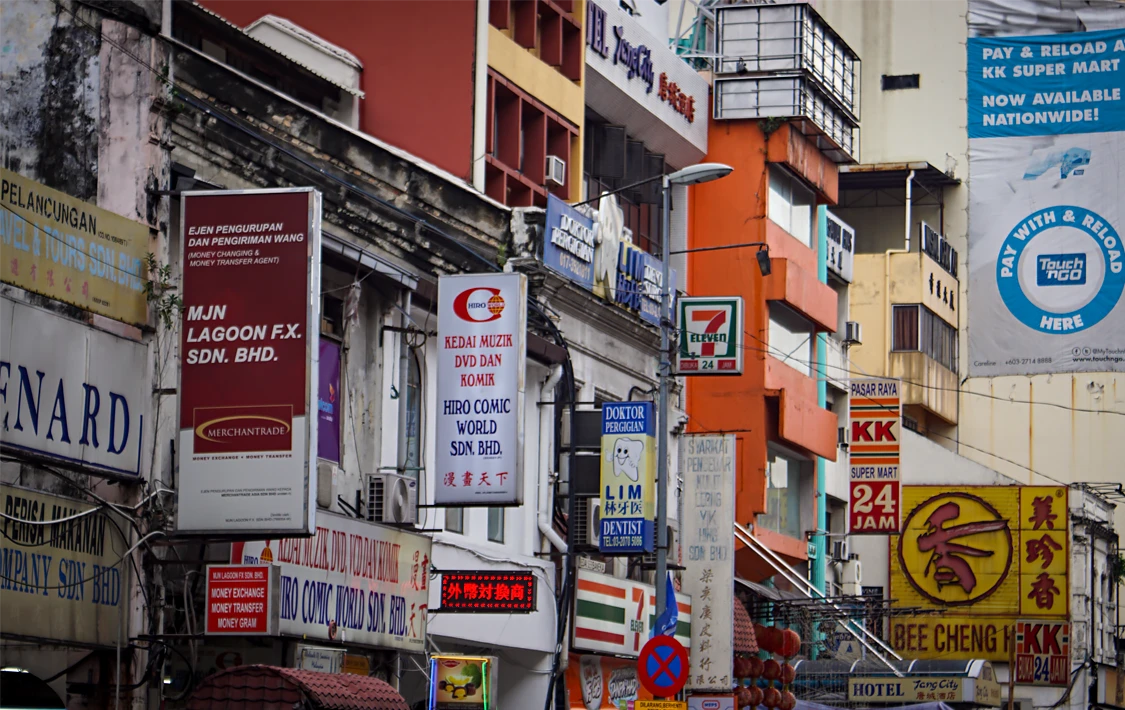
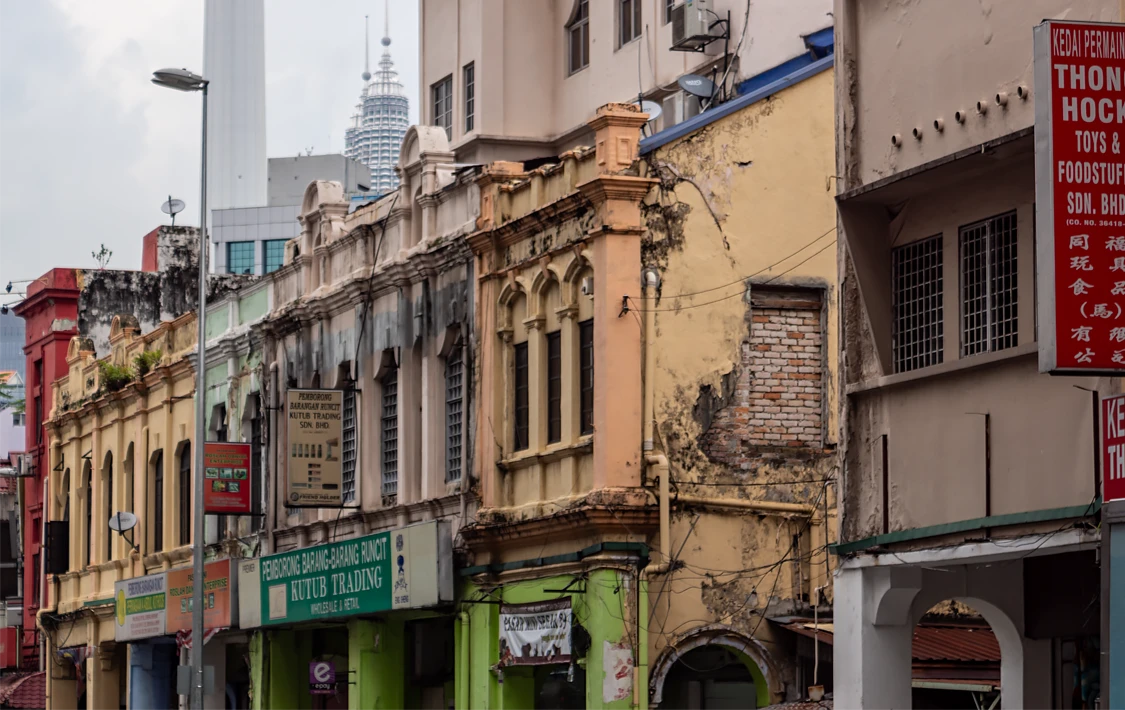
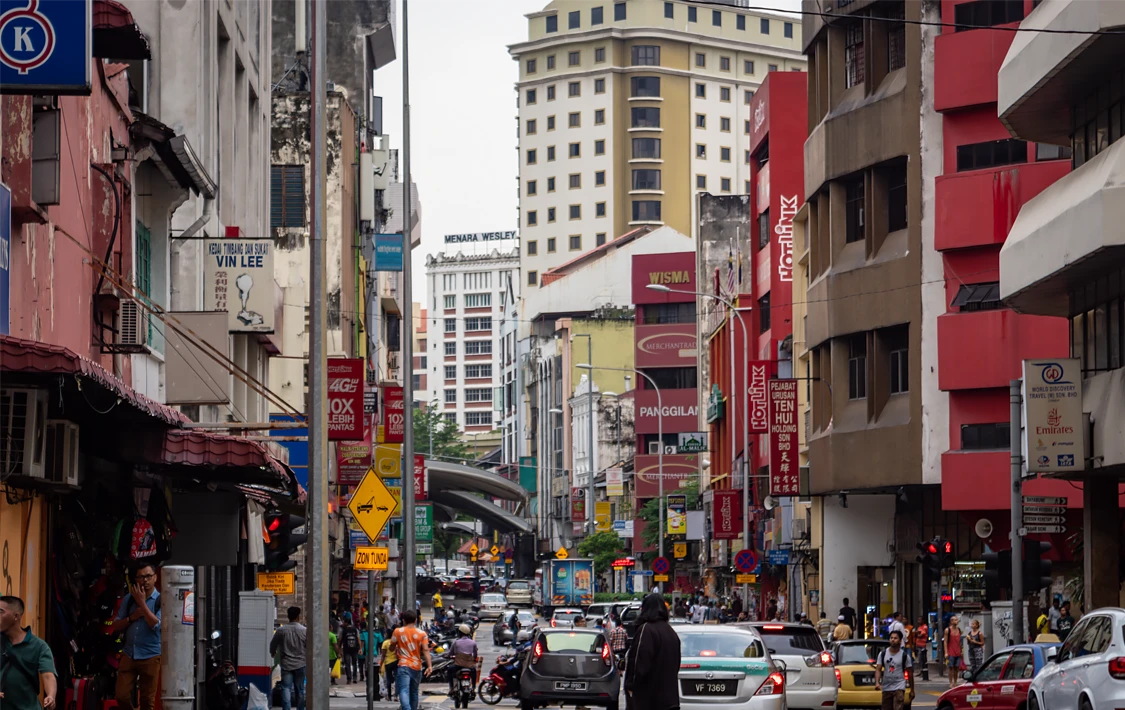
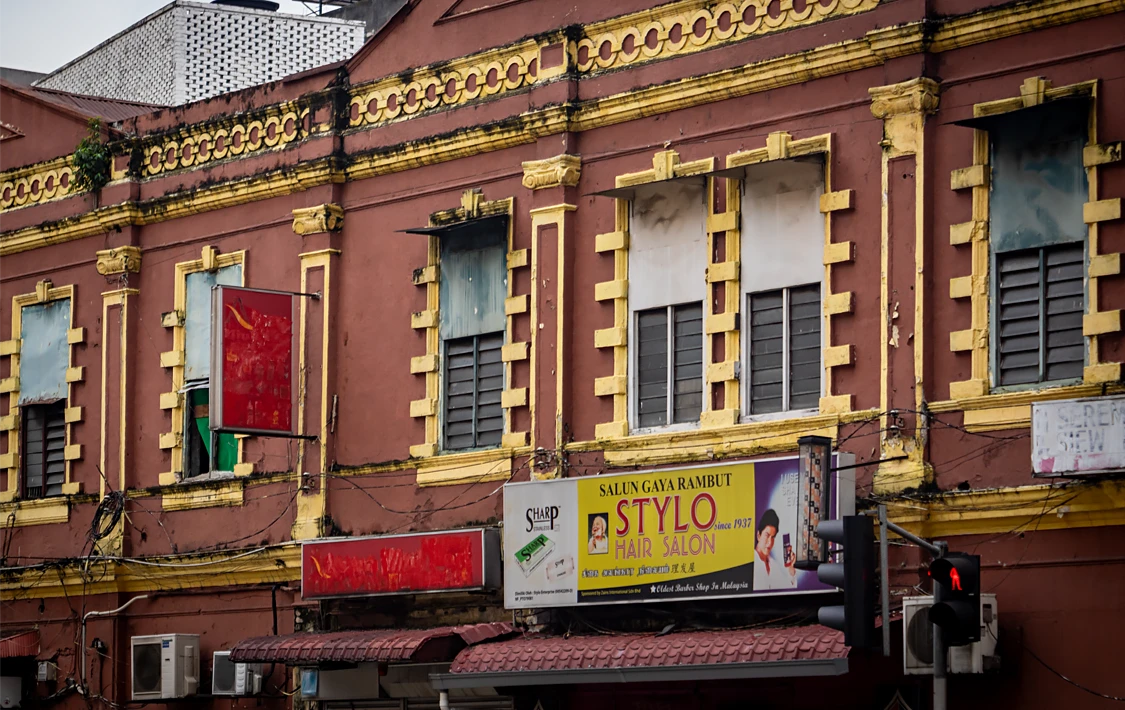
No major city is complete without a Chinatown, and this is especially true in Kuala Lumpur and Malaysia. Around a quarter of Malaysia’s population has Chinese roots, so it’s no surprise that Kuala Lumpur’s Chinatown is vibrant, diverse, and full of character. Between traditional temples, red lanterns, modern street art, small cafés, and narrow alleys, history blends seamlessly with modern city life.
This unique mix is exactly what makes Chinatown Kuala Lumpur so fascinating. While the main streets are filled with activity, just a few steps away you’ll discover hidden back lanes with colourful murals, old shophouses, and an atmosphere that feels surprisingly relaxed. Photography enthusiasts in particular will love this area. Around every corner, you’ll find new details, interesting perspectives, and authentic Asian urban vibes.
Some of the most famous attractions and highlights in Chinatown Kuala Lumpur include:
- Petaling Street
- Sri Mahamariamman Temple
- Kwai Chai Hong
- Street Art & hidden alleys with murals and colourful facades
- Chan She Shu Yuen Clan Ancestral Hall
- Thean Hou Temple
Especially around the small side streets branching off Petaling Street and Lorong Panggung, it’s worth simply wandering around without a plan. This is where you’ll find some of the best street art, hidden cafés, and authentic corners away from the larger tourist crowds.
9.1 Petaling Street – The Beating Heart of Chinatown Kuala Lumpur
Between Street Food, Lanterns & Typical Asian Big City Chaos
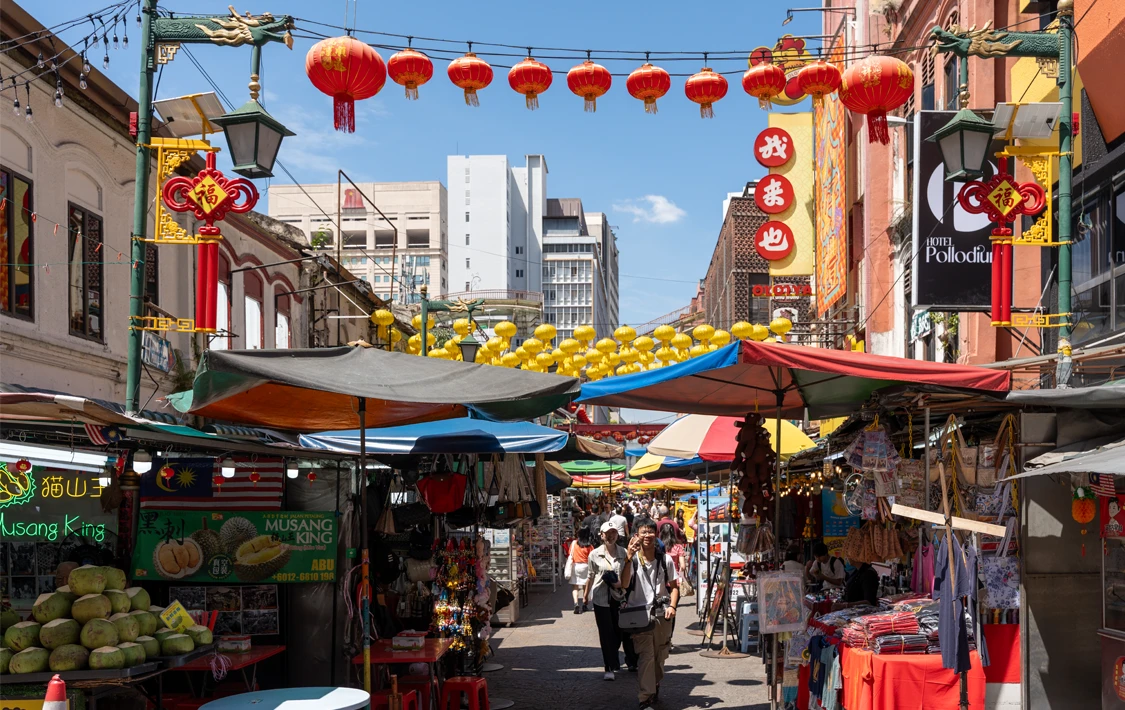
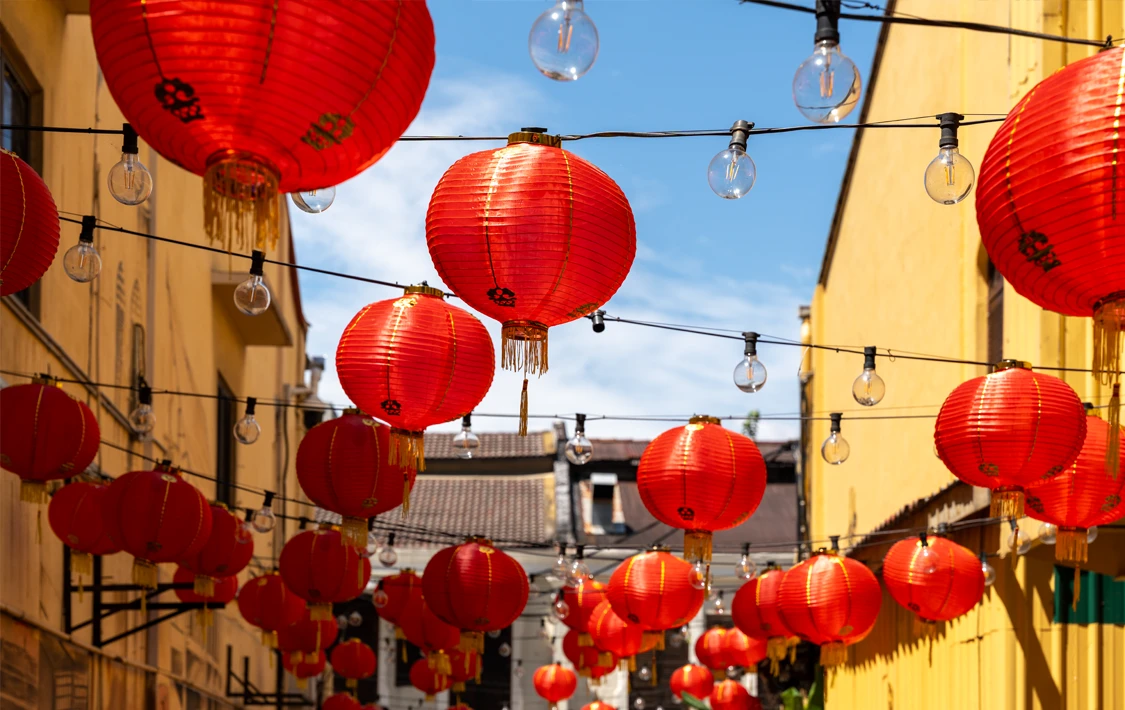
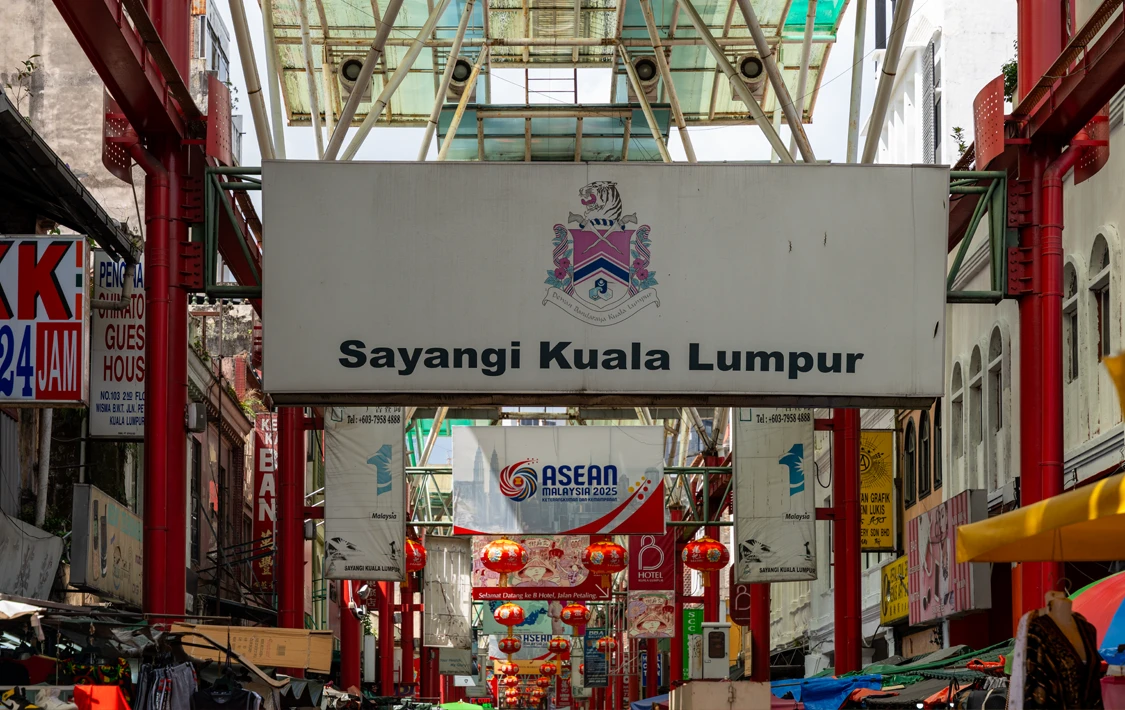
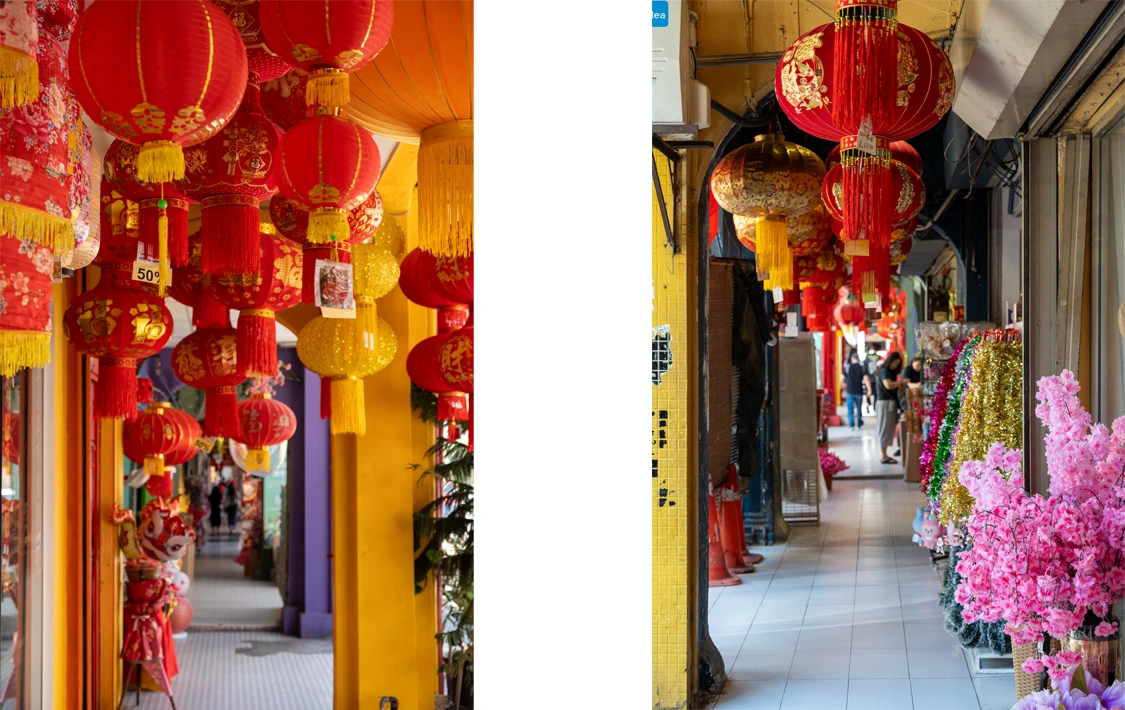
Petaling Street forms the heart of Chinatown Kuala Lumpur and is one of the city’s most famous streets. Between red lanterns, small food stalls, souvenir shops, and countless market vendors, you’ll experience the typical chaotic yet vibrant Southeast Asian atmosphere.
The street truly comes alive in the evening, transforming into a colourful night market with a unique atmosphere. Especially after dark, Petaling Street becomes one of the liveliest places in Kuala Lumpur.
Besides clothing, bags, watches, and souvenirs, you’ll also find numerous street food stalls and small restaurants along the street. From hearty noodle dishes and grilled snacks to fresh juices and Chinese specialties, this is the perfect place to explore a wide variety of Asian cuisine. Food lovers in particular will enjoy spending time here.
Discover Hidden Alleys & Street Art
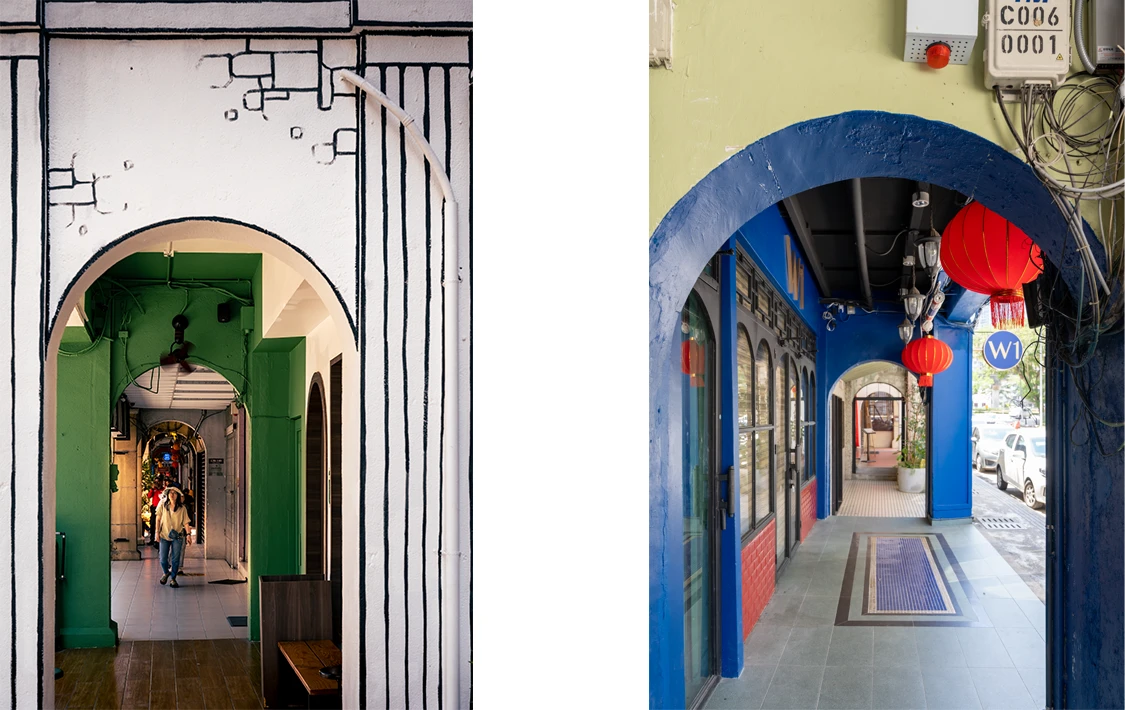
However, Petaling Street is much more than just a market. Around the main road, you’ll find narrow side alleys, hidden cafés, temples, and creative street art waiting to be discovered. This blend of tradition, modern influences, and slightly chaotic urban energy makes Chinatown one of Kuala Lumpur’s most exciting neighbourhoods.
A visit is especially worthwhile in the late afternoon or evening, when the glowing red lanterns, illuminated market stalls, and lively atmosphere create the unmistakable Chinatown feeling that makes Kuala Lumpur so unique.
Useful Information About Petaling Street
9.2 China Town – Sri Mahamariamman Tempel


The Sri Mahamariamman Temple was founded in 1873 by K. Thamboosamy Pillai and originally served as the private temple of the Pillai family. In the late 1920s, the temple was opened to the public. One of the main highlights is the beautifully decorated entrance tower, featuring intricate carvings and colourful Hindu figures, making it one of the most impressive temple facades in Kuala Lumpur.
Colonial Buildings & Smaller Temples
As you wander through the streets of Chinatown, you’ll repeatedly come across buildings dating back to the British colonial era, as well as smaller Taoist temples hidden between the shophouses and busy streets.
This mixture of different cultures, religions, and architectural styles is exactly what makes Chinatown one of Kuala Lumpur’s most fascinating neighbourhoods to explore.
Useful Information About the Sri Mahamariamman Temple
9.3 Kwai Chai Hong – Hidden Alleys Full of Street Art & Chinese Charm
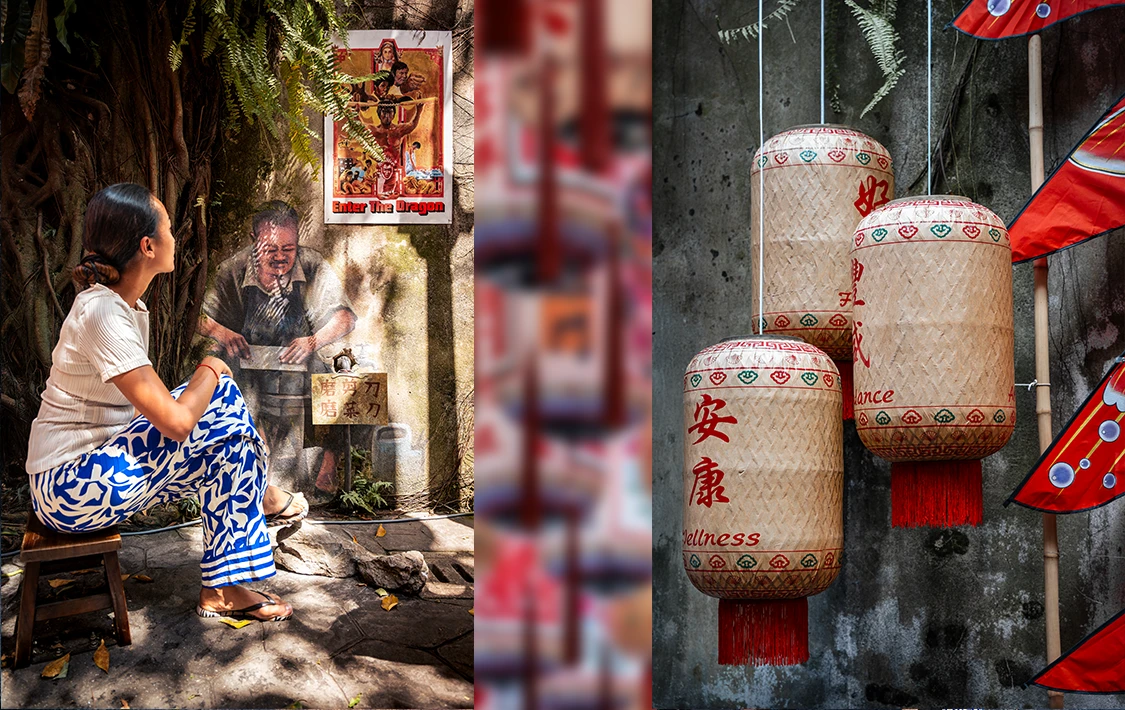
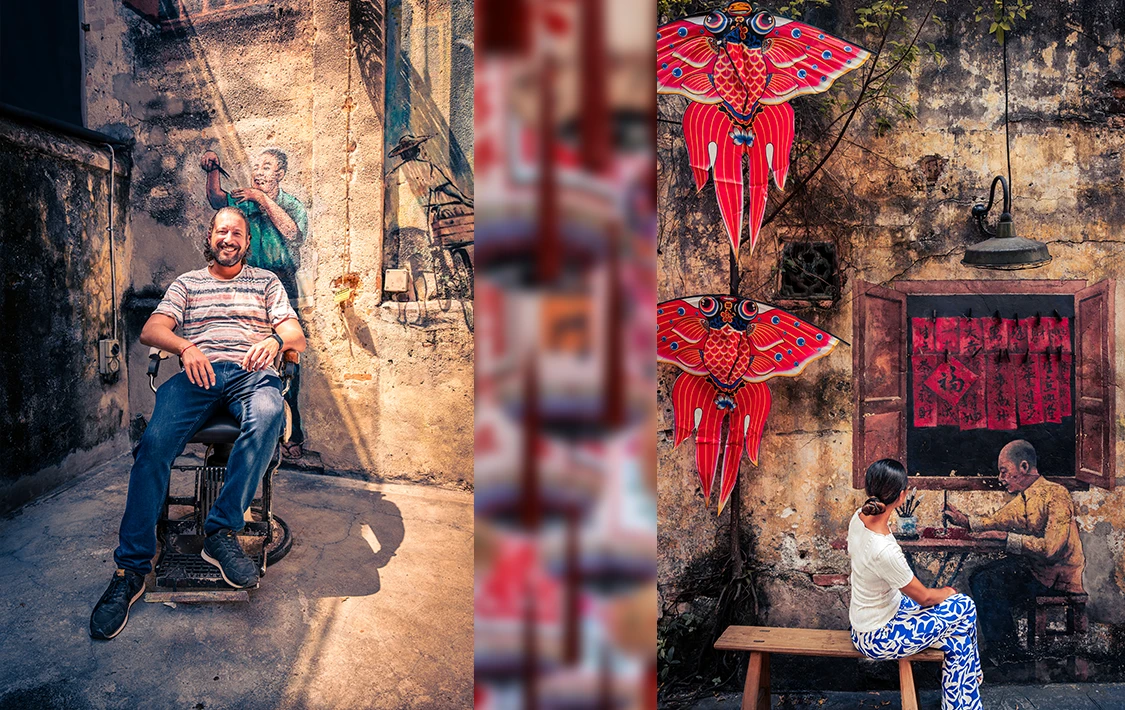
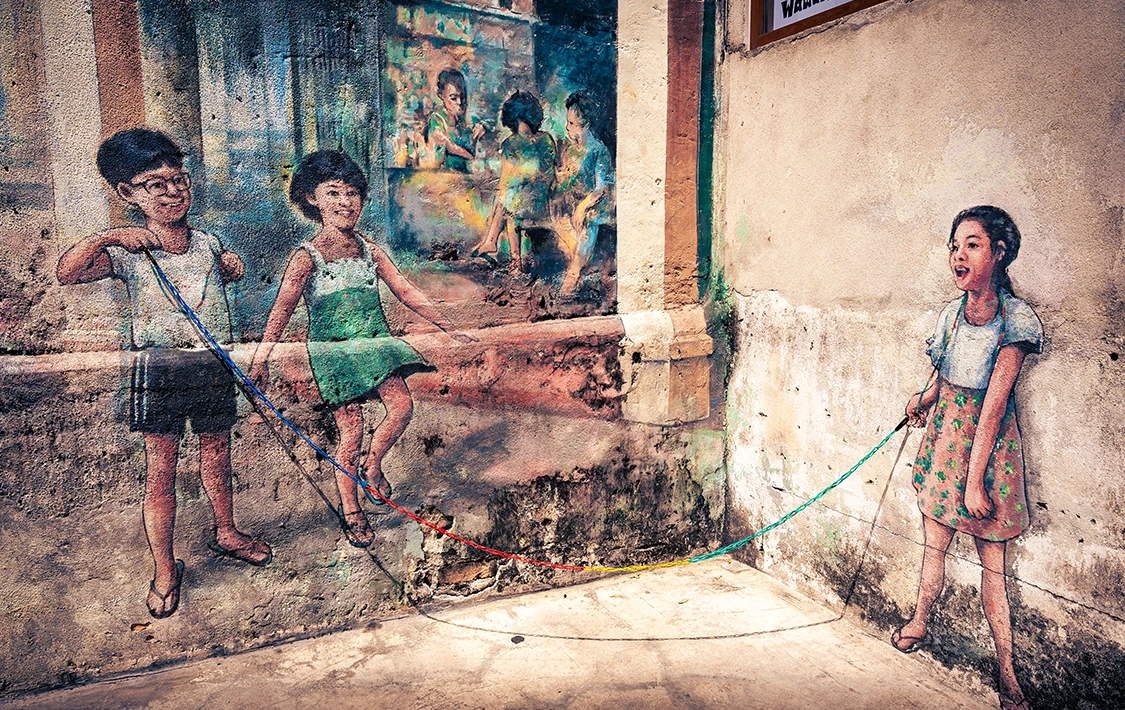
A Piece of Old Chinatown in the Middle of Kuala Lumpur
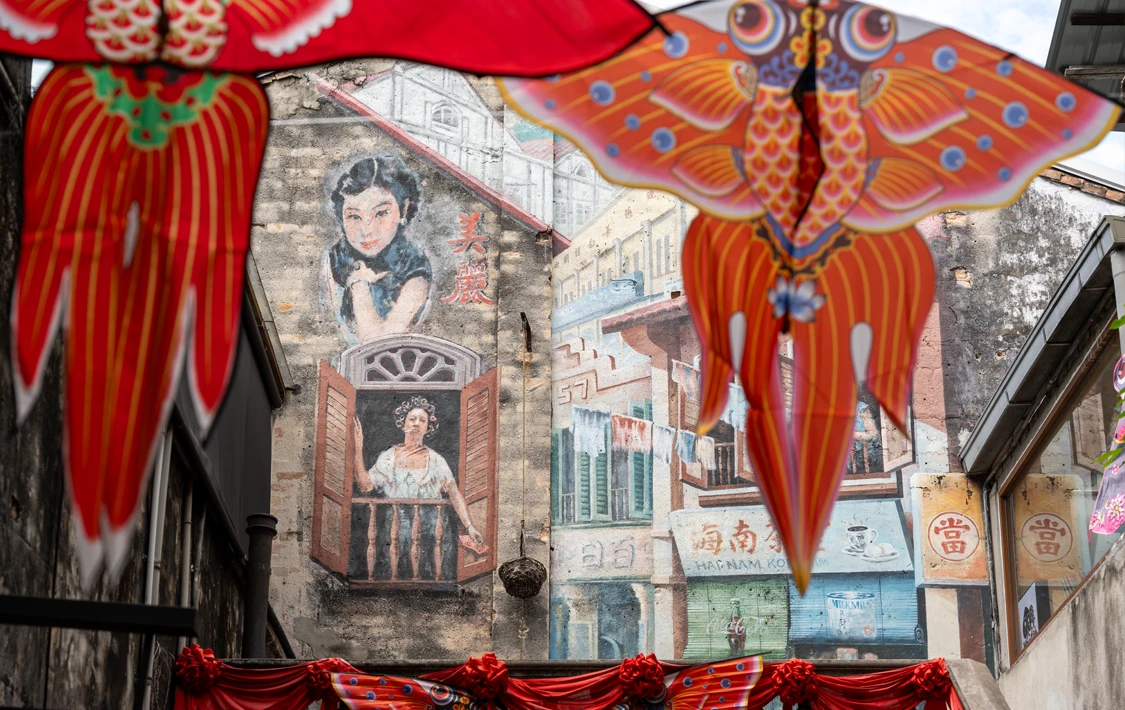
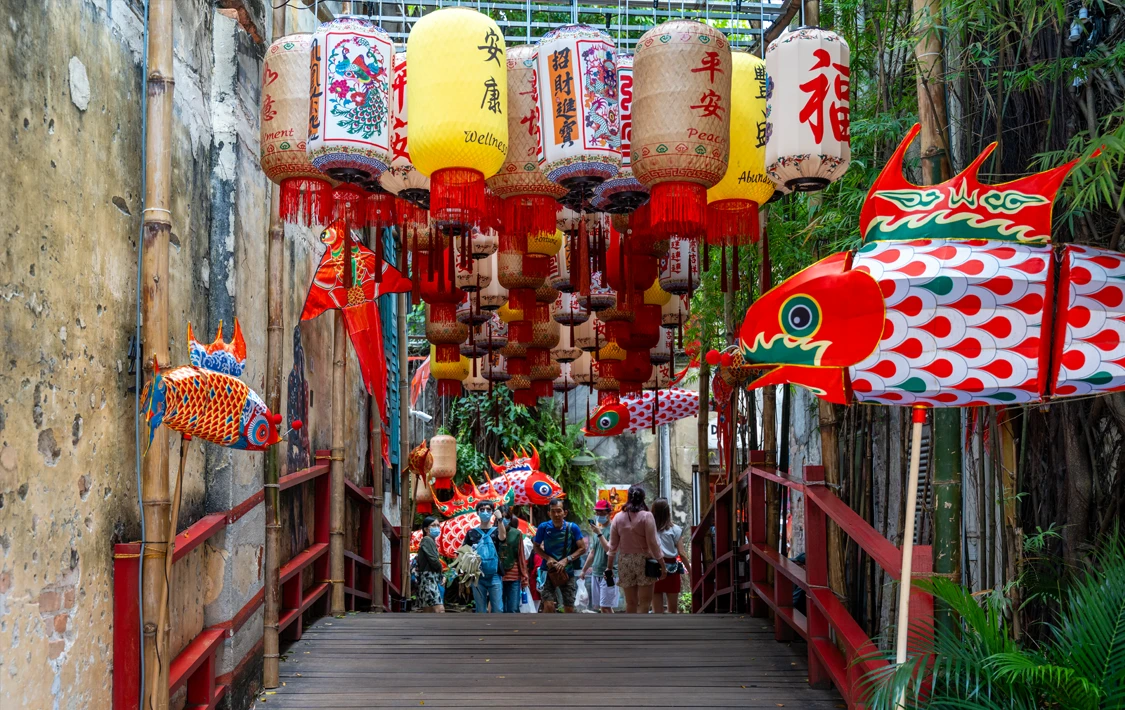
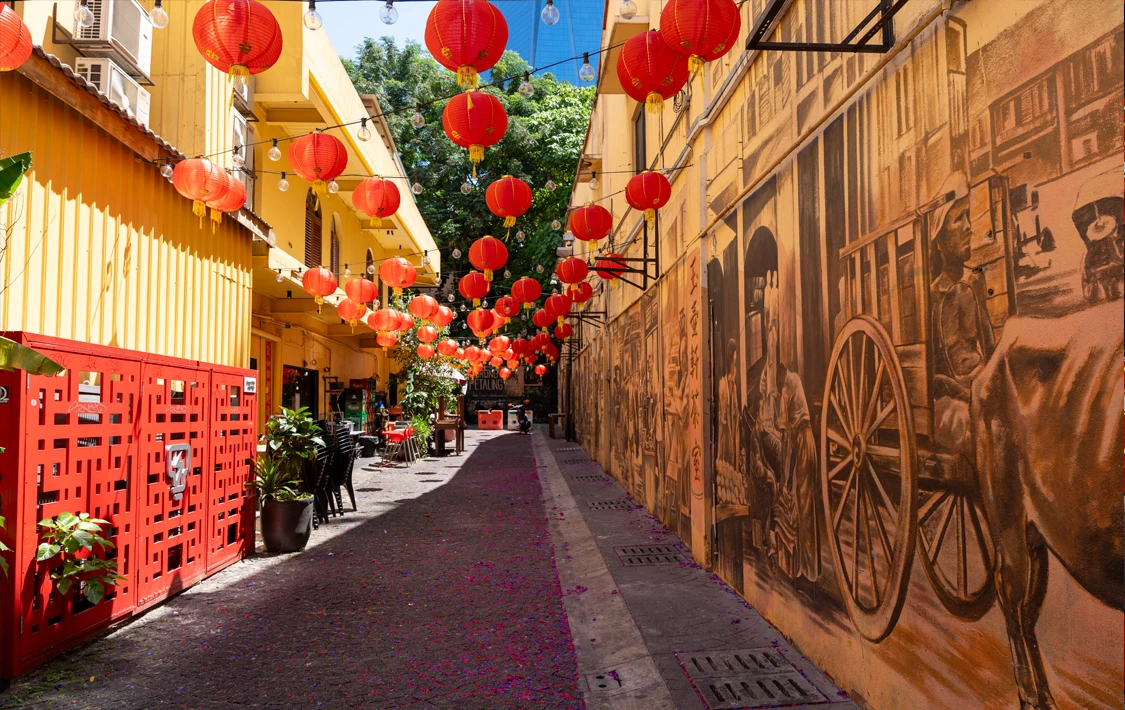
Kwai Chai Hong is definitely one of the most beautiful and atmospheric places in Chinatown Kuala Lumpur. Hidden behind the modern skyscrapers and busy city life lies a small, lovingly restored alley filled with Chinese charm, colourful street art, and traditional details.
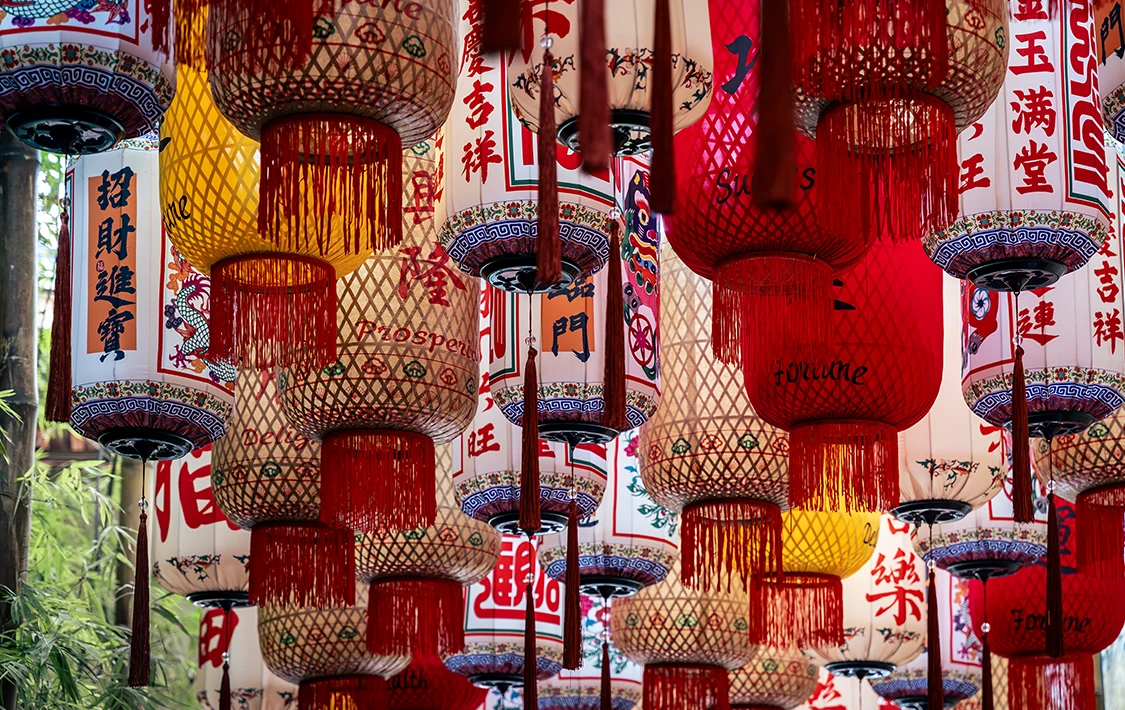
As soon as you enter the narrow lanes, the countless red lanterns hanging between the old building facades immediately catch your eye, creating a unique atmosphere, especially in the evening. Added to this are creative murals and street art installations, telling the story of old Chinatown in a modern and playful way.
This fascinating mix of tradition and urban art is exactly what makes Kwai Chai Hong one of Kuala Lumpur’s hidden highlights.
Street Art, Colours & Hidden Photo Spots
Photographers and Instagram enthusiasts in particular will love this place. Between the colourful buildings, narrow side streets, and artistically designed walls, you’ll constantly discover new perspectives and hidden photo spots.
It becomes even more interesting when you explore the small back alleys surrounding Kwai Chai Hong. Here, you’ll find additional street art, colourful facades, and a surprisingly relaxed atmosphere right in the middle of the bustling metropolis.
Useful Information About Kwai Chai Hong
9.4 CO2 Mural & the Hidden Alleys of Chinatown Kuala Lumpur
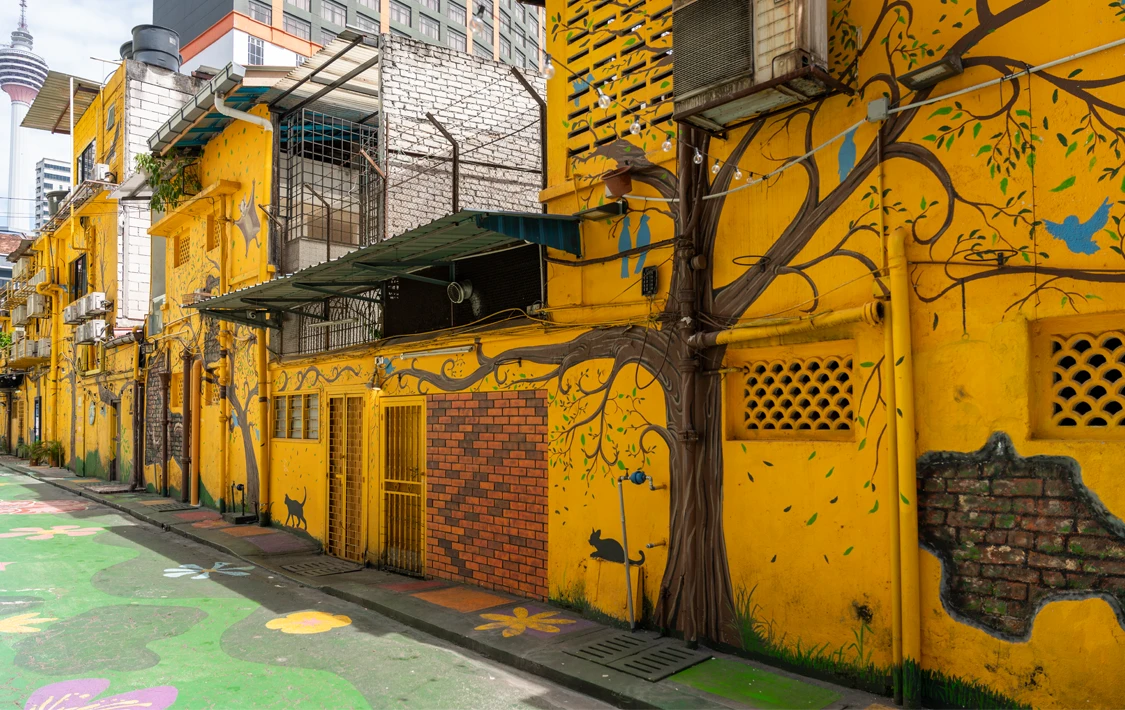
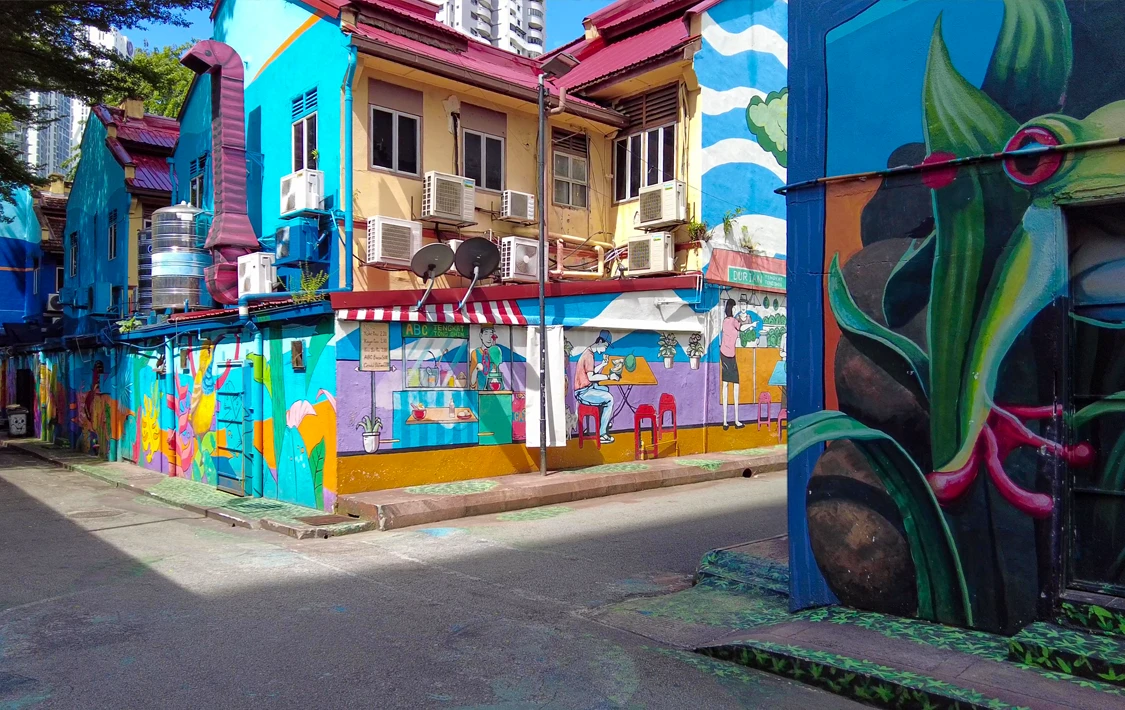
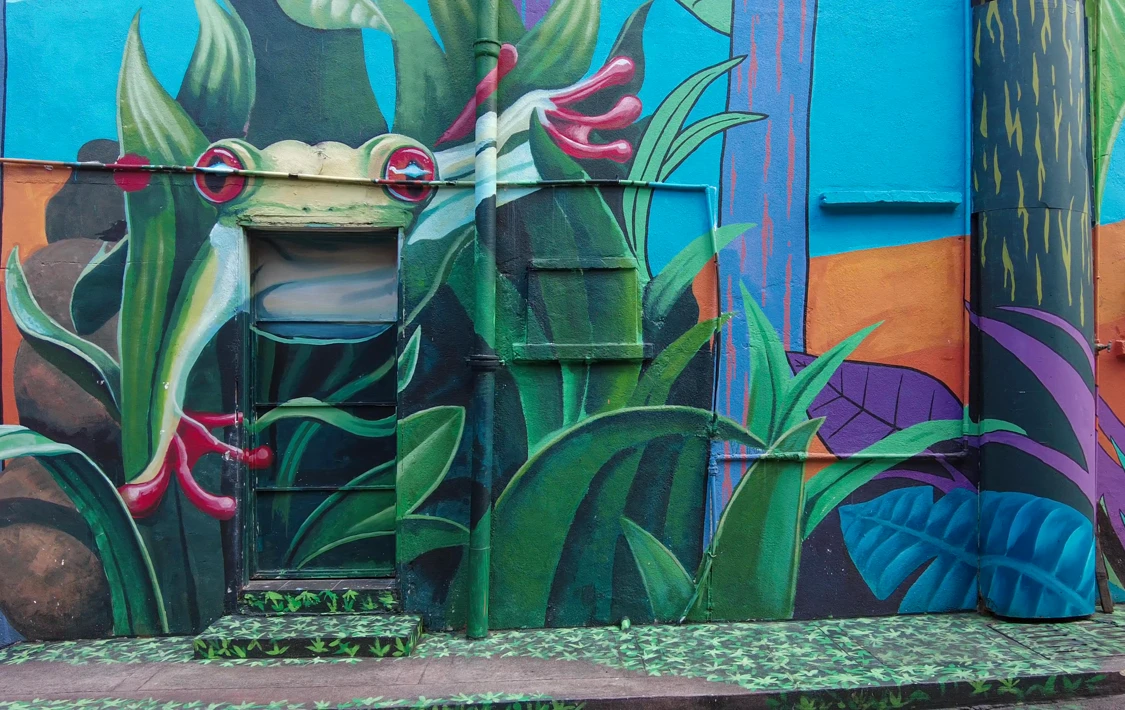
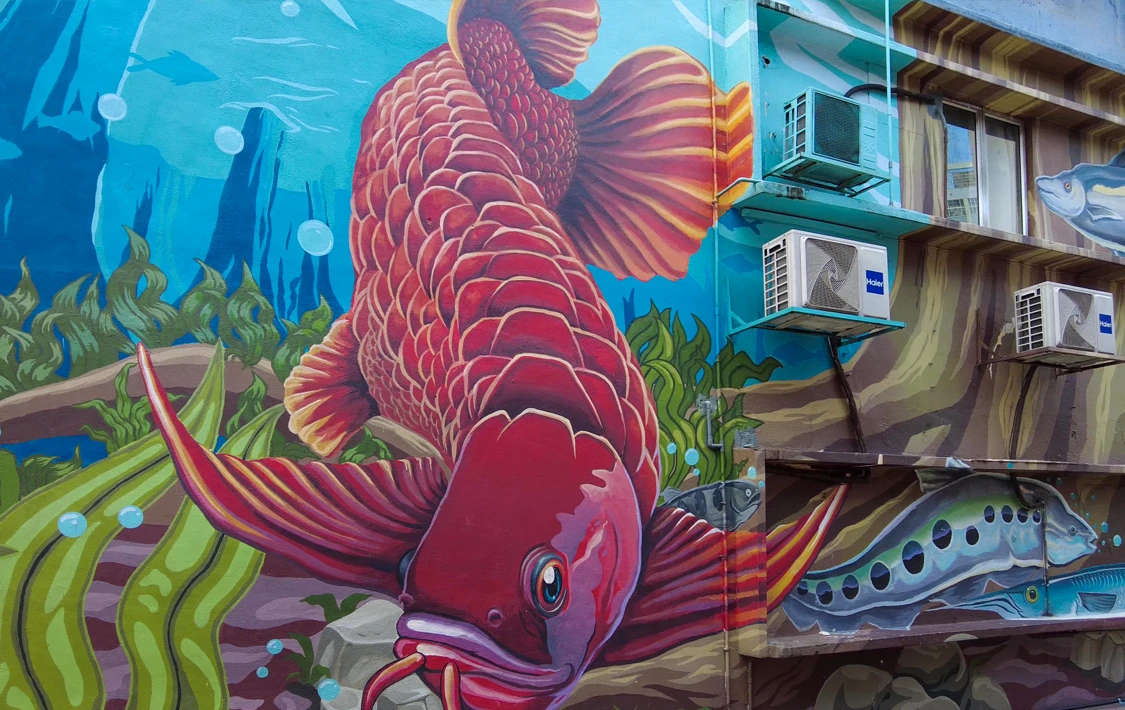
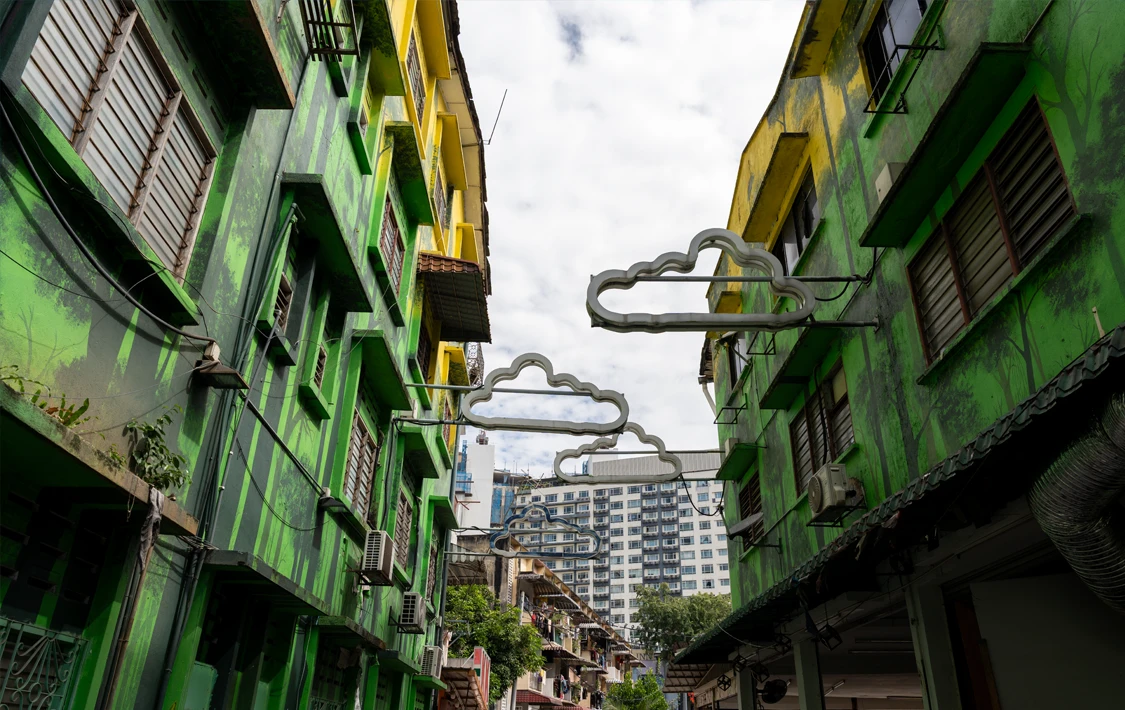
Discover the Colourful and Creative Side of Chinatown
Beyond the well-known attractions, one of the best things to do in Chinatown Kuala Lumpur is simply to wander through the small side streets and hidden back lanes without a plan. This is where many of the neighbourhood’s most interesting spots are hidden. Between old shophouses, colourful lanterns, small cafés, and tropical plants, you’ll repeatedly come across creative street art and surprisingly peaceful corners in the middle of the bustling city.
One of the most popular highlights is the colourful CO2 Mural, which perfectly reflects Chinatown’s modern and creative side. However, the true charm of the district comes from the many small alleys around Petaling Street and Kwai Chai Hong, where behind almost every corner you’ll discover new murals, painted facades, and hidden photo spots waiting to be explored.
Colours, Street Art & Authentic Chinatown Vibes
This blend of traditional Chinese atmosphere and modern urban art is exactly what makes Chinatown Kuala Lumpur so unique. While skyscrapers rise into the sky in the background, you’ll simultaneously walk through narrow lanes filled with colours, old shophouses, air-conditioning units, lanterns, and everyday Asian city life.
Useful Information About the Street Art Areas
9.5 Chan She Shu Yuen Clan Ancestral Hall – A Peaceful Oasis in the Heart of Chinatown
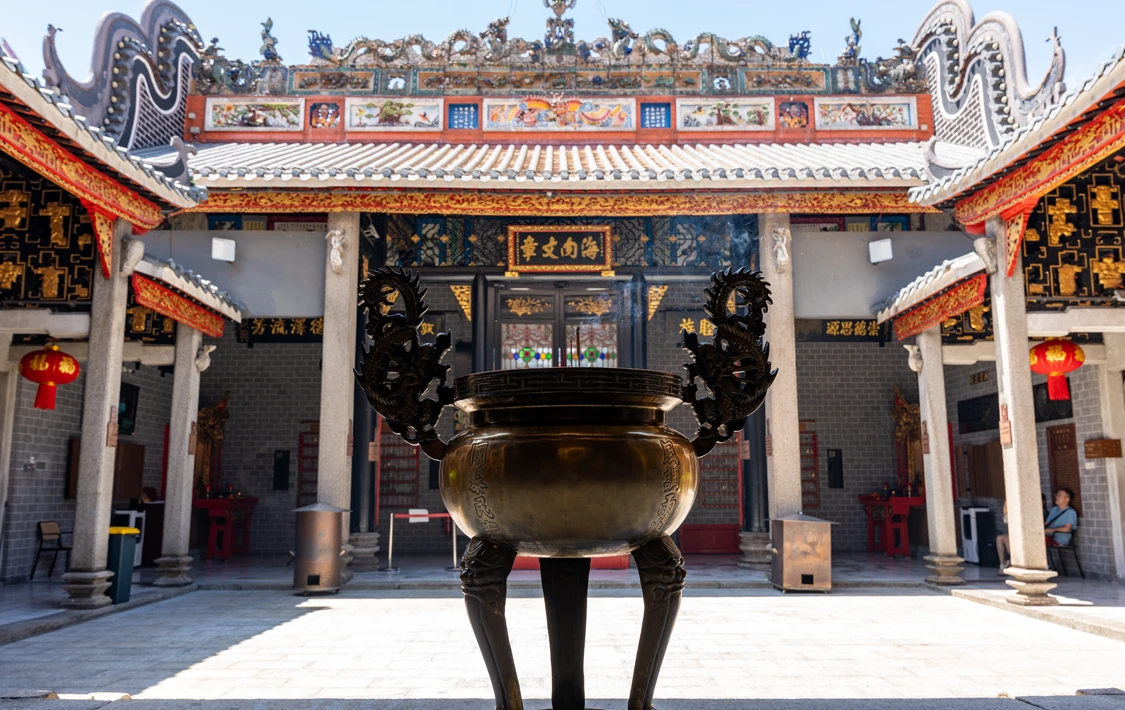
Traditional Chinese Architecture Away from the Crowds
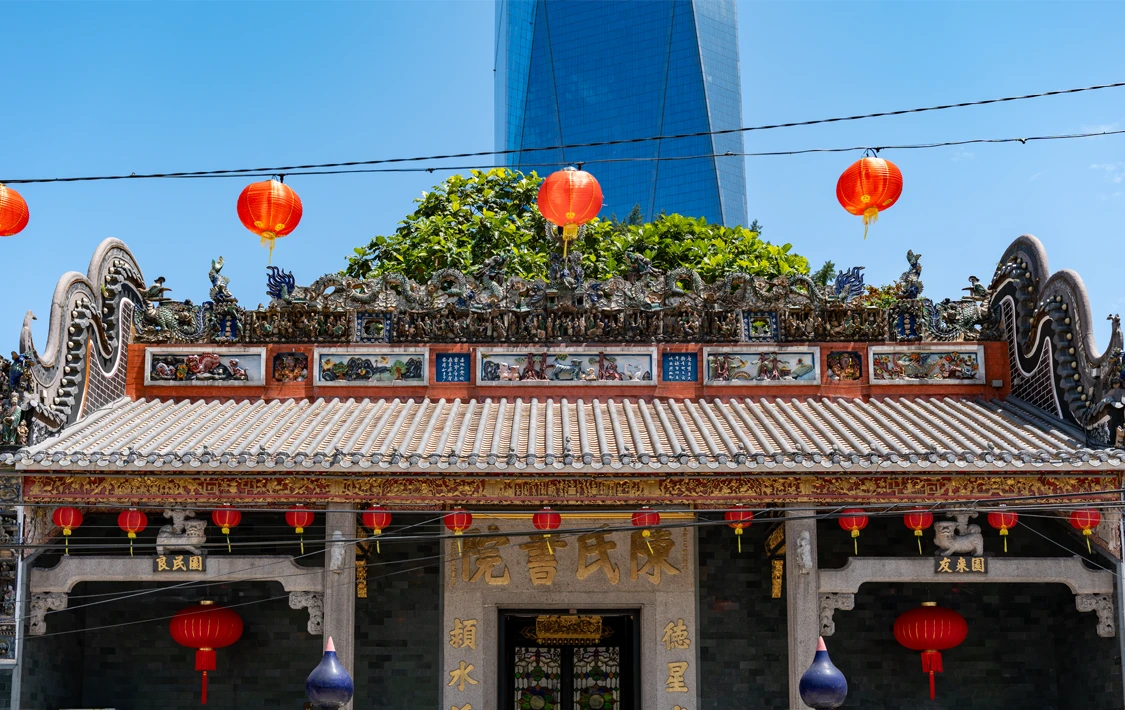
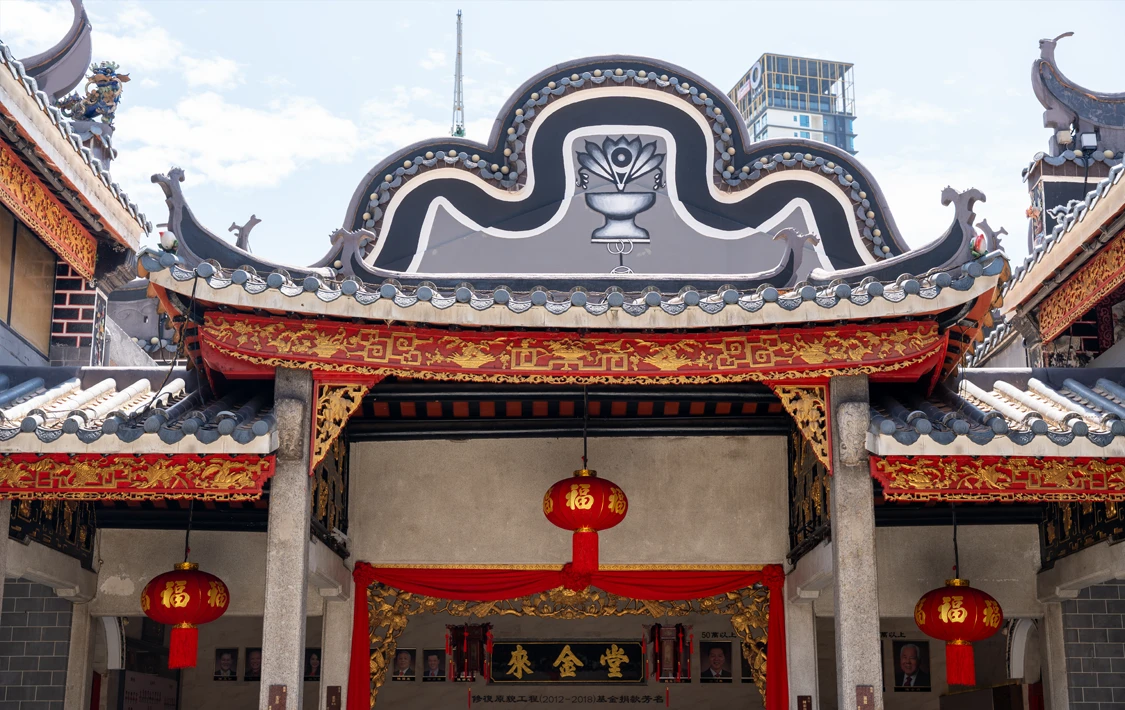
The Chan She Shu Yuen Clan Ancestral Hall is one of the most beautiful historical buildings in Chinatown Kuala Lumpur and offers an interesting contrast to the otherwise busy and lively neighbourhood. While just a few streets away you’ll find bustling markets, street food stalls, and crowds of people, here you’ll suddenly be surrounded by a surprisingly peaceful and relaxed atmosphere.
The traditional Chinese clan temple is especially impressive due to its beautiful architecture, featuring intricate decorations, red pillars, inner courtyards, and artistically designed rooftops. This combination of history, culture, and tranquillity makes it a true hidden gem within Chinatown Kuala Lumpur.
Tradition Meets the Modern Skyline
Another fascinating aspect is the contrast between traditional Chinese architecture and Kuala Lumpur’s modern skyline. From the temple grounds, you can spot the impressive Merdeka 118 Tower, one of the tallest buildings in the world, rising above the city and symbolising Kuala Lumpur’s modern side.
This direct contrast between historic tradition and futuristic skyscrapers is exactly what makes Kuala Lumpur so interesting from a photography perspective. While walking through the peaceful courtyards of the Chan She Shu Yuen Clan Hall, the towering skyscrapers in the background constantly remind you of how dynamic and modern the city has become.
Useful Information About Chan She Shu Yuen Clan Ancestral Hall
9.6 Thean Hou Temple – Colourful Temple Complex with Stunning Views
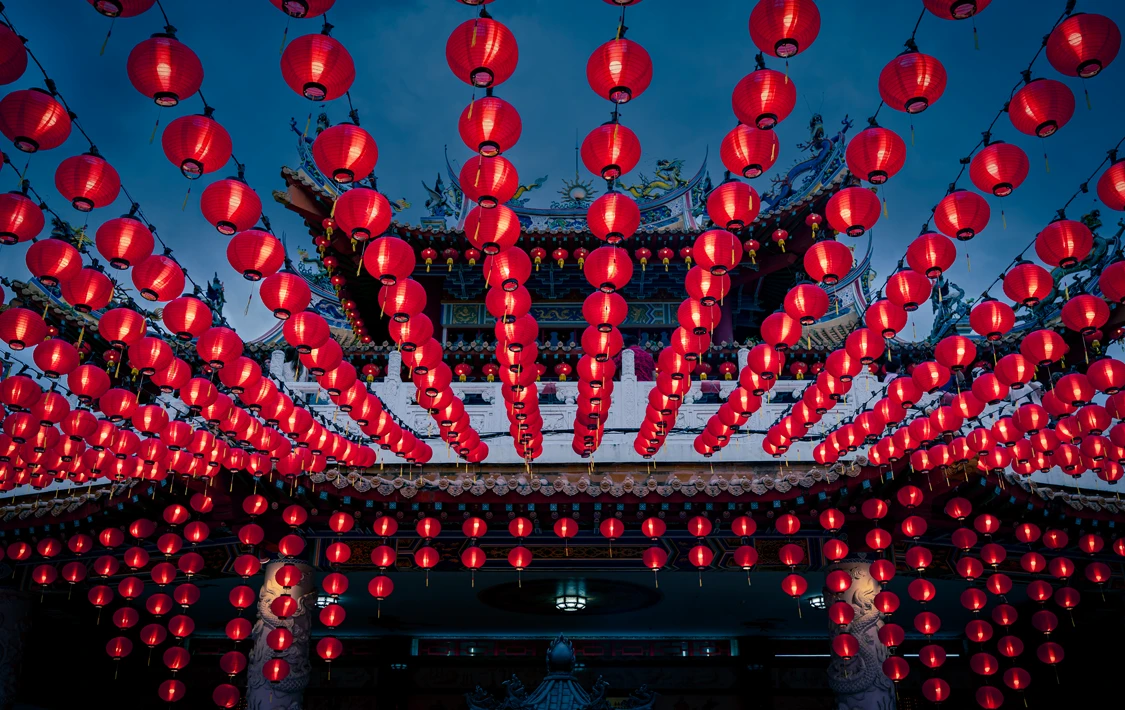

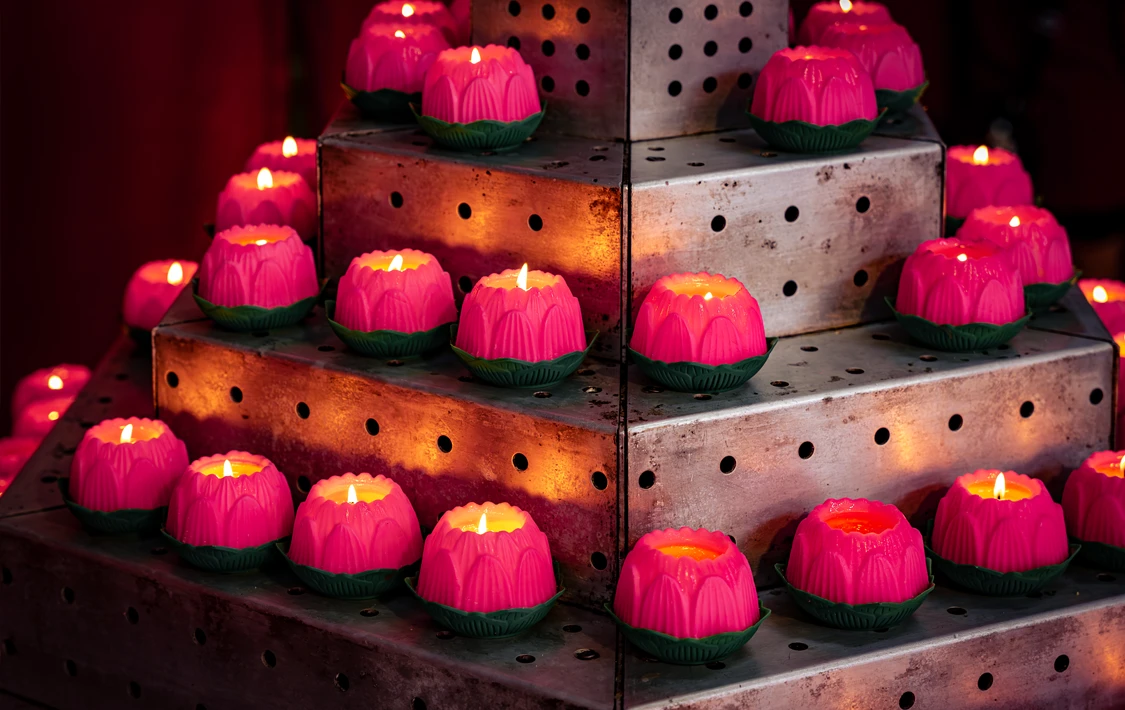
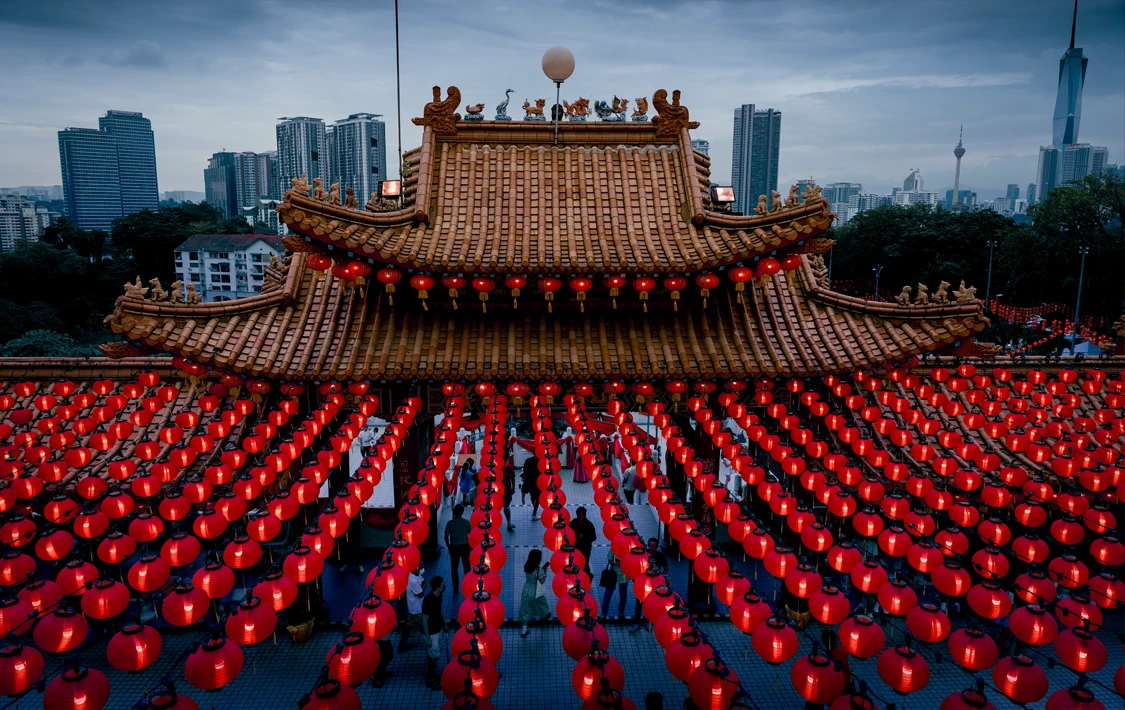
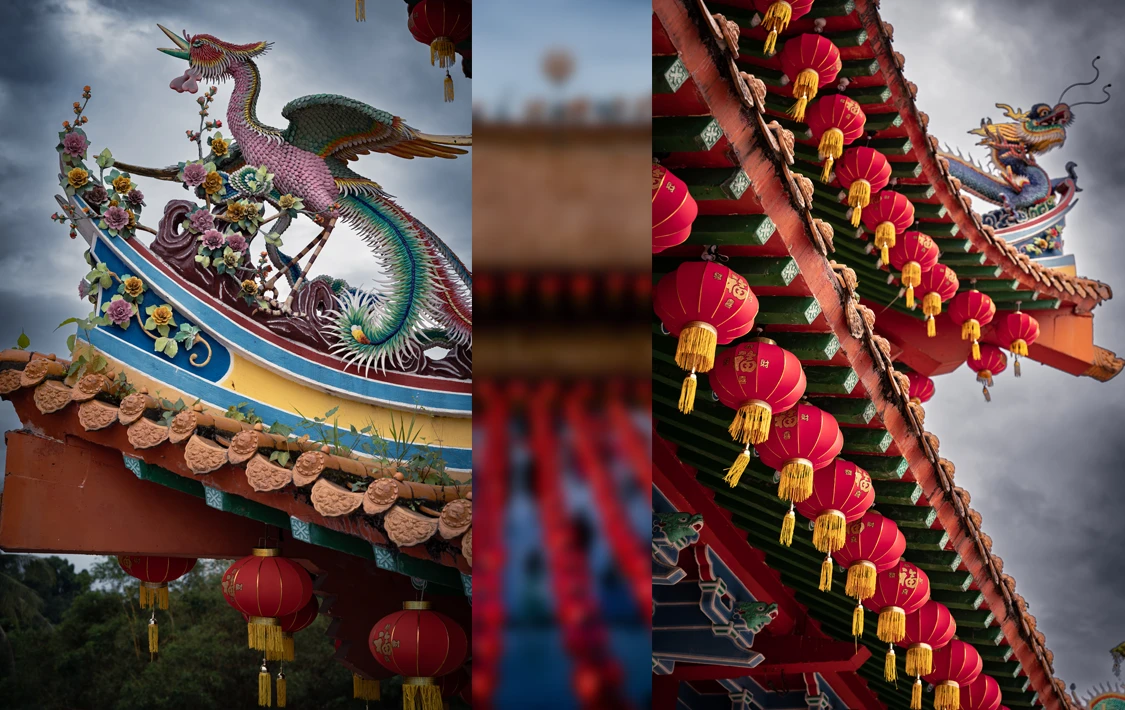
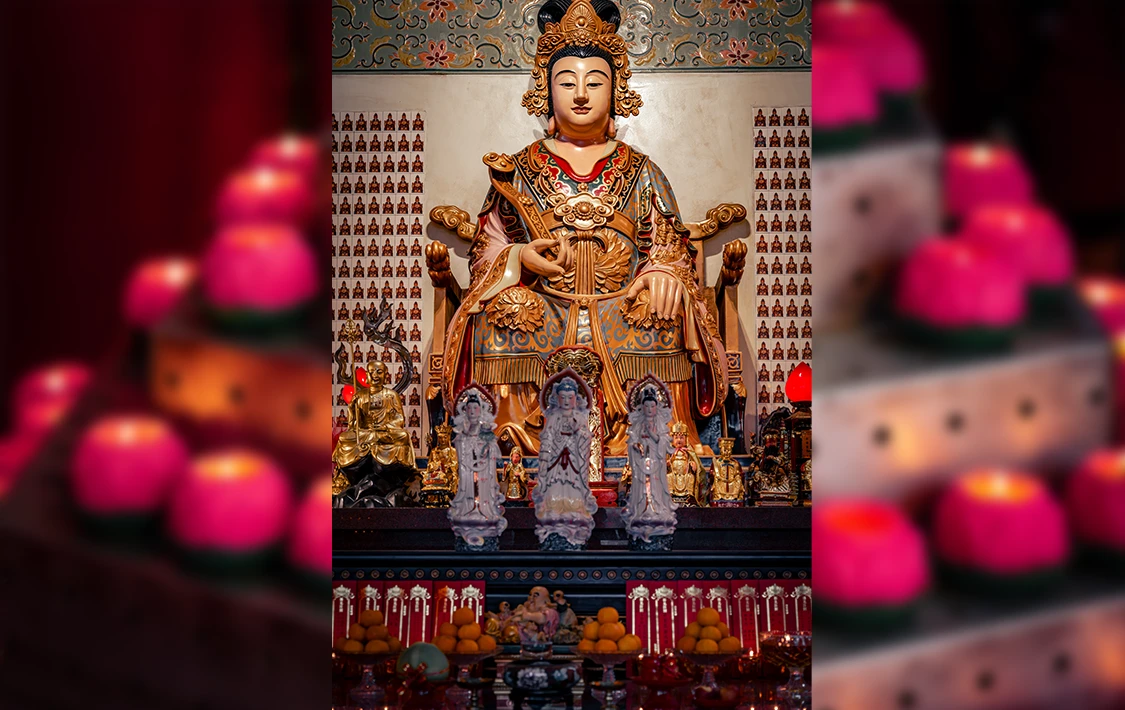
The Thean Hou Temple is without doubt one of the most impressive temples in Kuala Lumpur. Perched slightly above the city, this large Chinese temple complex is especially known for its beautiful architecture, countless red lanterns, and peaceful atmosphere.
As soon as you enter the temple grounds, the intricate decorations, colourful rooftops, and artistically designed courtyards immediately catch your attention. The many red lanterns perfectly complement the traditional Chinese ambience and make the temple one of Kuala Lumpur’s most popular photo spots.
A Peaceful Oasis with Views of Kuala Lumpur’s Skyline
Compared to the hectic city centre or lively Chinatown, the atmosphere at Thean Hou Temple feels much calmer. This relaxed environment makes it the perfect place to escape the bustle of the metropolis for a while.
Besides the impressive temple complex itself, the views over Kuala Lumpur’s skyline are also worth mentioning. Thanks to the slightly elevated location, you’ll repeatedly enjoy beautiful perspectives of the city’s modern skyscrapers, creating an interesting contrast to the traditional Chinese architecture.
Especially early in the morning or around sunset, the temple reveals its most magical side. The warm light, glowing red lanterns, and peaceful surroundings create an almost unreal atmosphere in the middle of Kuala Lumpur.
Useful Information About Thean Hou Temple
10. Saloma Link Bridge – Futuristic Bridge with Views of the Petronas Towers
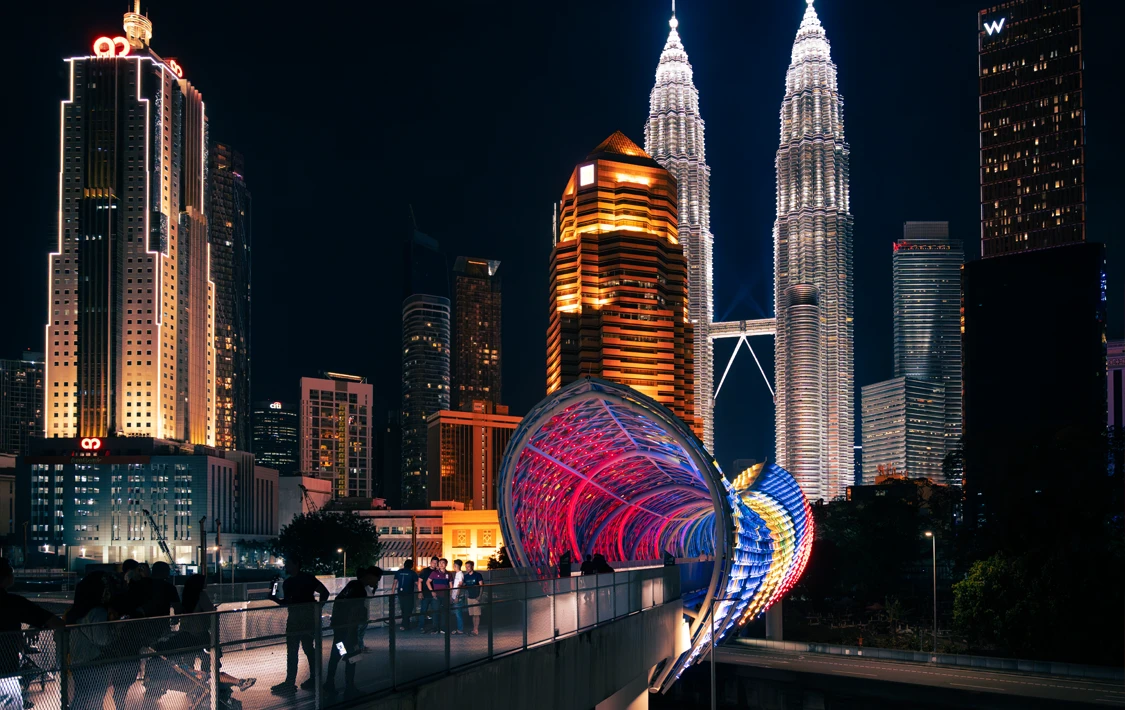
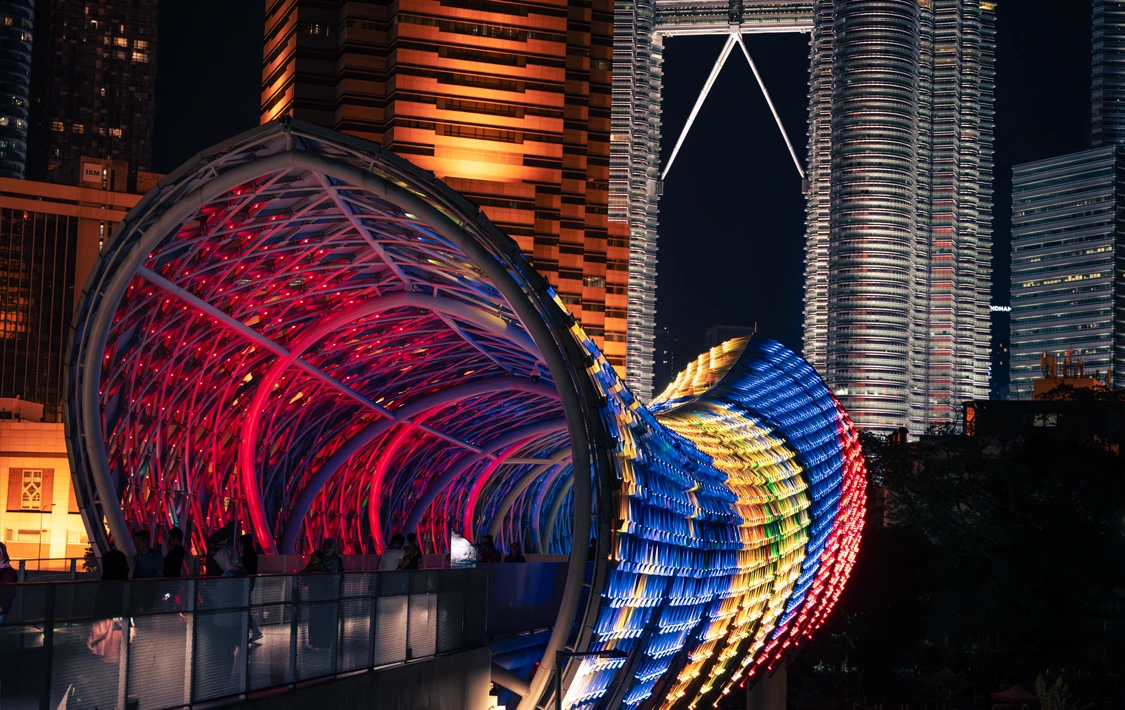
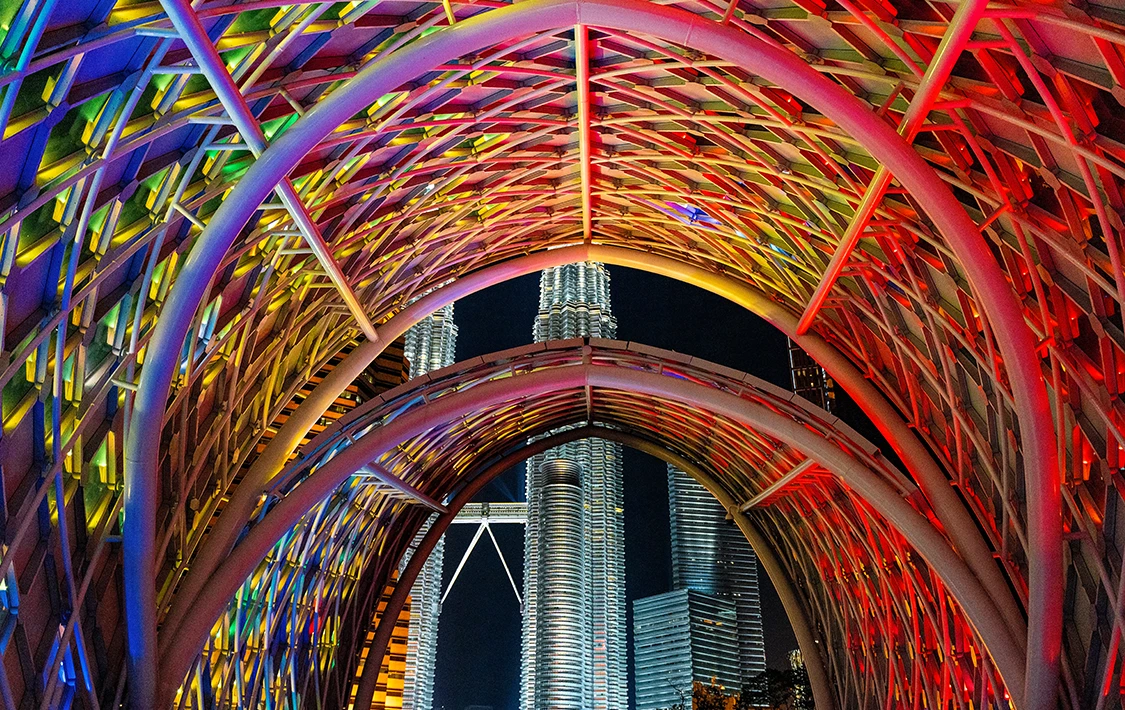
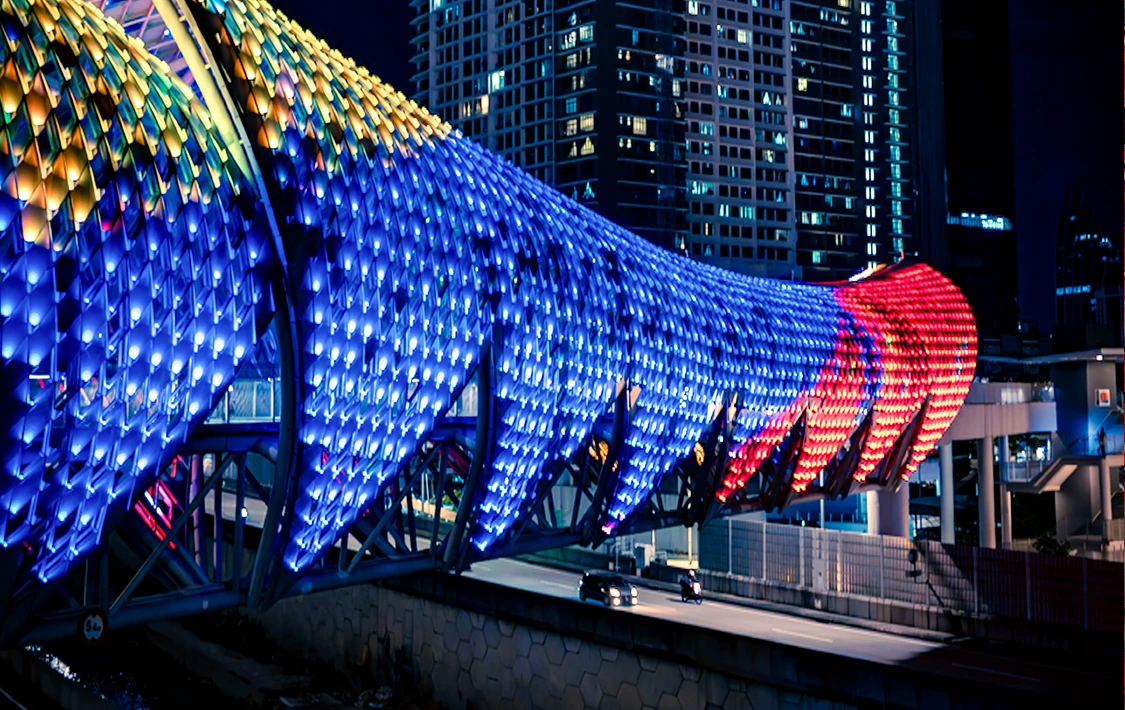
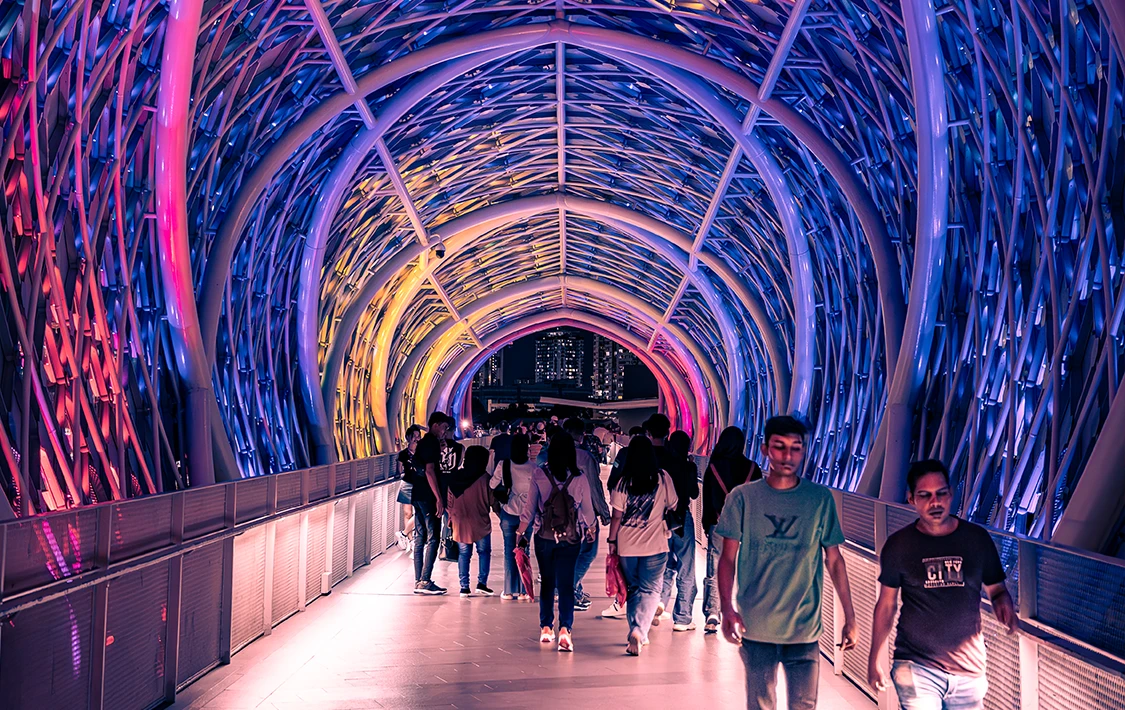
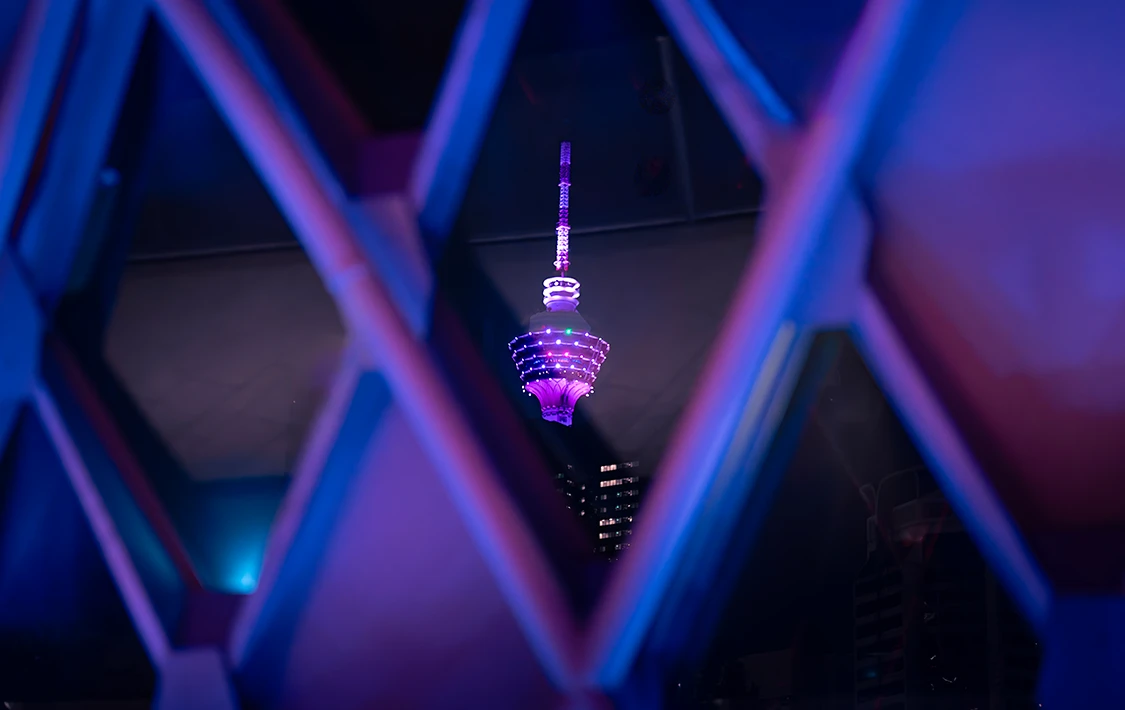
The Saloma Link Bridge has become one of the most famous photo spots in Kuala Lumpur. This modern pedestrian bridge connects the Kampung Baru district with the area surrounding the Petronas Towers, impressing visitors with its futuristic architecture and colourful evening illumination.
Especially after sunset, the bridge transforms into a real highlight. The entire structure lights up in changing colours, creating an almost futuristic atmosphere together with the illuminated skyscrapers in the background. In particular, the views towards the Petronas Towers make the Saloma Bridge one of the most popular locations for photos in Kuala Lumpur.
Useful Information About the Saloma Link Bridge
11. Little India Brickfields – Colourful Indian District in Kuala Lumpur
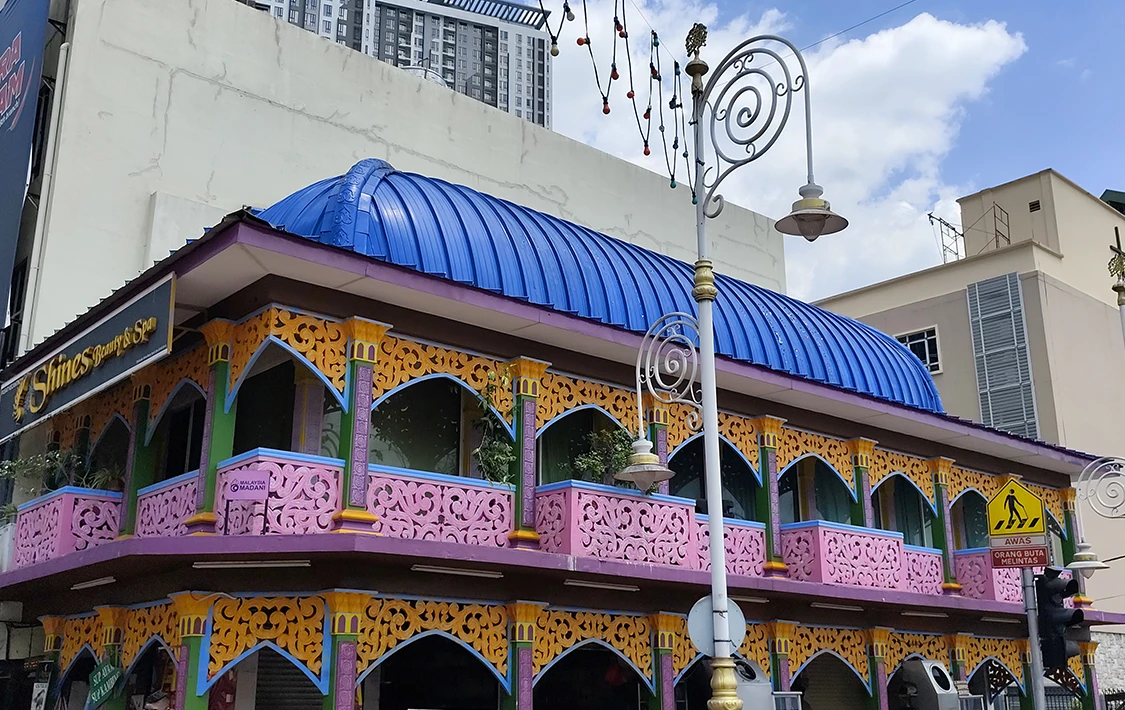
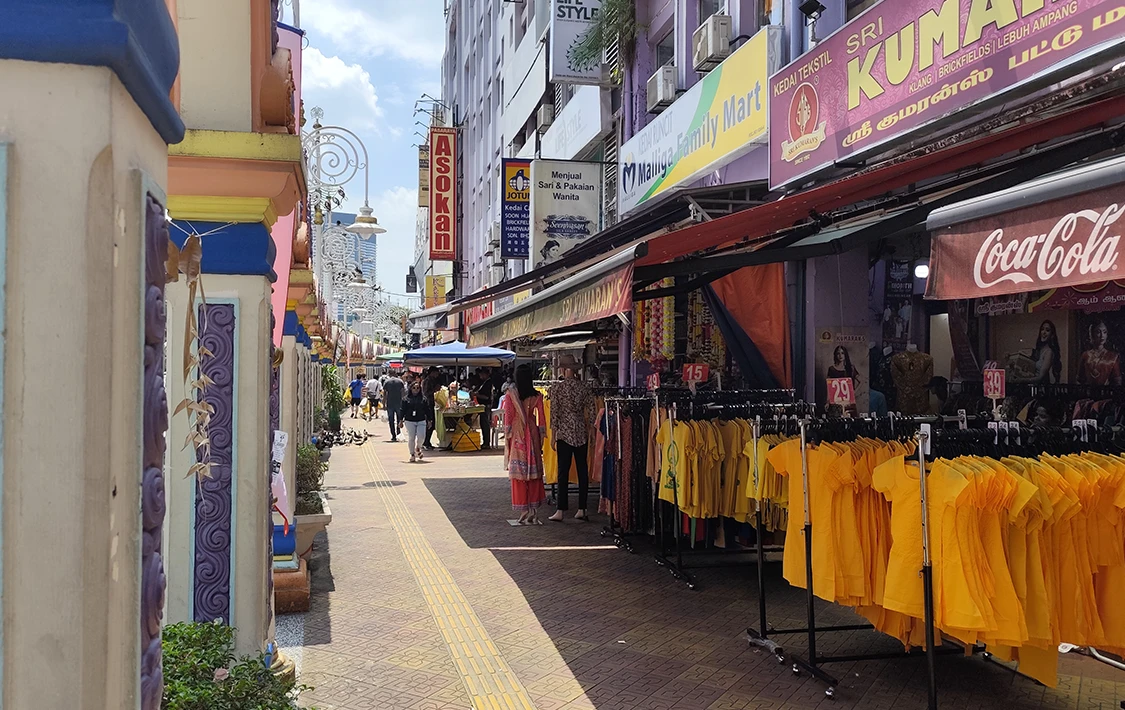
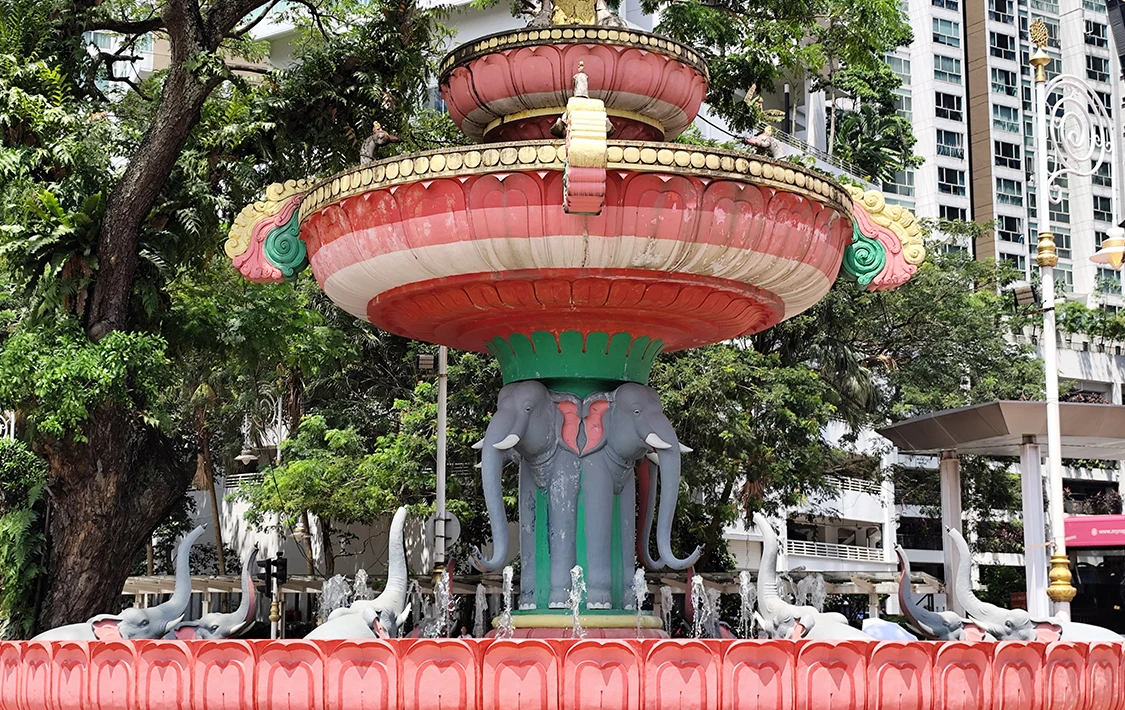
Between Spices, Music & Colourful Building Facades
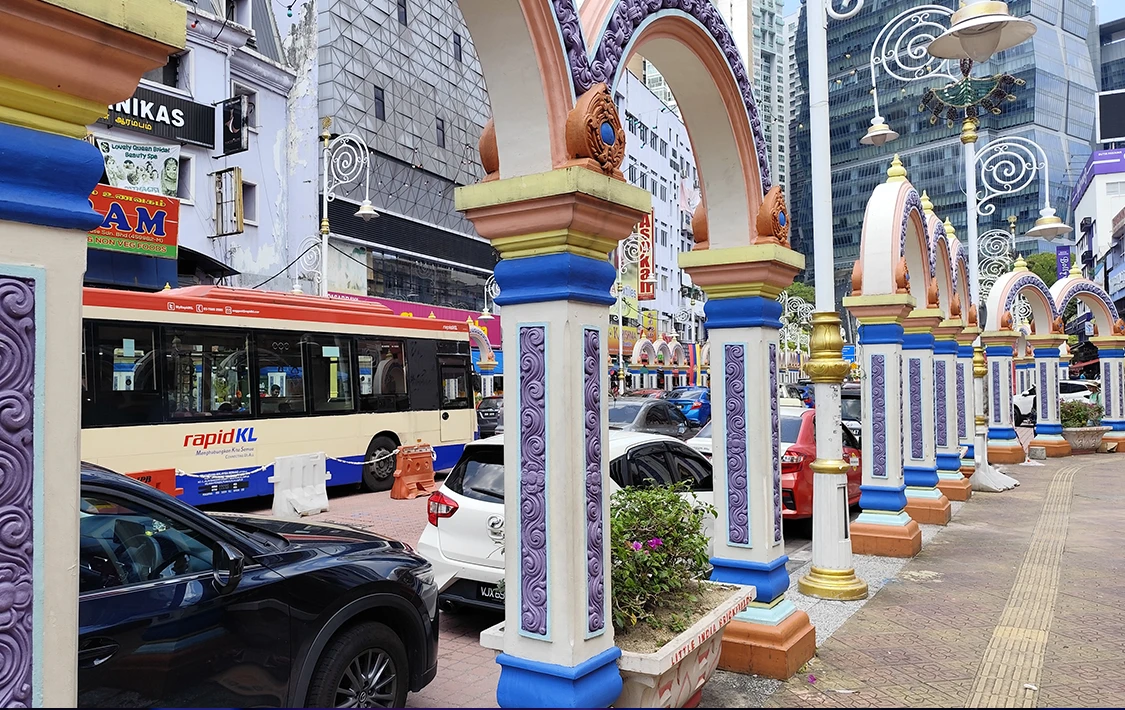
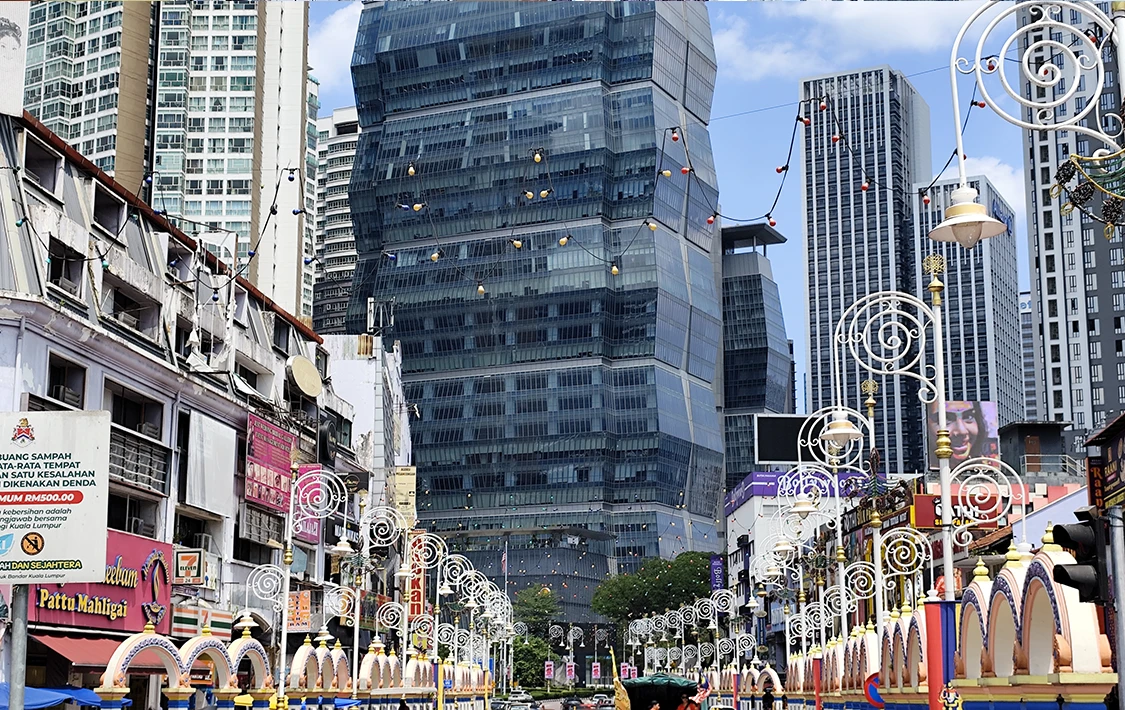
Little India in the Brickfields district is one of the most colourful and vibrant neighbourhoods in Kuala Lumpur. From the moment you start walking through the streets, it feels as if you’ve stepped into a completely different world. Colourful facades, Indian music, the scent of spices, and traditional decorations immediately create a unique atmosphere.
Especially along the main streets, you’ll find countless small restaurants, textile shops, jewellery stores, and market stalls. Whether you’re looking for Indian specialties, sweet chai tea, or traditional clothing, this area offers fascinating insights into Malaysia’s Indian culture.
Colourful Streets & Authentic Atmosphere
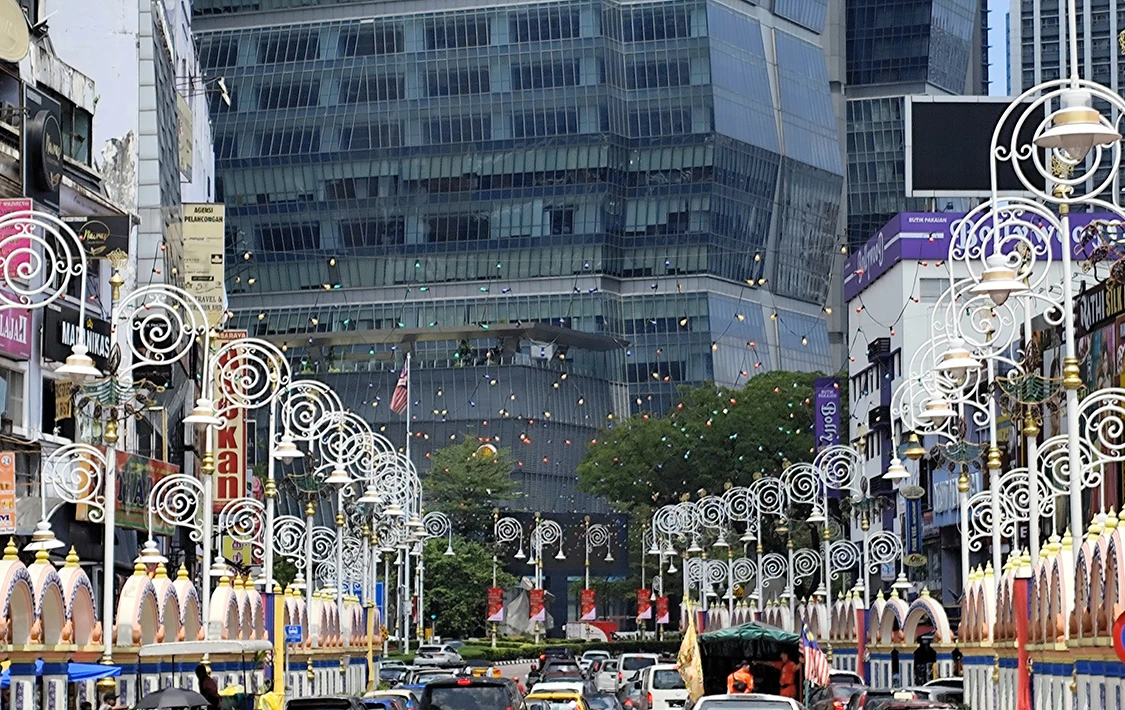
Particularly striking are the many decorative arches, colourful ornaments, and street lights, giving Little India Brickfields an almost festival-like atmosphere. At the same time, the neighbourhood feels more authentic and less touristy than many other places in Kuala Lumpur.
The atmosphere becomes especially interesting in the evening. Between flashing lights, street food aromas, and busy streets, a unique mix of chaos, culture, and Asian big-city energy emerges.
If you’d like to experience a different side of Kuala Lumpur, Little India Brickfields is definitely worth visiting. The district beautifully reflects how multicultural and diverse Malaysia’s capital truly is.
Useful Information About Little India
12. Perdana Botanical Garden – A Green Escape in the Heart of Kuala Lumpur
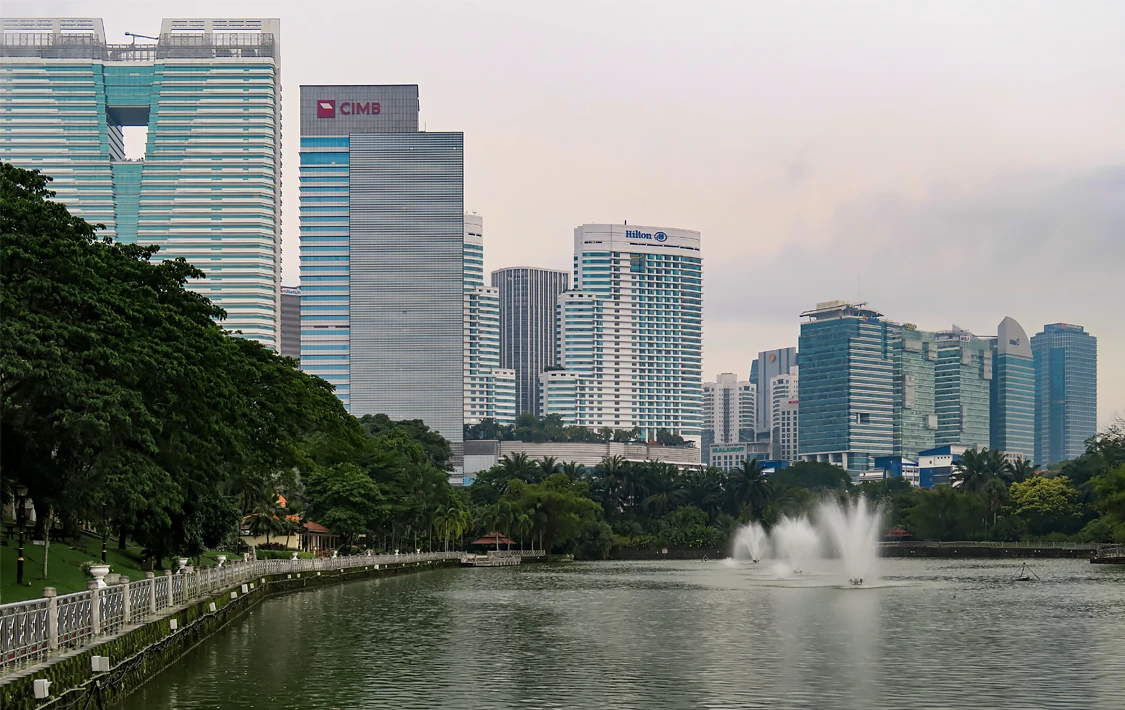

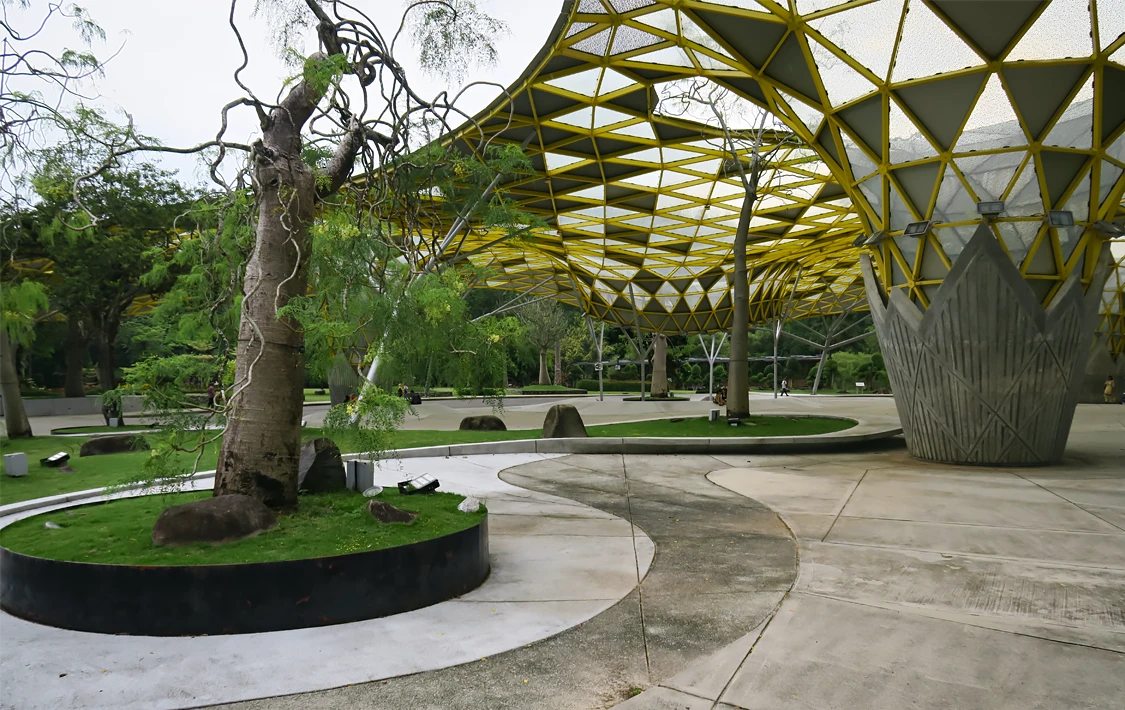

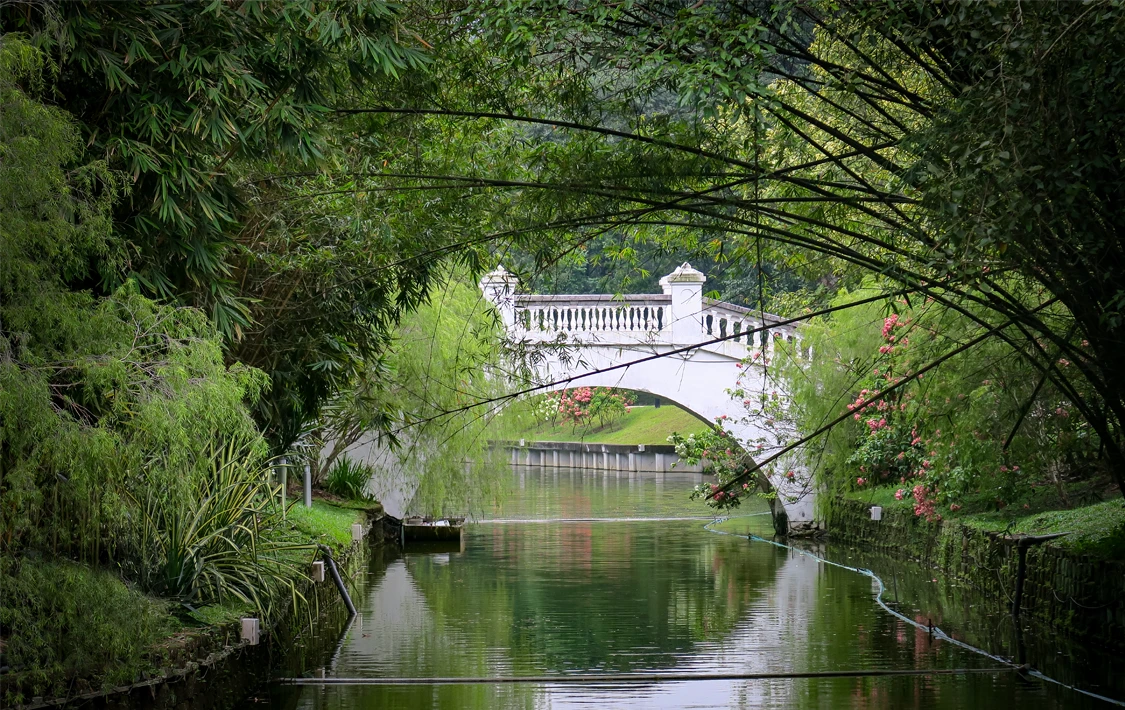
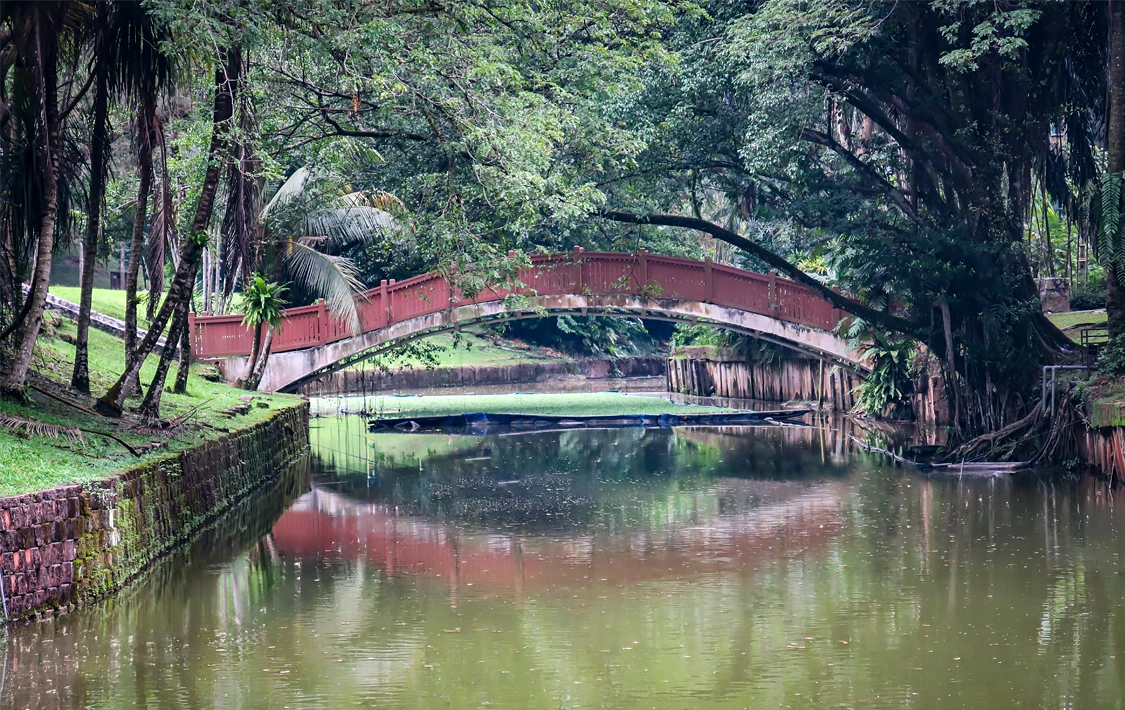
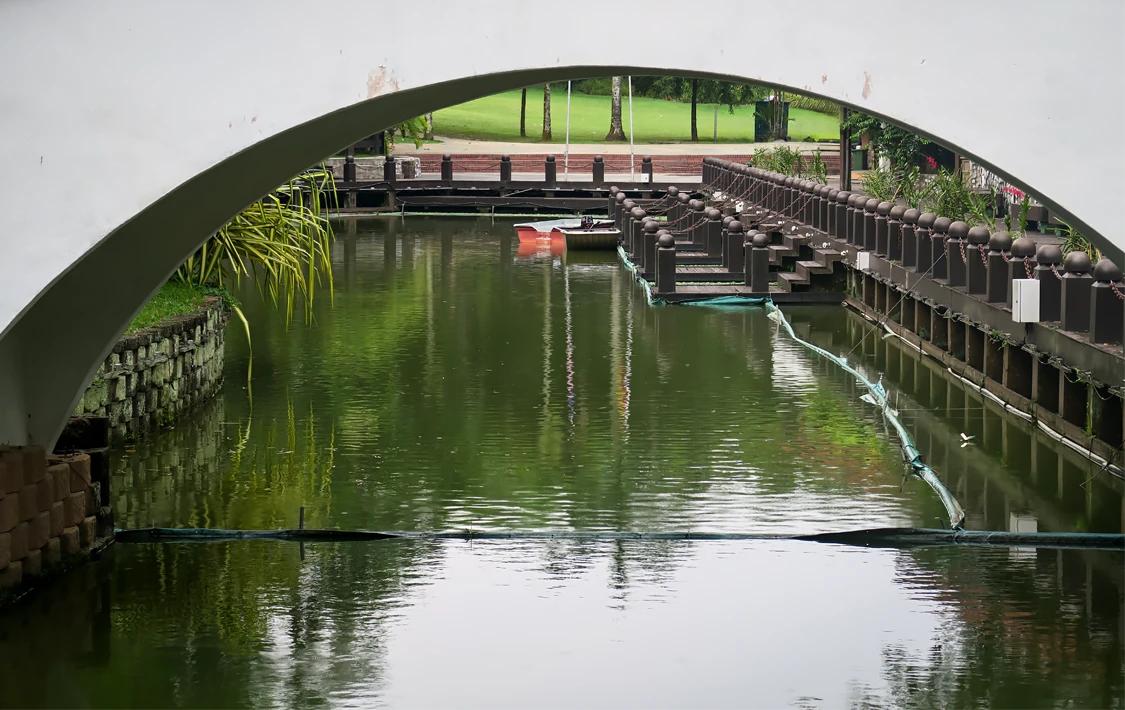

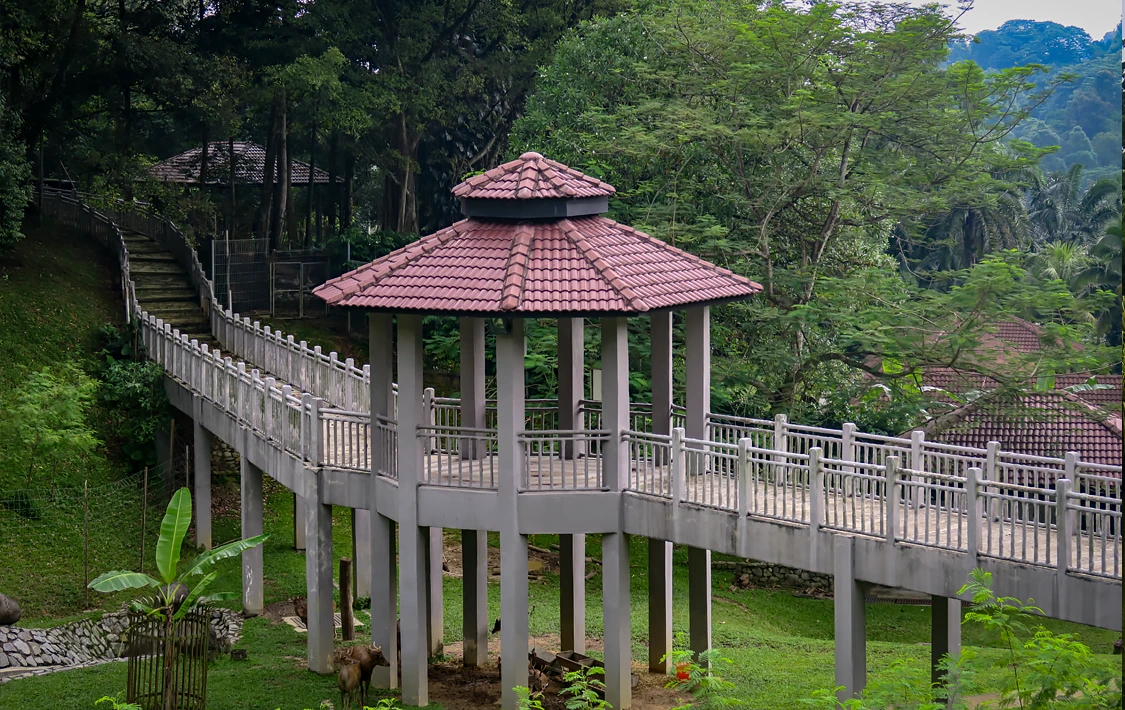
The Perdana Botanical Garden, previously known as Lake Gardens, is located on the edge of Kuala Lumpur’s city centre and, in my opinion, is one of the most underrated attractions in the city. I can already hear you thinking: another city park, how boring… But while parks might not usually top the list of must-see attractions, this 92-hectare green space offers a refreshing change of pace and a peaceful atmosphere away from the urban chaos.
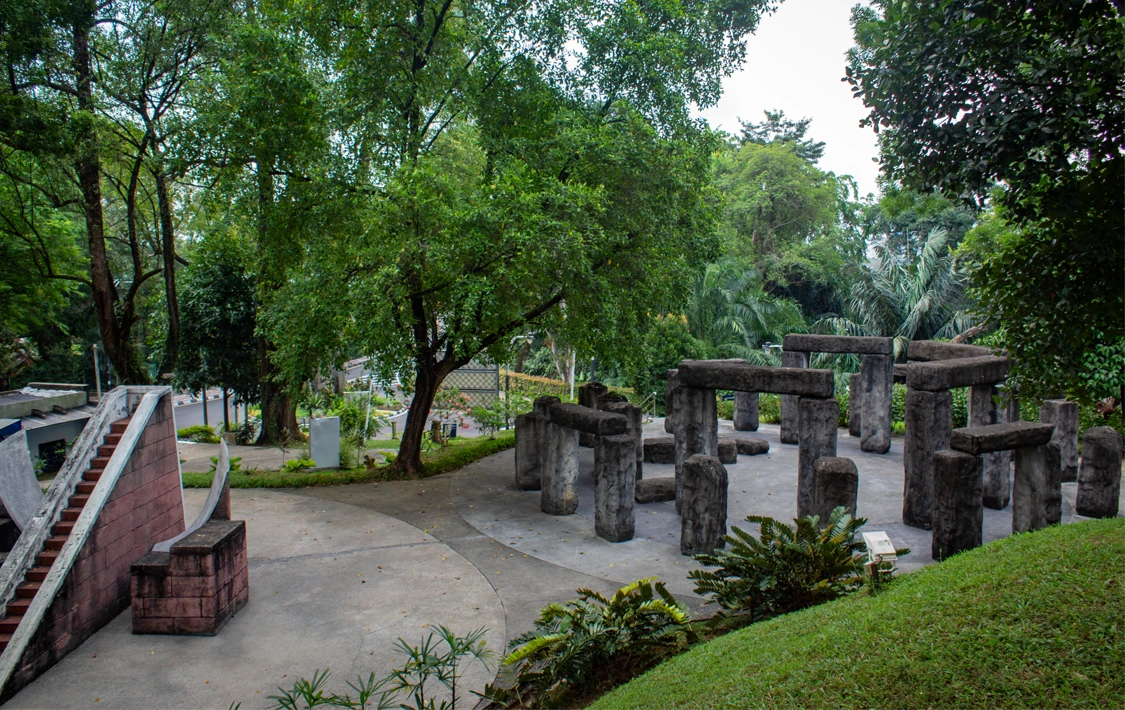
Within the park, you’ll find bird aviaries, a butterfly park, a deer park, an impressive orchid garden, playgrounds, the planetarium, and the Islamic Arts Museum. The diversity makes Perdana Garden much more than just another city park.
Laman Perdana Square
This well-maintained area is located directly on the northern shore of Tasik Lake and offers beautiful views over the water and Kuala Lumpur’s skyline. You’ll also find gardens featuring various trees such as eucalyptus and bonsai, alongside numerous plants and flowers.
Another striking feature is the large yellow curved roof structure, which creates an interesting architectural element. Around Laman Perdana, you’ll come across several attractive photo spots.
KL Sentral Viewpoint & Tasik Lake
Around the KL Sentral Viewpoint and Tasik Lake, you’ll encounter interesting wildlife. Small fish live in the artificial lake, and a fountain sits at its centre. During the entire walk around the lake, you’ll enjoy impressive views towards KL Sentral’s skyline.
Useful Information About Perdana Botanical Garden
13. Planetarium Negara
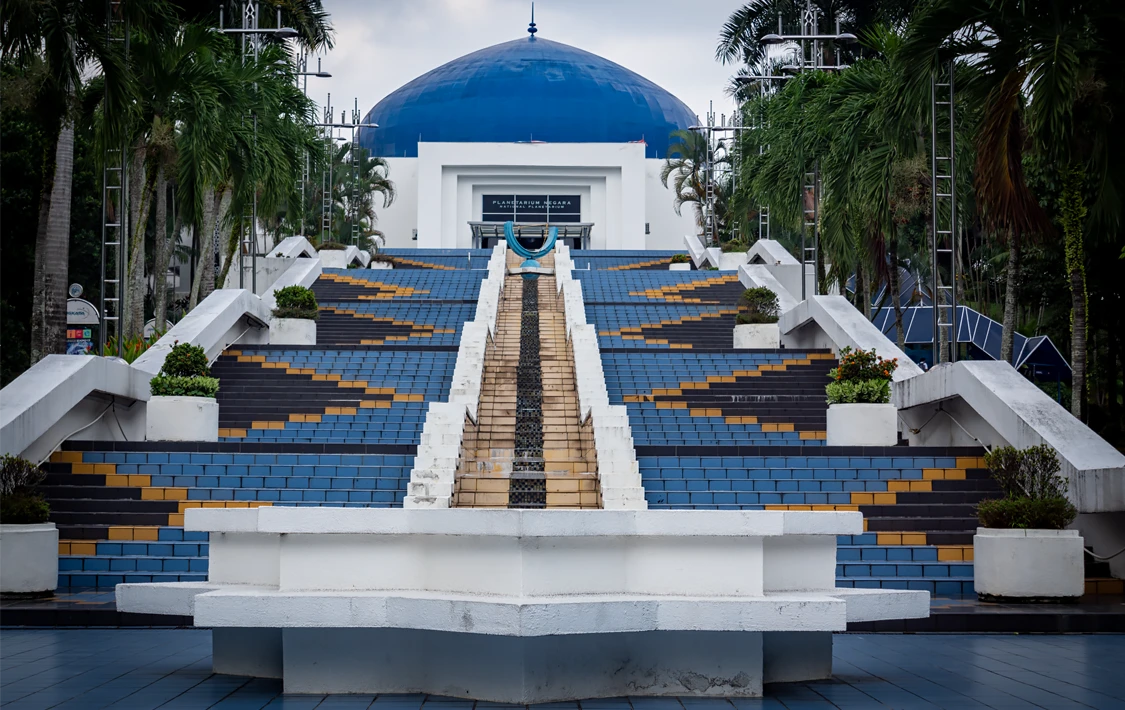
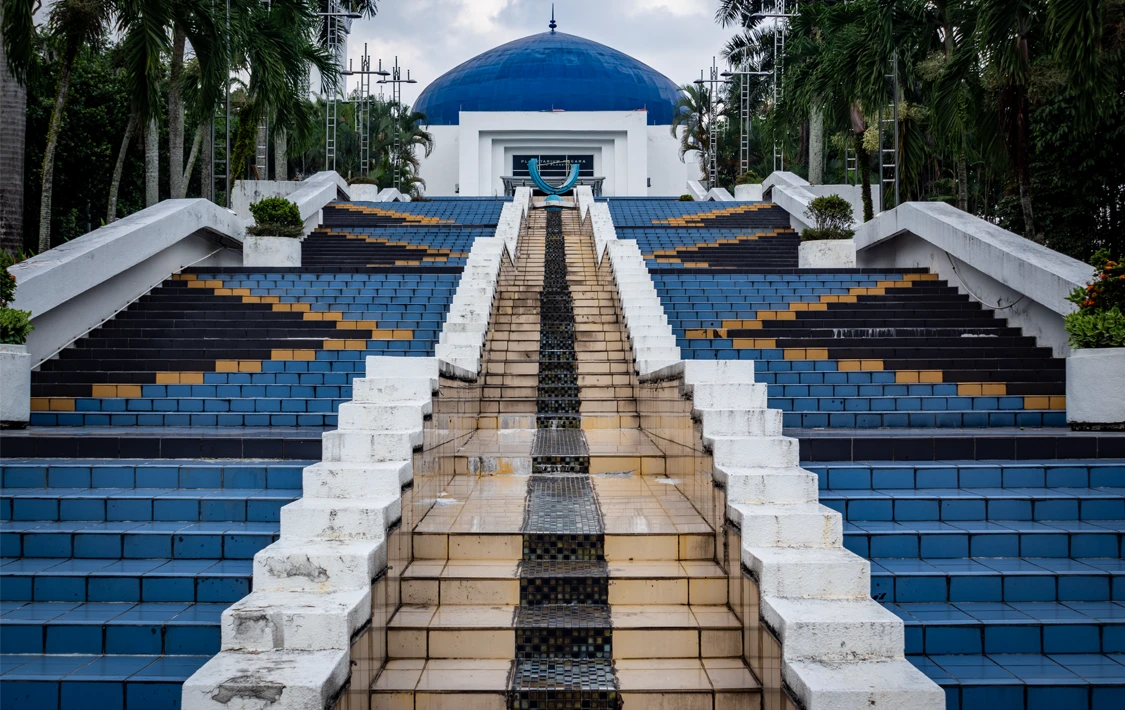
The Planetarium Negara is located on the edge of the Perdana Botanical Garden and is definitely worth a visit. Even if you’re not particularly interested in space science, the impressive building alone makes the stop worthwhile. The blue dome of the planetarium, combined with the large staircase in front, creates an architectural highlight and a great photo opportunity.
Dive Into the Depths of Space
The main attraction of the planetarium, opened in 1993, is its space theatre, featuring various shows and large-format films. In the main exhibition hall, you’ll find displays covering different topics related to space exploration and astronomy.
One of the more unusual exhibits is the Ariane IV rocket engine, which launched Malaysia’s first satellite, MEASAT-1, into space. You’ll also discover spacesuits, space technologies, and interactive simulators throughout the exhibitions.
Whether you’re travelling with children or simply interested in science and technology, the Planetarium offers an interesting alternative to Kuala Lumpur’s typical sightseeing spots.
Useful Information About Planetarium Negara
14. Masjid Asy Syakirin Mosque – The KLCC Mosque Near the Petronas Towers

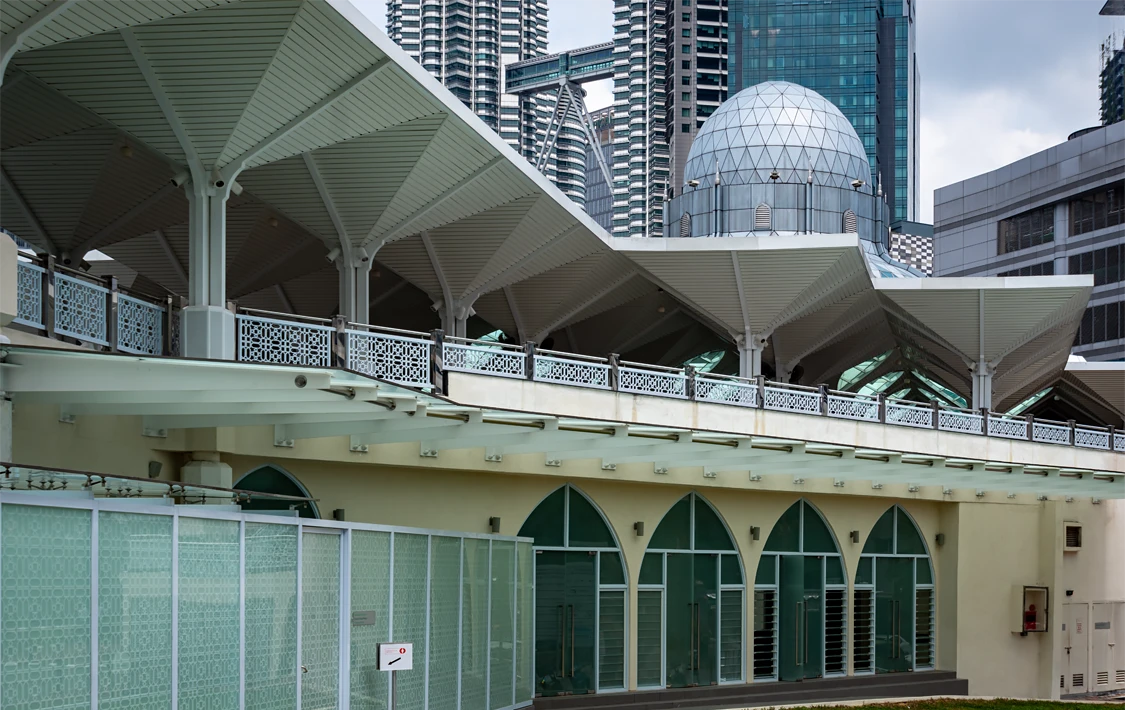

The Masjid Asy Syakirin Mosque, also known as the KLCC Mosque, is located in the centre of Kuala Lumpur, close to Suria KLCC shopping mall and the Petronas Twin Towers.
In 2009, the mosque underwent extensive renovations, increasing its visitor capacity from 6,000 to 12,000 people. The interior of the mosque was elaborately decorated by craftsmen from Uzbekistan, featuring intricate carvings and detailed Islamic calligraphy.
With the surrounding skyscrapers in the background, the mosque creates a beautiful contrast between modern city life and traditional Islamic architecture, making it a great location for travel photos.
Useful Information About Masjid Asy Syakirin Mosque
Accommodation & Hotels in Kuala Lumpur
Where I Stayed
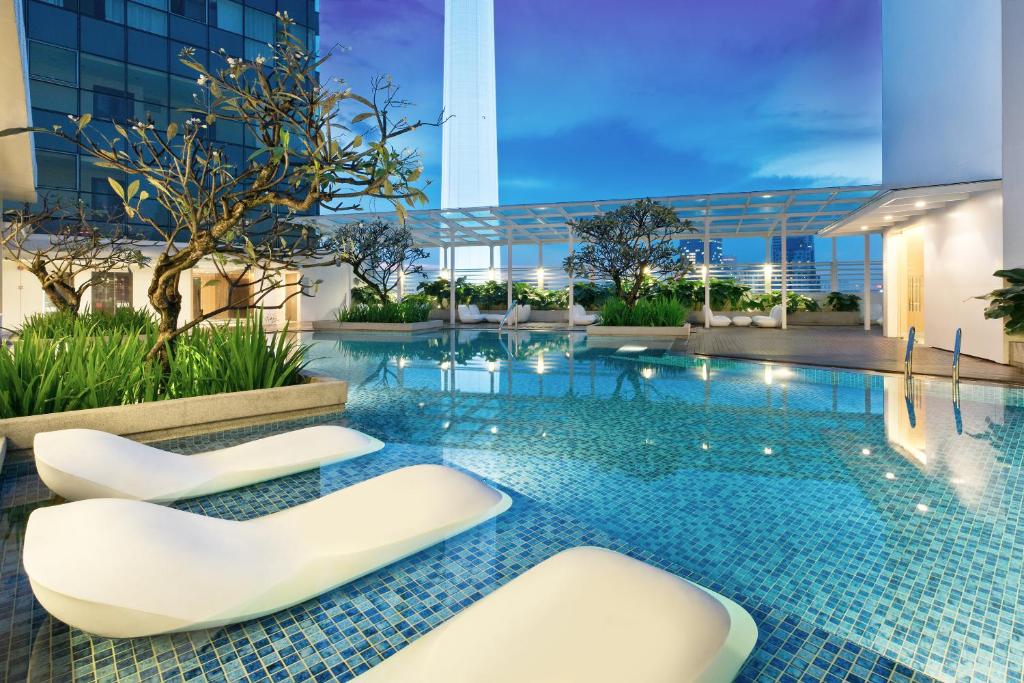
During my stay in Kuala Lumpur, I stayed at Oasia Suites Kuala Lumpur by Far East Hospitality and was overall very satisfied with the hotel. What impressed me most were the spacious rooms, convenient location, and excellent value for money.
The rooms, or rather apartments, offer significantly more space than many traditional city hotels and are ideal for longer stays. Another practical advantage is that many units come with a small kitchen and a private washing machine, which can be especially useful during extended travels or longer trips through Asia.
Good Location for Attractions & Skyline Spots
I also really liked the location of the hotel. Many attractions, including the Petronas Towers, Saloma Bridge, and Chinatown, can be reached easily by Grab or sometimes even on foot. At the same time, the hotel is situated in a quieter area, away from some of Kuala Lumpur’s more hectic districts.
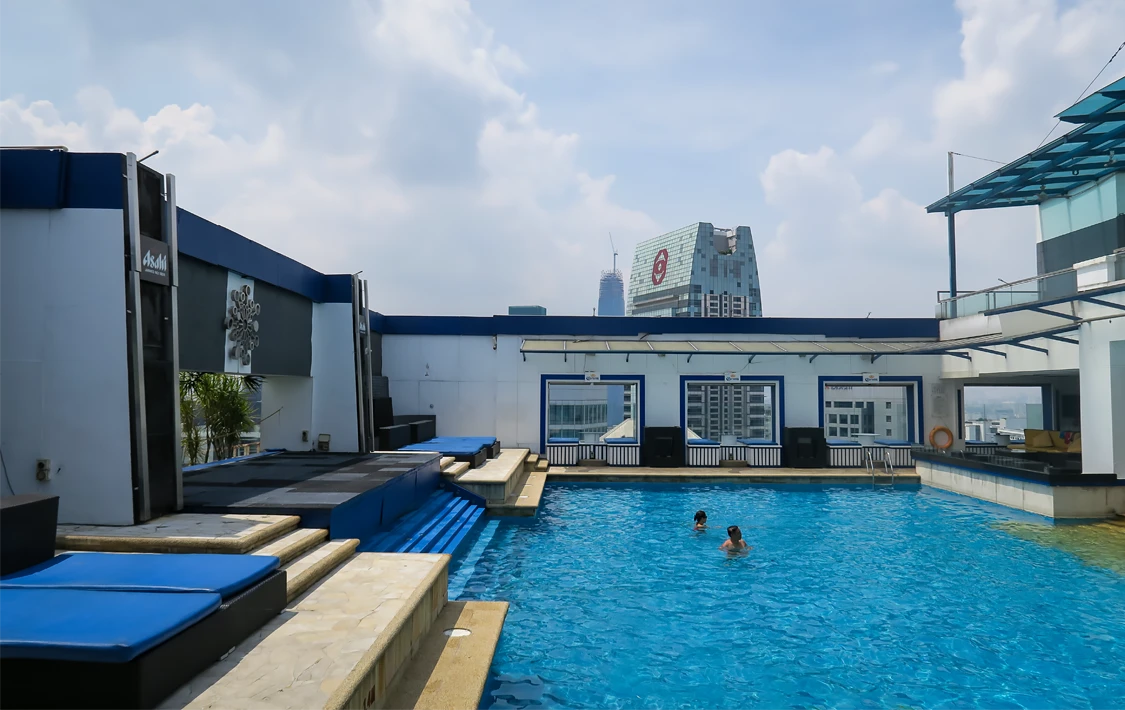
Another highlight is the rooftop pool overlooking Kuala Lumpur’s skyline. Especially in the evening, the atmosphere becomes quite special with views of the city’s illuminated skyscrapers.
If you’re looking for a modern, comfortable, and reasonably priced hotel in Kuala Lumpur, the Oasia Suites Kuala Lumpur is definitely a solid option.
Hotel Recommendations in the KLCC Area
- Impiana KLCC Hotel*,from approximately €75 per night
- Concorde Hotel Kuala Lumpur*, from approximately €55 per night
- de King Boutique Hotel KLCC*, from approximately €35 per night
Hotel Recommendations in the Chinatown Area
- Avenue J Hotel Central Market KL*, from approximately €30 per night
- Pacific Express Hotel Chinatown*, from approximately €20 per night
- Travelodge City Centre*, from approximately €30 per night
Getting Around Kuala Lumpur
Metro & Trains
Kuala Lumpur has a well-developed public transport system with several operators, including the Monorail, Light Rail Transit (LRT), and Commuter Rail.
The network consists of eight lines, covering most important areas and attractions across the city. Regardless of which operator you use, the ticketing system is generally straightforward and works across the various public transport services mentioned above.
At most stations, you’ll find ticket machines with touchscreen displays and route maps. Simply select your destination, pay for the ticket, and use the provided token or chip when exiting at your final station.
Taxis & Ride-Hailing Apps
If navigating the public transport system feels too exhausting, the many taxis in Kuala Lumpur are a convenient alternative. However, an even cheaper option is usually Grab, Southeast Asia’s popular ride-hailing app, which works similarly to Uber.
Personally, I mostly used a combination of walking and Grab rides during my stay.
Exploring the City on Foot
Honestly, walking is often the best way to explore a city. It gives you more flexibility and allows you to discover places you might otherwise miss. Many attractions in Kuala Lumpur are located within the same districts and can be reached on foot.
For longer distances, I usually booked a Grab taxi instead.
Kuala Lumpur – Getting from the Airport to the City Centre
By Train (KLIA Express)
From the airport, you have the option of taking the KLIA Express train directly into the city centre. The train departs from the terminals and travels non-stop to KL Sentral, Kuala Lumpur’s main transport hub. The journey takes around 30 minutes, and trains usually operate every 20 minutes.
From KL Sentral, you can continue your journey by metro, taxi, or Grab (ride-hailing app) to reach your hotel.
- Duration: Approx. 30 minutes to the city centre
- Price: Around RM 55
- Operating Hours: Approximately 4:55 AM to 12:55 AM
By Bus
Taking the bus is usually the cheapest way to get from Kuala Lumpur Airport into the city, although it takes considerably longer. Buses depart regularly from directly outside the terminals, and tickets can usually be purchased either at the airport or directly on the bus.
- Duration: Around 60 to 90 minutes to the city centre
- Price: Approx. RM 10
- Operating Hours: Unfortunately, I couldn’t find more detailed information
By Taxi / Ride-Hailing App
The most expensive but probably most comfortable option is taking a taxi into the city. It’s highly recommended to book an official airport taxi directly inside the terminal. At the taxi counter, you simply provide your destination and pay upfront before being assigned a taxi outside.
If you enter a random waiting taxi directly outside the terminal, there is a risk of paying significantly inflated prices.
- Duration: Around 1 hour to the city centre
- Price: Approximately RM 60 to RM 80
- Operating Hours: 24 hours
Recommended Length of Stay for Exploring Kuala Lumpur’s Attractions

In Kuala Lumpur, you can visit many of the main attractions within just one day. Even if you only have a few hours available, for example during a long layover, it’s possible to experience quite a lot of the city.
However, if you’d like to explore all major attractions in Kuala Lumpur at a more relaxed pace, I recommend staying for around 3 to 4 days.
Best Time to Visit Kuala Lumpur
Kuala Lumpur has a tropical and warm climate throughout the year, making it a destination that can be visited during any season.
- Rainiest months: October to December, as well as March and April
- Driest months: June and July
Kuala Lumpur can also be visited during the wetter months. In many cases, rain showers last only two to three hours rather than all day. However, tropical downpours can occasionally become quite heavy.
Worth knowing: Sudden rain showers are part of everyday life in Kuala Lumpur. A small umbrella or rain jacket can often come in handy while sightseeing.
Final Thoughts on Kuala Lumpur’s Attractions

Kuala Lumpur, the city without attractions? As you’ve seen throughout this guide, Malaysia’s capital actually offers plenty of interesting places to explore. And there are certainly many more attractions beyond those mentioned in this article.
The Perfect Stopover Destination
My visit to Kuala Lumpur pleasantly surprised me. Still, I partly agree with what many travellers say: Kuala Lumpur is the perfect stopover destination.
The city’s airport is one of the major transport hubs in Asia, and many international routes pass through Kuala Lumpur. Even when travelling within Malaysia, it’s difficult to avoid the capital entirely.
At the same time, Kuala Lumpur offers enough diversity, culture, food, architecture, and modern city life to justify spending a few extra days exploring beyond a simple layover.
Do You Have Questions About Kuala Lumpur’s Attractions?
How did you like my guide to Kuala Lumpur? Have you visited the city yourself and discovered additional tips worth sharing with other travellers? Or do you still have open questions?
Feel free to get in touch using the contact form below. I’d be happy to help.
*Affiliate Disclosure:
Please note that this website contains affiliate links. This means we may receive a small commission if you purchase products or services through these links. Using affiliate links does not affect the price you pay, but helps support the operation of this website and enables us to continue providing high-quality content and travel guides for you.